

Kirjahaku
Etsi kirjoja tekijän nimen, kirjan nimen tai ISBN:n perusteella.
1000 tulosta hakusanalla Kenneth Neill Cameron

Spend a season on the river bank and take a walk on the wild side . . . Spring is in the air and Mole has found a wonderful new world. There's boating with Ratty, a feast with Badger and high jinx on the open road with that reckless ruffian, Mr Toad of Toad Hall. The four become the firmest of friends, but after Toad's latest escapade, can they join together and beat the wretched weasels?PLUS A behind-the-scenes journey, including author profile, a guide to who's who, activities and more.

The Wind in the Willows by Kenneth Grahame is an English classic loved by adults and children alike.***Now in a beautiful cloth-bound hardback edition - a perfect gift for young readers.***Spend a season on the river bank and take a walk on the wild side . . . Spring is in the air and Mole has found a wonderful new world. There's boating with Ratty, a feast with Badger and high jinx on the open road with that reckless ruffian, Mr Toad of Toad Hall. The four become the firmest of friends, but after Toad's latest escapade, can they join together and beat the wretched weasels?PLUS A behind-the-scenes journey, including author profile, a guide to who's who, activities and more . . .

This new hardback edition of The Wind in the Willows, the classic story loved by children and adults alike, has been created in partnership with the world-famous V&A Museum, with exquisite cover designs from their William Morris collection. Spring is in the air and Mole has found a wonderful new world. There's boating with Ratty, a feast with Badger and high jinx on the open road with that reckless ruffian, Mr Toad of Toad Hall. The four become the firmest of friends, but after Toad's latest escapade, can they join together and beat the wretched weasels?

A renowned researcher in child development reveals how parents can promote the "friendship factor" in their children's emotional and social development, a key element that shapes their emotional and intellectual growth and ensures their future success in life. Reprint.

Kenneth Graham's The Wind in the Willows is one of the most celebrated works of literature for children, and this Penguin Classics edition contains notes and an introduction by Gillian Avery.Meek little Mole, wilful Ratty, Badger the perennial bachelor, and petulant, boastful Toad: over one hundred years since their first appearance in 1908, they've become emblematic archetypes of eccentricity, folly and friendship. And their misadventures - in gypsy caravans, stolen sports cars, and their beloved Wild Wood - continue to capture readers' imaginations and warm their hearts long after they grow up. Begun as a series of letters from Kenneth Grahame to his son, The Wind in the Willows is a timeless tale of animal cunning and human camaraderie.This Penguin Classics edition features an appendix of the letters in which Grahame first related the exploits of Toad, and new introduction by children's literature historian Gillian Avery.Kenneth Grahame (1859-1932) was an English bank official, writer, author of The Wind in the Willows (1908), set in the idyllic English countryside. The work established Grahame's international reputation as a writer of children's books and has deeply influenced fantasy literature.If you enjoyed The Wind in the Willows, you might enjoy JM Barrie's Peter Pan, also available in Penguin Classics.'A charming book'Terry Jones

The Wind in the Willows (Penguin Classics Deluxe Edition)
Kenneth Grahame
Penguin Classics
2012
nidottu
One of the most celebrated works of classic literature for children, The Wind in the Willows follows Mole, Rat, Toad and Badger from one adventure to the next - in gipsy caravans, stolen sports cars, to prison and back to the Wild Wood. A story of animal cunning and human camaraderie, this remains a timeless tale nearly 100 years after its publication. Bringing together traditional handicraft with cutting-edge book design, the Penguin Threads series has already created a huge buzz among the art and book-collecting communities. This latest set features cover art by painter and illustrator Rachell Sumpter, who brings a unique, whimsical sensibility to the Threads. With vivid colours and ambitiously intricate details, these additions to our innovative series commissioned by award-winning creative director Paul Buckley are rich works of art to be cherished and shared.

Only a Theory: Evolution and the Battle for America's Soul
Kenneth R. Miller
PENGUIN BOOKS
2009
nidottu
An inspiring book about the power and the passion of science Few have weighed in on the nation's contentious debate over evolution as effectively as Kenneth R. Miller. In Only a Theory, Miller-the highly regarded scientist who offered expert testimony at the 2005 trial over the teaching of evolution in Dover, Pennsylvania-eloquently shows how "Intelligent Design" collapses at the very moment one begins to take it seriously. Miller shows that the attack on evolution is a broader assault on the skepticism and reason that have fueled America's remarkable scientific advances, and offers an encouraging prescription for how we can save the nation's "scientific soul" to which we owe so much.
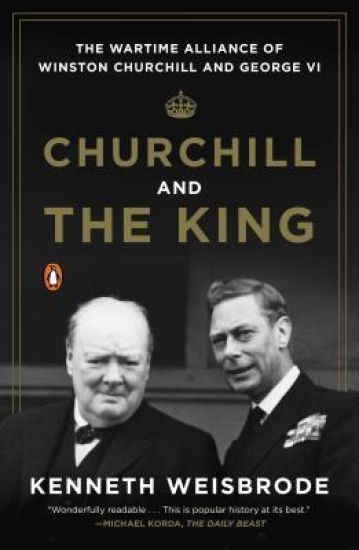
"Wonderfully readable. . . . This is popular history at its best." --The Daily Beast King George VI and Winston Churchill were not destined to be partners, let alone allies. Yet together--as foils, confidants, conspirators, and comrades--the unlikely duo guided Britain through war while inspiring renewed hope in the monarchy, Parliament, and the nation itself. In Churchill and the King, Kenneth Weisbrode explores the delicate fashioning of this important, though largely overlooked, relationship. The king and Churchill met nearly every week in private over lunch during the war. As they worked through the many problems facing their nation and empire, they came to realize that they had more in common than anyone could have guessed. Despite their differences, the trust and loyalty they eventually shared helped Britain navigate the most trying time in its history.

The Past in Perspective: An Introduction to Human Prehistory
Kenneth L. Feder
Oxford University Press
2019
nidottu
Ideal for introduction to archaeology and world prehistory courses, The Past in Perspective: An Introduction to Human Prehistory, Eighth Edition, is an engaging and up-to-date chronological overview of human prehistory. Kenneth L. Feder introduces students to "the big picture"--the grand sweep of human evolutionary history--presenting the human past within the context of fundamental themes of cultural evolution. Feder's unique, refreshing, and accessible narrative personalizes the past and makes it relevant to today's students. Using a consistent chapter format--"Prelude, Chronicle, Issues and Debates, Messages from the Past, and Case Study Close-up"--Feder helps students master both what we know and what is still debated about the complex story of the human past.

Texas and California are the leaders of Red and Blue America. As the nation has polarized, its most populous and economically powerful states have taken charge of the opposing camps. These states now advance sharply contrasting political and policy agendas and view themselves as competitors for control of the nation's future. Kenneth P. Miller provides a detailed account of the rivalry's emergence, present state, and possible future. First, he explores why, despite their many similarities, the two states have become so deeply divided. As he shows, they experienced critical differences in their origins and in their later demographic, economic, cultural, and political development. Second, he describes how Texas and California have constructed opposing, comprehensive policy models--one conservative, the other progressive. Miller highlights the states' contrasting policies in five areas--tax, labor, energy and environment, poverty, and social issues--and also shows how Texas and California have led the red and blue state blocs in seeking to influence federal policy in these areas. The book concludes by assessing two models' strengths, vulnerabilities, and future prospects. The rivalry between the two states will likely continue for the foreseeable future, because California will surely stay blue and Texas will likely remain red. The challenge for the two states, and for the nation as a whole, is to view the competition in a positive light and turn it to productive ends. Exploring one of the primary rifts in American politics, Texas vs. California sheds light on virtually every aspect of the country's political system.

Texas and California are the leaders of Red and Blue America. As the nation has polarized, its most populous and economically powerful states have taken charge of the opposing camps. These states now advance sharply contrasting political and policy agendas and view themselves as competitors for control of the nation's future. Kenneth P. Miller provides a detailed account of the rivalry's emergence, present state, and possible future. First, he explores why, despite their many similarities, the two states have become so deeply divided. As he shows, they experienced critical differences in their origins and in their later demographic, economic, cultural, and political development. Second, he describes how Texas and California have constructed opposing, comprehensive policy models--one conservative, the other progressive. Miller highlights the states' contrasting policies in five areas--tax, labor, energy and environment, poverty, and social issues--and also shows how Texas and California have led the red and blue state blocs in seeking to influence federal policy in these areas. The book concludes by assessing two models' strengths, vulnerabilities, and future prospects. The rivalry between the two states will likely continue for the foreseeable future, because California will surely stay blue and Texas will likely remain red. The challenge for the two states, and for the nation as a whole, is to view the competition in a positive light and turn it to productive ends. Exploring one of the primary rifts in American politics, Texas vs. California sheds light on virtually every aspect of the country's political system.

The Psychology of Strategy: Exploring Rationality in the Vietnam War
Kenneth Payne
Oxford University Press, USA
2015
sidottu
How do strategists decide what they wish to achieve through war, and how they might accomplish it? And why does their understanding of violence regularly turn out to be wrong? In seeking answers to these questions Kenneth Payne draws on the study of psychology to examine strategic behaviour during the Vietnam War. He explores the ways in which cognitive biases distort our sense of our own agency and our decision-making, arguing that much of the latter is emotional, shaped by unconscious processing and driven by a prickly concern for social esteem. The Nixon and Johnson administrations both proved susceptible to the processes that are familiar to students of modern neuroscience and psychology, but perhaps less appreciated within strategic studies. US strategists in the Vietnam era miscalculated in ways that would surprise rational theorists, but not evolutionary psychologists: they exaggerated the stakes, embraced risky and overly optimistic solutions, and failed to appreciate the limits of force to shatter the enemy's resolve. Their concern for reputation led to escalation, based on a flawed conception of what such escalation could achieve. The Vietnam conflict provides an excellent illustration that war is an inherently psychological phenomenon. This challenges abstract notions of rationality in strategic affairs, suggesting that the strategists -- much like the rest of us -- are strangers to themselves.

The overseas enterprises of Spain expanded dramatically following the first voyage of Christopher Columbus in 1492. The Spanish had already conquered the Canary Islands, which served as a base for the later conquest of lands in the Americas (known as the Indies) that served as the foundation of the Spanish Atlantic world. After 1492 Spanish colonists fanned out from a few Caribbean outposts to Mexico, as armies overthrew the Aztec Empire and annexed the Maya domains in southern Mexico and Central America. In just over a decade the Spaniards brought down the Inca Empire, giving the Castilians control over the vast human and mineral resources in South America. Over the course of the sixteenth century, the Castilian invaders, followed by crown bureaucrats and Catholic clergymen, consolidated control over the central regions of Mexico and Peru. Spain eventually claimed control over the vast region from the current southwest of the United States to the southern tip of South America, creating a massive domain that brought unimaginable wealth to the Kingdoms of Spain. This wide-ranging study examines the evolution of the Spanish Atlantic World from its inception with the voyages of Christopher Columbus through the period of conquest and expansion in the sixteenth century, the era of consolidation in the seventeenth century, to the reform and renovation of the eighteenth century, culminating in its slow-motion collapse by 1825. Drawing on traditions from the long Reconquest of the Iberian Peninsula from the Muslims, the first conquistadors and settlers attempted to establish a stratified patriarchal society, based on Roman Catholic values and firmly tied to metropolitan Spain and the wider Atlantic world. As Spain became mired in a series of disastrous wars with European rivals and the colonial economy expanded, diversified, and became more self-sufficient in the seventeenth century, colonial elites gained greater political and social power. Under the new French Bourbon dynasty after 1700, crown ministers framed Enlightenment-inspired policies to reform the Spanish Atlantic world, creating a more centralized state apparatus with the ability to raise taxes, curtail contraband commerce, and establish a military capable of defending the interests of the crown against its European foes. These Bourbon Reforms enjoyed successes, despite provoking opposition among conservative groups in Spain and unrest and revolts in the Indies. Finally, Spain became embroiled in the wars of the French Revolution and the rise of Napoleon Bonaparte, which led a French invasion of Iberia, political tumult in Spain and the Indies, and the collapse of the Spanish Atlantic World and independence for the Americas. Drawing on his extensive research and the most recent literature, eminent historian Kenneth J. Andrien lucidly narrates the three hundred years during which the Spanish Indies evolved from kingdoms of the crown to dependent colonies to independent nations, leading to the fracturing of the Spanish Atlantic world.

The overseas enterprises of Spain expanded dramatically following the first voyage of Christopher Columbus in 1492. The Spanish had already conquered the Canary Islands, which served as a base for the later conquest of lands in the Americas (known as the Indies) that served as the foundation of the Spanish Atlantic world. After 1492 Spanish colonists fanned out from a few Caribbean outposts to Mexico, as armies overthrew the Aztec Empire and annexed the Maya domains in southern Mexico and Central America. In just over a decade the Spaniards brought down the Inca Empire, giving the Castilians control over the vast human and mineral resources in South America. Over the course of the sixteenth century, the Castilian invaders, followed by crown bureaucrats and Catholic clergymen, consolidated control over the central regions of Mexico and Peru. Spain eventually claimed control over the vast region from the current southwest of the United States to the southern tip of South America, creating a massive domain that brought unimaginable wealth to the Kingdoms of Spain. This wide-ranging study examines the evolution of the Spanish Atlantic World from its inception with the voyages of Christopher Columbus through the period of conquest and expansion in the sixteenth century, the era of consolidation in the seventeenth century, to the reform and renovation of the eighteenth century, culminating in its slow-motion collapse by 1825. Drawing on traditions from the long Reconquest of the Iberian Peninsula from the Muslims, the first conquistadors and settlers attempted to establish a stratified patriarchal society, based on Roman Catholic values and firmly tied to metropolitan Spain and the wider Atlantic world. As Spain became mired in a series of disastrous wars with European rivals and the colonial economy expanded, diversified, and became more self-sufficient in the seventeenth century, colonial elites gained greater political and social power. Under the new French Bourbon dynasty after 1700, crown ministers framed Enlightenment-inspired policies to reform the Spanish Atlantic world, creating a more centralized state apparatus with the ability to raise taxes, curtail contraband commerce, and establish a military capable of defending the interests of the crown against its European foes. These Bourbon Reforms enjoyed successes, despite provoking opposition among conservative groups in Spain and unrest and revolts in the Indies. Finally, Spain became embroiled in the wars of the French Revolution and the rise of Napoleon Bonaparte, which led a French invasion of Iberia, political tumult in Spain and the Indies, and the collapse of the Spanish Atlantic World and independence for the Americas. Drawing on his extensive research and the most recent literature, eminent historian Kenneth J. Andrien lucidly narrates the three hundred years during which the Spanish Indies evolved from kingdoms of the crown to dependent colonies to independent nations, leading to the fracturing of the Spanish Atlantic world.

Thirty Readings in Introductory Sociology
Kenneth A. Gould; Tammy L. Lewis
Oxford University Press
2016
nidottu
Thirty Readings in Introductory Sociology, Second Edition, introduces students to the field of sociology in an engaging, accessible manner. Designed to be used alone or with its companion, Ten Lessons in Introductory Sociology, the book is organized around four themes commonly examined in introductory courses: Why sociology? What unites society? What divides society? and How do societies change? Rather than provide encyclopedic responses to such questions, Thirty Readings in Introductory Sociology engages students in critical thinking while presenting key concepts and methods in sociology. Edited by Kenneth A. Gould and Tammy L. Lewis, the text raises sociological questions, applies a sociological lens, illustrates how data are used, and presents core topics in a way that is easy for students to grasp. Each section begins with an introduction by Gould and Lewis, followed by three readings: one classical, one that uses qualitative data, and a third that uses quantitative data.

The international law governing armed conflict is at a crossroads, as the formal framework of laws designed to control the exercise of self-defense and conduct of inter-state conflict finds itself confronted with violent 21st Century disputes of a very different character. Military practitioners who seek to stay within the bounds of international law often find themselves applying bodies of law-IHRL, IHL, ICL-in an exclusionary fashion, and adherence to those boundaries can lead to a formal and often rigid application of the law that does not adequately address contemporary security challenges. Fighting at the Legal Boundaries offers a holistic approach towards the application of the various constitutive parts of international law. The author focuses on the interaction between the applicable bodies of law by exploring whether their boundaries are improperly drawn, or are being interpreted in too rigid a fashion. Emphasis is placed on the disconnect that can occur between theory and practice regarding how these legal regimes are applied and interact with one another. Through a number of case studies, Fighting at the Legal Boundaries explores how the threat posed by insurgents, terrorists, and transnational criminal gangs often occurs not only at the point where these bodies of law interact, but also in situations where there is significant overlap. In this regard, the exercise of the longstanding right of States to defend nationals, including the conduct of operations such as hostage rescue, can involve the application of human rights based law enforcement norms to counter threats transcending the conflict spectrum. This book has five parts: Part I sets out the security, legal, and operational challenges of contemporary conflict. Part II focuses on the interaction between the jus ad bellum, humanitarian law and human rights, including an analysis of the historical influences that shaped their application as separate bodies of law. Emphasis is placed on the influence the proper authority principle has had in the human rights based approach being favored when dealing with "criminal" non-State actors during both international and non-international armed conflict. Part III analyzes the threats of insurgency and terrorism, and the state response. This includes exploring their link to criminal activity and the phenomenon of transnational criminal organizations. Part IV addresses the conduct of operations against non-State actors that span the conflict spectrum from inter-state warfare to international law enforcement. Lastly, Part V looks at the way ahead and discusses the approaches that can be applied to address the evolving, diverse and unique security threats facing the international community.
Bits and Pieces tells the story of chiptune, a style of lo-fi electronic music that emerged from the first generation of video game consoles and home computers in the late 1970s and early 1980s. Through ingenuity and invention, musicians and programmers developed code that enabled the limited hardware of those early 8-bit machines to perform musical feats that they were never designed to achieve. In time, that combination of hardware and creative code came to define a unique 8-bit sound that imprinted itself on a generation of gamers. For a new generation of musicians, this music has currency through the chipscene, a vibrant musical subculture that repurposes obsolete gaming hardware. It's performative: raw and edgy, loaded with authenticity and driven by a strong DIY ethic. It's more punk than Pac-Man, and yet, it's part of that same story of ingenuity and invention; 8-bit hardware is no longer a retired gaming console, but a quirky and characterful musical instrument. Taking these consoles to the stage, musicians fuse 8-bit sounds with other musical styles - drum'n'bass, jungle, techno and house - to create a unique contemporary sound. Analyzing musical structures and technological methods used with chiptune, Bits and Pieces traces the simple beeps of the earliest arcade games, through the murky shadows of the digital underground, to global festivals and movie soundtracks.
Bits and Pieces tells the story of chiptune, a style of lo-fi electronic music that emerged from the first generation of video game consoles and home computers in the late 1970s and early 1980s. Through ingenuity and invention, musicians and programmers developed code that enabled the limited hardware of those early 8-bit machines to perform musical feats that they were never designed to achieve. In time, that combination of hardware and creative code came to define a unique 8-bit sound that imprinted itself on a generation of gamers. For a new generation of musicians, this music has currency through the chipscene, a vibrant musical subculture that repurposes obsolete gaming hardware. It's performative: raw and edgy, loaded with authenticity and driven by a strong DIY ethic. It's more punk than Pac-Man, and yet, it's part of that same story of ingenuity and invention; 8-bit hardware is no longer a retired gaming console, but a quirky and characterful musical instrument. Taking these consoles to the stage, musicians fuse 8-bit sounds with other musical styles - drum'n'bass, jungle, techno and house - to create a unique contemporary sound. Analyzing musical structures and technological methods used with chiptune, Bits and Pieces traces the simple beeps of the earliest arcade games, through the murky shadows of the digital underground, to global festivals and movie soundtracks.
With headlines focused on human suffering-civil wars, refugee flows, the spread of disease due to hunger and poor sanitation, population growth, climate change-it is easy to dive into despair. What is needed, instead, is a radical rethinking of global policy to realize the potential for improving the human condition. This book help provides hope by examining the basic needs for a fundamental shift in thinking about development and human security for both practical and ethical reasons. Kenneth A. Reinert calls for a basic goods approach that focuses on the provision of nutritious food, clean water, sanitation, health services, education services, housing, electricity, and human security services. This approach bridges two perspectives: that of standard growth, which emphasizes increasing GDP per capita, and that of capabilities/human development, which puts priority on the realization of human potential. Reinert argues that only when growth leads to an increase in the broad-based provision of basic goods and services will the hoped-for expansion of human capabilities and development be achieved. In short, basic goods and services are a critical link between growth and human development. No Small Hope: Towards the Universal Provision of Basic Goods places the basic goods approach on the firm foundation of objective human needs and subsistence rights. It offers a practical agenda for making real progress towards human development by focusing on the real determinants of human well-being in an ethical system of moral minimalism. In a world of climate change, increased risk of natural disasters and increased refugee flows, the basic goods approach promises to help alleviate ongoing suffering and address vast deprivations in basic needs fulfillment.