Kirjojen hintavertailu. Mukana 11 944 791 kirjaa ja 12 kauppaa.

Kirjahaku

Etsi kirjoja tekijän nimen, kirjan nimen tai ISBN:n perusteella.

1000 tulosta hakusanalla Maral Atmaca

Moral Theology

Moral Theology

Alphonsus Liguori Cssr

Mediatrix Press
2017
nidottu
St. Alphonsus Liguori's Moral Theology has long been praised and held in the highest regard by the Church, covering every moral question of his day. This first ever English translation features books 1-3 of the Theologia Moralis, on Conscience, Law, Sin and the Theological Virtues. Additionally, it contains several treatises on the saint on the use of equally probable opinion, the papacy, and more. St. Alphonsus comes highly recommended by the Catholic traditionBl. Pope Pius IX declared: "It happened, not without the most provident counsel of God almighty, that since the doctrine of the Jansenist innovators turned all eyes to themselves, enticing many to the sight of their error and leading them over to it, it was then that Alphonsus Maria Liguori stood up, the founder of the Congregation of the Most Holy Redeemer and the Bishop of St. Agatha of the Goths, who, 'fighting the good fight, opened his mouth in the midst of the Church'; and by his learned writings and labors eradicated this plague, roused from hell, and saw to it tear it out and so exterminate it from the field of the Lord. Not only did Alphonsus appoint these shares for himself, but focusing his mind on the glory of God and the spiritual salvation of men he wrote many books, related with holy erudition and piety, whose opinions were between those embraced by both more lax and rigid theologians, to fortify the safe path by which the confessors of Christ's faithful could advance without dashing their foot upon a stone; whether to train and establish the clergy, or to confirm the truth of the Catholic faith and to defend against the heretics of every kind or name; or to assert the laws of this Apostolic See; or to rouse the souls of the faithful to piety." Apostolic Letter Honoring St. Alphonsus with the title of Doctor of the Church]The famous theologian Reginald Garrigou Lagrange, O.P. declared: " The Casuistic method] was inefficacious in urging men to lead good lives, and] tends to laxism. ... But during this period there appeared a man, sent by God, to remedy the evils of casuistry. This man was St. Alphonsus Liguori, doctor of the Church, founder of the Redemptorists, renowned author of many works, ascetic and moral, highly praised by various popes. He is rather practical than speculative. As founder of aequiprobabilism, he cleansed casuistry from the defects of probabilism and laxism."Reginald Garrigou-LagrangeBeatitude, c. II, p. 13."One of St. Alphonsus' names is Doctor Moralis, the moral doctor. This name is deserved for three reasons: 1) his work Theologia Moralis, translated into English here for the first time, as well as various other works, treated moral theology with a thoroughness like no other work of a prior saint. 2) St. Alphonsus was a true scholar by mastering virtually all contributors in the field of moral theology up to his own time. Like St. Thomas who was known for his synthesis of theology in general, St. Alphonsus is clearly a master of synthesizing the various moral authors throughout time. ... 3) He addressed moral problems that had not been addressed by St. Thomas himself or other authors. ... St. Alphonsus provides a thoroughness to moral theology which is very much needed today, in which approaches are often not based upon reality, the natural law, or sound reasoning."Fr. Chad Ripperger, PhDMediatrix Press is pleased to bring you the first English Translation of this excellent work, once widely read but relegated to obscurity on account of the loss of Latin fluency in Western Society. Volume 1 embraces the first three Books of Alphonsus' Moral Theology.

Moral Anatomy and Moral Reasoning

Moral Anatomy and Moral Reasoning

Robert V. Hannaford

University Press of Kansas
1993
sidottu
Robert Hannaford's book answers two fundamental questions: How do we come to do what is morally demanded of us - that is, what leads us to ""acceptable acts""? And how does our being moral emerge from what we are and how we are related to each other? Hannaford shows that doing (reasoning and acting morally) and being (our ""moral anatomy"" or essential nature) do not exist in a vacuum, but are rooted in community, in our relations with others. Moral reasoning, he argues, focuses on what we ought to do in a situation where we must consider the needs, desires and expectations of others. ""It's about doing"", he explains. ""We provide food and water for the victims of an urban riot or a nearby natural disaster, and when we are met by a lost child, we try to help it in finding its parents. As responsible people we [make] choices that we believe can be shown to be acceptable to others in the community. What is morally correct must reflect the judgement of the moral community"". Rejecting relativists who claim the impossibility of universal moral values, Hannaford develops a theory based on a variation of the Golden Rule. He demonstrates how our natural responsiveness to others' feelings and sufferings, our concern for other persons ""conceived as like ourselves"", lies at the heart of our moral anatomy and moral reasoning and ultimately guides our moral actions.
Moral Issues in Military Decision Making

Moral Issues in Military Decision Making

Anthony E. Hartle

University Press of Kansas
2004
sidottu
Much has changed in warfare in recent years, with America now dominant on the international scene and terrorism the new enemy. In light of these changes, the need for moral grounding in military actions is a more pressing concern than ever. When it was originally published, Moral Issues in Military Decision Making reflected the concerns posed by nuclear stalemate and the lessons of Vietnam. In that highly-praised work. Anthony Hartle outlined the essential elements of the Professional Military Ethic created for American military forces. In this new edition, he reexamines the moral foundations for America's military leadership in the post-9/11 era. Considering world affairs since the first edition - the Gulf War, Bosnia, Afghanistan, Iraq, 9/11, and the emergence of the United States as an unrivaled military power - Hartle explains how these events have raised ethical issues that differ dramatically from those of the Cold War. He assesses how moral, legal, and psychological concerns have been impacted by the war on terrorism, homeland defense, asymmetric warfare, the proliferation of American military interventions, and the UN's role in peacekeeping operations.
Moral Issues in Military Decision Making

Moral Issues in Military Decision Making

Anthony E. Hartle

University Press of Kansas
2004
nidottu
In this new edition, he reexamines the moral foundations for America's military leadership in the post-9/11 era. Considering world affairs since the first edition - the Gulf War, Bosnia, Afghanistan, Iraq, 9/11, and the emergence of the United States as an unrivaled military power - Hartle explains how these events have raised ethical issues that differ dramatically from those of the Cold War. He assesses how moral, legal, and psychological concerns have been impacted by the war on terrorism, homeland defense, asymmetric warfare, the proliferation of American military interventions, and the UN's role in peacekeeping operations.
Moral Imperative

Moral Imperative

Darrel Whitcomb

University Press of Kansas
2020
nidottu
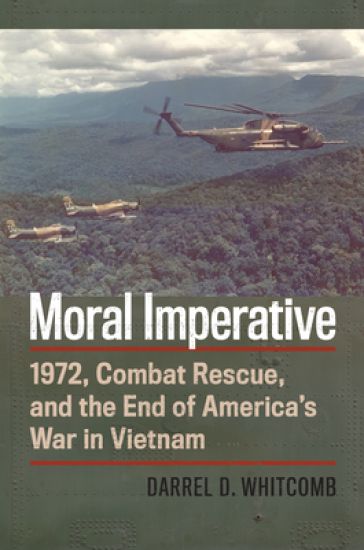
In 1972, America was completing its withdrawal from the long and divisive war in Vietnam. Air power covered the departure of ground forces, and search and rescue teams from all services and Air America covered the airmen and soldiers still in the fight. Day and night these military and civilian aircrews stood alert to respond to 'Mayday'; calls. The rescue forces were the answer to every man's prayer, and those forces brought home airmen, sailors, marines, and soldiers downed or trapped across the breadth and depth of the entire Southeast Asia theater. Moral Imperative relies on a trove of declassified documents and unit histories to tell their tales.Focusing on 1972, Darrel Whitcomb combines stories of soldiers cut off from their units, advisors trapped with allied forces, and airmen downed deep in enemy territory, with the narratives of the US Air Force, Army, Navy, Marines, contract pilots, and special operations teams ready to conduct rescues in Laos, Cambodia, North Vietnam, and South Vietnam. All of these missions occur against the backdrop of our withdrawal from the war and our diplomatic efforts to achieve a lasting peace. In detail, Whitcomb shows how American rescue forces supported the military response to the North Vietnamese's massive three-pronged invasion of South Vietnam, America's subsequent interdiction operations against North Vietnam, and ultimately the strategic bombing of Linebacker II.
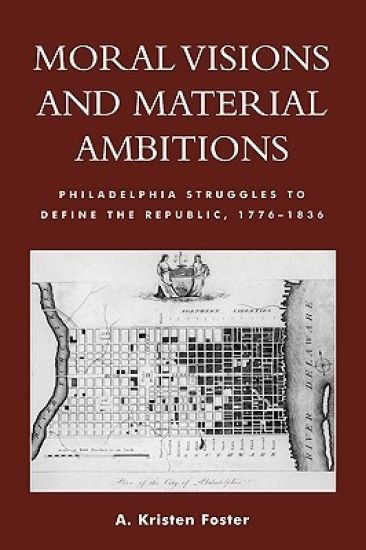
Moral Visions and Material Ambitions

Moral Visions and Material Ambitions

Kristen A. Foster

Lexington Books
2004
sidottu
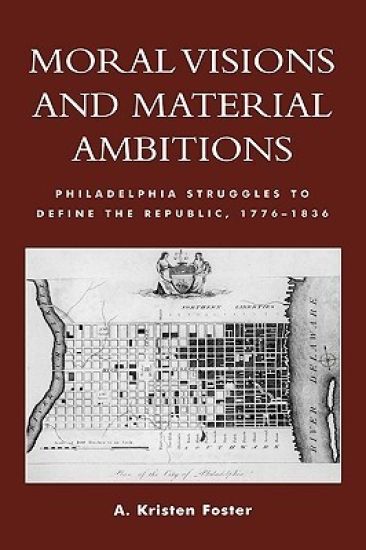
No single vision for the future of America existed after the Revolution. In light of social and economic changes, America's scope shifted from community-mindedness, the very heart of the republican ideal, to economic individualism. In Moral Visions and Material Ambitions, A. Kristen Foster describes how eager young entrepreneurs in Philadelphia manipulated America's moral vision of a classical republic to facilitate their own material ambitions, fostered by the free market economy that arose between 1776 and 1836. As market developments changed economic relationships in the city, men and women used the Revolution's republican language to help explain what was happening to them, and in the process they helped redefine class structure in Philadelphia. This study explores the ways Philadelphians used the Revolution and its powerful language of liberty and equality to impose meaning on their lives, as an expanding market irreversibly changed social and economic relationships in their city, and eventually the rest of the country.
Moral Cultivation

Moral Cultivation

Lexington Books
2007
sidottu
The volume Moral Cultivation explores an overlooked topic in the renewed interest in virtue ethics, the concept of moral cultivation. While the study of virtue ethics focuses on the concept of virtue itself, an exploration of moral cultivation explores the process of attaining that virtue. The essays in this collection explore the question: How do we develop good character? Brad Wilburn has brought together a range of moral perspectives on this issue. Drawing on many different traditions, the essayists employ many schools of thought and thinkers regarding this issue, including: the Confucian tradition, Ancient Greek philosophy, Classical Rabbinic thought, the moral theory of Hume, and the imperatives of Kant. Although the essays cover a wide breadth, the focus is on a few basic questions: What does moral cultivation look like? What parts of us need to be cultivated and what methods should be used? How do moral theories connect with this aspect of our moral experience? Moral Cultivation is a great contribution to the study of virtue ethics. It is a rewarding volume for all levels of thinkers and students with an interest in philosophy or ethics.
Moral Argument, Religion, and Same-Sex Marriage
The diverse expert contributors to this volume from the fields of politics and law use moral argumentation with respect to same-sex marriage, gay rights in general, and California's Prop 8. The arguments are advanced in terms of the nation's foundational political and legal principles, extending ethical argumentation to important contemporary public policy areas such as marriage, the separation of church and state, and the rearing of children. Several chapters also contest the perceived if not actual establishment in the law and public policy of heterosexist and religious bias that continues to work against full and meaningful inclusion of sexual minorities. This bias is ironically and improperly couched in the language of American political and religious values, and it misunderstands the nation's core principles, or willfully miscasts them as inapplicable to many Americans and their families. Nonetheless, this bias is pervasive in the nation's political discourse, working to deny an important right and the recognition of equality to many citizens. The main contribution ofMoral Argument, Religion, and Same-Sex Marriage is in its direct engagement with the political and legal arguments of the gay community's critics on their own moral and ethical terms. Along the way, important concepts in public discourse—such as governmental neutrality, the right to marry, and religious freedom—are presented and cast in the light of liberal-democratic theory.
Moral Argument, Religion, and Same-Sex Marriage
The diverse expert contributors to this volume from the fields of politics and law use moral argumentation with respect to same-sex marriage, gay rights in general, and California's Prop 8. The arguments are advanced in terms of the nation's foundational political and legal principles, extending ethical argumentation to important contemporary public policy areas such as marriage, the separation of church and state, and the rearing of children. Several chapters also contest the perceived if not actual establishment in the law and public policy of heterosexist and religious bias that continues to work against full and meaningful inclusion of sexual minorities. This bias is ironically and improperly couched in the language of American political and religious values, and it misunderstands the nation's core principles, or willfully miscasts them as inapplicable to many Americans and their families. Nonetheless, this bias is pervasive in the nation's political discourse, working to deny an important right and the recognition of equality to many citizens. The main contribution ofMoral Argument, Religion, and Same-Sex Marriage is in its direct engagement with the political and legal arguments of the gay community's critics on their own moral and ethical terms. Along the way, important concepts in public discourse_such as governmental neutrality, the right to marry, and religious freedom_are presented and cast in the light of liberal-democratic theory.
Moral Reflections on Foreign Policy in a Religious War
Moral Reflections on Foreign Policy in a Religious War argues that foreign policy thinkers and actors must take religion more seriously than they have in analysis and action. The tragedy of U.S. policy in Iraq is in part due to the dangers of ignoring religious conflicts in that country until it was too late, and then responding too lightly. Working as a philosopher of religion and politics, Stone shows how both in the United States and the Middle East unreflective religion in a dialogic relationship with politics power has proven hazardous. Stone proposes policy changes for the United States based on his analysis and calls for reform in the ways that both politics and religion are understood. Without peace between religions, there will be no peace in the Middle East. Without understanding how religion functions in international politics, the United States is doomed to repeat disastrous policies in the Middle East.
Moral Reflections on Foreign Policy in a Religious War
Moral Reflections on Foreign Policy in a Religious War argues that foreign policy thinkers and actors must take religion more seriously than they have in analysis and action. The tragedy of U.S. policy in Iraq is in part due to the dangers of ignoring religious conflicts in that country until it was too late, and then responding too lightly. Working as a philosopher of religion and politics, Stone shows how both in the United States and the Middle East unreflective religion in a dialogic relationship with politics power has proven hazardous. Stone proposes policy changes for the United States based on his analysis and calls for reform in the ways that both politics and religion are understood. Without peace between religions, there will be no peace in the Middle East. Without understanding how religion functions in international politics, the United States is doomed to repeat disastrous policies in the Middle East.
Moral Visions and Material Ambitions

Moral Visions and Material Ambitions

Kristen A. Foster

Lexington Books
2009
nidottu
No single vision for the future of America existed after the Revolution. In light of social and economic changes, America's scope shifted from community-mindedness, the very heart of the republican ideal, to economic individualism. In Moral Visions and Material Ambitions, A. Kristen Foster describes how eager young entrepreneurs in Philadelphia manipulated America's moral vision of a classical republic to facilitate their own material ambitions, fostered by the free market economy that arose between 1776 and 1836. As market developments changed economic relationships in the city, men and women used the Revolution's republican language to help explain what was happening to them, and in the process they helped redefine class structure in Philadelphia. This study explores the ways Philadelphians used the Revolution and its powerful language of liberty and equality to impose meaning on their lives, as an expanding market irreversibly changed social and economic relationships in their city, and eventually the rest of the country.
Moral Cultivation

Moral Cultivation

Lexington Books
2010
nidottu
The volume Moral Cultivation explores an overlooked topic in the renewed interest in virtue ethics, the concept of moral cultivation. While the study of virtue ethics focuses on the concept of virtue itself, an exploration of moral cultivation explores the process of attaining that virtue. The essays in this collection explore the question: How do we develop good character? Brad Wilburn has brought together a range of moral perspectives on this issue. Drawing on many different traditions, the essayists employ many schools of thought and thinkers regarding this issue, including: the Confucian tradition, Ancient Greek philosophy, Classical Rabbinic thought, the moral theory of Hume, and the imperatives of Kant. Although the essays cover a wide breadth, the focus is on a few basic questions: What does moral cultivation look like? What parts of us need to be cultivated and what methods should be used? How do moral theories connect with this aspect of our moral experience? Moral Cultivation is a great contribution to the study of virtue ethics. It is a rewarding volume for all levels of thinkers and students with an interest in philosophy or ethics.
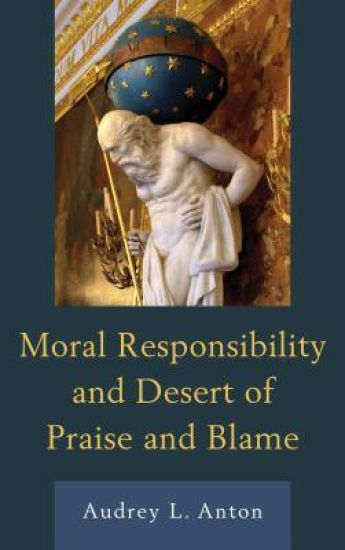
Moral Responsibility and Desert of Praise and Blame
This book challenges a basic assumption held by many responsibility theorists: that agents must be morally responsible in the retrospective sense for anything in virtue of which they deserve praise or blame (the primacy assumption). Anton sets out to defeat this assumption by showing that accepting it as well as the much more intuitive causality assumption renders us incapable of making sense of cases whereby agents seem to deserve praise and blame. She argues that retrospective moral responsibility is a species of causal responsibility (the causality assumption). Then, she illustrates several examples in which agents are not causally responsible for any morally relevant consequences, but they seem to be deserving of praise or blame nonetheless. Anton concludes that such cases are counterexamples to the primacy assumption, and turns her attention towards discerning what grounds desert of praise and blame if not retrospective moral responsibility. Anton advances the moral attitude account, whereby agents deserve praise and blame in virtue of moral attitudes they have in response to moral reasons. These moral attitudes must be sufficiently sincere, which means they reach a threshold that distinguishes such attitudes as eligible for praise and blame. Anton adds that whether one deserves praise or blame and to what degree is sensitive to the agent’s personal moral progress as well as the status quo of her society. This addition brings with it the welcome consequence that morality may be objective, but we are still justified in judging one another charitably based on personal and societal limitations.
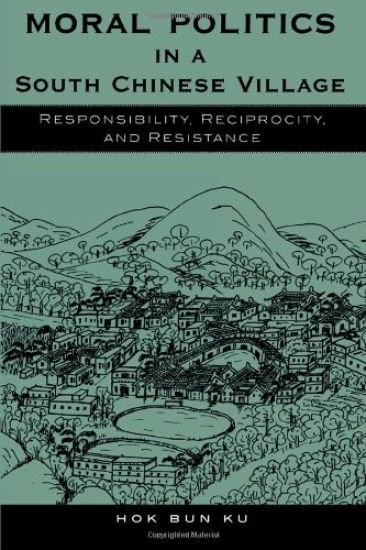
Moral Politics in a South Chinese Village

Moral Politics in a South Chinese Village

Hok Bun Ku

Rowman Littlefield Publishers
2003
sidottu
Exploring sensitive issues often hidden to outsiders, this engaging study traces the transformation and economic development of a south China village during the first tumultuous decade of reform. Drawing on a wealth of intimate detail, Ku explores the new sense of risk and mood of insecurity experienced in the post-reform era in Ku Village, a typical hamlet beyond the margins of richer suburban areas or fertile farmland. Villagers' dissatisfaction revolves around three key issues: the rising cost of living, mounting agricultural expenses, and the forcible implementation of birth-control quotas. Faced with these daunting problems, villagers have developed an array of strategies. Their weapons include resisting policies they consider unreasonable by disregarding fees, evading taxes, and ignoring strict family planning regulations; challenging the rationale of official policies and the legitimacy of the local government and its officials; and reestablishing clan associations to supercede local Party authority. Using lively everyday narratives and compelling personal stories, Ku argues that rural people are not in fact powerless and passive; instead they have their own moral system that informs their everyday family lives, work, and political activities. Their code embodies concepts of fairness and justice, a concrete definition of the relationship between the state and its citizens, an understanding of the boundaries and responsibilities of each party, and a clear notion of what constitutes good and bad government and officials. On the basis of these principles, they may challenge existing policies and deny the authority of officials and the government, thereby legitimizing their acts of self-defense. Through his richly realized ethnography, Ku shows the reader a world of memorable, fully realized individuals striving to control their fate in an often arbitrary world.
Moral Politics in a South Chinese Village

Moral Politics in a South Chinese Village

Hok Bun Ku

Rowman Littlefield Publishers
2003
nidottu
Exploring sensitive issues often hidden to outsiders, this engaging study traces the transformation and economic development of a south China village during the first tumultuous decade of reform. Drawing on a wealth of intimate detail, Ku explores the new sense of risk and mood of insecurity experienced in the post-reform era in Ku Village, a typical hamlet beyond the margins of richer suburban areas or fertile farmland. Villagers' dissatisfaction revolves around three key issues: the rising cost of living, mounting agricultural expenses, and the forcible implementation of birth-control quotas. Faced with these daunting problems, villagers have developed an array of strategies. Their weapons include resisting policies they consider unreasonable by disregarding fees, evading taxes, and ignoring strict family planning regulations; challenging the rationale of official policies and the legitimacy of the local government and its officials; and reestablishing clan associations to supercede local Party authority. Using lively everyday narratives and compelling personal stories, Ku argues that rural people are not in fact powerless and passive; instead they have their own moral system that informs their everyday family lives, work, and political activities. Their code embodies concepts of fairness and justice, a concrete definition of the relationship between the state and its citizens, an understanding of the boundaries and responsibilities of each party, and a clear notion of what constitutes good and bad government and officials. On the basis of these principles, they may challenge existing policies and deny the authority of officials and the government, thereby legitimizing their acts of self-defense. Through his richly realized ethnography, Ku shows the reader a world of memorable, fully realized individuals striving to control their fate in an often arbitrary world.
Moral Soundings

Moral Soundings

Rowman Littlefield Publishers
2004
nidottu
Moral Soundings takes a fresh new approach to introducing students and general readers to contemporary ethics. Rather than surveying the standard fare in a typical anthology format, Furrow collects diversified essays around a structured theme: does Western culture face a moral crisis of values? Prominent voices in the humanities and social sciences provide a range of perspectives on a concentrated set of ethical questions dealing with such topics as family values, the morality of capitalism, the benefits and dangers of new technologies, global conflict, and the role of religion. Unlike point/counterpoint books that often oversimplify the complexity of ethical questions, the readings in Moral Soundings provoke critical engagement and help students to recognize and emulate the logical development of arguments-all in engaging and easily accessible language. Readings are supplemented with helpful chapter introductions, study questions, and strategically placed editorial commentary to encourage further discussion and reflection. These features make Moral Soundings an ideal primary or supplementary text for undergraduate courses in ethics, contemporary moral issues, and social and political philosophy.
Moral Psychology

Moral Psychology

Rowman Littlefield Publishers
2004
sidottu
Moral psychology studies the features of cognition, judgement, perception, and emotion that make human beings capable of moral action. Perspectives from feminist and race theory immensely enrich moral psychology. Writers who take these perspectives ask questions about mind, feeling, and action in contexts of social difference and unequal power and opportunity. These essays by a distinguished international cast of philosophers explore moral psychology as it connects to social life, scientific studies, and literature.