Focuses on McCarthyism's public backing and the causes of Senator Joseph McCarthy's downfall. The book examines the Eisenhower administration's role in the Senator's political collapse and attempts to answer the question: to what extent is this episode exemplary of how a demagogue can be destroyed? Intended not only for students, scholars, and historians but also for a general audience interested in the McCarthy era.
This hard-hitting, meticulously researched study provides an in-depth analysis of the bizarre relationship between Senator Joe McCarthy and the Hearst press from 1942-57. Concentrating on the Journal-American and the Mirror in New York, Tuck looks deep into the center of the controversy and arrives at some surprising conclusions. Contents: The Cold War Within the Hot Water: Hearst as Pioneer; Pre-McCarthy McCarthyism: The Hearst Press and Parnell Thomas; The Hiss Case and the Mindszenty Trial; 1950: The Alliance Forms; 1951-52: The Alliance at High Noon; 1953: The Alliance Cracks; 1954: Fragmentation; 1955-57: The Reign of Silence; Epilogue: McCarthy as Redbaiter An Inquiry.
In the aftermath of the Irish Easter Rising of 1916, the Clans seek McCarthy Gold as Collin searches for his missing sister. Wicked Head Constable Boyle plots revenge on them all. Irish rebels Tadgh McCarthy and partner Morgan reunite with Peader O'Donnell to unravel riddles they hope may lead them to the McCarthy treasure. Kathy O'Donnell joins Collin in Ireland with an ultimatum to abandon his search for Claire or suffer losing his wife forever. Boyle stalks the McCarthys and O'Donnells in his crazed mission to seize the hidden treasures of the Clans Pact.
Each new print copy includes Navigate 2 Advantage Access that unlocks a comprehensive and interactive eBook, student practice activities and assessments, a full suite of instructor resources, and learning analytics reporting tools. McCarthy's Introduction to Health Care Delivery: A Primer for Pharmacists, Sixth Edition provides students with a current and comprehensive overview of the U.S. health care delivery system, including social, organizational, and economic aspects, from the perspective of the pharmacy profession. Each thoroughly updated chapter of this best-selling text includes real-world case studies, learning objectives, chapter review questions, questions for further discussion, and updated key topics and terms. NEW TO THE SIXTH EDITION Updated an Enhanced content relating to: Expanded section regarding pharmacist roles Post-graduate education/resources Credentialing/resources Affordable Care Act Medicare and Medicaid Contrasting views of health policy Government’s perspective on role of pharmacists (provider status) Examples of state health insurance programs Challenges of the VA system E-commerce, internet pharmacy, and other technologies Interdisciplinary models of care Scope of practice and related legislation Sources of patient information Health and illness behavior Culture, health literacy, health behavior change and motivational interviewing Role of quality improvement in patient safety Drug safety Pharmaceutical industry and drug development Electronic prescribing and electronic health records Patient Safety and Clinical Pharmacy Services Collaborative (PSPC) Pharmacy benefit managers Basic policy issues affecting health care Connections between medication use systems and health care delivery models Demographics, including compression of morbidity Basic epidemiology, including discussions of incidence, prevalence, risk, etc. Distribution process, e.g., wholesalers Counterfeits and efforts to prevent occurrence Internet pharmacy DTC advertising E-Commerce Health care disparities Examples of pharmacist roles in public health (immunizations, bioterrorism, community health clinics, etc.) Continuous quality improvement Measures of quality Root cause analysis E-prescribing Technologies to improve safety and efficiencies Reimbursement Joint Commission Multihospital systems, horizontal/vertical integration Fellowships Ambulatory care data LTC statistics New funding for community health centers New therapies used at home Economic principles affecting health care The uninsured Prescription drug plans Difference between private pay and Medicaid Expand discussion on HEDIS Supply-side and demand-side controls Consumer-driven healthcare PBMS, pharmacy reimbursement Details on formularies DUR Specialty pharmacies Cognitive reimbursement and MTM Transitions of Care Formulary review for expensive biotech drugs Health technology assessment Pharmacoeconomic methods Quality of life and health outcomes measurement Health education Developing countries Accountable care organizations (ACOS) Patient-centered medical homes (PCMS) Consumer driven health care INSTRUCTOR RESOURCES: Instructor’s Manual, Slides in PowerPoint format, Test Bank With Navigate 2, technology and content combine to expand the reach of your classroom. Whether you teach an online, hybrid, or traditional classroom-based course, Navigate 2 delivers unbeatable value. Experience Navigate 2 today at www.jblnavigate.com/2 Some electronic and eBook versions do include access to Navigate 2 Advantage resources. Navigate 2 Advantage Access may be purchased separately. See Student Resources tab.
In 1953, Mary Knowles was fired as a branch librarian for the Morrill Memorial Library, a public library in Norwood, Massachusetts. She had been called before the Senate Internal Security Subcommittee and, when asked if she’d ever been a member of the Communist Party, she declined to answer, relying on her Fifth Amendment rights. She was fired less than three weeks later. Knowles thought she was unlikely to find a position as a librarian again and left the area. She found a job at a small library outside Philadelphia, where anticommunists who learned of her past tried to create public support for a Loyalty Oath, resulting in the loss of public funding for the library. The resulting controversy eventually brought national attention to the local Quakers who had hired Knowles, the FBI was asked to investigate, Knowles was convicted of contempt of Congress, and the Quakers were subpoenaed and testified before the House Un-American Activities Committee. Knowles, however, was never fired from this position, retiring from the library in 1979. This book illustrates the impact of McCarthyism on small towns and “ordinary” people and local officials, some of whom abided by the standards of the era. There were others however, who challenged the status quo. Their actions provide readers with models of behavior often at odds with what has been thought of as the 1950s. People who spoke up risked families and jobs. At the same time, anticommunists also tapped into citizens’ fears of the cold war, not just of Communists but of a broad swath of people who promoted social justice and equality. The resulting interactions as described in this book offer important lessons on how fear and bravery operate local communities against the backdrop of (and involvement with) national events.
In 1953, Mary Knowles was fired as a branch librarian for the Morrill Memorial Library, a public library in Norwood, Massachusetts. She had been called before the Senate Internal Security Subcommittee and, when asked if she’d ever been a member of the Communist Party, she declined to answer, relying on her Fifth Amendment rights. She was fired less than three weeks later. Knowles thought she was unlikely to find a position as a librarian again and left the area. She found a job at a small library outside Philadelphia, where anticommunists who learned of her past tried to create public support for a Loyalty Oath, resulting in the loss of public funding for the library. The resulting controversy eventually brought national attention to the local Quakers who had hired Knowles, the FBI was asked to investigate, Knowles was convicted of contempt of Congress, and the Quakers were subpoenaed and testified before the House Un-American Activities Committee. Knowles, however, was never fired from this position, retiring from the library in 1979. This book illustrates the impact of McCarthyism on small towns and “ordinary” people and local officials, some of whom abided by the standards of the era. There were others however, who challenged the status quo. Their actions provide readers with models of behavior often at odds with what has been thought of as the 1950s. People who spoke up risked families and jobs. At the same time, anticommunists also tapped into citizens’ fears of the cold war, not just of Communists but of a broad swath of people who promoted social justice and equality. The resulting interactions as described in this book offer important lessons on how fear and bravery operate local communities against the backdrop of (and involvement with) national events.
You ain't gonna like it: bad grammar's not so bad. - The TimesRemember all those grammar rules from school? No? Most of us don't. Mike McCarthy, renowned corpus linguist and co-author of the 900-page Cambridge Grammar of English answers the awkward questions that regularly bother us about English grammar. In this helpful A-Z field guide, McCarthy tells us what the conventional rules are as well as shows us what people are writing or saying now and gives simple reasons why you might choose one or the other so that you can speak and write with confidence.Through witty and entertaining examples pulled from 50 years of teaching, 40 years of field notes picked from books, newspapers, letters, radio and TV, etc., and shamelessly eavesdropping on people's conversations in public spaces, and a British and American English computer database, McCarthy has created a book to browse and enjoy, as well as a useful reference to keep on your bookshelf.Why a Field Guide to grammar?- A to Z format makes it easy to access and to find what you're looking for- Presents solutions to a host of common, everyday grammatical problems- References current events to bring relevance to the grammar (fronted adverbials anyone?)- Looks at historical usage to illustrate how the English language has evolved, and continues to evolve- Gives guidance on appropriate usage where more than one way of saying something exists- Distinguishes between spoken and written grammar where appropriate- includes advice on vocabulary, spelling, pronunciation, punctuation and style- Compares North American and British grammar, and includes Englishes from around the world- Charming drawings to illustrate the playfulness in the English language- Grammar guide backed by data and researchTrue to the Chambers name, this field guide is as much quirky as it is informative. It is the perfect gift for any language lover, student, teacher, struggling parent or carer supporting their child's schooling, the grammar purist or the grammar descriptivist.
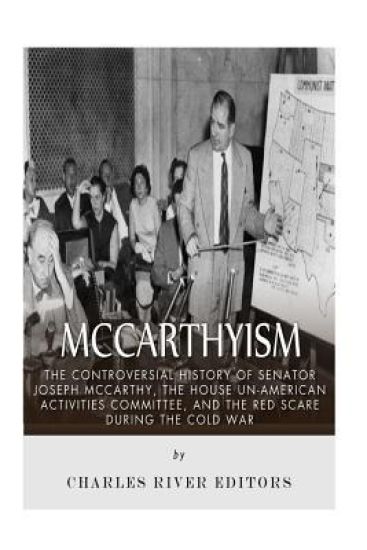
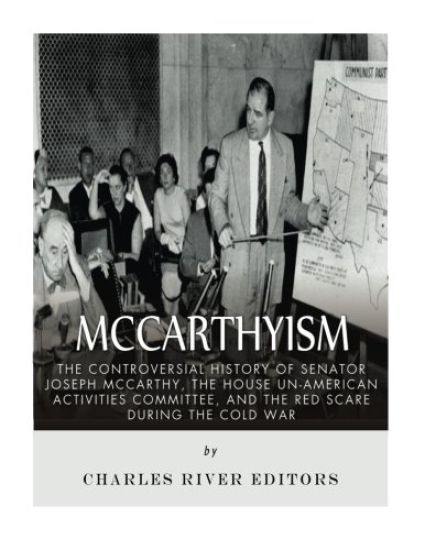
This book is a must-read for anyone studying and researching the rise and fall of Senator Joseph R. McCarthy and McCarthyism in American political life.Intolerance in America that targets alleged internal subversives controlled by external agents has a storied history that stretches hundreds of years. While the post-World War II "Red Scare" and the emergence of McCarthyism during the 1950s is the era commonly associated with American anticommunism, there was also a "First Red Scare" that occurred in 1919-1920. In both time periods, many Americans feared the radicalism of the left, and some of the most outspoken—like McCarthy—used slander to denounce their political enemies. The result was an atmosphere in which individual rights and liberties were at risk and hysteria prevailed.McCarthyism and the Red Scare: A Reference Guide tracks the rise and fall of Senator Joe McCarthy and the broad pursuit of domestic "Red" subversives in the post-World War II years, and focuses on how American society responded to real and perceived threats from the left during the first decade of the Cold War.
Kennedy Donovan loved living in the city. But when a mysterious envelope arrives in the mail describing her new inheritance from an estranged uncle, she finds herself in the Alaskan bush country facing more than just snow. Family secrets, life threatening blizzards, and the potential for love- Does Alaska offer Kennedy more than her life in New York?Adam Stockton moved to McCarthy, Alaska at fifteen years old. Thanks to Neal Donovan, he'd grown up and adjusted well to the Alaskan frontier. But when Neal's long-lost niece shows up to claim her inheritance after Neal's passing, Adam finds himself potentially losing his last tie to Neal as well as his heart. Can he show Kennedy that life in McCarthy is worth sticking out?
The firm of McCarter & Nairne dominated public architecture in Vancouver from the inception of the partnership between John Y. McCarter (1886-1981) and George C. Nairne (1884-1953) until the completion of the General Post Office in 1958. The respected background and experience of McCarter and Nairne reflected the localization of sophisticated trans-Atlantic architectural practice that both characterized their work and accounted for their success. The holdings of the Canadian Architectural Archives focus on the architecture of twentieth-century Canada and the work of its outstanding architects. The McCarter and Nairne Collection is a very important one within the CAA's holdings, as it is one of the few whose history begins in the twenties on the west coast. As such, it provides a historical context and complement to the CAA's other collections with west coast roots, like the Thompson Berwick Pratt, Arthur Erickson, and Ron Thom collections. It is hoped that this inventory, in both its arrangement and detailed information, will encourage both the appreciation and scholarly interest in one of the most historically significant collections at the Canadian Archtectural Archives.
This is a highly personal selection of photographs amassed by Mary McCartney, oldest child of The Beatles singer Paul McCartney. As the title suggests, it's split into two volumes: one for color and one for black and white images. The book shows McCartney's love for quiet, intimate moments off the beaten track but it also gives an extraordinary behind-the-scenes insight into the lives of celebrities. "I didn't put photos in for it to be a celebrity or non-celebrity," McCartney tells Time. "I am interested in shooting all different types of people. I find a lot of people inspirational. I'm interested in people, in their stories."
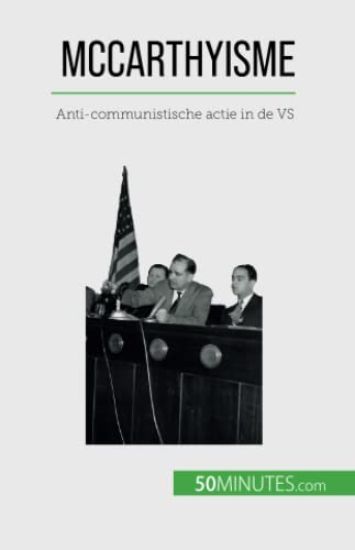
Het McCarthyisme, het hoogtepunt van de rode schrik die de Verenigde Staten vanaf de jaren twintig in zijn greep hield, is een bepalende episode in de naoorlogse Amerikaanse geschiedenis. Hoewel de heksenjacht niet begon met McCarthy, was het McCarthyisme de belichaming en het hoogtepunt ervan. Van 1950 tot 1954 dreef paranoia de Republikeinse Senator Joseph McCarthy tot een anticommunistisch beleid om vermeende communistische agenten, die infiltreerden in de federale macht, uit te schakelen. Miljoenen onderzoeken naar gewone burgers en de overheid resulteerden in de beperking van politieke meningsuiting en burgerrechten. Lees meer over deze periode in dit boek.
1920'lerden itibaren Amerika Birleşik Devletleri'ni saran kızıl korkunun doruk noktası olan McCarthycilik, savaş sonrası Amerikan tarihinin belirleyici bir b l m d r. Cadı avı McCarthy ile başlamamış olsa da, McCarthycilik onun somutlaşmış ve doruk noktası olmuştur. 1950'den 1954'e kadar paranoya, Cumhuriyet i Senat r Joseph McCarthy'yi federal g ce sızan s zde kom nist ajanları ortadan kaldırmaya y nelik bir anti-kom nist politikaya y neltti. Sıradan vatandaşlar ve h k met hakkında a ılan milyonlarca soruşturma, siyasi ifade ve sivil hakların kısıtlanmasıyla sonu landı. Bu d nem hakkında daha fazla bilgiyi bu kitapta bulabilirsiniz.
McCarthyismul, punctul culminant al fricii roșii care a cuprins Statele Unite ncep nd cu anii 1920, este un episod definitoriu n istoria americană postbelică. Deși v nătoarea de vrăjitoare nu a nceput cu McCarthy, McCarthyismul a fost ntruchiparea și punctul culminant al acesteia. ntre 1950 și 1954, paranoia l-a determinat pe senatorul republican Joseph McCarthy să aplice o politică anticomunistă de eliminare a presupușilor agenți comuniști care se infiltrau n puterea federală. Milioane de investigații asupra cetățenilor obișnuiți și a guvernului au dus la restricționarea discursului politic și a drepturilor civile. Citiți mai multe despre această perioadă n această carte.