Kirjojen hintavertailu. Mukana 12 016 292 kirjaa ja 12 kauppaa.

Kirjahaku

Etsi kirjoja tekijän nimen, kirjan nimen tai ISBN:n perusteella.

1000 tulosta hakusanalla Muhammad Anwar

Arabia Before Muhammad

Arabia Before Muhammad

De Lacy O'Leary

Routledge
2000
sidottu
First Published in 2000. This is Volume V of six of the Oriental series looking at Arabic History and Culture. It was written in 1927, the main purpose of this text is to show that Arabia, before the coming of Islam, was not a country secluded from the cultural influences of Western Asia, nor was it entirely cut off from contact with the political and social life of its neighbours in the Near East.
Arabia Before Muhammad

Arabia Before Muhammad

De Lacy O'Leary

Routledge
2012
nidottu
First Published in 2000. This is Volume V of six of the Oriental series looking at Arabic History and Culture. It was written in 1927, the main purpose of this text is to show that Arabia, before the coming of Islam, was not a country secluded from the cultural influences of Western Asia, nor was it entirely cut off from contact with the political and social life of its neighbours in the Near East.
The Biography of Muhammad

The Biography of Muhammad

Gregor Schoeler

Routledge
2010
sidottu
This book considers the Arabic biographies of Prophet Muhammad, the earliest of which dates from two centuries after his life. These biographies, prized by Muslims, have been approached in the Western study of Islam from a range of positions. Some scholars reject them entirely, seeing in them products of the Muslim community’s idealisation of its history, while others accept them at face value, reasoning that, if not exact versions of events, the events could not have differed too much from their descriptions. The author revisits the debate and reconsiders several key incidents in the life of the Prophet. By compiling an extensive corpus of materials and comparing them closely, this book analyses the transmission and the contents of the accounts. It shows that by understanding clearly the interaction in early Islam between written and oral modes of transmission, and by the judicious sieving of the accounts, as well as the lines of transmission, we can sometimes reach back to that generation of Muslims who though not themselves witness to the events were younger contemporaries of those who were. Establishing a solid basis for the informed study of Muhammad’s biography and adding to the ongoing debate, this book will appeal to scholars of early Islam, history and theology.
The Life of Muhammad
Muhammad b. ‘Umar al-Waqidi was a Muslim scholar, born in Medina in the 1st Century. Of his several writings the most significant is the Kitab al-Maghazi, one of the earliest standard histories of the life of the Prophet. Translated into English for the first time, Rizwi Faizer makes available this key text to a new, English-speaking audience. It includes an "Introduction" authored jointly by Rizwi Faizer and Andrew Rippin and a carefully prepared index. The book deals with the events of the Prophet’s life from the time of his emigration from Mecca to his death, and is generally considered to be biographical. Bringing together events in the Prophet’s life with appropriate passages of Qur’an in a considered sequence, the author presents an interpretation of Islam that existed in his times. It includes citations from the Qur’an, as well as poetry that appears to have been inspired by activities during his life. This English translation of a seminal text on the life of Muhammad is an invaluable addition to the existing literature, and will be of great significance to students and scholars in the field of Islamic studies, Islamic history, Medieval history and Arabic literature.
The Life of Muhammad
Muhammad b. ‘Umar al-Waqidi was a Muslim scholar, born in Medina in the 1st Century. Of his several writings the most significant is the Kitab al-Maghazi, one of the earliest standard histories of the life of the Prophet. Translated into English for the first time, Rizwi Faizer makes available this key text to a new, English-speaking audience. It includes an "Introduction" authored jointly by Rizwi Faizer and Andrew Rippin and a carefully prepared index. The book deals with the events of the Prophet’s life from the time of his emigration from Mecca to his death, and is generally considered to be biographical. Bringing together events in the Prophet’s life with appropriate passages of Qur’an in a considered sequence, the author presents an interpretation of Islam that existed in his times. It includes citations from the Qur’an, as well as poetry that appears to have been inspired by activities during his life. This English translation of a seminal text on the life of Muhammad is an invaluable addition to the existing literature, and will be of great significance to students and scholars in the field of Islamic studies, Islamic history, Medieval history and Arabic literature.
Who Was Muhammad Ali?

Who Was Muhammad Ali?

James Buckley

Grosset and Dunlap
2014
pokkari
He would go on to become the first and only three-time (in succession) World Heavyweight Champion. Nicknamed "The Greatest," Ali was as well known for his unique boxing style, consisting of the Ali Shuffle and the rope-a-dope, as he was for the catchphrase "float like a butterfly, sting like a bee." He was an uncompromising athlete who brought beauty and grace to a very rough sport and became one of the world's most famous cultural icons. Read Who Is Muhammad Ali? And discover "The Greatest.".
The Succession to Muhammad

The Succession to Muhammad

Wilferd Madelung

Cambridge University Press
1996
sidottu
In a comprehensive study of early Islamic history, Wilferd Madelung examines the conflict which developed after Muhammad’s death for the leadership of the Muslim community. He pursues the history of this conflict through the reign of the four ‘Rightly Guided’ caliphs to its climax in the first inter-Muslim war. The outcome of the war, which marked the demise of the reign of the Early Companions, resulted in the lasting schism between Sunnite and Shi’ite Islam. Contrary to recent scholarly trends, the author brings out Ali’s early claim to legitimate succession, which gained support from the Shi‘a, and offers a convincing reinterpretation of early Islamic history. This book will make a major contribution to the debate over succession. Wilferd Madelung’s book The Succession to Muhammad has been awarded the Best Book of the Year prize by the Islamic Republic of Iran for the year 1997.
The Succession to Muhammad

The Succession to Muhammad

Wilferd Madelung

Cambridge University Press
1998
pokkari
In a comprehensive study of early Islamic history, Wilferd Madelung examines the conflict which developed after Muhammad’s death for the leadership of the Muslim community. He pursues the history of this conflict through the reign of the four ‘Rightly Guided’ caliphs to its climax in the first inter-Muslim war. The outcome of the war, which marked the demise of the reign of the Early Companions, resulted in the lasting schism between Sunnite and Shi’ite Islam. Contrary to recent scholarly trends, the author brings out Ali’s early claim to legitimate succession, which gained support from the Shi‘a, and offers a convincing reinterpretation of early Islamic history. This book will make a major contribution to the debate over succession. Wilferd Madelung’s book The Succession to Muhammad has been awarded the Best Book of the Year prize by the Islamic Republic of Iran for the year 1997.
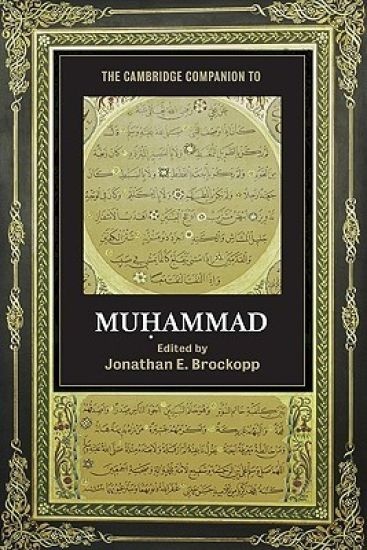
The Cambridge Companion to Muhammad

The Cambridge Companion to Muhammad

Cambridge University Press
2010
pokkari
As the Messenger of God, Muhammad stands at the heart of the Islamic religion, revered by Muslims throughout the world. The Cambridge Companion to Muhammad comprises a collection of essays by some of the most accomplished scholars in the field exploring the life and legacy of the Prophet. The book is divided into three sections, the first charting his biography and the milieu into which he was born, the revelation of the Qur'an, and his role within the early Muslim community. The second part assesses his legacy as a law-maker, philosopher, and politician and, finally, in the third part, chapters examine how Muhammad has been remembered across history in biography, prose, poetry, and, most recently, in film and fiction. Essays are written to engage and inform students, teachers, and readers coming to the subject for the first time. They will come away with a deeper appreciation of the breadth of the Islamic tradition, of the centrality of the role of the Prophet in that tradition, and, indeed, of what it means to be a Muslim today.
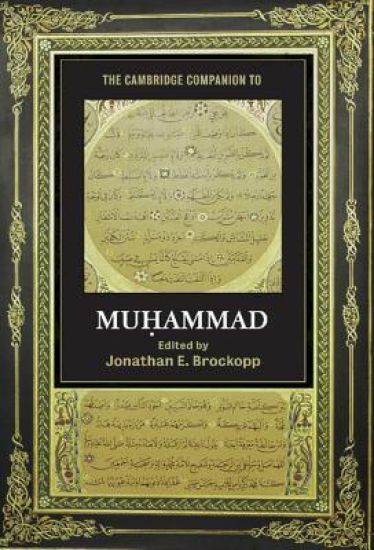
The Cambridge Companion to Muhammad

The Cambridge Companion to Muhammad

Cambridge University Press
2010
sidottu
As the Messenger of God, Muhammad stands at the heart of the Islamic religion, revered by Muslims throughout the world. The Cambridge Companion to Muhammad comprises a collection of essays by some of the most accomplished scholars in the field exploring the life and legacy of the Prophet. The book is divided into three sections, the first charting his biography and the milieu into which he was born, the revelation of the Qur'an, and his role within the early Muslim community. The second part assesses his legacy as a law-maker, philosopher, and politician and, finally, in the third part, chapters examine how Muhammad has been remembered across history in biography, prose, poetry, and, most recently, in film and fiction. Essays are written to engage and inform students, teachers, and readers coming to the subject for the first time. They will come away with a deeper appreciation of the breadth of the Islamic tradition, of the centrality of the role of the Prophet in that tradition, and, indeed, of what it means to be a Muslim today.
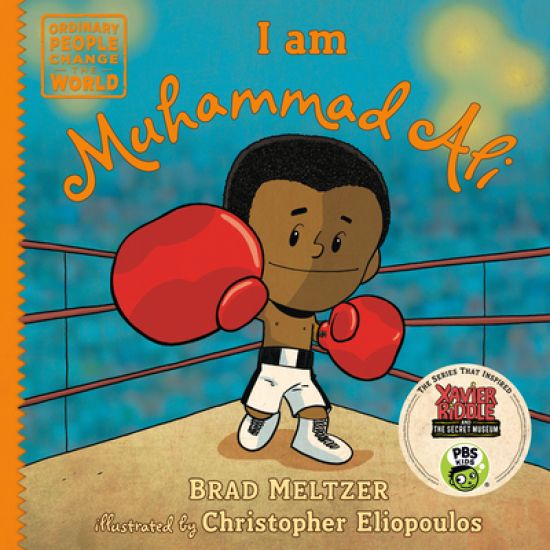
I am Muhammad Ali

I am Muhammad Ali

Brad Meltzer

Penguin Young Readers
2022
sidottu
The American boxing champ and vocal civil rights activist Muhammad Ali is the 27th hero in the New York Times bestselling picture book biography series for ages 5 to 8. Muhammad Ali was the leading heavyweight boxer of the 20th century and a charismatic, beloved public figure. His objection to the military draft during the Vietnam War made him an icon for a generation, and his impact in sports and the Civil Rights movement is still felt today. This friendly, fun biography series inspired the PBS Kids TV show Xavier Riddle and the Secret Museum. One great role model at a time, these books encourage kids to dream big. Included in each book are: • A timeline of key events in the hero’s history • Photos that bring the story more fully to life • Comic-book-style illustrations that are irresistibly adorable • Childhood moments that influenced the hero • Facts that make great conversation-starters • A virtue this person embodies: Muhammad Ali's confidence shines in this biography. You’ll want to collect each book in this dynamic, informative series!
The Passion of Muhammad Shakir

The Passion of Muhammad Shakir

William a. Meis Jr; Guillermo Bosch

Fallen Bros. Press
2013
nidottu
"The Passion of Muhammad Shakir" is a fable written by Guillermo Bosch, the critically acclaimed author of the political/erotic fantasy "Rain". The story details the final days of a horribly wounded prisoner undergoing interrogation, humiliation and degradation in a mysterious prison for a crime he may or may not have committed, as well as the memories that sustain him during his ordeal.
The Dao of Muhammad

The Dao of Muhammad

Zvi Ben-Dor Benite

Harvard University Press
2005
sidottu
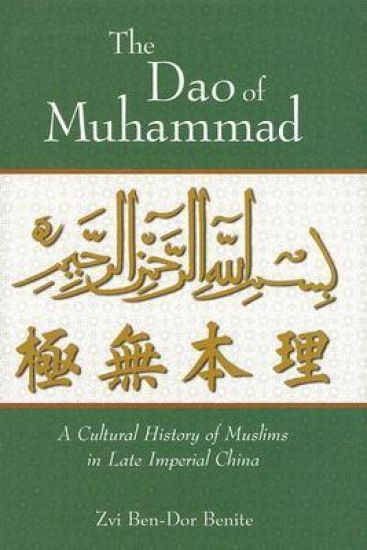
This book documents an Islamic–Confucian school of scholarship that flourished, mostly in the Yangzi Delta, in the seventeenth and eighteenth centuries. Drawing on previously unstudied materials, it reconstructs the network of Muslim scholars responsible for the creation and circulation of a large corpus of Chinese Islamic written material—the so-called Han Kitab. Against the backdrop of the rise of the Manchu Qing dynasty, The Dao of Muhammad shows how the creation of this corpus, and of the scholarly network that supported it, arose in a context of intense dialogue between Muslim scholars, their Confucian social context, and China’s imperial rulers.Overturning the idea that participation in Confucian culture necessitated the obliteration of all other identities, this book offers insight into the world of a group of scholars who felt that their study of the Islamic classics constituted a rightful “school” within the Confucian intellectual landscape. These men were not the first Muslims to master the Chinese Classics. But they were the first to express themselves specifically as Chinese Muslims and to generate foundation myths that made sense of their place both within Islam and within Chinese culture.
The Lives of Muhammad

The Lives of Muhammad

Kecia Ali

Harvard University Press
2016
nidottu
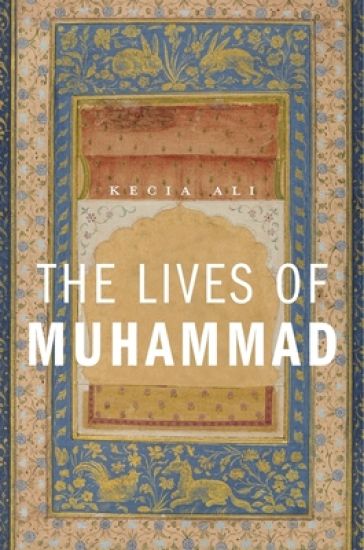
Recent outbursts sparked by a viral video and controversial cartoons powerfully illustrate the passions and sensitivities that continue to surround the depiction of the seventh-century founder of Islam. The Lives of Muhammad delves into the many ways the Prophet’s life story has been told from the earliest days of Islam to the present, by both Muslims and non-Muslims. Emphasizing the major transformations since the nineteenth century, Kecia Ali shows that far from being mutually opposed, these various perspectives have become increasingly interdependent.Since the nineteenth century, two separate streams of writing, one hagiographic and the other polemical, have merged into a single, contentious story about the life of Muhammad. Protestant missionaries, European Orientalists, Indian and Egyptian modernists, and American voices across the spectrum, including preachers, scholars, Islamophobes, journalists, academics, and new-age gurus, debated Muhammad’s character and the facts of his life. In the process, texts written symbolically came to be read literally. Muhammad’s accomplishments as a religious and political leader, his military encounters with Meccans and Medinan Jews, and—a subject of perennial interest—his relationships with women, including his young wife Aisha, are among the key subjects writers engaged, repurposing early materials for new circumstances.Many of the ideas about Muhammad that Muslims embrace today—Muhammad the social reformer, Muhammad the consummate leader, Muhammad the ideal husband—arose in tandem and in tension with Western depictions. These were in turn shaped by new ideas about religion, sexuality, and human accomplishments.
Medieval Latin Lives of Muhammad

Medieval Latin Lives of Muhammad

Julian Yolles

Harvard University Press
2018
sidottu
Throughout the Middle Ages, Christians wrote about Islam and the life of Muhammad. These stories, ranging from the humorous to the vitriolic, both informed and warned audiences about what was regarded as a schismatic form of Christianity. Medieval Latin Lives of Muhammad covers nearly five centuries of Christian writings on the prophet, including accounts from the farthest-flung reaches of medieval Europe, the Iberian Peninsula, and the Byzantine Empire. Over time, authors portrayed Muhammad in many guises, among them: Theophanes’s influential ninth-century chronicle describing the prophet as the heretical leader of a Jewish conspiracy; Embrico of Mainz’s eleventh-century depiction of Muhammad as a former slave who is manipulated by a magician into performing unholy deeds; and Walter of Compiègne’s twelfth-century presentation of the founder of Islam as a likable but tricky serf ambitiously seeking upward social mobility.The prose, verse, and epistolary texts in Medieval Latin Lives of Muhammad help trace the persistence of old clichés as well as the evolution of new attitudes toward Islam and its prophet in Western culture. This volume brings together a highly varied and fascinating set of Latin narratives and polemics never before translated into English.
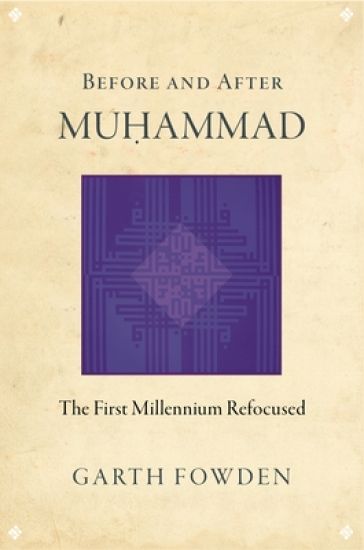
Before and After Muhammad

Before and After Muhammad

Garth Fowden

Princeton University Press
2013
sidottu
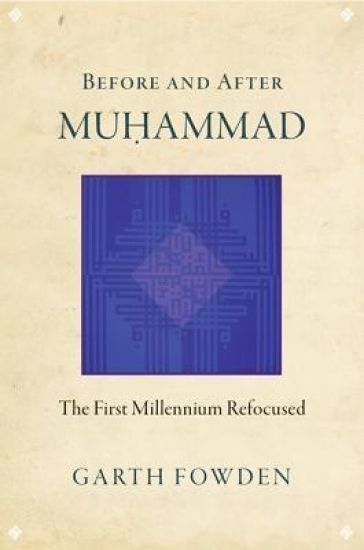
Islam emerged amid flourishing Christian and Jewish cultures, yet students of Antiquity and the Middle Ages mostly ignore it. Despite intensive study of late Antiquity over the last fifty years, even generous definitions of this period have reached only the eighth century, whereas Islam did not mature sufficiently to compare with Christianity or rabbinic Judaism until the tenth century. Before and After Muhammad suggests a new way of thinking about the historical relationship between the scriptural monotheisms, integrating Islam into European and West Asian history. Garth Fowden identifies the whole of the First Millennium--from Augustus and Christ to the formation of a recognizably Islamic worldview by the time of the philosopher Avicenna--as the proper chronological unit of analysis for understanding the emergence and maturation of the three monotheistic faiths across Eurasia. Fowden proposes not just a chronological expansion of late Antiquity but also an eastward shift in the geographical frame to embrace Iran. In Before and After Muhammad, Fowden looks at Judaism, Christianity, and Islam alongside other important developments in Greek philosophy and Roman law, to reveal how the First Millennium was bound together by diverse exegetical traditions that nurtured communities and often stimulated each other.
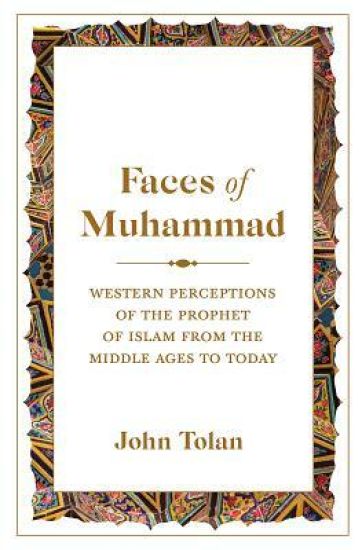
Faces of Muhammad

Faces of Muhammad

John Tolan

PRINCETON UNIVERSITY PRESS
2019
sidottu
Heretic and impostor or reformer and statesman? The contradictory Western visions of MuhammadIn European culture, Muhammad has been vilified as a heretic, an impostor, and a pagan idol. But these aren’t the only images of the Prophet of Islam that emerge from Western history. Commentators have also portrayed Muhammad as a visionary reformer and an inspirational leader, statesman, and lawgiver. In Faces of Muhammad, John Tolan provides a comprehensive history of these changing, complex, and contradictory visions. Starting from the earliest calls to the faithful to join the Crusades against the “Saracens,” he traces the evolution of Western conceptions of Muhammad through the Reformation, the Enlightenment, and the nineteenth and twentieth centuries, and up to the present day.Faces of Muhammad reveals a lengthy tradition of positive portrayals of Muhammad that many will find surprising. To Reformation polemicists, the spread of Islam attested to the corruption of the established Church, and prompted them to depict Muhammad as a champion of reform. In revolutionary England, writers on both sides of the conflict drew parallels between Muhammad and Oliver Cromwell, asking whether the prophet was a rebel against legitimate authority or the bringer of a new and just order. Voltaire first saw Muhammad as an archetypal religious fanatic but later claimed him as an enemy of superstition. To Napoleon, he was simply a role model: a brilliant general, orator, and leader.The book shows that Muhammad wears so many faces in the West because he has always acted as a mirror for its writers, their portrayals revealing more about their own concerns than the historical realities of the founder of Islam.
Before and After Muhammad

Before and After Muhammad

Garth Fowden

Princeton University Press
2015
pokkari
Islam emerged amid flourishing Christian and Jewish cultures, yet students of Antiquity and the Middle Ages mostly ignore it. Despite intensive study of late Antiquity over the last fifty years, even generous definitions of this period have reached only the eighth century, whereas Islam did not mature sufficiently to compare with Christianity or rabbinic Judaism until the tenth century. Before and After Muhammad suggests a new way of thinking about the historical relationship between the scriptural monotheisms, integrating Islam into European and West Asian history. Garth Fowden identifies the whole of the First Millennium--from Augustus and Christ to the formation of a recognizably Islamic worldview by the time of the philosopher Avicenna--as the proper chronological unit of analysis for understanding the emergence and maturation of the three monotheistic faiths across Eurasia. Fowden proposes not just a chronological expansion of late Antiquity but also an eastward shift in the geographical frame to embrace Iran. In Before and After Muhammad, Fowden looks at Judaism, Christianity, and Islam alongside other important developments in Greek philosophy and Roman law, to reveal how the First Millennium was bound together by diverse exegetical traditions that nurtured communities and often stimulated each other.
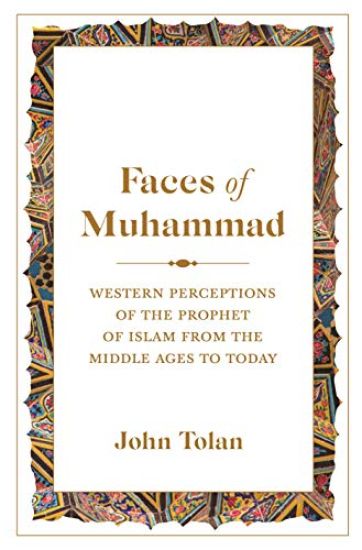
Faces of Muhammad

Faces of Muhammad

John Tolan

PRINCETON UNIVERSITY PRESS
2025
pokkari
Heretic and impostor or reformer and statesman? The contradictory Western visions of MuhammadIn European culture, Muhammad has been vilified as a heretic, an impostor, and a pagan idol. But these aren’t the only images of the Prophet of Islam that emerge from Western history. Commentators have also portrayed Muhammad as a visionary reformer and an inspirational leader, statesman, and lawgiver. In Faces of Muhammad, John Tolan provides a comprehensive history of these changing, complex, and contradictory visions. Starting from the earliest calls to the faithful to join the Crusades against the “Saracens,” he traces the evolution of Western conceptions of Muhammad through the Reformation, the Enlightenment, and the nineteenth and twentieth centuries, and up to the present day.Faces of Muhammad reveals a lengthy tradition of positive portrayals of Muhammad that many will find surprising. To Reformation polemicists, the spread of Islam attested to the corruption of the established Church, and prompted them to depict Muhammad as a champion of reform. In revolutionary England, writers on both sides of the conflict drew parallels between Muhammad and Oliver Cromwell, asking whether the prophet was a rebel against legitimate authority or the bringer of a new and just order. Voltaire first saw Muhammad as an archetypal religious fanatic but later claimed him as an enemy of superstition. To Napoleon, he was simply a role model: a brilliant general, orator, and leader.The book shows that Muhammad wears so many faces in the West because he has always acted as a mirror for its writers, their portrayals revealing more about their own concerns than the historical realities of the founder of Islam.