What really differentiates us from our relatives in the animal world? And what can they teach us about ourselves? Taking these questions as his starting point, Norbert Sachser presents fascinating insights into the inner lives of animals, revealing what we now know about their thoughts, feelings and behaviour. By turns surprising, humourous and thought-provoking, Much Like Us invites us on a journey around the animal kingdom, explaining along the way how dogs demonstrate empathy, why chimpanzees wage war and how crows and ravens craft tools to catch food. Sachser brings the science to life with examples and anecdotes drawn from his own research, illuminating the vast strides in understanding that have been made over the last 30 years. He ultimately invites us to challenge our own preconceptions – the closer we look, the more we see the humanity in our fellow creatures.
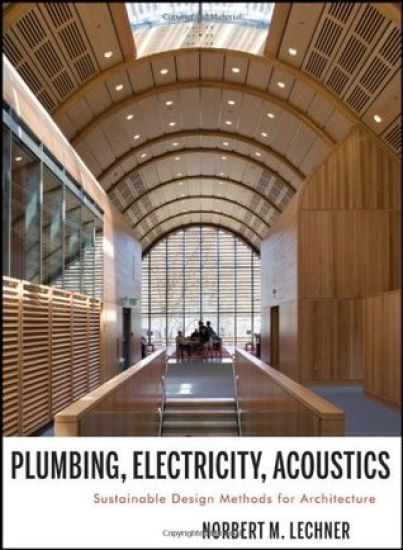
Discover sustainable methods for designing crucial building systems for architects. This indispensable companion to Norbert Lechner's landmark volume Heating, Cooling, Lighting: Sustainable Design Methods for Architects, Third Edition completes the author's mission to cover all topics in the field of sustainable environmental control. It provides knowledge appropriate for the level of complexity needed at the schematic design stage and presents the most up-to-date information available in a concise, logical, accessible manner and arrangement. Although sustainability deals with many issues, those concerning energy and efficiency are the most critical, making an additional goal of this book one of providing architects with the skills and knowledge needed to create buildings that use electricity and water efficiently. Guidelines and rules-of-thumb are provided to help designers make their buildings use less energy, less water, and less of everything else to achieve their primary objectives. In addition, this book: Addresses ways to reduce electricity usage through more efficient lighting systems and appliances and by incorporating automatic switches and control systems that turn off systems not in use.Covers the design of well-planned effluent treatment systems that protect against potential health hazards while also becoming a valuable source of reclaimed water and fertilize.rProvides coverage of fire protection and conveyance systems, including very efficient types of elevators and escalators and designs that encourage the use of stairs or ramps. Complete with case studies that illustrate how these systems are incorporated into large-project plans, Plumbing, Electricity, Acoustics is an indispensable resource for any architect involved in a sustainable design project.
The only manual for faculty and staff who work directly with student organizations Advising Student Groups and Organizations is a one-of-a-kind book that equips faculty members and administrators to competently and confidently serve as advisers to clubs and other student groups. The second edition is here to help colleges and universities keep up with the skyrocketing number of student groups and shifts in the legal landscape. New chapters on crucial topics, updated case studies, and a full suite of practical resources simplify the process of navigating student organizations. With Advising Student Groups and Organizations, educators can turn the chore of advising into a rewarding activity that benefits everyone. Challenges like student apathy, university politics, and budgetary restrictions can be overcome with the ideas and activities presented here. And in this fully updated edition, new chapters contain everything you need to know about: Advising fraternities and sororitiesNavigating laws such as FERPA, Title IX, and the Clery ActWorking with online distance students and using social media as an advising toolConflict mediation and training student advisors You'll want to keep this guide handy so you can take advantage of tools like reflection questions, activities, checklists, and sample forms. Advising Student Groups and Organizations even covers the use of assessments such as True Colors and StrengthsFinder. Now you'll be able to cut through bureaucracy to make the student advising experience truly transformative.
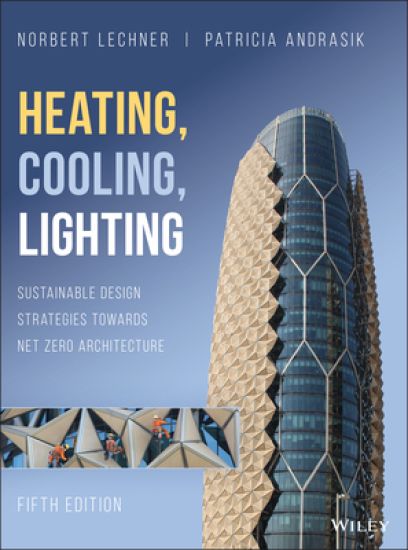
The essential guide to environmental control systems in building design For over 25 years Heating, Cooling, Lighting: Sustainable Design Strategies Towards Net Zero Architecture has provided architects and design professionals the knowledge and tools required to design a sustainable built environment at the schematic design stage. This Fifth Edition offers cutting-edge research in the field of sustainable architecture and design and has been completely restructured based on net zero design strategies. Reflecting the latest developments in codes, standards, and rating systems for energy efficiency, Heating, Cooling, Lighting: Sustainable Design Strategies Towards Net Zero Architecture includes three new chapters: Retrofits: Best practices for efficient energy optimization in existing buildingsIntegrated Design: Strategies for synergizing passive and active designDesign Tools: How to utilize the best tools to benchmark a building's sustainability and net zero potential Heating, Cooling, Lighting: Sustainable Design Strategies Towards Net Zero Architecture is a go-to resource for practicing professionals and students in the fields of environmental systems technology or design, environmental design systems, construction technology, and sustainability technology.
This book delves into the diverse prerequisites for grounding and earthing in contemporary ship power systems, addressing the evolving landscape of ship design influenced by power electronics The introduction of transformative technologies such as variable frequency drives and electric propulsion systems has heightened the complexity of shipboard grounding systems. This complexity necessitates accommodation for robust electronic systems, extending the focus beyond traditional grounding aspects to include common mode grounding and its profound design implications. Engineers now require a comprehensive guide to navigate the intricacies of shipboard electric power systems. To meet this imperative, Design of Shipboard Power System Grounding/Earthing provides an in-depth exploration of the subject. It offers a step-by-step initiation into the grounding process, supported by numerous case studies for enhanced comprehension. Aligned with both US and international standards, this book serves as an essential resource for engineers engaged in the design and implementation of shipboard power systems. Key highlights for readers encompass meticulous comparisons between terrestrial power system grounding and shipboard power grounding, as well as comprehensive discussions on high resistance grounding, shipboard AC system grounding requirements, DC system grounding, and more, including common mode grounding and earthing. The inclusion of abundant engineering drawings supports significant case studies, enhancing the practical application of the material. Designed to cater to a broad audience, Design of Shipboard Power System Grounding/Earthing is invaluable for readers involved with shipboard electrical systems, including shipbuilders, ship designers, ship operators, and those in regulatory bodies such as the Navy, USCG, ABS, among others. This resource is also well-suited for academicians, particularly final-year undergraduate and graduate students in marine electrical engineering programs.
The law serves a function that is not often taken seriously enough by ethicists, namely practicability. A consequence of practicability is that law requires elaborated and explicit methodologies that determine how to do things with norms. This consequence forms the core idea behind this book, which employs methods from legal theory to inform and examine debates on methodology in applied ethics, particularly bioethics. It is argued that almost all legal methods have counterparts in applied ethics, which indicates that much can be gained from comparative study of the two. The author first outlines methods as used in legal theory, focusing on deductive reasoning with statutes as well as analogical reasoning with precedent cases. He then examines three representative kinds of contemporary ethical theories, Beauchamp and Childress’s principlism, Jonsen and Toulmin’s casuistry, and two versions of consequentialism—Singer’s preference utilitarianism and Hooker’s rule-consequentialism—with regards to their methods. These examinations lead to the Morisprudence Model for methods in applied ethics.
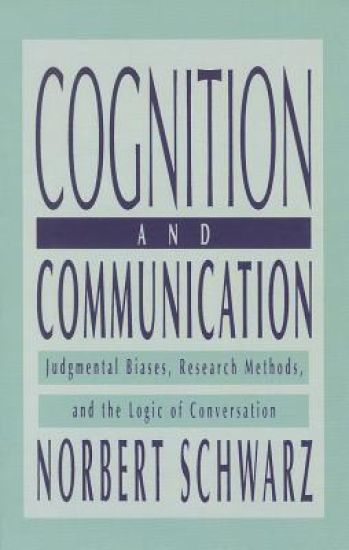
Psychological research into human cognition and judgment reveals a wide range of biases and shortcomings. Whether we form impressions of other people, recall episodes from memory, report our attitudes in an opinion poll, or make important decisions, we often get it wrong. The errors made are not trivial and often seem to violate common sense and basic logic. A closer look at the underlying processes, however, suggests that many of the well known fallacies do not necessarily reflect inherent shortcomings of human judgment. Rather, they partially reflect that research participants bring the tacit assumptions that govern the conduct of conversation in daily life to the research situation. According to these assumptions, communicated information comes with a guarantee of relevance and listeners are entitled to assume that the speaker tries to be informative, truthful, relevant, and clear. Moreover, listeners interpret the speakers' utterances on the assumption that they are trying to live up to these ideals. This book introduces social science researchers to the "logic of conversation" developed by Paul Grice, a philosopher of language, who proposed the cooperative principle and a set of maxims on which conversationalists implicitly rely. The author applies this framework to a wide range of topics, including research on person perception, decision making, and the emergence of context effects in attitude measurement and public opinion research. Experimental studies reveal that the biases generally seen in such research are, in part, a function of violations of Gricean conversational norms. The author discusses implications for the design of experiments and questionnaires and addresses the socially contextualized nature of human judgment.
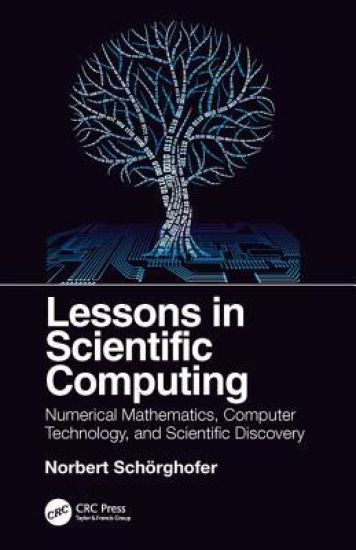
Taking an interdisciplinary approach, this new book provides a modern introduction to scientific computing, exploring numerical methods, computer technology, and their interconnections, which are treated with the goal of facilitating scientific research across all disciplines. Each chapter provides an insightful lesson and viewpoints from several subject areas are often compounded within a single chapter. Written with an eye on usefulness, longevity, and breadth, Lessons in Scientific Computing will serve as a "one stop shop" for students taking a unified course in scientific computing, or seeking a single cohesive text spanning multiple courses.Features:Provides a unique combination of numerical analysis, computer programming, and computer hardware in a single textIncludes essential topics such as numerical methods, approximation theory, parallel computing, algorithms, and examples of computational discoveries in science Not wedded to a specific programming language
Taking an interdisciplinary approach, this new book provides a modern introduction to scientific computing, exploring numerical methods, computer technology, and their interconnections, which are treated with the goal of facilitating scientific research across all disciplines. Each chapter provides an insightful lesson and viewpoints from several subject areas are often compounded within a single chapter. Written with an eye on usefulness, longevity, and breadth, Lessons in Scientific Computing will serve as a "one stop shop" for students taking a unified course in scientific computing, or seeking a single cohesive text spanning multiple courses.Features:Provides a unique combination of numerical analysis, computer programming, and computer hardware in a single textIncludes essential topics such as numerical methods, approximation theory, parallel computing, algorithms, and examples of computational discoveries in science Not wedded to a specific programming language
This second edition of Concrete Pavement Design, Construction, and Performance provides a solid foundation for pavement engineers seeking relevant and applicable design and construction instruction. It relies on general principles instead of specific ones, and incorporates illustrative case studies and prime design examples to highlight the material. It presents a thorough understanding of materials selection, mixture proportioning, design and detailing, drainage, construction techniques, and pavement performance. It also offers insight into the theoretical framework underlying commonly used design procedures as well as the limits of the applicability of the procedures. All chapters have been updated to reflect recent developments, including some alternative and emerging design technologies that improve sustainability.What’s New in the Second Edition:The second edition of this book contains a new chapter on sustainability, and coverage of mechanistic-empirical design and pervious concrete pavements. RCC pavements are now given a new chapter. The text also expands the industrial pavement design chapter. Outlines alternatives for concrete pavement solutionsIdentifies desired performance and behavior parametersEstablishes appropriate materials and desired concrete proportionsPresents steps for translating the design into a durable facilityThe book highlights significant innovations such as one is two-lift concrete pavements, precast concrete pavement systems, RCC pavement, interlocking concrete pavers, thin concrete pavement design, and pervious concrete. This text also addresses pavement management, maintenance, rehabilitation, and overlays.
This book reconsiders the notion of liminality in postcolonial critical discourse today. By visiting Mashriqi writers of memoir, Bugeja offers a unique intervention in the understanding of 'in-between' and ‘threshold’ states in present-day postcolonialist thought. His analysis situates liminal space as a fraught form of consciousness that mediates between conditions of historical contingency and the memorializing present. Within the present Mashriqi memoir form, liminal spaces may be read as articulations of 'representational spaces' — narrative spaces that, based as they are within the histories of local communities, are nonetheless redolent with memorial and imaginary elements. Liminal consciousness today, Bugeja argues, is a direct consequence of the impact of volatile present-day memories on the re-conception of the open wounds of history. Incisive readings of life-writings by Mourid Barghouti, Amin Maalouf, Orhan Pamuk, Amos Oz, and Wadad Makdisi Cortas demonstrate the double-edged representational chasm that opens up when present acts of memorializing are brought to bear upon the elusive histories of the early-twentieth-century Mashriq. Sifting through the wide-ranging theoretical literature on liminality and challenging received views of the concept, this book proposes a nuanced, materialist, and original rethinking of the liminal as a more vigilant outlook onto the political, literary and historical predicaments of the contemporary Middle East.
Individualisation has become an ambiguous, but defining feature of late modern societies and while it is in part characterised by an increase in individual autonomy and a sense of liberation, individuals are equally required to negotiate a fragmented, pluralised and ambiguous social order by themselves. This book sheds light on the processes and nature of contemporary individualisation, specifically exploring the manner in which it unfolds under conditions of contemporary network capitalism. With attention to the modern workplace, where the individual and the organisation meet directly, but also in the wider community, Individualisation at Work reveals individualisation to become an ideological and ambiguous process of liberation, as conditions of marketisation and corporatisation transform the emancipatory qualities and motivations that define individualisation into a means for the coordination and reproduction of systemic imperatives, which are realised by individuals' qualities and capacities for self-realisation. A rigorous theoretical study, illustrated with interview material gathered amongst managers from internationally operating corporations, this book will appeal to sociologists with interests in work and organisations and the theory of contemporary modernity.
First published in 1999, this volume combines the theory and practice of regional economic policy in Europe. Six main topics are covered as follows: theory of regional economic development and policy; Regional policy at the national level; Regional disparities in the EU – past and present; Impact of the integration on regions; Regional policy in the EU 1975-1999; The structural funds 2000-2006 and openness to Eastern European countries. The book also includes an up-to-date bibliography on the topic covered.
First published in 1999, this volume combines the theory and practice of regional economic policy in Europe. Six main topics are covered as follows: theory of regional economic development and policy; Regional policy at the national level; Regional disparities in the EU – past and present; Impact of the integration on regions; Regional policy in the EU 1975-1999; The structural funds 2000-2006 and openness to Eastern European countries. The book also includes an up-to-date bibliography on the topic covered.
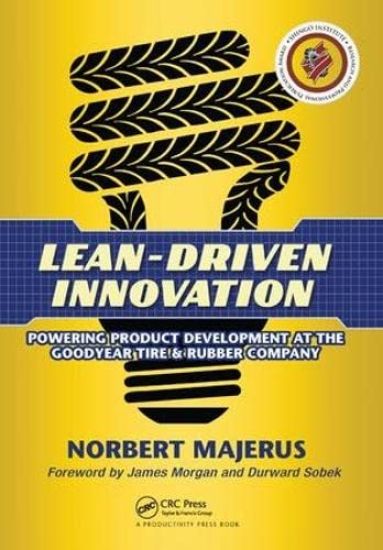
In 2005, Goodyear?s research and development (RandD) engine was not performing up to its full potential. The RandD organization developed high-quality tires, but the projects were not always successful. Goodyear embarked on a major initiative to transform its innovation creation processes by learning, understanding, and applying lean product development principles. Within five years, Goodyear saw its product development cycle times slashed by 70 percent, on-time delivery performance rise close to 100 percent, and throughput improve three-fold ? all achieved with no increase in the RandD budget.Lean-Driven Innovation: Powering Product Development at The Goodyear Tire and Rubber Company describes in great detail how the Goodyear team was able to achieve such significant improvements. Revealing the ups and downs of this successful transformation, the book shares experiences of how this seismic change was managed, how people were engaged, and how Goodyear dramatically reinvigorated its product development and innovation processes?and, in the process, delivered substantial more value to customers and to the company.The book also explains how lean product development helped Goodyear dramatically improve revenue by having every new product available when the market needed it. Presenting wide-ranging perspectives from all levels of leadership, this book is ideal for anyone in RandD daring to take on a lean initiative in RandD or who is struggling with a lean transformation that is not delivering to its full potential. Since the book focuses on universal lean principles, it is as insightful to other manufacturing and nonmanufacturing disciplines in any industry as well.The book presents invaluable insights gained by the author during his 36 years within Goodyear, of which 10 have been directly involved in trying to develop, implement, and sustain lean to achieve the company?s business objectives. It distills ideas, prac
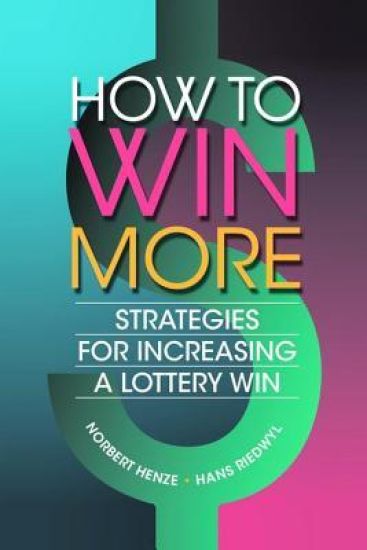
This book is designed to provide valuable insight into how to improve the return on your investment when playing the lottery. While it does not promise that you will win more often, it does show you how to improve the odds of winning larger amounts when your numbers do come up. So, when you do win that million-dollar jackpot, you will be less likely to have to share it with anyone else. Among the intriguing topics covered are the most popular (and the most foolish) combinations of numbers, why it is impossible to improve the odds of any legitimate lottery, how popular (and thus unprofitable) an attractive-looking ticket might be, why not to follow the suggested numbers from so-called "expert advisors" and why it is important to avoid winning combinations of past drawings. With this book and a little luck, the dream of winning millions might just come true.
This title was first published in 2003. The Baltic Sea region offers exceptionally rich material for the discussion of civil society. This is because it has witnessed the erosion of communist regimes, the crisis of the welfare state, the increasing importance of new social movements and the shift from a centralist paradigm to one oriented towards networks. This engaging book focuses on the phenomena and prospects for civil society in north-eastern Europe which have had a major impact on political and scholarly debates since 1989. Nineteen experts from the region provide a comprehensive and comparative account of the history, the present state and the perspectives of civil society in the Baltic Sea area. The reader will learn that civil society should not only be seen in opposition to the state and that it has a major impact on current developments of European integration.