Kirjojen hintavertailu. Mukana 12 390 323 kirjaa ja 12 kauppaa.

Kirjahaku

Etsi kirjoja tekijän nimen, kirjan nimen tai ISBN:n perusteella.

1000 tulosta hakusanalla Pamela Cook

The Invention of the Renaissance Woman

The Invention of the Renaissance Woman

Pamela J. Benson

Pennsylvania State University Press
1992
pokkari
During the Renaissance the nature of womankind was a major topic of debate. Numerous dialogues, defenses, paradoxes, and tributes devoted to sustaining woman's excellence were published, and in them history was rewritten to include the achievements of womankind. Often these texts demonstrate that women are capable of acting with prudence, temperance, fortitude, and justice, and thus are capable of being independent of male political and moral authority. Pamela Benson argues that the writers use literary means (genre, characterization, narrator, paradox, plot) to defeat the political challenge posed by female independence and to restrain women within a traditional role. The Invention of the Renaissance Woman is a study of the literary strategies used both to create the notion of the independent woman and to restrain her. Traditionally, the profeminism of most of these texts has not been taken seriously because their playful or extreme styles have been read as a sign that they were nothing but a game. Benson demonstrates that the flamboyant and frequently paradoxical style of these texts is the key to their successful profeminism. She defines the literary and conceptual differences between the Italian and English traditions and argues that two of the greatest literary works of the Renaissance, the Orlando furioso and The Faerie Queene, are major texts in the tradition of defense and praise of women. The Inventions of the Renaissance Women is the first substantial contextual discussion of the majority of the Italian texts and many of the English ones. Benson uses the insights of feminist theory and of cultural studies without subordinating the Renaissance texts to a modern political agenda. Among the authors discussed are Spenser, Boccaccio, Ariosto, Castiglione, Vespasiano da Bisticci, Thomas More, Thomas Elyot, Juan Luis Vives, Richard Hyrde, Jane Anger, and Henry Howard.

Everyday Life in the German Book Trade

Everyday Life in the German Book Trade

Pamela E. Selwyn

Pennsylvania State University Press
2000
pokkari
In his popular book The Germans (1982), Stanford historian Gordon Craig remarked: "When German intellectuals at the end of the eighteenth century talked of living in a Frederican age, they were sometimes referring not to the monarch in Sans Souci, but to his namesake, the Berlin bookseller Friedrich Nicolai." Such was the importance attributed to Nicolai’s role in the intellectual life of his age by his own contemporaries.While long neglected by students of the period, who tended to accept the caricature of him as a philistine who failed to recognize Goethe’s genius, Nicolai has experienced a resurgence of interest among scholars reexploring the German Enlightenment and the literary marketplace of the eighteenth century.This book, drawing upon Nicolai’s large unpublished correspondence, rounds out the picture we have of Nicolai already as author and critic by focusing on his roles as bookseller and publisher and as an Aufkärer in the book trade.
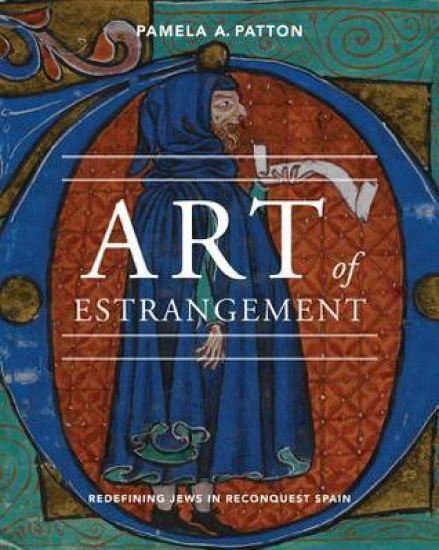
Art of Estrangement

Art of Estrangement

Pamela A. Patton

Pennsylvania State University Press
2012
sidottu
At its peak in the twelfth and thirteenth centuries, the so-called Spanish Reconquest transformed the societies of the Iberian Peninsula at nearly every level. Among the most vivid signs of this change were the innovative images developed by Christians to depict the subjugated Muslims and Jews within their vastly expanded kingdoms. In Art of Estrangement, Pamela Patton traces the transformation of Iberia’s Jews in the visual culture of Spain’s Christian-ruled kingdoms as those rulers strove to affiliate with mainstream Europe and distance themselves from an uncomfortably multicultural past.Art of Estrangement scrutinizes a wide range of works—from luxury manuscripts and cloister sculptures to household ceramics and scribal doodles—to show how imported and local motifs were brought together to articulate and reinforce the efforts of Spain’s Christian communities to renegotiate their relationships with a vibrant Jewish minority. The arsenal of stereotypes, symbols, and narratives deployed to characterize Jews and their changing social roles often paralleled those found in contemporaneous literature and folklore; they ranged from such time-honored European formulae as the greedy usurer and the “Jewish nose” to locally resonant conflations of Jews with Muslims. The book’s close, contextualized reading of works from the late twelfth through early fourteenth centuries draws on recent scholarship in Iberian history, religion, and cultural studies, shedding new light on the delicate processes by which communal and religious identities were negotiated in medieval Spain.
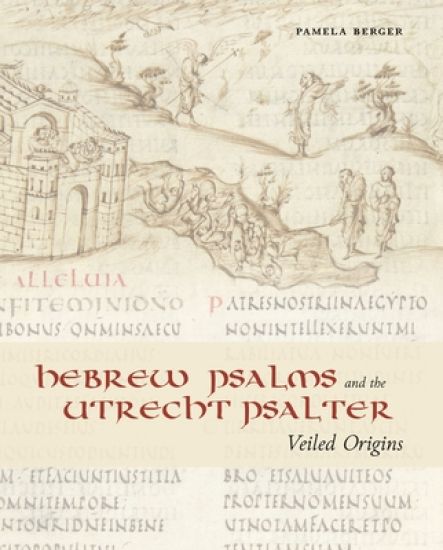
Hebrew Psalms and the Utrecht Psalter

Hebrew Psalms and the Utrecht Psalter

Pamela Berger

Pennsylvania State University Press
2020
sidottu
In a major departure from previous scholarship, this volume argues that the illustrations in the famous and widely influential Utrecht Psalter manuscript were inspired by a late antique Hebrew version of Psalms, rather than a Latin, Christian version of the text.Produced during the early ninth century in a workshop near Reims, France, the Utrecht Psalter is illustrated with pen-and-ink drawings in a lively style reminiscent of Hellenistic art. The motifs are largely literal renditions of words and phrases found in the book of Psalms. However, more than three dozen motifs cannot be explained by either the Latin text that accompanies the imagery or the commentaries of the church fathers. Through a close reading of the Hebrew Psalms, Pamela Berger demonstrates that these motifs can be explained only by the Hebrew text, the Jewish commentary, or Jewish art. Drawing comparisons between the “Hellenistic” style of the Psalter images and the style of late antique Galilean mosaics and using evidence from recent archaeological discoveries, Berger argues that the model for those Psalter illustrations dependent on the Hebrew text was produced in the Galilee.Pioneering and highly persuasive, this book resolves outstanding issues surrounding the origins of one of the most extensively studied illuminated manuscripts. It will be mandatory reading for many historians of medieval art and literature and for those interested in the Hebrew text of the book of Psalms.
Minority Group Threat, Crime, and Policing

Minority Group Threat, Crime, and Policing

Pamela Irving Jackson

Praeger Publishers Inc
1989
sidottu
Jackson's expertise shines in this innovative analysis of the link between social inequality and law enforcement efforts. The research connects the level of conflict characterizing majority-minority relations to the level of financial investment in police resources. . . . Readers will find scholarly attention to theory, responsible implications for policy, and a careful diagnosis of the limits to law enforcement, along with a bibliography that reflects the cutting edge of research. This book should be available wherever a program in criminology, stratification, or criminal justice studies exists. ChoiceIn a major contribution to the criminology literature, Pamela Irving Jackson examines the societal expectations for police work--from national, regional, and local perspectives--and attempts to identify the conflicts within these expectations. Basing her study upon quantitative analysis of the determinants of police spending in cities throughout the United States during the 1970s, Jackson demonstrates that the history, traditions, socioeconomic traits, and racial and ethnic population mix characteristic of each social context influence the expectations set for police officers and the support they are accorded. An exploration of newspapers' treatment of the police and issues of police/minority relations in selected cities adds depth to the analysis by providing the public perspective on policing and its variations by location and time period.The author's central thesis is that the mobilization of municipal police resources in the early 1970s was influenced by the size of the minority population in the city, especially in locations of historical tension in minority/majority relations. By the end of the decade, Jackson shows, the impact of minority threat in determining municipal police appropriations had changed in form and focus and there developed a new awareness of the role of police and a corresponding recognition of the stress under which individual officers operate. Her conclusions regarding the effect of unrealistic expectations on the overall performance of police work offer an important counterweight to arguments that the police failed to control escalating crime or resort too often to violence in the performance of of their duties. An excellent supplementary text for courses in criminology, criminal justice, and sociology, this book offers a realistic appraisal of the limits of police work that will enable policymakers and the police themselves to make a more accurate determination of the situation in which police work can be most useful.
Witnessing for Sociology

Witnessing for Sociology

Pamela J. Jenkins; J.S. Kroll-Smith

Praeger Publishers Inc
1996
sidottu
The American court system is making increasing use of sociologists as expert witnesses. From toxic torts to religious cults and brainwashing, sociological knowledge is becoming increasingly more commonplace in the legal arena. This edited volume is a collection of the experiences of sociologists who have appeared as expert witnesses in a variety of court cases. Many of the cases covered in this book revolve around central issues of murder, self-defense, religious cults, battered women, child pornography, environmentalism, and homelessness. This volume is unique in its breadth of topics and contributions.
From Disadvantaged Girls to Successful Women

From Disadvantaged Girls to Successful Women

Pamela C. LePage

Praeger Publishers Inc
1997
sidottu
This book's most important goal is to explore styles of teaching and learning that can promote resiliency among women from disadvantaged backgrounds. These findings can be useful in affecting policy decisions as professionals begin the process of restructuring our educational system to meet the needs of a diverse student population. Higher education is now attempting to attract and encourage varied students and this book will provide educators with information not only about how to educate women from difficult backgrounds, but how women in this population have felt about their past, their success, and their schooling. The author provides insights into what disadvantaged women need and want from schools.The author conducted in-depth interviews with 21 academically high achieving women who were also disadvantaged as children, having faced multiple risk factors. Qualitative measures were used to explore how our education system has either assisted these women in their achievement or set up barriers to their success. The interpretations, however, go beyond simply listing what was good and bad in these women's education experiences. The results suggest patterns in their psychology and in the traditional social structures that discourage learning among certain populations. The author discusses the sociological and psychological barriers to education (especially higher education) for women who have experienced disadvantages.
Japanese Diplomats and Jewish Refugees

Japanese Diplomats and Jewish Refugees

Pamela R. Sakamoto

Praeger Publishers Inc
1998
sidottu
In the late 1930s and early 1940s, European Jews traveled east to seek refuge in the West. Three thousand refugees transited Japan and China, and more than 21,000 spent the war in Japanese-occupied Shanghai. Japanese diplomats in Europe were caught off guard by the flood of visa applicants, and the Foreign Ministry belatedly confronted a refugee problem. Unexpected visitors became uninvited guests. Vice Consul Sugihara Chiune might have faded into history as a minor diplomat in Lithuania had he not issued thousands of transit visas to refugees, including those who fulfilled few visa requirements. Sakamoto demonstrates how he helped thousands escape Europe; in the end, as she points out, a number of Japanese diplomats saved Jews by issuing visas, but very few issued visas to save Jews. Sakamoto focuses on the extensive archives of the Ministry of Foreign Affairs, which have not been treated at length before. By examining the cable traffic between diplomats and the ministry headquarters, she reveals the uncensored reactions of Japanese diplomats to Jewish refugees. Through the files of Jewish organizations and the American government, she presents the dimensions of the crisis as Germany's emphasis on emigration changed to extermination. Interviews with former diplomats, refugees, and those who knew Sugihara give human dimensions to a fascinating and little-known episode of the war.
Gender, Song, and Sensibility

Gender, Song, and Sensibility

Pamela J. Stewart; Andrew Strathern

Praeger Publishers Inc
2002
sidottu
The authors present a historical picture of gender relations in Highlands New Guinea by exploring domains of imagination as revealed in courting songs, ballads, and folktales from across the Highlands but with particular reference to field areas in the western Highlands. Texts and/or translations are from a rich corpus of materials previously unpublished in English. The examples draw the reader into the imaginative world of the people, while the analytical framework sets the discussion firmly into debates within interpretive anthropology.The aim is to re-examine the images of gender relations in Highlands New Guinea by revealing the sensuous and emotional modalities of expressive folk genres and their aesthetic qualities. Ideas and practices centered on female spirit entities are shown to be important and pervasive in cult contexts, and these spirits were felt to have a significant influence on relations of courtship, marriage, and reproduction. Both women and men are also shown to have complex expressions of emotional dispositions in the spheres of courting and the choice of marital partners. By entering into these domains, the book modifies earlier analyses that have concentrated on antagonism, behavioral taboos, separation, and domination as themes in gender relations in Highland societies.
Latina Adolescent Childbearing in East Los Angeles

Latina Adolescent Childbearing in East Los Angeles

Pamela I. Erickson

University of Texas Press
1998
pokkari
Preventing teen pregnancy has become a national goal, but a one-size-fits-all strategy for achieving it may never be found. Because varying social and cultural factors lead to pregnancy among different ethnic/class groups, understanding these factors is essential in designing pregnancy prevention programs that work. This book explores the factors that lead to childbearing among Latina adolescents. Pamela Erickson draws on both quantitative data and case histories to trace the pathways to motherhood for Latina teens. After situating her study within current research on teen pregnancy, she looks specifically at teen mothers enrolled in programs at Women's Hospital in East L.A. She describes the teens' relationships to their babies' fathers and their own families and discusses how these relationships affect whether teen mothers want to become pregnant, their use of prenatal, postpartum, and family planning services, and their ability to prevent a repeat pregnancy. Erickson describes culturally appropriate intervention efforts and assesses the limitations of prevention programs in institutional settings such as schools and clinics.
For Glory and Bolívar

For Glory and Bolívar

Pamela S. Murray

University of Texas Press
2008
pokkari
She was a friend, lover, and confidante of charismatic Spanish American independence hero Simón Bolívar and, after her death, a nationalist icon in her own right. Yet authors generally have chosen either to romanticize Manuela Sáenz or to discount her altogether. For Glory and Bolivar: The Remarkable of Life of Manuela Sáenz, by contrast, offers a comprehensive and clear-eyed biography of her. Based on unprecedented archival research, it paints a vivid portrait of the Quito-born "Libertadora," revealing both an exceptional figure and a flesh-and-blood person whose life broadly reflected the experiences of women during Spanish America's turbulent Age of Revolution.Already married at the time of her meeting with the famous Liberator, Sáenz abandoned her husband in order to become not only Bolívar's romantic companion, but also his official archivist, a member of his inner circle, and one of his most loyal followers. She played a central role in Spanish South America's independence drama and eventually in developments leading to the consolidation of new nations. Pamela Murray, for the first time, closely examines Sáenz's political trajectory including her vital, often-overlooked years in exile. She exposes the myths that still surround her. She offers, in short, a nuanced and much-needed historical perspective, one that balances recognition of Sáenz's uniqueness with awareness of the broader forces that shaped this dynamic nineteenth-century woman.
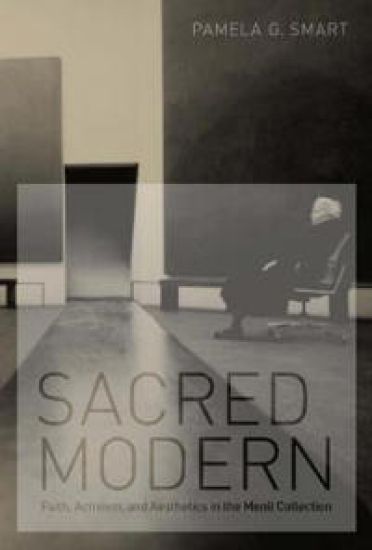
Sacred Modern

Sacred Modern

Pamela G. Smart

University of Texas Press
2011
pokkari
Renowned as one of the most significant museums built by private collectors, the Menil Collection in Houston, Texas, seeks to engage viewers in an acutely aesthetic, rather than pedagogical, experience of works of art. The Menil's emphasis on being moved by art, rather than being taught art history, comes from its founders' conviction that art offers a way to reintegrate the sacred and the secular worlds. Inspired by the French Catholic revivalism of the interwar years that recast Catholic tradition as the avant-garde, Dominique and John de Menil shared with other Catholic intellectuals a desire to reorder a world in crisis by imbuing modern cultural forms with religious faith, binding the sacred with the modern. Sacred Modern explores how the Menil Collection gives expression to the religious and political convictions of its founders and how "the Menil way" is being both perpetuated and contested as the Museum makes the transition from operating under the personal direction of Dominique de Menil to the stewardship of career professionals. Taking an ethnographic approach, Pamela G. Smart analyzes the character of the Menil aesthetic, the processes by which it is produced, and the sensibilities that it is meant to generate in those who engage with the collection. She also offers insight into the extraordinary impact Dominique and John de Menil had on the emergence of Houston as a major cultural center.
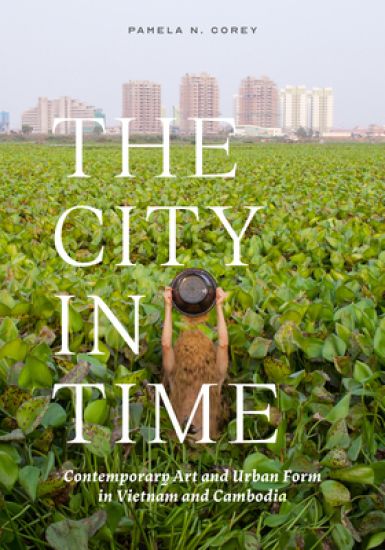
The City in Time

The City in Time

Pamela N. Corey

University of Washington Press
2021
sidottu
Illuminates how the city has shaped contemporary artistic practice in Southeast AsiaIn The City in Time, Pamela N. Corey provides new ways of understanding contemporary artistic practices in a region that continues to linger in international perceptions as perpetually "postwar." Focusing on art from the last two decades, Corey connects artistic developments with social transformations as reflected through the urban landscapes of Ho Chi Minh City and Phnom Penh. As she argues, artists' engagements with urban space and form reveal ways of grasping multiple and layered senses and concepts of time, whether aligned with colonialism, postcolonial modernity, communism, or postsocialism.The City in Time traces the process through which collective memory and aspiration are mapped onto landscape and built space to shed light on how these vibrant Southeast Asian cities shape artistic practices as the art simultaneously consolidates the city as image and imaginary. Featuring a dynamic array of creative productions that include staged and documentary photography, the moving image, and public performance and installation, The City in Time illustrates how artists from Vietnam and Cambodia have envisioned their rapidly changing worlds.
Forests Are Gold

Forests Are Gold

Pamela D. McElwee

University of Washington Press
2016
sidottu
Forests Are Gold examines the management of Vietnam's forests in the tumultuous twentieth century—from French colonialism to the recent transition to market-oriented economics—as the country united, prospered, and transformed people and landscapes. Forest policy has rarely been about ecology or conservation for nature's sake, but about managing citizens and society, a process Pamela McElwee terms "environmental rule." Untangling and understanding these practices and networks of rule illuminates not just thorny issues of environmental change, but also the birth of Vietnam itself.
Forests Are Gold

Forests Are Gold

Pamela D. McElwee

University of Washington Press
2016
pokkari
Forests Are Gold examines the management of Vietnam's forests in the tumultuous twentieth century—from French colonialism to the recent transition to market-oriented economics—as the country united, prospered, and transformed people and landscapes. Forest policy has rarely been about ecology or conservation for nature's sake, but about managing citizens and society, a process Pamela McElwee terms "environmental rule." Untangling and understanding these practices and networks of rule illuminates not just thorny issues of environmental change, but also the birth of Vietnam itself.
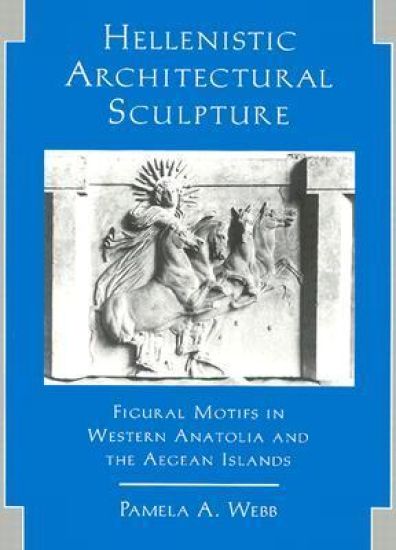
Hellenistic Architectural Sculpture

Hellenistic Architectural Sculpture

Pamela A. Webb

University of Wisconsin Press
1996
sidottu
Sculpted figural motifs were an important component of many buildings in the Hellenistic world, and their frequent relegation to subsidiary status has, until now, left our knowledge of both Hellenistic architecture and sculpture incomplete. In Hellenistic Architectural Sculpture, Pamela A. Webb examines the full range of figural embellishment—from simple to complex, on large monuments as well as on more obscure ones, and in the major population centers as well as the smaller cities, sanctuaries, and isolated areas throughout western Anatolia and the Aegean islands.In this book, the first to focus specifically on the figural adornment of Hellenistic architecture, Webb provides extensive information about the chronology and interpretation of figural motifs adorning religious, civic, commercial, commemorative, and domestic constructions. She finds that figural sculptures adorn structures at every level from the ground to the roof, and display a wide variety of motifs on such architectural elements as columns, walls, entablatures, and pediments. More than 130 illustrations of Hellenistic monuments—temples, altars, cult buildings, heroa, theaters, bouleuteria, stoas, gymnasia, and houses—and their sculptured adornment complement the author's descriptions and analyses. The book features an extensive bibliography, citing resources from the early nineteenth century to the most recent publications.
Sailing to the Far Horizon

Sailing to the Far Horizon

Pamela Sisman Bitterman

University of Wisconsin Press
2012
nidottu
The tall ship Sofia sank off New Zealand's North Island in February 1982, stranding its crew on disabled life rafts for five days. They struggled to survive as any realistic hope of rescue dwindled. Just a few years earlier, Pamela Sisman Bitterman was a naïve swabbie looking for adventure, signing on with a sailing co-operative taking this sixty-year-old, 123-foot, three-masted gaff-topsail schooner around the globe. The aged Baltic trader had been rescued from a wooden boat graveyard in Sweden and reincarnated as a floating commune in the 1960s. By the time Sofia went down, Bitterman had become an able seaman, promoted first to bos'un and then acting first mate, immersing herself in this life of a tall ship sailor, world traveler, and survivor.
Most German of the Arts

Most German of the Arts

Pamela M. Potter

Yale University Press
1998
sidottu
This important book investigates the role played by German musicology in buttressing Nazi institutions and ideology. Pamela Potter examines the social, economic, and intellectual factors that caused some German musical scholars to support with such fervor the ideological aims of the Nazis. She argues convincingly that many of the ideas that served the regime not only predated Hitler’s rise to power but survived the Nazi period to influence the conception of music history—including that of American musical scholarship—down to the present time. Potter reveals that prominent German musicologists went beyond other scholars in serving the state by publicizing the German musical legacy as a source of national pride; exploring politically relevant research topics, including pseudo-scientific race theories; and participating in the Germanization of occupied and annexed territories during World War II. Nazi leaders recognized musicology’s potential service to Nazi causes, says Potter, and musicological ventures enjoyed generous support from the government, party, and SS. Scrutinizing private papers, archives, and rare publications, Potter breaks the silence imposed by the postwar German musicological establishment and demonstrates the extent to which the entire profession was politicized during the Nazi era.
Joel Shapiro

Joel Shapiro

Pamela Franks

Yale University Press
2020
sidottu
American artist Joel Shapiro (b. 1941) is best known for his monumental wood and metal sculptures of abstracted human forms. Less familiar, however, is his work in a variety of other media—particularly plaster, which Shapiro has turned to repeatedly during his long career. In this fascinating book, Pamela Franks examines how the artist’s explorations in plaster echo throughout his frequently shifting art practice, inspiring works in wood, wire, paper, and other materials. The publication includes pieces ranging in scale from small to room-sized, as well as paper collages, which serve both as inspiration for his sculptural work and as works of art in their own right. Through a close look at all of these objects, the book studies how Shapiro blurs the line between figuration and geometric abstraction, and it documents variations on some of the artist’s most recognizable forms. Installation photographs situate Shapiro’s works in space and in curated groupings. This exciting publication offers readers a thought-provoking investigation of the possibilities to be found in the intersections between different media and between abstract and figurative art.
Revise

Revise

Pamela Haag

Yale University Press
2021
sidottu
A helpful, engaging guide to the revision of scholarly writing by an editor and award-winning author “Pamela Haag has been called ‘the tenure whisperer’ for good reason. Any scholar who hopes to attract a wider audience of readers will benefit from the brilliant, step-by-step guidance shared here. It’s pure gold for all aspiring nonfiction writers.”—Nancy MacLean, author of Democracy in Chains: The Deep History of the Radical Right’s Stealth Plan for America Writing and revision are two different skills. Many scholar-writers have learned something about how to write, but fewer know how to read and revise their own writing, spot editorial issues, and transform a draft from passable to great. Drawing on before and after examples from more than a decade as a developmental editor of scholarly works, Pamela Haag tackles the most common challenges of scholarly writing. This book is packed with practical, user-friendly advice and is written with warmth, humor, sympathy, and flair. With an inspiring passion for natural language, Haag demonstrates how to reconcile clarity with intellectual complexity. Designed to be an in-the-trenches desktop reference, this indispensable resource can help scholars develop a productive self-editing habit, advise their graduate and other students on style, and, ultimately, get their work published and praised.