Kirjojen hintavertailu. Mukana 12 016 292 kirjaa ja 12 kauppaa.

Kirjahaku

Etsi kirjoja tekijän nimen, kirjan nimen tai ISBN:n perusteella.

1000 tulosta hakusanalla Peter Kaye

Peter Martyr Vermigli

Peter Martyr Vermigli

McLelland Joseph C.

WILFRID LAURIER UNIVERSITY PRESS
1981
sidottu
Renaissance and Reformationâpartners or enemies? The popular image of these two historical phenomena is one of opposition and contradiction: the Renaissance was a cultural revival influenced by classical philosophy; the Reformation was a radical religious movement which rejected traditional authority. But in the life and work of Peter Martyr Vermigli, a "Calvinist Thomist" and the leading sixteenth-century Italian Reformer, scholasticism and Protestantism converge. An international conference, sponsored by the Faculty of Religious Studies, McGill University, reflects the recent renewed interest in Italian reform. Entitled "The Cultural Impact of Italian Reformers," its aim was to gather Vermigli scholars along with Renaissance and Reformation scholars. Half the essays (by Paul Grendler, Cesare Vasoli, Rita Belladonna, Anthony Santosuosso, and Antonio D'Andrea) deal with the general question of Renaissance and Reformation interaction: How are humanism and scholasticism related? Marvin Anderson, Philip McNair, J. Patrick Donnelly, Robert Kingdon, and Joseph C. McLelland focus on the thought and activity of Vermigli himself. Students of theology, history, and philosophy, and specifically of the Renaissance and the Reformation, will welcome this book.
peter among th towring boxes / text bites
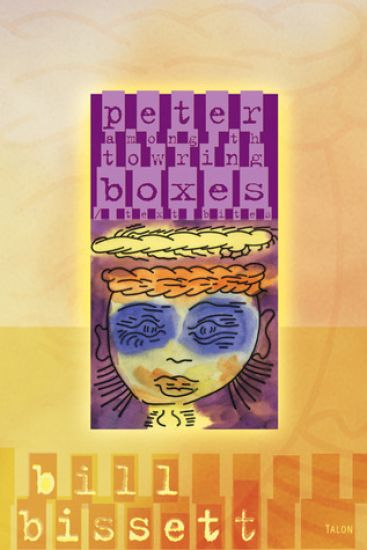
bissett's latest book marks some significant boundaries, draws some sharp, clear lines for this veteran of the evolving phonetic alphabet, and of sound, concrete and performance poetry. While the work remains overwhelmingly playful, subtly layered, and full of the astonishment and sheer delight at seeing and hearing things one has never quite thought of the way the poet/performer imagines them before, there is a new edginess to this work that will shake up both old fans and new readers of what can only be called the unique bill bissett experience in language. These new sharper edges come, quite generously, from the poet's own re-assesment of where the self ends, and the other begins, and a growing recognition that those boundaries often need to be imposed, and defended, if destructive relationships of co-dependency are to be avoided. bissett's usual biting, acute, often deliciously comic interrogation of the socio-political events towering around us like so many boxes we need constantly to think, feel and imagine our way out of, is counterposed in this collection by a recurring dream of a future wherein 20 billion people are locked in a global war on the poisoned surface of the planet while a small minority of peace-loving libertarians have garrisoned themselves into a scanner-protected, completely virtualized underground.While the Bill Gates compound reference of this recurring nightmare is inescapable, the text remains profoundly ambivalent about where one might be better off. There's just a touch of scariness here in bissett's latest exuberant rage through the urban wilderness of our time.
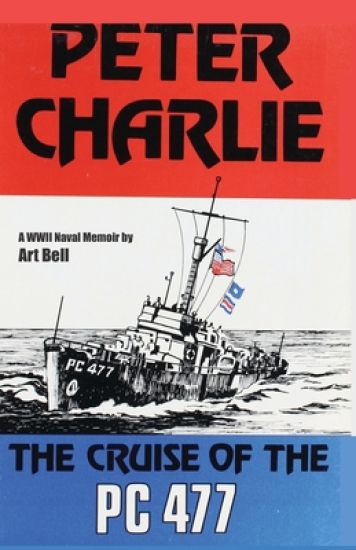
Peter Charlie

Peter Charlie

Art Bell

Compendium Press
2019
pokkari
Aboard a patrol boat in World War II, chasing Japanese subsIn 1942, Art Bell was a twenty-three-year old ensign in the U.S. Navy, assigned to duty aboard the PC 477. The PCs were 173-foot, steel-hulled submarine fighters. Uncle Sam had thousands of seamen on hundreds of PCs convoying and patrolling in WWII. They were introduced in the desperate, early days of World War II, when the waters off America's Atlantic coast were a graveyard of torpedoed ships. They performed essential, hazardous, and sometimes spectacular missions, yet the PCs were scarcely known at all outside the service.Here is the story of the wartime service of one of those ships. From Pearl Harbor to Guadalcanal, from Australia to the Solomon Islands, the PC 477 saw action throughout the South Pacific. Collecting numerous first-hand accounts from his shipmates, Art Bell, who eventually took command of the 477, gives us a detailed, compelling and often humorous memoir of life aboard a Navy ship during the war. It is a feast for World War II buffs and an essential reference for historians studying that period. The Navy didn't even dignify PCs with names. But the crew of the PC 477 did. They called her "Peter Charlie."Art Bell (1919 - 1988) was a respected Los Angeles attorney. He played baseball at UCLA with Jackie Robinson, saw action in World War II, and graduated from the USC Law School in 1951. His son, James Scott Bell, aided in the writing and editing of the book.
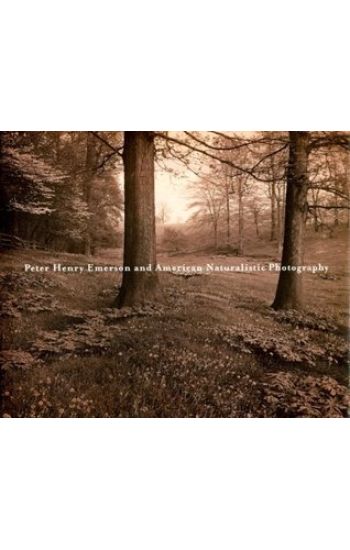
Peter Henry Emerson and American Naturalistic Photography

Peter Henry Emerson and American Naturalistic Photography

Christian A. Peterson

Minneapolis Institute of Art
2008
sidottu
Peter Henry Emerson (1856-1936) was a leading English photographer who spearheaded a style he termed "naturalistic photography." He argued for photography as a fine art, encouraged his colleagues to use nature as their standard, and introduced the theory of "differential focusing," whereby the main subject was in focus and everything else fell into moderate softness.Many young Americans admired Emerson's work, forming a movement of naturalistic photography in this country that lasted from the 1890s to about 1930. Like Emerson, they emphasized the beauty of Mother Nature and humankind's harmony with her, photographing the land in all its seasons. Among the photographers whose work is included are Edward Curtis, Rudolf Eickemeyer, Alfred Stieglitz, and Doris Ulman.
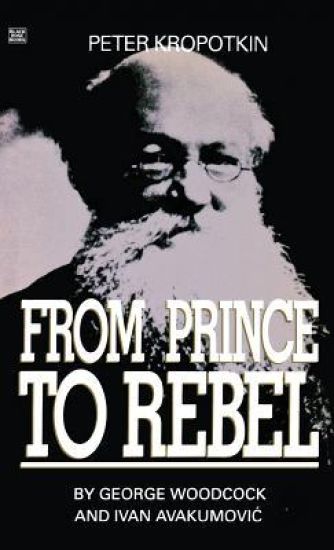
Peter Kropotkin – From Prince to Rebel

Peter Kropotkin – From Prince to Rebel

George Woodcock

Black Rose Books
1990
nidottu
Anarchism - the concept of a society without authority, of a civil order without any form of constitution or government - has fascinated people almost as long as we have possessed the power of speculative thought. In the general history of anarchism, the name of Peter Kropotkin dominates.Born in 1842 into an ancient military family of Russian princes, Kropotkin was selected as a child for the elite Corps of Pages by Tsar Nicholas I himself. Shortly before his death in 1921, he had moved so far from his aristocratic beginnings and attained such stature as a libertarian leader that he could write with impunity to Lenin, "Vladimir Ilyich, your concrete actions are completely unworthy of the ideas you pretend to hold."Woodcock and Avakumovic's biography, From Prince to Rebel, details the life that flowed between these two points in time. It surveys and analyses the most significant aspects of Kropotkin's life and thought: his formative years in Russia, 1842-1876, and the origins of his anarchist thinking (military service in eastern Siberia, the influence of the works of Proudhon and Bakunin, his role in the Chaikovsky Circle); his years as an migr in western Europe, 1876-1917, and the ripening of his political though (editor ofLe Revolte, his views on Marxist socialism); and his last years in the Soviet Union, 1917-1921, the revolution and civil war, and his meeting and correspondence with Lenin.For more details, visit: http: //blackrosebooks.net/products/view/Peter+Kropotkin%3A+From+Prince+to+Rebel/28352
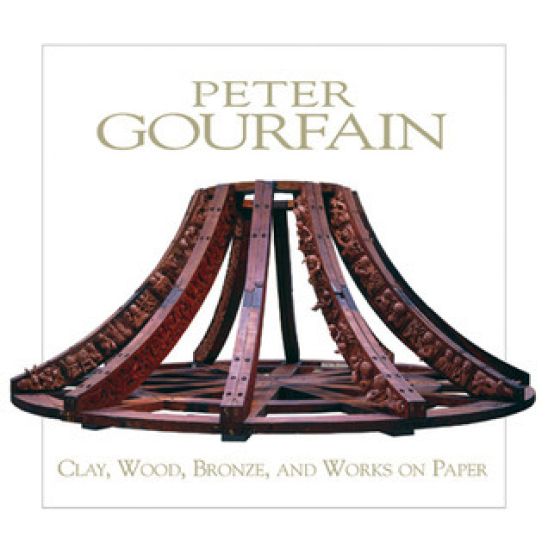
Peter Gourfain

Peter Gourfain

Chazen Museum of Art

University of Wisconsin Press
2002
nidottu
Peter Gourfain emerged on the New York art scene in the 1960s showing minimalist sculpture. Since the 1980s his work has become figurative, expressionist, personal, and socially engaged. Many of Gourfain’s terracotta reliefs, large-scale urns, cast bronzes, woodcarvings, prints, and paintings deliver specific messages about political and social issues, often of universal importance. Gourfain’s carved homage to Michael Stewart, an African American art student from Brooklyn who died from a beating, allegedly by eleven NYPD officers, presents a tragic story with an important message. A chronicler of our times, Gourfain portrays the human struggle and makes vivid comment on social injustice in America. His 1994 large-scale bronze sculpture ""Powerful Days"" features images from milestones in African American history. His dramatic narratives also often weave in themes and songs from the work of James Joyce, exemplified by the 1990 woodblock print ""Finnegan’s Wake."" Trained at the School of the Art Institute of Chicago, Gourfain has exhibited his work at the Brooklyn Museum, Guggenheim Museum, Museum of Modern Art, and the Jewish Museum in New York, among others. The Elvehjem (now Chazen) Museum’s exhibition is the first major showing of Gourfain’s work since a presentation at the Brooklyn Museum in 1987. Distributed for the Chazen Museum of Art, University of Wisconsin–Madison
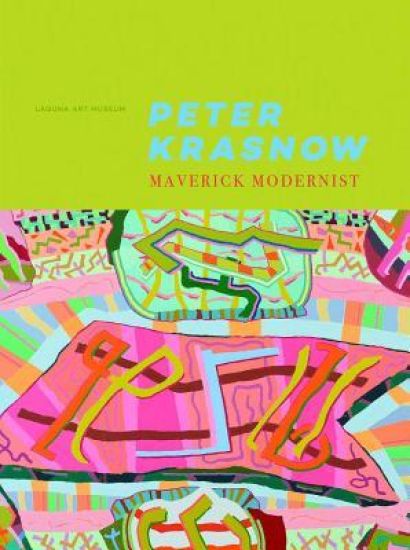
Peter Krasnow: Maverick Modernist

Peter Krasnow: Maverick Modernist

Michael Duncan; Susan Ehrlich

Grand Central Press
2016
sidottu
Peter Krasnow (1886-1979) is the great California modernist you don't know. Although revered during his lifetime by a coterie that included Edward Weston, Richard Neutra, Rudolph Schindler, Galka Scheyer, Frederick Sommer, Grace Clements, Lorser Feitelson, Helen Lundeberg, June Wayne, and Jules Langsner, Krasnow remained largely out of the public eye, cantankerously resisting publicity or self-promotion while dedicating himself to an artistic ideal. He demonstrated extraordinary skills in each of his three major phases: the early representational paintings and wood carvings (1910-1930), the abstract wood sculptures (1936-1943), and the hard-edged geometric and patterned paintings (1940-1979). Although his mature work in some ways presages abstract art by modern artists such as John McLaughlin, Karl Benjamin, Inez Johnston, Isamu Noguchi, and Raoul Hague as well as contemporary art by Steve Roden, Alma Allen, Zach Harris, and James Siena, it remains unique. In 1977 Lorser Feitelson said of Krasnow, "I call him both the youngest old artist in Los Angeles and the oldest young artist. Because his art doesn't date. It's ever present." - Michael Duncan, guest curator
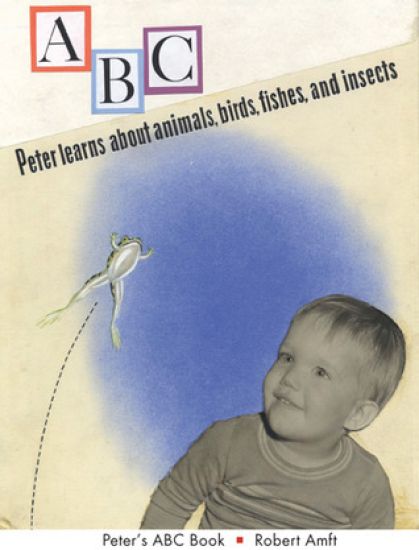
Peter`s ABC Book – Peter Learns About Animals, Birds, Fishes, and Insects
The natural world is a magical maze in the eyes of a child—everything appears bigger and more colorful, and nothing is ordinary. With this in mind, Chicago artist and photographer Robert Amft designed an alphabet book for his son Peter. The result, beautifully published here, is a wholly unique children’s book chronicling Peter’s encounters with the everyday environment. Originally conceived in the 1940s as a piece of art that could be published and sold by Amft’s wife if he was killed fighting in World War II, Amft invested the book as much with artistic skill and imagination as with love for his son. Amft’s arresting collages uniquely convey the complex and unpredictable ways that Peter, like so many young children, interacts with his surroundings. Alternately charming, unexpected, and mysterious, the images juxtapose and meld the natural and unnatural. A richly illustrated book holding as many treasures for the attentive adult as for the inquisitive child, Peter’s ABC Book is a rare gift from a pivotal figure in American art.
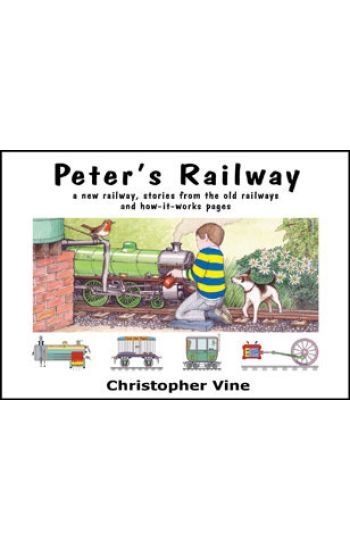
Peter's Railway

Peter's Railway

Christopher G. C. Vine

Christopher Vine
2008
sidottu
Book 1. Tells the story of a young boy who lives with his family in a cottage at the edge of his Grandpa's farm. To make visiting each other easier, they build a miniature steam railway between their houses. 96 pages with 14 pages of simply explained technical diagrams and 30 watercolour pictures. Age 6 to 12 years.
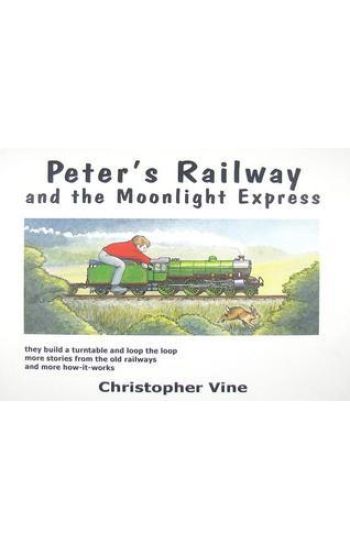
Peter's Railway and the Moonlight Express

Peter's Railway and the Moonlight Express

Christopher G. C. Vine

Christopher Vine
2009
sidottu
Book 2. Peter and his Grandpa have built a miniature steam railway across their farm. Now they extend the line and build a turntable. The great excitement for Peter is learning to drive the locomotive. 96 pages with 14 pages of simply explained technical diagrams and 30 watercolour pictures. Age 6 to 12 years.
Peter's Railway and the Forgotten Engine

Peter's Railway and the Forgotten Engine

Christopher G. C. Vine

Penguin books ltd
2009
sidottu
Book 3. Peter and Grandpa extend their farm railway to Yockletts Village for Grandma to do her shopping. They hold the Great Train Race, but who will win? They also find a forgotten engine, hidden in a barn, which they put back to work. 96 pages with 14 pages of simply explained technical diagrams and 30 watercolour pictures. Age 6 to 12 year
Peter's Railway Christmas Steam

Peter's Railway Christmas Steam

Christopher G. C. Vine

Christopher Vine
2011
pokkari
Peter saves Christmas! Peter and Grandpa save the day with a wonderful tale of night time steam train adventures to Santa's woodland grotto, magically lit up by hundreds of tiny lamps. This "Little" Peter's Railway book is aimed at younger readers (3-6 years), there are lots of simple details on making things and running a miniature steam train
Peter's Railway Surprise Goods

Peter's Railway Surprise Goods

Christopher G. C. Vine

Christopher Vine
2011
pokkari
A bed-time story with a twist. "Once upon a time - there was an extra special train with a top secret load." This "Little" Peter's Railway book is aimed at younger readers (3 - 6 years), there is some simple engineering, buried in the story.
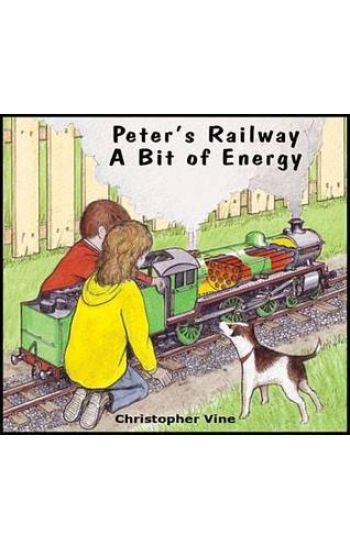
Peter's Railway a Bit of Energy

Peter's Railway a Bit of Energy

Christopher G. C. Vine

Christopher Vine
2011
pokkari
A technical story book - Grandpa tries to answer a tricky question. "Where does the little steam train get its energy from?" A simple lump of coal from the time of dinosaurs!!! This wonderful story of energy conversion is just perfect for those with inquisitive minds. It even covers photosynthesis. Age 6-12.