
Kirjahaku
Etsi kirjoja tekijän nimen, kirjan nimen tai ISBN:n perusteella.
1000 tulosta hakusanalla Peter Pactor
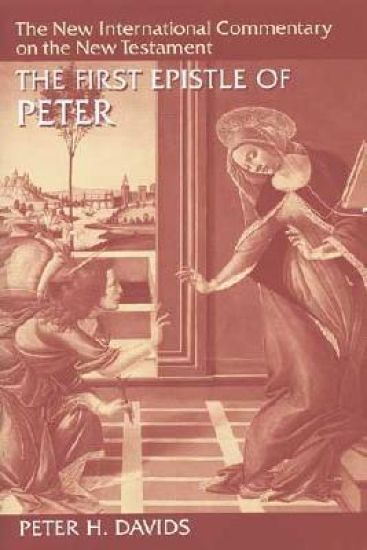
The First Epistle of Peter constitutes an important work of New Testament theology and pastoral care, serves as an example of how the early church applied Jesus' sayings and the Old Testament writings to contemporary concerns, and presents some extremely useful perspectives on living the Christian life today. This commentary by Peter Davids does an excellent job of mining the rich wealth of instruction to be found in this very significant section of Scripture. Davids's commentary contains several notable features: a unique grasp of 1 Peter's structure, a systematically arranged introduction that summarizes the commentary proper, a perceptive excursus on suffering in 1 Peter and the New Testament, Davids's own study translation, thorough and incisive comments on each verse of the test, frequent parallels to ancient literature, an exceptionally clear and lively writing style, and one of the most comprehensive bibliographies on 1 Peter available anywhere.
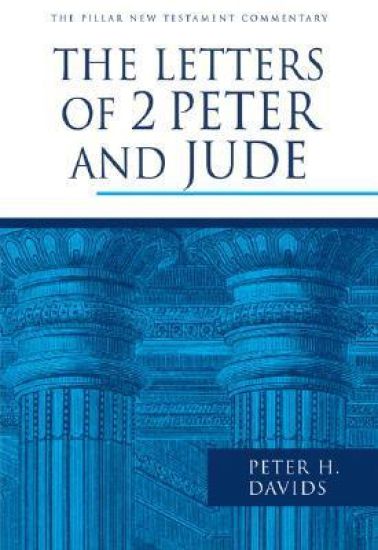
Filling a notable gap in scholarship on 2 Peter and Jude, Peter Davids artfully unpacks these two neglected but fascinating epistles that deal with the confrontation between the Greco-Roman world and the burgeoning first-century Jesus communities. Davids firmly grasps the overall structure of these oft-maligned epistles and presents a strong case for 2 Peter and Jude as coherent, consistent documents. Marked by exceptional exegesis and sharp, independent judgments, Davids's work both connects with the latest scholarship and transforms scholarly insights into helpful conclusions benefiting Christian believers.
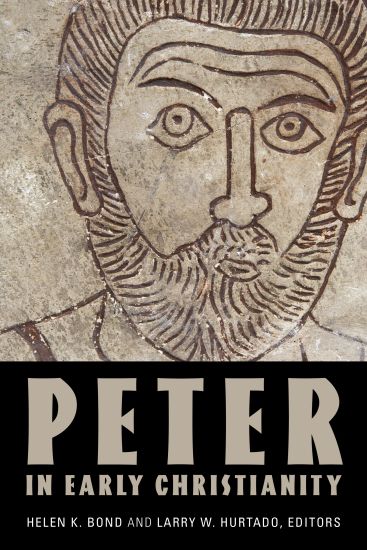
Peter in Early Christianity
William B Eerdmans Publishing Co
2015
nidottu
After playing second fiddle to the apostle Paul for a long, long time, Peter has received increased scholarly attention of late.This book builds on the recent resurgence of interest in the apostle Peter. Nineteen internationally prominent scholars of early Christian history here examine and reassess the historical Peter and his significance in Christian texts from the first three centuries. Giving due attention to archaeological data and recent scholarship, the contributors offer a comprehensive view of Peter through analysis of both New Testament texts and later, noncanonical literature. Markus Bockmuehl concludes the volume by considering present-day questions about the role of Peter, popes, and church leadership.
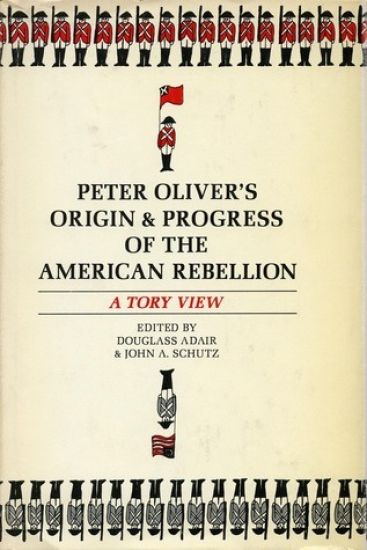
Peter Oliver's "Origin and Progress of the American Rebellion"
Peter Oliver
Stanford University Press
1961
pokkari
One difficulty in writing a balanced history of the American Revolution arises in part from its success as a creator of our nation and our nationalistic sentiment. Unlike the Civil War, unlike the French Revolution, the American Revolution produced no lingering social trauma in the United States—it is a historic event widely applauded by Americans today as both necessary and desirable. But one consequence of this happy unanimity is that the chief losers of the War of Independence—the American Loyalists—have fared badly at the hands of historians. This explains, in part, why the account of the Revolution recorded by self-professed Loyalist and Chief Justice of the Superior Court of Massachusetts, Peter Oliver, has heretofore been so routinely overlooked. Oliver's manuscript, entitled "The Origins & Progress of the American Rebellion," written in 1781, challenges the motives of the founding fathers, and depicts the revolution as passion, plotting, and violence. His descriptions of the leaders of the patriot party, of their program and motives, are unforgiving, bitter, and inevitably partisan. But it records the impressions of one who had experienced these events, knew most of the combatants intimately, and saw the collapse of the society he had lived in. His history is a very important contemporary account of the origins of the revolution in Massachusetts, and is now presented here in it entirety for the first time.

Splendid. . . . McAlexander's biography only makes it clearer than ever that Peter Taylor was our last great southern man of letters."" - Chicago Tribune""For those of us to whom Taylor's writing is among the chief glories of 20th-century American literature, Peter Taylor: A Writer's Life has much to tell us about how he emerged from what he called 'the small old world we knew...in Tennessee' and explored that world with such acuity, clarity, and unsentimental love."" - Jonathan Yardley, Washington Post Book World""McAlexander has done a splendid job of tracing the progression of Taylor's writing through the circumstances of a surprisingly frenetic life...Anyone interested in the evolution of fiction writing in the last century will be delighted to come upon this volume...fascinating, sometimes amusing, and often heartbreaking."" - New York Times Book ReviewHubert H. McAlexander's accomplished portrait of Peter Taylor (1917-1994) achieves a remarkable intimacy with this central figure in the history of the American short story and one of the greatest southern writers of his time. McAlexander knits together the facts of Taylor's life in a compelling, seamless account: his deep and distinguished family roots in Tennessee; his close bonds with writers from three generations, including Allen Tate, Robert Lowell, and James Alan McPherson; his establishment of the dysfunctional family as a force in American literature; and his perseverance as a writer, finally rewarded with the Pulitzer Prize at age seventy. Exhaustively researched and engagingly written, Peter Taylor presents a vivid picture of the man, the artist, and his literary milieu.

The Best of Peter Finney, Legendary New Orleans Sportswriter
Peter Finney
Louisiana State University Press
2016
sidottu
Five times each week over the past several decades, sports fans in New Orleans began their mornings by reading local sportswriter Peter Finney. Finney's newspaper columns -- entertaining, informative, and inspiring -- connected New Orleans readers to the world of sports, for nearly 70 years. From a career total of 15,000 articles, this book offers a prime selection of the very best of Finney's writing as well as an introduction from Peter Finney, Jr. Beginning his writing career as a college freshman at Loyola University, Finney added his distinctly poetic voice to the sports pages of the States-Item (1945--80) and the Times-Picayune (1980--2013). This impressive time span placed the reporter on the sidelines of the most iconic moments in Louisiana sports history. This collection includes Finney's account of Billy Cannon's 89-yard punt return against Ole Miss in 1959; Tom Dempsey's 1970 NFL-record 63-yard field goal; and the Saints' 31--17 victory over the Indianapolis Colts in the 2010 Super Bowl. His interviews and profiles covered nearly every major sports figure of his time: Ted Williams, Jesse Owens, Joe DiMaggio, Muhammad Ali, Joe Namath, Jack Nicklaus, Tiger Woods, Arnold Palmer, Billy Cannon, Pete Maravich, Lee Trevino, Rusty Staub, Archie, Peyton, and Eli Manning, Eddie Robinson, Doug Williams, Dale Brown, Billy Martin, Brett Favre, Nick Saban, Shaquille O'Neal, Mike Ditka, Sean Payton, Drew Brees, Sugar Ray Leonard, Skip Bertman, Les Miles, and Tom Benson, among many others.The riveting moments and fascinating characters portrayed in this volume will delight both hardcore sports enthusiasts and casual fans, in stories told with Finney's characteristic grace, humility, and wit.

This illustrated story of America's first architect is based on material from a number of contemporary sources in the colonial period. Harrison's buildings reflect the classical mode, and they fortunately survived the Revolution. His designs include the King's Chapel, Boston; the Synagogue, Newport; and Christ Church, Cambridge.Originally published in 1949.A UNC Press Enduring Edition -- UNC Press Enduring Editions use the latest in digital technology to make available again books from our distinguished backlist that were previously out of print. These editions are published unaltered from the original, and are presented in affordable paperback formats, bringing readers both historical and cultural value.
Of the non-natural part of his story I will not say much. It is, of course, a fact that he had been absolutely and, to all appearance, incurably insane before he wrote his life. There seems to have been a difference of opinion, or rather a doubt, among the authorities of the asylum as to whether he was mad after the acute but very violent period of his brief attack had ended. Whichever may have been the case, I am at least convinced of this: that he was no romancer, and thoroughly believed in the extraordinary mental experience he has revealed. At the risk of being thought to share his madness -- if he _was_ mad -- I will conclude by saying that I, for one, believe him to have been sane, and to have told the truth all through.

Peter Greenaway's Postmodern / Poststructuralist Cinema
Scarecrow Press
2008
nidottu
Since the 1960s, British multi-media artist Peter Greenaway has shocked and intrigued audiences with his avant-garde approach to filmmaking and other artistic ventures. From early experimental films to provocative features, Greenaway has deployed strategies associated with structuralist cinema, only to challenge or critique the very limits of that cinema and of film in general. In this collection of essays, scholars from a variety of disciplines explore various postmodern and poststructuralist aspects of Greenaway's films, starting with his early shorts and delving into his feature-length works, including The Draughtman's Contract, The Belly of an Architect, A Zed and Two Noughts, The Cook, the Thief, His Wife and Her Lover, The Baby of Mâcon, and The Pillow Book. Other artistic productions, including his paintings and installations are also discussed. These essays examine the filmmaker's position within British and avant-garde cinema and his interest in constructing and deconstructing representational systems. In the years since the first edition of this book, Greenaway has enjoyed continued success in creating hybridized media projects for the stage and screen, as evidenced by additional essays for this revised edition. A new chapter addresses how Dutch political events and Dutch art have been crucial in shaping Greenaway's aesthetic, focusing on The Draughtsman's Contract, the 1991 opera Writing to Vermeer, and Nightwatching, the audio-visual installation and 2007 film of the same name, which were inspired by Rembrandt's Night Watch. Also new to this collection is an essay that examines Greenaway's most ambitious endeavor to date, The Tulse Luper Suitcases, which exists as four feature films, multiple websites, an online game, several books and installations, and a number of theatrical events. Peter Greenaway's Postmodern/Poststructuralist Cinema, Revised Edition explores the cultural, historical, and philosophical implication

Varied weather conditions, long distances, and a minimum of equipment characterize lightweight Alpine climbing. The book includes advice on training, technique, and safety in the mountains.

Peter Singer Under Fire
Open Court Publishing Co ,U.S.
2009
pokkari
One of the leading ethical thinkers of the modern age, Peter Singer has repeatedly been embroiled in controversy. Protesters in Germany closed down his lectures, mistakenly thinking he was advocating Nazi views on eugenics. Conservative publisher Steve Forbes withdrew generous donations to Princeton after Singer was appointed professor of bioethics. His belief that infanticide is sometimes morally justified has appalled people from all walks of life. Peter Singer Under Fire gives a platform to his critics on many contentious issues. Leaders of the disability rights group Not Dead Yet attack Singer's views on disability and euthanasia. Economists criticize the effectiveness of his ideas for solving global poverty. Philosophers expose problems in Singer's theory of utilitarianism and ethicists refute his position on abortion. Singer's engaging "Intellectual Autobiography" explains how he came by his controversial views, while detailed replies to each critic reveal further surprising aspects of his unique outlook.
Adapted from Barrie's 1904 play, this novelized version of the classic tale--a reproduction of the 1911 American edition--features twelve original black-and-white illustrations by F.D. Bedford, and a reading group guide.
The Letters of Peter Damian, 151-180
Peter Damian
The Catholic University of America Press
2014
nidottu
This volume concludes the series of Peter Damian's Letters in English translation. Among Letters 151-180 readers will find some of Damian's most passionate exhortations on behalf of eremitic ideals. These include Letter 152, in which Damian defends as consistent with the spirit and the letter of Benedict's Rule his practice of receiving into the eremitic life monks who had abandoned their cenobitic communities. In Letter 153 Damian encourages monks at Pomposa to pass beyond the minimum standards established in the Rule of St. Benedict for the higher and more demanding eremitic vocation. In Letter 165, addressed to a hermit, Albizo, and a monk, Peter, Damian reveals as well the importance of monastic life to the world: because the integrity of the monastic profession has weakened, the world has fallen even deeper into an abyss of sin and corruption and is rushing headlong to destruction. Let monks and hermits take refuge within the walls of the monastery, he urges, while outside the advent of Antichrist seems imminent. Only from within their walls can they project proper examples of piety and sanctity that may transform the world as a whole.Damian was equally concerned to address the moral condition of the larger Church. Letter 162 represents the last of Damian's four tracts condemning clerical marriage (Nicolaitism). Damian's condemnation of Nicolaitism also informed his rejection of Cadalus, the antipope Honorius II (see Letters 154 and 156), who was said to support clerical marriage, and therefore cast him into the center of a storm of ecclesiastical (and imperial) politics from which Damian never completely extricated himself.
Peter Damian (1007-1072), an eleventh-century monk and man of letters, left a large and significant body of correspondence. Over one hundred and eighty letters have been preserved, principally from Damian's own monastery of Fonte Avellana. Ranging in length from short memoranda to longer monographs, the letters provide a contemporary account of many of the controversies of the eleventh century: purgatory, the Eucharist, clerical marriage and celibacy, immorality, and others. Peter Damian, or ""Peter the Sinner"" as he often referred to himself, was one of the most learned men of his day, and his letters are filled with both erudition and zeal for reform. This first volume contains the first thirty letters, and covers the period before 1049. Here we see Peter Damian as an untiring preacher and uncompromising reformer, both of the monastic world and of the church at large. He attacks clerical laxity and monastic decadence in letter after letter. The first letter in the collection is of particular interest, containing a theological consideration of the Christian position against the Jews. Other important letters in this first volume are Damian's allegorical interpretation of the Divine Office, his letters on the Last Days and the Judgment, on canonical and legal points (such as the prohibited degrees of consanguinity in marriage), and on liturgical matters (particularly in monastic observance).
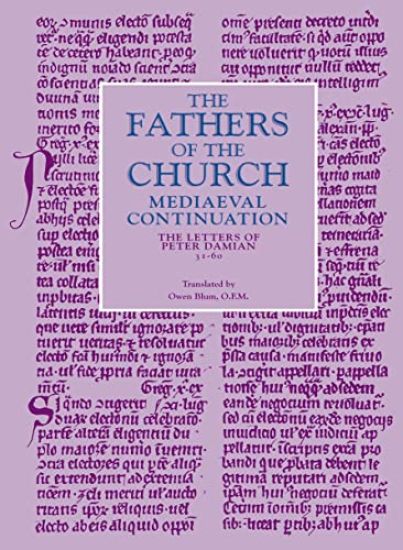
The Letters of Peter Damian 31-60
Peter Damian
The Catholic University of America Press
2014
sidottu
This second volumes of the Mediaeval Continuation contains Letters 31-60 of Peter Damian. While his epistolary style is varied--exhortatory, occasional, pastoral, reforming--his message is singular and simple in urging strict adherence to the canons of the Church.Letters 31 and 40 are long treatises, each published separately in critical editions. Letter 31, also known as the Book of Gomorrah, deplores the degradation of the priesthood through the vice of sodomy and appeals to Pope Leo IX to educate and purge the clergy. Letter 40, perhaps his most celebrated work, is also called the Liber gratissimus. In it Peter Damian opposes the reordination of those ordained simonists but writes that simonists are ""worthy of the supreme punishment that befits the incorrigible."" The very early reference to the ""heart of Jesus"" which is found in this letter was anticipated only by the Venerable Bede.Among the more personal letters are 55 and 57. In the former he writes of a long, debilitating illness, so serious that funeral preparations had been made, and of his immediate recovery when his brethren gave food to one hundred poor people. In the latter, he begs to be relieved of the administration of the diocese of Gubbio because of ill health, so that he may return to Fonte Avellana and his ""beloved solitude."" He also makes many references to folkloric tales and, perhaps, the earliest reference to the game of chess in Western literature.Letter 58 to Henry the archbishop of Ravenna in 1058 is the best example in the collection of Peter Damian's political and ecclesiastical influence. In it he gives his opinion of Benedict X and Nicholas II, the two candidates for the Apostolic See. He makes no effort to conceal his strong opinions but rather requests that this letter be made public so that all may learn what he has thought about the subject. This is perhaps, after all, what he would have hoped for the entire collection.
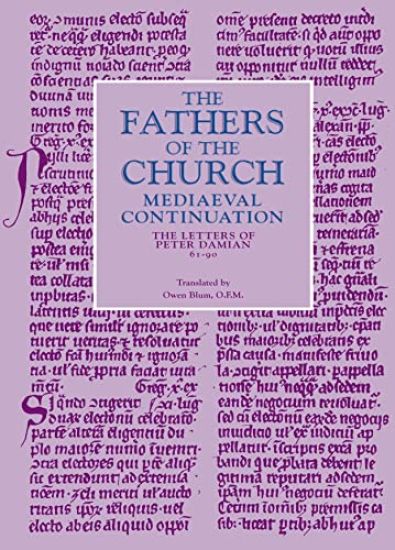
The Letters of Peter Damian 61-90
Peter Damian
The Catholic University of America Press
2014
sidottu
Peter Damian (1007-1072), an eleventh-century monk and man of letters, left a large and significant body of correspondence. Over one hundred and eighty letters have been preserved, principally from Damian's own monastery of Fonte Avellana. Ranging in length from short memoranda to longer monographs, the letters provide a contemporary account of many of the controversies of the eleventh century: purgatory, the Eucharist, clerical marriage and celibacy, immorality, and others. Peter Damian, or ""Peter the Sinner"" as he often referred to himself, was one of the most learned men of his day, and his letters are filled with both erudition and zeal for reform. This third volume of The Letters of Peter Damian is a careful, fluent, and annotated translation of Letters 61-90. These letters reveal the author's concern with the contemporary need for reforms, centering on clerical, especially episcopal, celibacy and on the ""heresy"" of simony which involved the purchase of ecclesiastical offices. In Letter 89, for example, Damian addresses the Selvismatic attempt of antipope Honorius II (Cadalus of Parma) to circumvent the election of Alexander II by the newly organized college of cardinal bishops. Also, among the letters here presented are several of a highly spiritual, even mystical content. These letters demonstrate that this active reformer was at heart a solitary soul who, when away from home, longed for his ""beloved solitude,"" where he could practice the contemplative life. Eventually, Damian grew weary of his efforts at reform and asked to be retired from his office of cardinal bishop of Ostia.Because Damian's Latin was a living language that surpasses the ability of classical Latin lexicography to cope with it, all disciplines that make use of medieval thought will welcome this English translation. Owen J. Blum's thorough notes to each letter indicate the vocabulary problems he encountered and how they were resolved. This third volume, like its companions, uses Damian's thought to understand an important and gripping period in the history of church and state. With these intimate revelations into his character and motivation, readers may more readily appreciate Damian's total dedication to his mission.