Kirjojen hintavertailu. Mukana 12 016 292 kirjaa ja 12 kauppaa.

Kirjahaku

Etsi kirjoja tekijän nimen, kirjan nimen tai ISBN:n perusteella.

1000 tulosta hakusanalla Philip Stuart

Philip Larkin

Philip Larkin

J. Booth

Palgrave Macmillan
2005
sidottu
James Booth reads Philip Larkin's mature poetry in terms of his ambiguous self-image as lonely, anti-social outsider, plighted to his art, and as nine-to-five librarian, sharing the common plight of humanity. Booth's focus is on Larkin's artistry with words, the 'verbal devices' through which this purest of lyric poets celebrates 'the experience. The beauty.' Featuring discussion for the first time of two recently discovered poems by Larkin, this original and exciting new study will be of interest to all students, scholars and enthusiasts of Larkin.
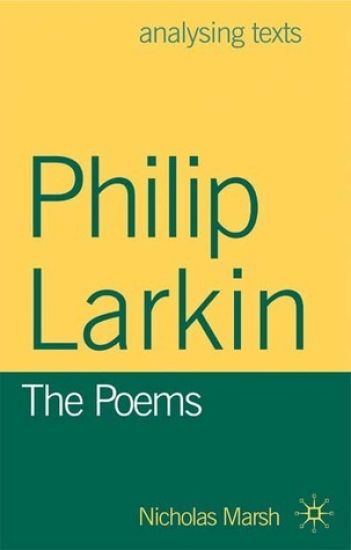
Philip Larkin

Philip Larkin

Nicholas Marsh

Red Globe Press
2007
nidottu
Controversy rages around Larkin's character and life. This book takes a fresh look at his poems through close analysis, discussion of Larkin's major concerns and demonstrating how to approach these enigmatic works. It provides background information including an account of his life, discussion of cultural context and major critical views
Philip Larkin

Philip Larkin

James Booth

Bloomsbury Publishing PLC
2015
nidottu
Philip Larkin was that rare thing among poets: a household name in his own lifetime. Lines such as ‘Never such innocence again’ and ‘Sexual intercourse began / In nineteen sixty-three’ made him one of the most popular poets of the last century. Larkin’s reputation as a man, however, has been more controversial. A solitary librarian known for his pessimism, he disliked exposure and had no patience with the literary circus. And when, in 1992, the publication of his Selected Letters laid bare his compartmentalised personal life, accusations of duplicity, faithlessness, racism and misogyny were levelled against him. There is, of course, no requirement that poets should be likeable or virtuous, but James Booth asks whether art and life were really so deeply at odds with each other. Can the poet who composed the moving ‘Love Songs in Age’ have been such a cold-hearted man? Can he who uttered the playful, self-deprecating words ‘Deprivation is for me what daffodils were for Wordsworth’ really have been so boorish? A very different public image is offered by those who shared the poet’s life: the women with whom he was romantically involved, his friends and his university colleagues. It is with their personal testimony, including access to previously unseen letters, that Booth reinstates a man misunderstood: not a gaunt, emotional failure, but a witty, provocative and entertaining presence, delightful company; an attentive son and a man devoted to the women he loved. Meticulously researched, unwaveringly frank and full of fresh material, Philip Larkin: Life, Art and Love definitively reinterprets one of our greatest poets.
Philip Melanchthon, Speaker of the Reformation

Philip Melanchthon, Speaker of the Reformation

Timothy J. Wengert

Ashgate Publishing Limited
2010
sidottu
The studies in this volume illuminate the thought and life of Philip Melanchthon, one of the most neglected major figures in Reformation history and theology. Melanchthon was one of the most widely published and respected thinkers in his own day, who authored some of the sixteenth-century's most important books on Latin and Greek grammar, rhetoric, dialectics, and history, to say nothing of his theological output, which included the first overview of Protestant theology, the first Protestant commentaries on Romans, 1 & 2 Corinthians, and John. He was also the chief drafter of the Augsburg Confession and wrote its defense, the Apology. These essays, written over the past twenty years, commemorate the 450th anniversary of Melanchthon's death in 2010. The articles provide a wide-ranging picture of Melanchthon's thought and life with topics including his view of free will, approaches to biblical interpretation, his perspective on the church fathers and world history, and comparisons to other important figures of the age, including Calvin, Luther and Erasmus.