Kirjojen hintavertailu. Mukana 12 016 292 kirjaa ja 12 kauppaa.

Kirjahaku

Etsi kirjoja tekijän nimen, kirjan nimen tai ISBN:n perusteella.

1000 tulosta hakusanalla Philo

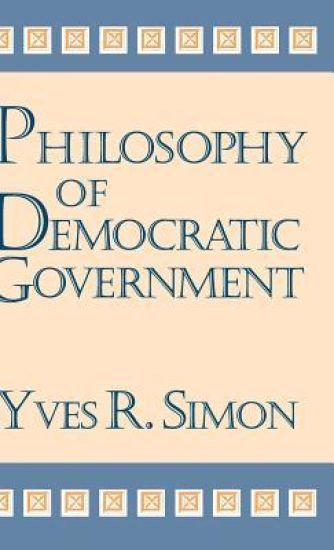
Philosophy of Democratic Government

Philosophy of Democratic Government

Yves R. Simon

University of Notre Dame Press
1993
nidottu
This complete treatise of political philosophy demonstrates Yves R. Simon's belief that, even in the best conceivable circumstances, government is needed to determine direction toward the common good and to provide the means for united action.
Philosophy Between Faith and Theology

Philosophy Between Faith and Theology

Adriaan Theodoor Peperzak

University of Notre Dame Press
2005
sidottu
Adriaan Theodoor Peperzak contends that while many Catholic philosophers try to practice a modern, autonomous style of thinking, their experience of a faith-guided life necessarily compels them to integrate their scholarly pursuits with their Christian faith. He writes, "Christians who think cannot separate their thought from their faith and theology." Indeed, he argues that the work of Christian, particularly Catholic, philosophers loses its vitality when philosophers try to restrict their reflections to natural reason alone. In this book he explores the essential unity of philosophical and theological thought from various perspectives and pleads for a radical change of method in philosophy. Peperzak maintains that the interdependencies of philosophy, theology, and the sciences must collectively determine the character of a Catholic university. For him, all serious philosophy has a profoundly religious character and is the quest for a kind of wisdom unhampered by arbitrary boundaries. His plea for a paradigm shift in philosophy and theology concentrates on the idea of speaking God's word in a way that provokes appropriate responses, including praise and prayer.
Philosophy Between Faith and Theology

Philosophy Between Faith and Theology

Adriaan Theodoor Peperzak

University of Notre Dame Press
2005
nidottu
Adriaan Theodoor Peperzak contends that while many Catholic philosophers try to practice a modern, autonomous style of thinking, their experience of a faith-guided life necessarily compels them to integrate their scholarly pursuits with their Christian faith. He writes, "Christians who think cannot separate their thought from their faith and theology." Indeed, he argues that the work of Christian, particularly Catholic, philosophers loses its vitality when philosophers try to restrict their reflections to natural reason alone. In this book he explores the essential unity of philosophical and theological thought from various perspectives and pleads for a radical change of method in philosophy. Peperzak maintains that the interdependencies of philosophy, theology, and the sciences must collectively determine the character of a Catholic university. For him, all serious philosophy has a profoundly religious character and is the quest for a kind of wisdom unhampered by arbitrary boundaries. His plea for a paradigm shift in philosophy and theology concentrates on the idea of speaking God's word in a way that provokes appropriate responses, including praise and prayer.
Philosophy of Democratic Government

Philosophy of Democratic Government

Yves R. Simon

University of Notre Dame Press
1993
sidottu
This complete treatise of political philosophy demonstrates Yves R. Simon's belief that, even in the best conceivable circumstances, government is needed to determine direction toward the common good and to provide the means for united action.
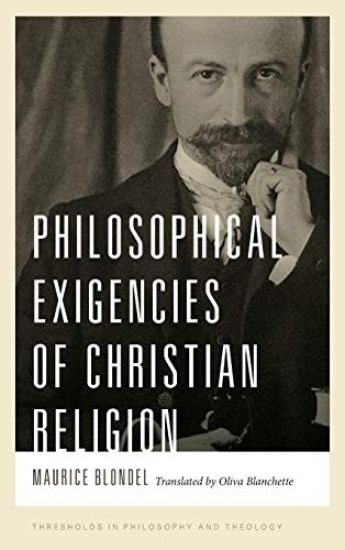
Philosophical Exigencies of Christian Religion

Philosophical Exigencies of Christian Religion

Maurice Blondel

University of Notre Dame Press
2021
sidottu
Philosophical Exigencies of Christian Religion is a translation of two of Maurice Blondel's essays. Blondel's thinking played a significant role in the deliberations and arguments of the Second Vatican Council. Although a towering figure in the history of twentieth-century Catholic thought, the later systematic works of Maurice Blondel have been largely inaccessible in the English-speaking world. Oliva Blanchette, who previously translated Blondel's early groundbreaking work Action (1893), now offers the first English translation of the final work Blondel himself signed off on the day before he died, Philosophical Exigencies of Christian Religion. This work of transition from mere philosophy to a consideration of Christian religion consists of two main essays, The Christian Sense and the shorter On Assimilation, followed by a Reconsideration and Global View and an Appendix: Clarifications and Admonitions written in answer to an inquiry by a young scholar about method. The first essay explores the Christian sense of the spiritual life and how Christian religion, even as supernatural, can come under the purview of critical philosophy. The second essay examines the move from analogy to assimilation in speaking of the Christian life. Blondel tackles the question: How does the human spirit combine with the divine spirit in such a way that neither is lost in the process? Philosophical Exigencies of Christian Religion is critical for understanding Blondel's thought. This high-quality translation and Blanchette's concise preface will appeal not only to philosophers and theologians but also to spiritual writers and directors of spiritual retreats in the Ignatian and Jesuit traditions.
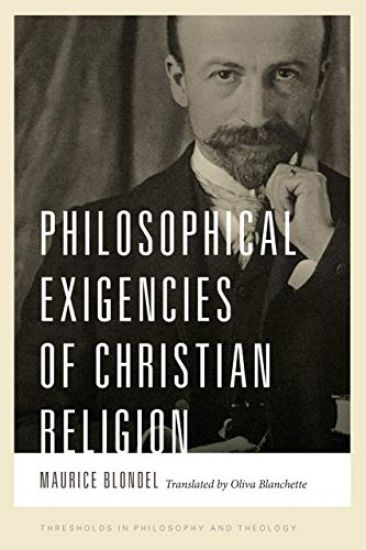
Philosophical Exigencies of Christian Religion

Philosophical Exigencies of Christian Religion

Maurice Blondel

University of Notre Dame Press
2021
nidottu
Philosophical Exigencies of Christian Religion is a translation of two of Maurice Blondel's essays. Blondel's thinking played a significant role in the deliberations and arguments of the Second Vatican Council. Although a towering figure in the history of twentieth-century Catholic thought, the later systematic works of Maurice Blondel have been largely inaccessible in the English-speaking world. Oliva Blanchette, who previously translated Blondel's early groundbreaking work Action (1893), now offers the first English translation of the final work Blondel himself signed off on the day before he died, Philosophical Exigencies of Christian Religion. This work of transition from mere philosophy to a consideration of Christian religion consists of two main essays, The Christian Sense and the shorter On Assimilation, followed by a Reconsideration and Global View and an Appendix: Clarifications and Admonitions written in answer to an inquiry by a young scholar about method. The first essay explores the Christian sense of the spiritual life and how Christian religion, even as supernatural, can come under the purview of critical philosophy. The second essay examines the move from analogy to assimilation in speaking of the Christian life. Blondel tackles the question: How does the human spirit combine with the divine spirit in such a way that neither is lost in the process? Philosophical Exigencies of Christian Religion is critical for understanding Blondel's thought. This high-quality translation and Blanchette's concise preface will appeal not only to philosophers and theologians but also to spiritual writers and directors of spiritual retreats in the Ignatian and Jesuit traditions.
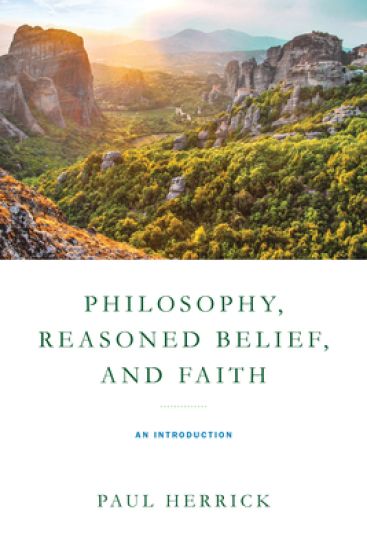
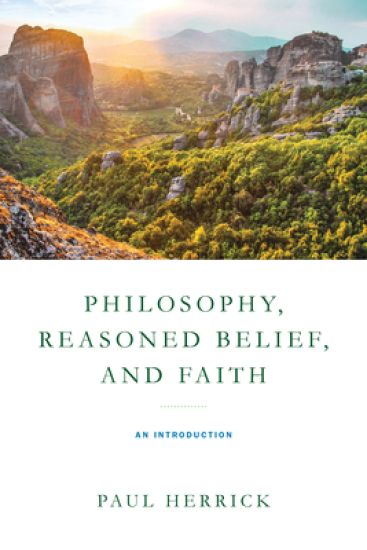
Philosophy, Reasoned Belief, and Faith

Philosophy, Reasoned Belief, and Faith

Paul Herrick

UNIVERSITY OF NOTRE DAME PRESS
2022
sidottu
This clear, readable introduction to philosophy presents a traditional theistic view of the existence of God. There are many fine introductions to philosophy, but few are written for students of faith by a teacher who is sensitive to the intellectual challenges they face studying in an environment that is often hostile to religious belief. Many introductory texts present short, easy-to-refute synopses of the traditional arguments for God's existence, the soul, free will, and objective moral value rooted in God's nature, usually followed by strong objections stated as if they are the last word. This formula may make philosophy easier to digest, but it gives many students the impression that there are no longer any good reasons to accept the beliefs just mentioned. Philosophy, Reasoned Belief, and Faith is written for philosophy instructors who want their students to take a deeper look at the classic theistic arguments and who believe that many traditional views can be rigorously defended against the strongest objections. The book is divided into four sections, focusing on philosophy of religion, an introduction to epistemology, philosophy of the human person, and philosophical ethics. The text challenges naturalism, the predominant outlook in the academic world today, while postmodernist relativism and skepticism are also examined and rejected. Students of faith—and students without faith—will deepen their worldviews by thoughtfully examining the philosophical arguments that are presented in this book. Philosophy, Reasoned Belief, and Faith will appeal to Christian teachers, analytic theists, home educators, and general readers interested in the classic arguments supporting a theistic worldview.
Philosophy, Reasoned Belief, and Faith

Philosophy, Reasoned Belief, and Faith

Paul Herrick

UNIVERSITY OF NOTRE DAME PRESS
2022
nidottu
This clear, readable introduction to philosophy presents a traditional theistic view of the existence of God. There are many fine introductions to philosophy, but few are written for students of faith by a teacher who is sensitive to the intellectual challenges they face studying in an environment that is often hostile to religious belief. Many introductory texts present short, easy-to-refute synopses of the traditional arguments for God's existence, the soul, free will, and objective moral value rooted in God's nature, usually followed by strong objections stated as if they are the last word. This formula may make philosophy easier to digest, but it gives many students the impression that there are no longer any good reasons to accept the beliefs just mentioned. Philosophy, Reasoned Belief, and Faith is written for philosophy instructors who want their students to take a deeper look at the classic theistic arguments and who believe that many traditional views can be rigorously defended against the strongest objections. The book is divided into four sections, focusing on philosophy of religion, an introduction to epistemology, philosophy of the human person, and philosophical ethics. The text challenges naturalism, the predominant outlook in the academic world today, while postmodernist relativism and skepticism are also examined and rejected. Students of faith—and students without faith—will deepen their worldviews by thoughtfully examining the philosophical arguments that are presented in this book. Philosophy, Reasoned Belief, and Faith will appeal to Christian teachers, analytic theists, home educators, and general readers interested in the classic arguments supporting a theistic worldview.
Philosophy and the Passions

Philosophy and the Passions

Michel Meyer

Pennsylvania State University Press
2000
sidottu
The subject of the passions has always haunted Western philosophy and, more often than not, aroused harsh judgments. For the passions represent a force of excess and lawlessness in humanity that produces troubling, confusing paradoxes.Michel Meyer provides new insight into an age-old dilemma: Does passion torture people because it blinds them, or, on the contrary, does it permit them to apprehend who and what we really are?
Philosophy and the Passions

Philosophy and the Passions

Michel Meyer

Pennsylvania State University Press
2000
pokkari
The subject of the passions has always haunted Western philosophy and, more often than not, aroused harsh judgments. For the passions represent a force of excess and lawlessness in humanity that produces troubling, confusing paradoxes.Michel Meyer provides new insight into an age-old dilemma: Does passion torture people because it blinds them, or, on the contrary, does it permit them to apprehend who and what we really are?
Philosophical Historicism and the Betrayal of First Philosophy

Philosophical Historicism and the Betrayal of First Philosophy

Carl Page

Pennsylvania State University Press
1995
pokkari
The recent emergence, among philosophers, of the view that the activity of human reason in all its possible modes must also be historicized, including the activity of philosophizing itself, may be found in writers as diverse as Hans-Georg Gadamer, Richard Rorty, Michel Foucault, and Alasdair MacIntyre. This contemporary view of human reason contrasts with the traditional commitments of "First Philosophy," Aristotle's name for the knowledge of things through their ultimate causes and principles. This book challenges the prevailing historicist orthodoxies about the nature of reason and philosophy and offers the first comprehensive analysis and critique of historicism in its current philosophical form. Can philosophical historicism reasonably justify the interpretation of human reason on which its own objections to First Philosophy are based? While Carl Page ultimately concludes that it cannot, he also seeks to rehabilitate historicism's motivating insights by showing how they derive from questions Hegel and Heidegger raised about reason's relation to history.
Philosophy and Rhetoric in Dialogue

Philosophy and Rhetoric in Dialogue

Pennsylvania State University Press
2008
pokkari
Philosophy and Rhetoric, one of Penn State Press’s longest-running journals, was conceived at a time of immense philosophical upheaval: rhetoric as a field of study—first dismissed by Descartes—was being reexamined after decades of neglect. Now, nearly forty years later, Philosophy and Rhetoric continues to hold pride of place in this reinvigorated discipline. The brainchild of Penn State professors Carroll Arnold and Henry Johnstone, Philosophy and Rhetoric boasts work from dozens of international luminaries from a broad spectrum of specializations. To commemorate the fortieth year of publication, current series editor Gerard Hauser assembled a volume of the journal’s most noteworthy articles, beginning with Henry Johnstone’s gem of an essay underscoring the essential relationship between the art of rhetoric and philosophy. Donald Verene elaborates that initial thesis and suggests that rhetoric and philosophy are not distinct entities in conversation, but instead that rhetoric provides a forum in which philosophy can exist. Jean Goodwin looks at the theory in terms of a teacher/student relationship, and Barbara Biesecker looks at how governments in the war on terror employ rhetoric to manipulate the social consciousness. A concluding article by Carroll Arnold casts rhetoric as a dramatic device essential to establishing personal sovereignty. During its forty years, Hauser writes, the journal “radically altered the relationship between philosophy and rhetoric from irreconcilable antagonists to interlocutors in a shared inquiry into the constitutive powers of discourse.” This series of essays brilliantly traces the arc of that accomplishment.
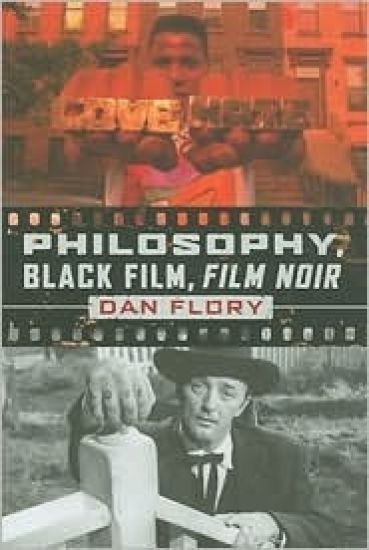
Philosophy, Black Film, Film Noir

Philosophy, Black Film, Film Noir

Dan Flory

Pennsylvania State University Press
2008
sidottu
In the past two decades, African American filmmakers like Spike Lee have made significant contributions to the dialogue about race in the United States by adapting techniques from classic film noir to black American cinema. This book is the first to examine these artistic innovations in detail from a philosophical perspective informed by both cognitive film theory and critical race theory.Dan Flory explores the techniques and themes that are used in black film noir to orchestrate the audience’s emotions of sympathy and empathy felt toward morally complex characters whom people might not typically find appealing in real life, such as thugs, drug dealers, or murderers. Using an approach that combines the cognitive insights of theorists like David Bordwell, Noël Carroll, and Murray Smith with the reflective Wittgensteinian methods for considering film employed by Stanley Cavell, Stephen Mulhall, and William Rothman, Flory shows how these films scrutinize the state of race in America, induce their viewers to do so as well, and illuminate the ways in which categories of race have defined and continue to direct much of our vision of the moral self and what counts as appropriate moral sensibility.