
Kirjahaku
Etsi kirjoja tekijän nimen, kirjan nimen tai ISBN:n perusteella.
1000 tulosta hakusanalla Pilo

Up to now, environmental policies have relied mainly on rules, regulations, and prohibitions. This kind of environmental policy -- a clearly reactive approach – has shown a mounting array of limitations. There is a clear need to seek new solutions, in particular those involving the initiative of firms themselves. Since the mid-1980’s, a new approach called “environmental management” has been established in research and practical applications; it is designed to systematically integrate environmental considerations into company activities. If, for instance, environmental objectives are being formulated for an enterprise, it is imperative to identify, highlight, and analyze real and significant environmental impacts of the firm's activities and to take appropriate measures to improve its performance. Controlling and implementing these environmental objectives requires suitable structures, procedures, and tools. Many motivated companies have approached the issue of environmental management through incorporating methods such “continual improvement processes” and “Life Cycle Assessment” into the various operational activities of the enterprise. Some firms initiated such transformation processes at their own production sites because it was easier to identify their own environmental impacts than to analyze, let alone mitigate, the effects of upstream and downstream processes. However, in many cases these processes are decisive factors in the overall environmental performance of a product. It has become clear that product design can influence these processes to a great extent.

Up to now, environmental policies have relied mainly on rules, regulations, and prohibitions. This kind of environmental policy -- a clearly reactive approach – has shown a mounting array of limitations. There is a clear need to seek new solutions, in particular those involving the initiative of firms themselves. Since the mid-1980’s, a new approach called “environmental management” has been established in research and practical applications; it is designed to systematically integrate environmental considerations into company activities. If, for instance, environmental objectives are being formulated for an enterprise, it is imperative to identify, highlight, and analyze real and significant environmental impacts of the firm's activities and to take appropriate measures to improve its performance. Controlling and implementing these environmental objectives requires suitable structures, procedures, and tools. Many motivated companies have approached the issue of environmental management through incorporating methods such “continual improvement processes” and “Life Cycle Assessment” into the various operational activities of the enterprise. Some firms initiated such transformation processes at their own production sites because it was easier to identify their own environmental impacts than to analyze, let alone mitigate, the effects of upstream and downstream processes. However, in many cases these processes are decisive factors in the overall environmental performance of a product. It has become clear that product design can influence these processes to a great extent.

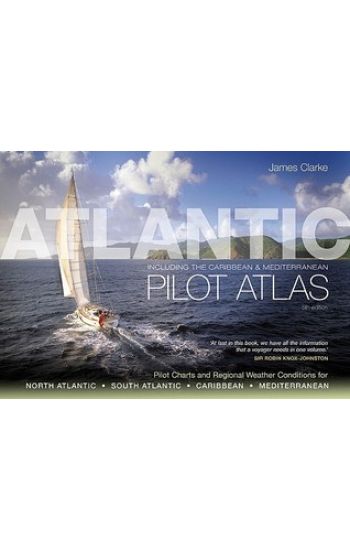
The Atlantic Pilot Atlas provides a complete guide to the weather of the North and South Atlantic, the Mediterranean and the Caribbean.Now revised for the fifth edition, it includes weather forecasting, global warming and hurricane avoidance information as well as wind and current charts, wave heights, tropical cyclone tracks and shipping routes. Any skipper contemplating an ocean crossing needs to know what conditions he is likely to meet en route, in order to plan a safe and comfortable passage, and this book provides exactly what is needed.40 specially drawn colour charts show detailed information on the winds, currents, gale frequencies, rough sea conditions, hurricane tracks and recommended sailing routes for each month of the year for all these oceans.'This is what every yachtsman contemplating an extended cruise needs in one book... No serious offshore bookshelf should be without one.' Yachting Monthly 'Without doubt the most useful guide for anyone planning a Transatlantic voyage.' Ships & Ports
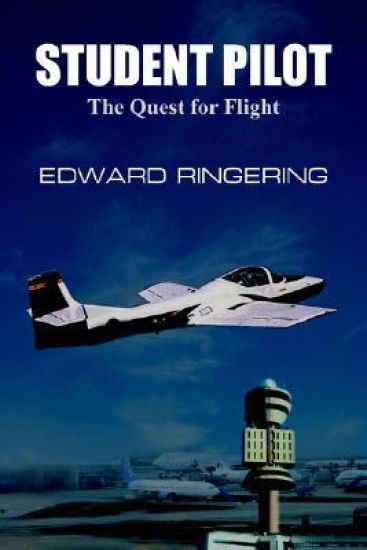
Ed Ringering takes the successes and failures of several student pilots and weaves them into the story of one particular student who has dreamed of flying since his early years in grade school. You will follow this student pilot's journey from the very first flight to the attainment of his dream and only then learn how important commitment and dedication can be when working towards a dream.



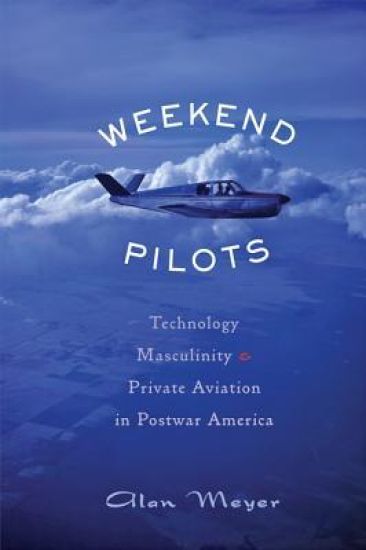
In 1960, 97 percent of private pilots were men. More than half a century later, this figure has barely changed. In Weekend Pilots, Alan Meyer provides an engaging account of the post-World War II aviation community. Drawing on public records, trade association journals, newspaper accounts, and private papers and interviews, Meyer takes readers inside a white, male circle of the initiated that required exceptionally high skill levels, that celebrated facing and overcoming risk, and that encouraged fierce personal independence. The Second World War proved an important turning point in popularizing private aviation. Military flight schools and postwar GI-Bill flight training swelled the ranks of private pilots with hundreds of thousands of young, mostly middle-class men. Formal flight instruction screened and acculturated aspiring fliers to meet a masculine norm that traced its roots to pre-war barnstorming and wartime combat training. After the war, the aviation community's response to aircraft designs played a significant part in the technological development of personal planes. Meyer also considers the community of pilots outside the cockpit-from the time-honored tradition of "hangar flying" at local airports to air shows to national conventions of private fliers-to argue that almost every aspect of private aviation reinforced the message that flying was by, for, and about men. The first scholarly book to examine in detail the role of masculinity in aviation, Weekend Pilots adds new dimensions to our understanding of embedded gender and its long-term effects.






New Piloting Directions for the Mediterranean Sea, the Adriatic or Gulf of Venice, the Black Sea, Grecian Archipelago and the Seas of Marmara and Azof
John William Norie
Kessinger Pub
2007
pokkari