Kirjojen hintavertailu. Mukana 12 190 997 kirjaa ja 12 kauppaa.

Kirjahaku

Etsi kirjoja tekijän nimen, kirjan nimen tai ISBN:n perusteella.

1000 tulosta hakusanalla Quentin Labridy

Psalms 51–150

Psalms 51–150

Quentin F. Wesselschmidt; Thomas C. Oden

Inter-Varsity Press,US
2007
sidottu
The Psalms have long served a vital role in the individual and corporate lives of Christians, expressing the full range of human emotions, including some that we are ashamed to admit. The Psalms reverberate with joy, groan in pain, whimper with sadness, grumble in disappointment, and rage with anger. The church fathers employed the Psalms widely. In liturgy they used them both as hymns and as Scripture readings. Within them they found pointers to Jesus both as Son of God and as Messiah. They also employed the Psalms widely as support for other New Testament teachings, as counsel on morals, and as forms for prayer. Especially noteworthy was their use of Psalms in the great doctrinal controversies. The Psalms were used to oppose subordinationism, modalism, Arianism, Apollinarianism, Nestorianism, Eutychianism, and Monophysitism, among others. More than fifty church fathers are cited in the Ancient Christian Commentary on Scripture volume from Ambrose to Zephyrinus. From the British Isles, Gaul, and the Iberian Peninsula, we find Hilary of Poitiers, Prudentius, John Cassian, Valerian of Cimiez, Salvian the Presbyter, Caesarius of Arles, Martin of Bruga, Braulio of Saragossa, and Bede. From Rome and Italy, we find Clement, Justin Martyr, Callistus, Hippolytus, Novatian, Rufinus, Maximus of Turin, Peter Chrysologus, Leo the Great, Cassiodorus, and Gregory the Great. Carthage and North Africa are represented by Tertullian, Cyprian, Augustine, and Fulgentius. Fathers from Alexandria and Egypt include Clement, Origen, Dionysius, Pachomius, Athanasius, Cyril, and Poemen. Constantinople and Asia Minor supply the Great Cappadocians—Basil the Great and the two Gregorys, from Nazianzus and Nyssa—plus Evagrius of Pontus and Nicetas of Remesiana. From Antioch and Syria we find Ephrem, John Chrysostom, Theodore of Mopsuestia, Theodoret of Cyr, Philoxenus of Mabbug, Sahdona, and John of Damascus. Finally, Jerusalem, Palestine and Mesopotamia are represented by Eusebius of Caesarea, Aphrahat, Cyril, Jacob of Sarug, Jerome, and Isaac of Nineveh. Readers of these selections, some of which appear here for the first time in English, will glean from a rich treasury of deep devotion and profound theological reflection.
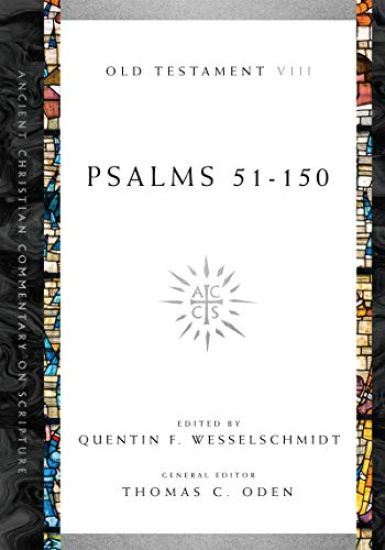
Psalms 51–150

Psalms 51–150

Quentin F. Wesselschmidt; Thomas C. Oden

IVP Academic
2019
nidottu
The Psalms have long served a vital role in the individual and corporate lives of Christians, expressing the full range of human emotions, including some that we are ashamed to admit. The Psalms reverberate with joy, groan in pain, whimper with sadness, grumble in disappointment, and rage with anger. The church fathers employed the Psalms widely. In liturgy they used them both as hymns and as Scripture readings. Within them they found pointers to Jesus both as Son of God and as Messiah. They also employed the Psalms widely as support for other New Testament teachings, as counsel on morals, and as forms for prayer. Especially noteworthy was their use of Psalms in the great doctrinal controversies. The Psalms were used to oppose subordinationism, modalism, Arianism, Apollinarianism, Nestorianism, Eutychianism, and Monophysitism, among others. More than fifty church fathers are cited in the Ancient Christian Commentary on Scripture volume from Ambrose to Zephyrinus. From the British Isles, Gaul, and the Iberian Peninsula, we find Hilary of Poitiers, Prudentius, John Cassian, Valerian of Cimiez, Salvian the Presbyter, Caesarius of Arles, Martin of Bruga, Braulio of Saragossa, and Bede. From Rome and Italy, we find Clement, Justin Martyr, Callistus, Hippolytus, Novatian, Rufinus, Maximus of Turin, Peter Chrysologus, Leo the Great, Cassiodorus, and Gregory the Great. Carthage and North Africa are represented by Tertullian, Cyprian, Augustine, and Fulgentius. Fathers from Alexandria and Egypt include Clement, Origen, Dionysius, Pachomius, Athanasius, Cyril, and Poemen. Constantinople and Asia Minor supply the Great Cappadocians—Basil the Great and the two Gregorys, from Nazianzus and Nyssa—plus Evagrius of Pontus and Nicetas of Remesiana. From Antioch and Syria we find Ephrem, John Chrysostom, Theodore of Mopsuestia, Theodoret of Cyr, Philoxenus of Mabbug, Sahdona, and John of Damascus. Finally, Jerusalem, Palestine and Mesopotamia are represented by Eusebius of Caesarea, Aphrahat, Cyril, Jacob of Sarug, Jerome, and Isaac of Nineveh. Readers of these selections, some of which appear here for the first time in English, will glean from a rich treasury of deep devotion and profound theological reflection.

Rob Riley

Rob Riley

Quentin Beresford

Aboriginal Studies Press
2006
nidottu
Rob Riley was at the centre of debates that polarised views on race relations in Australia: land rights, treaty, deaths in custody, self-determination, justice system, native title and the Stolen Generations. Tragically he took his own life in 1996, shocking community leaders and citizens alike. Riley's life raises profound questions about our past, our present and our future.
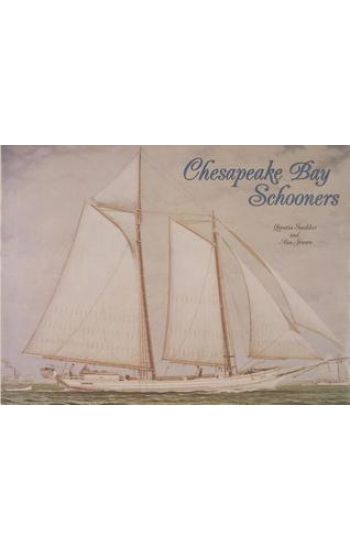
Chesapeake Bay Schooners

Chesapeake Bay Schooners

Quentin Snediker

Schiffer Publishing Ltd
2009
nidottu
Chesapeake Bay Schooners focuses on the evolution of a uniquely American vessel from its European origins to the shipyards and waters of the bay, where it was perfected. This story of the schooners began with the handy colonial schooner, with the search for speed culminating in the creation of the graceful Baltimore clipper. These swift, sharp-built vessels of the Chesapeake gave rise to countless tales of high adventure and romance. No other book has chronicled the history of the commercial schooner, including its economic and social aspects. The authors spent hours interviewing maritime historians, and relied heavily upon those who sailed the last schooners to tell their own stories. Extensive research at private and public libraries, in photo collections, and in archives has yielded previously unpublished material and photographs to flesh out the history of this significant influence in bay commercial enterprise. But, above all, this narrative is a tribute to these often overlooked commercial vessels that were a mainstay of commerce on the bay and to the tenacity and dedication of the men and women who operated them.
Photography at MoMA: 1960 to Now - Volume II

Photography at MoMA: 1960 to Now - Volume II

Quentin Bajac; Roxana Marcoci; Sarah Meister; Eva Respini

Museum of Modern Art
2015
sidottu
The Museum of Modern Art has one of the greatest collections of 20th-century photography in the world. As one of three volumes dedicated to a new history of photography published by the Museum, this publication comprises a comprehensive catalogue of the collection post-1960s and brings much-needed new critical perspective to the most prominent artists working with the photographic medium of the late 20th and early 21st centuries. At a moment when photography is undergoing fast-paced changes and artists are seeking to redefine its boundaries in new and exciting ways, Photography at MoMA serves as an excellent resource for understanding the expanded field of contemporary photography today. The book begins with an in-depth introduction followed by eight chapters of full-color plates, each introduced by a short essay. Over 250 artists are featured, including Diane Arbus, John Baldessari, Jan Dibbets, Rineke Dijkstra, William Eggleston, Lee Friedlander, Louise Lawler, Zoe Leonard, Helen Levitt, Sigmar Polke, Cindy Sherman, Wolfgang Tillmans, Jeff Wall, Carrie Mae Weems, Hannah Wilke and Garry Winogrand, among many others.
Fort Worth

Fort Worth

Quentin McGown

Texas Christian University Press,U.S.
2008
sidottu
Phil Vinson grew up in Fort Worth, fascinated by the city's visual icons: Mrs. Baird's Bakery on Summit Avenue, historic Thistle Hill, the tower at the Will Rogers Complex, the Tarrant County Courthouse, the Texas Electric smokestacks, the art-deco design of the Texas & Pacific depot, the Paddock Viaduct. He started making photographs while still in his teens but as an adult he rediscovered the visual richness of his hometown. Once he started photographing, he couldn't stop. For the past four decades, through careers as a journalist, photographer, and teacher, he has spent the weekends driving around taking pictures.Vinson has particular respect for subjects that have been around for enough years to acquire a certain dignity and nobility. Aware that the days of many of these old structures may be numbered, he has tried to document such buildings as the Seventh Street Theater before they disappeared to the wrecking ball.Fort Worth is well documented in photographs, but in many photographs Vinson has moved beyond documentation to a more intimate, personal view of the city, looking for dramatic light and compelling visual design, focusing on architectural details and graphic possibilities not obvious at a casual glance. While most of the photographs in this collection focus on Fort Worth, Vinson, who lived in Childress as a small child, is also drawn to rural or small-town subjects and includes here pictures taken on weekend drives to small communities in North and West Texas.
The Essential Federalist

The Essential Federalist

Quentin P. Taylor

Rowman Littlefield
1998
sidottu
Jefferson called The Federalist "the best commentary on the principles of government which was ever written," and yet the text is considered lifeless and impenetrable by all but the most persistent readers. The Essential Federalist presents a bold new approach to reading one of the most important documents in American history. By careful selection, organization, and annotation of the essays' most meaningful passages, this book showcases what is central to The Federalist. "If the road over which you will still have to pass," in reading these papers, wrote Publius, "should in some places appear to you tedious or irksome, you will recollect that you are in quest of information on a subject the most momentous which can engage the attention of free people. . . . It will be my aim to remove the obstacles to your progress in as compendious a manner as it can be done, without sacrificing utility to dispatch." Dr. Quentin P. Taylor takes up Publius' challenge by making The Federalist an understandable and usable resource. This book will be essential reading for anyone who seeks to understand the roots of American government.
Wiser Than Despair: The Evolution of Ideas in the Relationship of Music and the Christian Church
This book addresses a highly complex and elusive matter: why the Christian Church was able to contribute so generously to music from its earliest days through the 18th century and why it has suffered since that time from a creeping artistic paralysis. Modern attitudes and assumptions often find the values and accomplishments of the Christian worldview enigmatic, even repellant, and church music has come to be one of the primary areas in which the tension between conflicting worldviews continues to be worked out on a daily basis. This thoughtful work investigates the historical interaction of theology, philosophy and music, and will be of interest to church musicians, theologians, music historians and cultural anthropologists. In its concluding chapter this work explores a number of basic questions: In what sense, if any, can the arts (and then the fine arts) be considered profoundly significant for modern society? Is there a meaningful role for artists of genius and total commitment? Do the arts (and then the fine arts) have any profound significance for the Church in the modern world? Of what significance, if any, to the Church in the modern world are the great Christian artistic accomplishments of the past? This exploration is by means of excerpts from historical sources, quotations from modern authors, and commentary on both. It calls upon historical, philosophical, theological, liturgical, anthropological, and musical sources and concepts in an attempt to develop a comprehensive understanding of musical developments that have served the Christian church for centuries and that have also provided a rich heritage of art music.
The Number and the Siren

The Number and the Siren

Quentin Meillassoux

Sequence Press
2012
pokkari
A philosophical interrogation of the concepts of chance, contingency, and eternity through a concentrated study of Mallarme's poem "Un Coup de Des."A meticulous literary study, a detective story a la Edgar Allan Poe, a treasure-hunt worthy of an adventure novel-such is the register in which can be deciphered the hidden secrets of a poem like no other. Quentin Meillassoux, author of After Finitude, continues his philosophical interrogation of the concepts of chance, contingency, infinity, and eternity through a concentrated study of Mallarme's poem "Un Coup de Des," patiently deciphering its enigmatic meaning on the basis of a dazzlingly simple and lucid insight with regard to Mallarme's "unique Number."The decisive point of the investigation proposed by Meillassoux comes with a discovery, unsettling and yet as simple as a child's game. The Number that "can be no other" can only be revealed to us via a secret code, hidden in the "Coup de des" like a key that finally unlocks every one of its poetic devices. Thus is also unveiled the meaning of that siren, emerging for a lightning-flash amongst the debris of the shipwreck: as the living heart of a drama that is still unfolding.With this bold new interpretation of Mallarme's work, Meillassoux offers brilliant insights into modernity, poetics, secularism, and religion, and opens a new chapter in his philosophy of radical contingency.The volume contains the entire text of the "Coup de des" and three other poems, with new English translations.
Tommy Frasier and the Planet of the Slugs

Tommy Frasier and the Planet of the Slugs

Quentin Dodd

Snake Year Press
2012
nidottu
The Space Slugs need a hero One afternoon, Tommy Frasier finds a talking slug hiding in his refrigerator. Things get crazier from there. Soon, Tommy is traveling across the galaxy, fighting space pirates and Arctic Viking Ducks, to help his slimy new friends. Will he save the planet of the slugs? Find out inside Ages 7 and up
Tennis Camp of the Living Dead

Tennis Camp of the Living Dead

Quentin Dodd

Snake Year Press
2013
nidottu
Stickley Smythe is spending the summer at Bright River Tennis Academy. He's playing against top competition and learning from the best tennis coaches in the country.But something isn't quite right. Everyone else thinks the camp is perfectly normal, but Stickley can't help asking questions, such as: "Why does the camp pro never go out in the sunlight?" "Why are they building coffins in arts and crafts class?" "Why do the villagers across the river fear the camp so much?" and, most importantly: "Why did he agree to come here in the first place?" As Stickley works to unravel the mystery, he realizes that he's staying at no ordinary summer camp. Instead, he's stumbled upon the Tennis Camp of the Living Dead
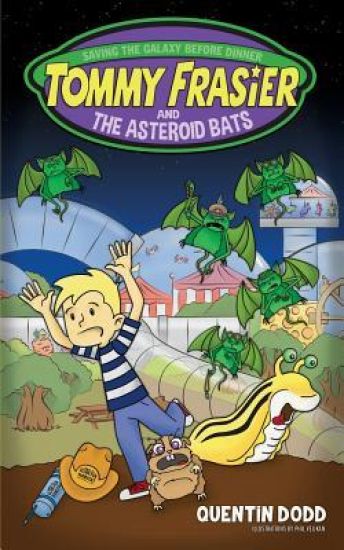
Tommy Frasier and the Asteroid Bats

Tommy Frasier and the Asteroid Bats

Quentin Dodd

Snake Year Press
2016
nidottu
Tommy Frasier's Second Adventure The Ultra Fun Habitat is the most exciting amusement park in the galaxy. It has rides, it has games, it has every kind of junk food and souvenir imaginable. It even has free tickets What could go wrong? Plenty. Tommy and his alien friends discover that it's easy to get into the Ultra Fun Habitat, but getting out will be their biggest challenge yet
The Princess of Neptune

The Princess of Neptune

Quentin Dodd

Snake Year Press
2016
pokkari
Formula for Adventure: A teenage punk-rock drummer and her pesky younger brotherA doomed effort to get a good grade in science classA world-famous research institute, led by a fearless father and sonA terrible secret behind a beloved fast-food franchiseAn intergalactic beauty pageantA singing cockroach from the moonAn entire planet afraid to go to the mallA deranged plot to become the world's biggest pop starMix them all together and you get. . . Confused? No A hilarious novel by Quentin Dodd? Yes