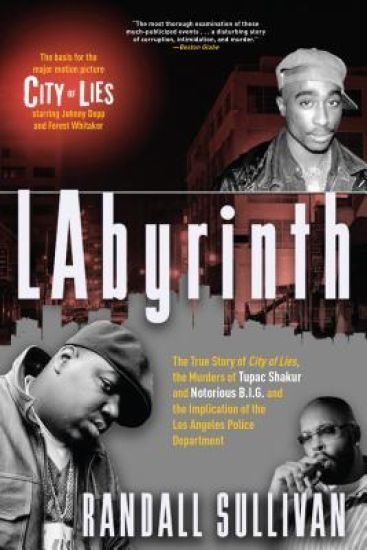
"Flaunt" magazine declares "LAbyrinth" "absolutely impossible to put down." Acclaimed journalist Sullivan follows Russell Poole, an LAPD detective who discovered that a growing cadre of black officers were allied not only with Death Row but with the murderous Bloods street gang. of photos.
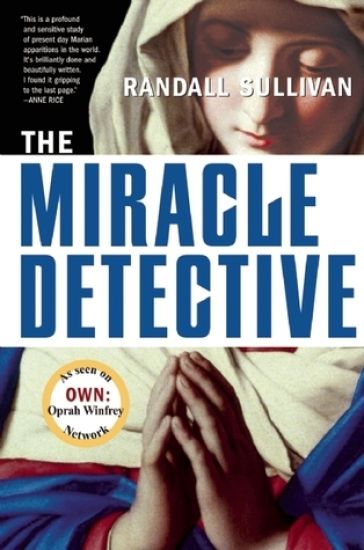
In a thought-provoking assessment about what constitutes a miracle in the modern world, the author of The Price of Experience investigates the phenomenon of Virgin Mary visions around the world and the team of theologians, historians, and postulators charged by the Vatican with investigating such incidents. Reprint. 35,000 first printing.
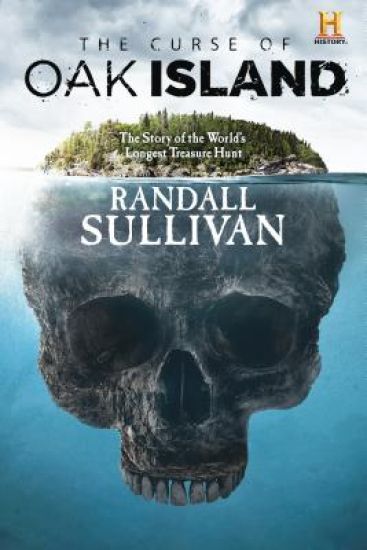
UPDATED WITH NEW MATERIAL FROM THE AUTHOR In The Curse of Oak Island, longtime Rolling Stone contributing editor and journalist Randall Sullivan explored the curious history of Oak Island and the generations of people who tried and failed to unlock its secrets. Drawing on his exclusive access to Marty and Rick Lagina, stars of the History Channel’s television show The Curse of Oak Island, Sullivan delivers an up to the minute chronicle of their ongoing search for the truth. In 1795, a teenager discovered a mysterious circular depression in the ground on Oak Island, in Nova Scotia, Canada, and ignited rumors of buried treasure. Early excavators uncovered a clay-lined shaft containing layers of soil interspersed with wooden platforms, but when they reached a depth of ninety feet, water poured into the shaft and made further digging impossible. Since then the mystery of Oak Island’s “Money Pit” has enthralled generations of treasure hunters, including a Boston insurance salesman whose obsession ruined him; young Franklin Delano Roosevelt; and film star Errol Flynn. Perplexing discoveries have ignited explorers’ imaginations: a flat stone inscribed in code; a flood tunnel draining from a man-made beach; a torn scrap of parchment; stone markers forming a huge cross. Swaths of the island were bulldozed looking for answers; excavation attempts have claimed two lives. Theories abound as to what’s hidden on Oak Island. Could it be pirates’ treasure or Marie Antoinette’s lost jewels? Or perhaps the Holy Grail or proof of the identity of the true author of Shakespeare’s plays? In this rich, fascinating account, Sullivan takes readers along as the Lagina brothers mount the most comprehensive effort yet to crack the mystery, and chronicles the incredible history of the “curse” of Oak Island, where for two centuries dreams of buried treasure have led intrepid treasure hunters to sacrifice everything.
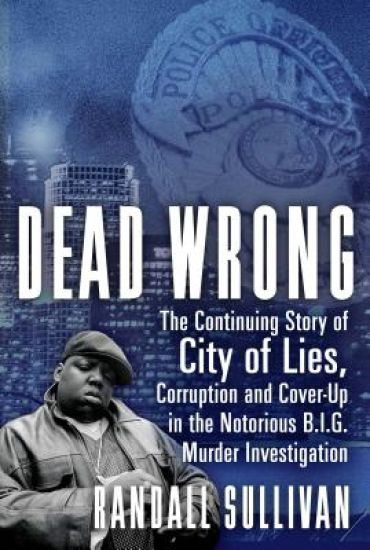
"[An] engrossing, damning tale of widespread unchecked corruption in one of the nation's largest police departments, one that deserves attention . . . Exhaustively researched . . . The most thorough examination of these much-publicized events."--Boston Globe, on LAbyrinthIn 2002, acclaimed journalist Randall Sullivan's groundbreaking book LAbyrinth ignited a firestorm with its startling disclosures about corruption in the LAPD. It told the story of Russell Poole, a highly decorated LAPD detective, who uncovered a cabal of "gangsta cops" tied to Marion "Suge" Knight's notorious rap label, Death Row Records, and allegedly to the murders of Tupac Shakur and the Notorious B.I.G. Over twenty years later, no one has been held accountable for their killings.Now Dead Wrong tells the story of the last sixteen years in the B.I.G. investigations, and uncovers the conspiracy of silence that met the estate's wrongful death suit against the City. Back in 2001, an eyewitness identified the man who shot Biggie as Amir Muhammad, a man who was former LAPD officer, Death Row associate, and convicted bank robber David Mack's college roommate and the only man to visit him in prison. Poole's investigation was repeatedly directed away from Mack and Muhammad, and the wrongful death lawsuit sought to make the city explain why--but instead, investigators encountered a disturbing pattern of selective investigation, hidden evidence, and possible witness tampering. Exclusive interviews with the FBI's lead investigator of the Biggie murder demonstrate a conspiracy that went to the top, and which implicates some of the most powerful men in law enforcement nationally. A gripping investigation into murder, police corruption, and the corridors of power in Los Angeles, Dead Wrong is full of shocking revelations about a mystery that continues to hold us twenty years on.
A vivid portrait of the Columbia River Bar that combines maritime history, adventure journalism, and memoir, bringing alive the history—and present—of one of the most notorious stretches of water in the world Off the coast of Oregon, the Columbia River flows into the Pacific Ocean and forms the Columbia River Bar: a watery collision so turbulent and deadly that it’s nicknamed the Graveyard of the Pacific. Two thousand ships have been wrecked on the bar since the first European ship dared to try to cross it in the late 18thcentury. For decades ships continued to make the bar crossing with great peril, first with native guides and later with opportunistic newcomers, as Europeans settled in Washington and Oregon, displacing the natives and transforming the river into the hub of a booming region. Since then, the commercial importance of the Columbia River has only grown, and despite the construction of jetties on either side, the bar remains treacherous, even today a site of shipwrecks and dramatic rescues as well as power struggles between small fishermen, powerful shipowners, local communities in Washington and Oregon, the Coast Guard, and the Columbia River Bar Pilots – a small group of highly skilled navigators who help guide ships through the mouth of the Columbia. When Randall Sullivan and a friend set out to cross the bar in a two-man kayak, they’re met with skepticism and concern. But on a clear day in July 2021, when the tides and weather seem right, they embark. As they plunge through the currents that have taken so many lives, Randall commemorates the brave sailors that made the crossing before him – including his own abusive father, a sailor himself who also once dared to cross the bar – and reflects on toxic masculinity, fatherhood, and what drives men to extremes. Rich with exhaustive research and propulsive narrative, Graveyard of the Pacific follows historical shipwrecks through the moment-by-moment details that often determined whether sailors would live or die, exposing the ways in which boats, sailors, and navigation have changed over the decades. As he makes his way across the bar, floating above the wrecks and across the same currents that have taken so many lives, Randall Sullivan faces the past, both in his own life and on the Columbia River Bar.
A vivid portrait of the Columbia River Bar that combines maritime history, adventure journalism, and memoir, bringing alive the history—and present—of one of the most notorious stretches of water in the world Off the coast of Oregon, the Columbia River flows into the Pacific Ocean and forms the Columbia River Bar: a watery collision so turbulent and deadly that it’s nicknamed the Graveyard of the Pacific. Two thousand ships have been wrecked on the bar since the first European ship dared to try to cross it in the late 18thcentury. For decades ships continued to make the bar crossing with great peril, first with native guides and later with opportunistic newcomers, as Europeans settled in Washington and Oregon, displacing the natives and transforming the river into the hub of a booming region. Since then, the commercial importance of the Columbia River has only grown, and despite the construction of jetties on either side, the bar remains treacherous, even today a site of shipwrecks and dramatic rescues as well as power struggles between small fishermen, powerful shipowners, local communities in Washington and Oregon, the Coast Guard, and the Columbia River Bar Pilots – a small group of highly skilled navigators who help guide ships through the mouth of the Columbia. When Randall Sullivan and a friend set out to cross the bar in a two-man kayak, they’re met with skepticism and concern. But on a clear day in July 2021, when the tides and weather seem right, they embark. As they plunge through the currents that have taken so many lives, Randall commemorates the brave sailors that made the crossing before him – including his own abusive father, a sailor himself who also once dared to cross the bar – and reflects on toxic masculinity, fatherhood, and what drives men to extremes. Rich with exhaustive research and propulsive narrative, Graveyard of the Pacific follows historical shipwrecks through the moment-by-moment details that often determined whether sailors would live or die, exposing the ways in which boats, sailors, and navigation have changed over the decades. As he makes his way across the bar, floating above the wrecks and across the same currents that have taken so many lives, Randall Sullivan faces the past, both in his own life and on the Columbia River Bar.
Part true crime story, part religious and literary history, an investigation into the nature of evil and the figure of the Devil by acclaimed journalist Randall SullivanThroughout history, humans have struggled to explain the evils of the world and the darkest parts of ourselves. The Devil's Best Trick is a unique and far-reaching investigation into evil and the myriad ways we attempt to understand it - particularly through the figure of the Devil.Sullivan's narrative moves through centuries of historical, religious, and cultural conceptions of evil and the Devil: from the Mesopotamian and Egyptian gods to the Book of Job to the New Testament to the witch hunts in Europe in the 15th through 17th centuries to the history of the devil-worshipping "Black Mass" ceremony and its depictions in 19th-century French literature. He references major literary, religious and historical figures, from the Persian sages Zoroaster and Mani, Plato, Thomas Aquinas, John Milton, Edgar Allan Poe, Aleister Crowley, and many more, among them Charles Baudelaire, from whose work Sullivan took the title of the book.But this is not just a cultural history - Sullivan intersperses original reporting and personal reflection. He travels to Catemaco, Mexico, to participate in the "Hour of the Witches" -- an annual ceremony in which hundreds of people congregate in the jungle south of Vera Cruz to negotiate terms with El Diablo. He takes us through the most famous and best-documented exorcism in American history, which occurred in 1928 and lasted four months. He ponders the psychology of evil through his encounter with one brutal serial killer and he reports on the "Satanic Panic" of the 1980s, detailing the shocking story of a small town in Texas that, one summer in 1988, unraveled into paranoia after a seventeen-year-old boy was found hanging from the branch of a horse apple tree and rumors about cult worship spread throughout the wider community.Randall Sullivan, whose reportage and narrative skill has been called "extraordinary" and "enthralling" by Rolling Stone, takes on a bold task in this book that is both biography of the Devil and a look at how evil manifests in the world.
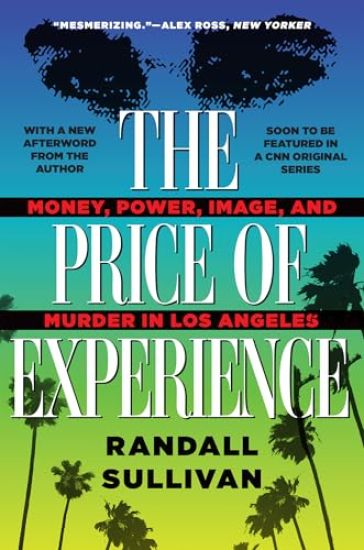
"Sullivan has done what every aspiring true crime writer hopes to do: He has crossed the line from titillation into cultural history."--Los Angeles TimesThe shocking story of Joe Hunt and the downfall of the Billionaire Boys Club -- from social investing group to Ponzi scheme to murderers -- told in a propulsive narrative by Randall Sullivan, now updated with a new afterword and soon to be a CNN miniseriesWhen it first came to the public's attention in the fall of 1986, the story of the Billionaire Boys Club and its leader, Joe Hunt, a young man labeled a "yuppie Charles Manson" by the prosecutor was splashed across headlines and TV screens throughout the nation.The story of rich kids, flagrant excess, and multiple murders fascinated the American public, but deeper truths lay buried beneath. The saga was so complex that neither its scope nor its implications could be clearly discerned--that is, until The Price of Experience was published in 1996.A scholarship student with a strange father and a mysterious background, Joe was socially shunned at the ultra-elite Harvard School in Los Angeles. By age twenty, however, Joe had made and lost $14 million on Chicago's commodities exchange. Back in L.A., he dazzled former classmates with his power and confidence, assembling them into the BBC Consolidated of North America, Inc. - part corporate empire and part private social club. Joe convinced the children of L.A.'s most powerful families that all the wealth, status, and power in the world was theirs for the taking. They gave him their trust funds and a loyalty he transformed into cultish devotion. Hunt and the BBC became the talk of L.A. - not only for the meteoric rise that brought them control of more than $100 million in assets, but for the grisly murders connected to the group. As the group's deadly momentum increased and its business dealings spun out of control, BBC members began to talk, and eventually Hunt and four others were arrested on two counts of murder.In this utterly gripping narrative, award-winning journalist Randall Sullivan finally revealed the whole story. Now, in the new afterword, he returns to Joe Hunt--who has now been in prison for almost forty years--and recounts the fates of his accomplices. This is a landmark true-crime book with a diabolical, but almost irresistibly seductive, genius at its center.
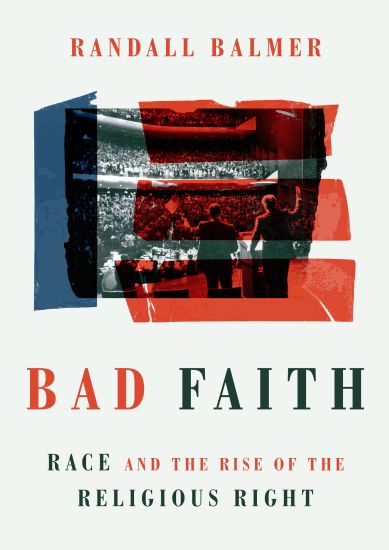
A surprising and disturbing origin story There is a commonly accepted story about the rise of the Religious Right in the United States. It goes like this: with righteous fury, American evangelicals entered the political arena as a unified front to fight the legality of abortion after the Supreme Court's 1973 Roe v. Wade decision. The problem is this story simply isn't true. Largely ambivalent about abortion until the late 1970s, evangelical leaders were first mobilized not by Roe v. Wade but by Green v. Connally, a lesser-known court decision in 1971 that threatened the tax-exempt status of racially discriminatory institutions--of which there were several in the world of Christian education at the time. When the most notorious of these schools, Bob Jones University, had its tax-exempt status revoked in 1976, evangelicalism was galvanized as a political force and brought into the fold of the Republican Party. Only later, when a more palatable issue was needed to cover for what was becoming an increasingly unpopular position following the civil rights era, was the moral crusade against abortion made the central issue of the movement now known as the Religious Right. In this greatly expanded argument from his 2014 Politico article "The Real Origins of the Religious Right," Randall Balmer guides the reader along the convoluted historical trajectory that began with American evangelicalism as a progressive force opposed to slavery, then later an isolated apolitical movement in the mid-twentieth century, all the way through the 2016 election in which 81 percent of white evangelicals coalesced around Donald Trump for president. The pivotal point, Balmer shows, was the period in the late 1970s when American evangelicals turned against Jimmy Carter--despite his being one of their own, a professed "born-again" Christian--in favor of the Republican Party, which found it could win their loyalty through the espousal of a single issue. With the implications of this alliance still unfolding, Balmer's account uncovers the roots of evangelical watchwords like "religious freedom" and "family values" while getting to the truth of how this movement began--explaining, in part, what it has become.
What really gave rise to the Religious Right? There is a commonly accepted story about the rise of the Religious Right in the United States. It goes like this: with righteous fury, American evangelicals entered the political arena as a unified front to fight the legality of abortion after the Supreme Court's 1973 Roe v. Wade decision. The problem is this story simply isn't true. Bad Faith recounts how it was in fact the elimination of tax-exempt status for racially discriminatory Christian institutions, like Bob Jones University, that galvanized evangelicalism into a political force. Only later, when something more palatable was needed to cover for what was becoming an increasingly unpopular position following the civil rights era, was the moral crusade against abortion made the leading issue. Through exhaustive research and trenchant historical analysis, Randall Balmer exposes the ingrained priorities of the Religious Right movement and uncovers the roots of coded evangelical watchwords like "religious freedom" and "family values"--helping to explain, in part, what this movement has become.
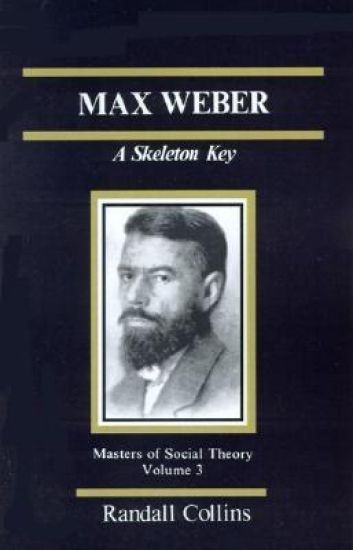
A concise overview of sociology's greatest classic thinker. Weber emerges as a multisided intellectual personality, whose intellectual ambivalence is related to a neurotic breakdown in mid career and to the compromises he was forced to make among the conflicting politievanscal and intellectual currents of his time. Here we see what kinds of philosophical idealism Weber favored and what kinds he rejected, as well as his position on the "battle of methods" among the economists of his day. Weber's famous "Protestant Ethic" thesis is put in proper perspective as an intellectual gambit in one particular period of his life, rather than as his central achievement. Weber's overall view of social change is examined, drawing on several of his crucial but little-known works, on the sociology of ancient agrarian societies and on the long chain of organizational conditions that finally led to modern capitalism. Also treated are Weber's major works on the sociology of religion and his contributions to systematic theory, especially social stratification. The many strands of Weber's theorizing, and his tremendous scope of comparisons across world history, are here brought into a clear and manageable focus. "Randall Collins is the leading sociological theorist of his generation. He has also done more than anyone else to use and develop Weberian sociology. Accordingly we expect much from Collins on Weber and Max Weber does not disappoint." --Whitney Pope, Indiana University "A lively, efficient, reliable interpretation, captivating for the novice, provocative for the expert. . . . Typical Collins." --Alan Sica, University of Kansas "A good introductory survey of Weber's major writings. It is interesting reading and highly informative." --Contemporary Sociology "A good capsule biography . . . very readable . . . honors clarity, style, and the value of popular understanding." --The Madison Independent Books in Review "Ideal for an introductory course on Weber." --Ethics
A concise overview of sociology's greatest classic thinker. Weber emerges as a multisided intellectual personality, whose intellectual ambivalence is related to a neurotic breakdown in mid career and to the compromises he was forced to make among the conflicting politievanscal and intellectual currents of his time. Here we see what kinds of philosophical idealism Weber favored and what kinds he rejected, as well as his position on the "battle of methods" among the economists of his day. Weber's famous "Protestant Ethic" thesis is put in proper perspective as an intellectual gambit in one particular period of his life, rather than as his central achievement. Weber's overall view of social change is examined, drawing on several of his crucial but little-known works, on the sociology of ancient agrarian societies and on the long chain of organizational conditions that finally led to modern capitalism. Also treated are Weber's major works on the sociology of religion and his contributions to systematic theory, especially social stratification. The many strands of Weber's theorizing, and his tremendous scope of comparisons across world history, are here brought into a clear and manageable focus. "Randall Collins is the leading sociological theorist of his generation. He has also done more than anyone else to use and develop Weberian sociology. Accordingly we expect much from Collins on Weber and Max Weber does not disappoint." --Whitney Pope, Indiana University "A lively, efficient, reliable interpretation, captivating for the novice, provocative for the expert. . . . Typical Collins." --Alan Sica, University of Kansas "A good introductory survey of Weber's major writings. It is interesting reading and highly informative." --Contemporary Sociology "A good capsule biography . . . very readable . . . honors clarity, style, and the value of popular understanding." --The Madison Independent Books in Review "Ideal for an introductory course on Weber." --Ethics
`An excellent introduction.... Readers of this journal looking for a brief but comprehensive introduction to the field of stress management will find this book to be more than adequate for this purpose. Perhaps the book's greatest strength is the way it has managed to combine insights and research from both occupational psychology and clinical psychology to tackle workplace stress. Cary Cooper would surely be pleased with the authors' efforts at what he has termed "clinical occupational" psychology' - International Journal of Social Psychiatry This practical guide focuses on the intervention strategies which can be employed by counsellors to help individuals suffering from emotional and physiological stresses engendered in the workplace. With key points illustrated by case studies, chapters define the nature of occupational stress and provide information about the emotional, behavioural, physiological and cognitive symptoms which can occur. The authors also discuss the factors influencing the problem: factors which can be tied to the individual, to the work setting and to the larger social context. Specific coping strategies explored are targeted both at the individual, for example relaxation training and stress management programmes, and at the workplace, for instance job redesign and career planning. Finally, methods that practitioners can use to evaluate their interventions are presented in detail.
This book explores the accomplishments of the golden age of "macrohistory," the sociologically informed analysis of long-term patterns of political, economic, and social change that has reached new heights of sophistication in the last decades of the twentieth century. It describes the scholarly revolution that has taken place in the Marxian-inspired theory of revolutions, the shift to a state-breakdown model in which revolutions, rather than bubbling up from discontent below, start at the top in the fiscal strains of the state. The author links revolutions to military-centered transformations of the state, and reviews how he used this theory in the early 1980s to predict the breakdown of the Soviet empire. He goes on to show the implications of viewing states and societies from the outside in, including the geopolitical patterns that affect the legitimacy of dominant ethnic groups and thus determine the direction of ethnic assimilation or fragmentation. Another application is the author's new theory of democratization, which asserts that democracy depends not merely on a widening of the franchise but on a geopolitical pattern favoring federated structures of collegially shared power. Using this new theoretical tool, the author argues that Anglophone scholars have polemically misinterpreted German history, and that the roots of the Holocaust cannot be determined by German-bashing but must be attributed to processes that affect all of us. Other essays generalize about the historical dynamics and transformations of markets. Going beyond Weber's Eurocentric model, the author proposes a more general theory that explains the origins of capitalism in Japan on an independent but parallel path.
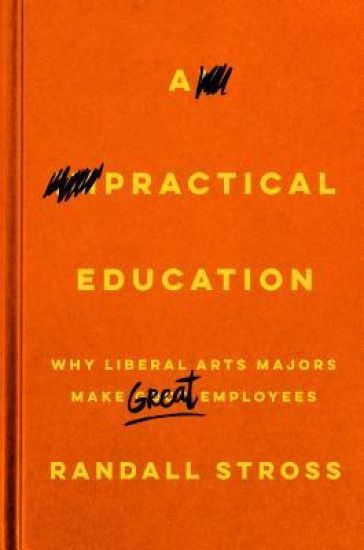
The liberal arts major is often lampooned: lacking in "skills," unqualified for a professional career, underemployed. But studying for the joy of learning turns out to be surprisingly practical. Unlike career-focused education, liberal education prepares graduates for anything and everything—and nervous "fuzzy major" students, their even more nervous parents, college career center professionals, and prospective employers would do well to embrace liberal arts majors. Just look to Silicon Valley, of all places, to see that liberal arts majors can succeed not in spite of, but because of, their education. A Practical Education investigates the real-world experiences of graduates with humanities majors, the majors that would seem the least employable in Silicon Valley's engineering-centric workplaces. Drawing on the experiences of Stanford University graduates and using the students' own accounts of their education, job searches, and first work experiences, Randall Stross provides heartening demonstrations of how multi-capable liberal arts graduates are. When given a first opportunity, these majors thrive in work roles that no one would have predicted. Stross also weaves the students' stories with the history of Stanford, the rise of professional schools, the longstanding contention between engineering and the liberal arts, the birth of occupational testing, and the popularity of computer science education to trace the evolution in thinking about how to prepare students for professional futures. His unique blend of present and past produces a provocative exploration of how best to utilize the undergraduate years. At a time when institutions of higher learning are increasingly called on to justify the tangible merits of the liberal arts, A Practical Education reminds readers that the most useful training for an unknowable future is the universal, time-tested preparation of a liberal education.
Written as a supplemental text for an introductory or intermediate statistics course, this book is organized along the lines of many popular statistics texts. The chapters provide a good conceptual understanding of basic statistics and include exercises that use S-PLUS simulation programs. Each chapter lists a set of objectives and a summary.The book offers a rich insight into how probability has shaped statistical procedures in the behavioral sciences, as well as a brief history behind the creation of various statistics. Computational skills are kept to a minimum by including S-PLUS programs that run the exercises in the chapters. Students are not required to master the writing of S-PLUS programs, but explanations of how the programs work and program output are included in each chapter. S-PLUS is an advanced statistical package that has an extensive library of functions, which offer flexibility in writing customized routines.The S-PLUS functions provide the capability of programming object and dialog windows, which are commonly used in Windows software applications. The S-PLUS program also contains pull-down menus for the statistical analysis of data.A ZIP file containing programs that work in S-PLUS 6.2 for use with this book is available for download from http://www.psypress.com/resources/9780805836233.zip - please note that these scripts will only run in S-PLUS 6.2 and not later versions due to changes in the programming language syntax.
Consistent with previous editions, this book assembles in a single volume summaries of the treatment literature and treatment procedures of the most common childhood behavior disorders facing persons who practice in applied settings—clinics, schools, counseling centers, psychiatric hospitals, and residential treatment centers.Its 16 chapters cover the historical context of child and adolescent therapy; obsessive compulsive disorders; childhood depression; childhood fears, phobias and related anxieties; attention-deficit hyperactivity disorder; academic problems; conduct disorder; somatic disorders; autism spectrum disorder; intellectual disabilities; children medically at risk; sexual and other abuse of children; child and adolescent psychopharmacotherapy; prevention; and child therapy and the law. Key features include:Treatment Orientation—Although some chapters include a discussion of theoretical issues, the primary emphasis is on intervention techniques and strategies for changing various behavior and learning problems. Case examples are often used to illustrate treatment procedures.Empirical Orientation—While most authors have adopted a broad-based behavioral or cognitive-behavioral orientation, they were encouraged to review the entire treatment literature and to construct their presentations on the basis of empirically supported treatment techniques and procedures.Psychopharmacotherapy Chapter—The chapter on child and adolescent psychopharmacotherapy focuses on psychopharmacological interventions rather than on which drugs should be prescribed for specific behavior or learning problems.Author Expertise—Each chapter is written by experts who are well qualified to discuss treatment practices for the specific topic under discussion.This book is intended for individuals who have entered or plan to enter the mental health profession or such related professions as counseling, special education, nursing and rehabilitation. It is especially useful for individuals taking child and adolescent therapy and intervention courses and practicum courses. Finally, it is suitable for persons who work in applied settings including clinics, schools, counseling centers, psychiatric hospitals, and residential treatment centers.
Consistent with previous editions, this book assembles in a single volume summaries of the treatment literature and treatment procedures of the most common childhood behavior disorders facing persons who practice in applied settings—clinics, schools, counseling centers, psychiatric hospitals, and residential treatment centers.Its 16 chapters cover the historical context of child and adolescent therapy; obsessive compulsive disorders; childhood depression; childhood fears, phobias and related anxieties; attention-deficit hyperactivity disorder; academic problems; conduct disorder; somatic disorders; autism spectrum disorder; intellectual disabilities; children medically at risk; sexual and other abuse of children; child and adolescent psychopharmacotherapy; prevention; and child therapy and the law. Key features include:Treatment Orientation—Although some chapters include a discussion of theoretical issues, the primary emphasis is on intervention techniques and strategies for changing various behavior and learning problems. Case examples are often used to illustrate treatment procedures.Empirical Orientation—While most authors have adopted a broad-based behavioral or cognitive-behavioral orientation, they were encouraged to review the entire treatment literature and to construct their presentations on the basis of empirically supported treatment techniques and procedures.Psychopharmacotherapy Chapter—The chapter on child and adolescent psychopharmacotherapy focuses on psychopharmacological interventions rather than on which drugs should be prescribed for specific behavior or learning problems.Author Expertise—Each chapter is written by experts who are well qualified to discuss treatment practices for the specific topic under discussion.This book is intended for individuals who have entered or plan to enter the mental health profession or such related professions as counseling, special education, nursing and rehabilitation. It is especially useful for individuals taking child and adolescent therapy and intervention courses and practicum courses. Finally, it is suitable for persons who work in applied settings including clinics, schools, counseling centers, psychiatric hospitals, and residential treatment centers.