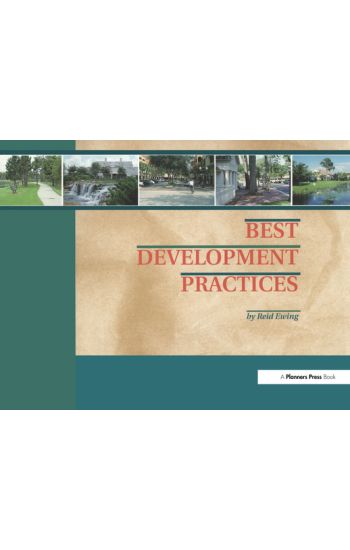
The author draws upon case examples of some of today's most acclaimed developments in this book, and recommends best practice guidelines to help developers create vibrant, livable communities-and still make money. For years, Florida's planners and developers have had to deal with some of the most difficult growth management problems. Now
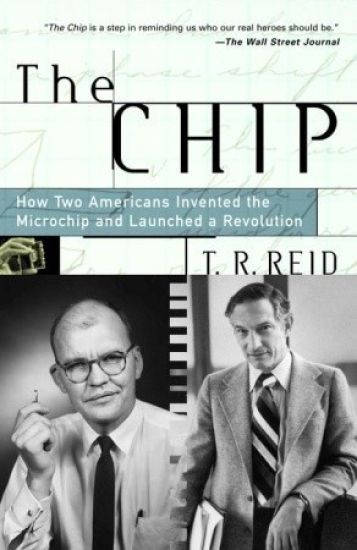
Barely fifty years ago a computer was a gargantuan, vastly expensive thing that only a handful of scientists had ever seen. The world's brightest engineers were stymied in their quest to make these machines small and affordable until the solution finally came from two ingenious young Americans. Jack Kilby and Robert Noyce hit upon the stunning discovery that would make possible the silicon microchip, a work that would ultimately earn Kilby the Nobel Prize for physics in 2000. In this completely revised and updated edition of The Chip, T.R. Reid tells the gripping adventure story of their invention and of its growth into a global information industry. This is the story of how the digital age began.
This title is part of UC Press's Voices Revived program, which commemorates University of California Press’s mission to seek out and cultivate the brightest minds and give them voice, reach, and impact. Drawing on a backlist dating to 1893, Voices Revived makes high-quality, peer-reviewed scholarship accessible once again using print-on-demand technology. This title was originally published in 1953.
This title is part of UC Press's Voices Revived program, which commemorates University of California Press’s mission to seek out and cultivate the brightest minds and give them voice, reach, and impact. Drawing on a backlist dating to 1893, Voices Revived makes high-quality, peer-reviewed scholarship accessible once again using print-on-demand technology. This title was originally published in 1953.
Reid Barbour's 2002 study takes a fresh look at English Protestant culture in the reign of Charles I (1625–1649). In the decades leading into the civil war and the execution of their monarch, English writers explored the experience of a Protestant life of holiness, looking at it in terms of heroic endeavours, worship, the social order, and the cosmos. Barbour examines sermons and theological treatises to argue that Caroline religious culture comprises a rich and extensive stocktaking of the conditions in which Protestantism was celebrated, undercut, and experienced. Barbour argues that this stocktaking was also carried out in unusual and sometimes quite secular contexts; in the masques, plays and poetry of the era as well as in scientific works and diaries. This broad-ranging study offers an extensive appraisal of crucial seventeenth-century themes, and will be of interest to historians as well as literary scholars of the period.
Algebraic geometry is, essentially, the study of the solution of equations and occupies a central position in pure mathematics. This short and readable introduction to algebraic geometry will be ideal for all undergraduate mathematicians coming to the subject for the first time. With the minimum of prerequisites, Dr Reid introduces the reader to the basic concepts of algebraic geometry including: plane conics, cubics and the group law, affine and projective varieties, and non-singularity and dimension. He is at pains to stress the connections the subject has with commutative algebra as well as its relation to topology, differential geometry, and number theory. The book arises from an undergraduate course given at the University of Warwick and contains numerous examples and exercises illustrating the theory.
In American criminal law, if a defendant demonstrates that they lack certain psychological capabilities, they may be excused of blame and punishment for wrongdoing. However, criminal defense law often fails to consider the developmental science of individual differences in ability and functioning that may inform jurisprudential issues of rational capacity and responsibility in criminal law. This book discusses the excusing nature of a range of both traditional and non-traditional criminal law defenses and questions the structure of these defenses based on scientific findings from social and developmental psychology. This book explores how research on individual differences in the development of social perception, judgment and decision making explain why some youths and adults develop psychological tendencies that favor criminal behavior, and considers how developmental science can guide the understanding of criminal excuses and affirmative defense law.
Geometry provides a whole range of views on the universe, serving as the inspiration, technical toolkit and ultimate goal for many branches of mathematics and physics. This book introduces the ideas of geometry, and includes a generous supply of simple explanations and examples. The treatment emphasises coordinate systems and the coordinate changes that generate symmetries. The discussion moves from Euclidean to non-Euclidean geometries, including spherical and hyperbolic geometry, and then on to affine and projective linear geometries. Group theory is introduced to treat geometric symmetries, leading to the unification of geometry and group theory in the Erlangen program. An introduction to basic topology follows, with the Möbius strip, the Klein bottle and the surface with g handles exemplifying quotient topologies and the homeomorphism problem. Topology combines with group theory to yield the geometry of transformation groups,having applications to relativity theory and quantum mechanics. A final chapter features historical discussions and indications for further reading. With minimal prerequisites, the book provides a first glimpse of many research topics in modern algebra, geometry and theoretical physics. The book is based on many years' teaching experience, and is thoroughly class-tested. There are copious illustrations, and each chapter ends with a wide supply of exercises. Further teaching material is available for teachers via the web, including assignable problem sheets with solutions.
Reid Barbour's 2002 study takes a fresh look at English Protestant culture in the reign of Charles I (1625–1649). In the decades leading into the civil war and the execution of their monarch, English writers explored the experience of a Protestant life of holiness, looking at it in terms of heroic endeavours, worship, the social order, and the cosmos. Barbour examines sermons and theological treatises to argue that Caroline religious culture comprises a rich and extensive stocktaking of the conditions in which Protestantism was celebrated, undercut, and experienced. Barbour argues that this stocktaking was also carried out in unusual and sometimes quite secular contexts; in the masques, plays and poetry of the era as well as in scientific works and diaries. This broad-ranging study offers an extensive appraisal of crucial seventeenth-century themes, and will be of interest to historians as well as literary scholars of the period.
Abstract: Concern for the effectiveness of the educational system is manifest in the recent push for accountability. It follows that a properly conceived system of accountability must include systematic evaluation of every aspect of the service delivery system from student entrance into as well as student exit from the system. This study was conducted to investigate and describe current special education declassification practices and the extent to which student exit data are maintained at the school district level in the states of Florida and North Carolina. An eight-page research questionnaire was disseminated to 67 directors of special education in the state of Florida and 108 directors of special education in the state of North Carolina. A total of 103 usable returns was received (a return rate of 59%). A follow-up telephone interview of those not responding to the questionnaire served as a second method of data collection. Information related to special education declassification, the maintenance of documented exit criteria, the nature of exit criteria, the various uses of exit data, and the systematic management of exit data was collected and analyzed. Exceptional student education (ESE) directors indicated that the entrance and exit processes as well as related practices were quite similar. Further, 82% of those responding reported the maintenance of both entrance and exit criteria. These admission and exit standards differed minimally and, in most cases, each set of criteria contained both academic and affective components. The responsibilities of district level staff regarding initiating and attending staffing, reporting and disseminating assessment information, and the administrative monitoring of programs were determined to be fairly consistent throughout the special education process. More than 84% of the ESE directors perceived their programs as being very effective. While ESE directors reported collection and maintenance of exit and transfer figures, little evidence of such efforts was obtained. Dissertation Discovery Company and the University of Florida are dedicated to making scholarly works more discoverable and accessible throughout the world. This dissertation, "An Analysis of Declassification Practices in Special Education" by Reid Jeffrey Linn, was obtained from the University of Florida and is being sold with permission from the author. A free digital copy of this work may also be found in the university's institutional repository, the IR@UF. The content of this dissertation has not been altered in any way. We have altered the formatting in order to facilitate the ease of printing and reading of the dissertation.
Abstract: Concern for the effectiveness of the educational system is manifest in the recent push for accountability. It follows that a properly conceived system of accountability must include systematic evaluation of every aspect of the service delivery system from student entrance into as well as student exit from the system. This study was conducted to investigate and describe current special education declassification practices and the extent to which student exit data are maintained at the school district level in the states of Florida and North Carolina. An eight-page research questionnaire was disseminated to 67 directors of special education in the state of Florida and 108 directors of special education in the state of North Carolina. A total of 103 usable returns was received (a return rate of 59%). A follow-up telephone interview of those not responding to the questionnaire served as a second method of data collection. Information related to special education declassification, the maintenance of documented exit criteria, the nature of exit criteria, the various uses of exit data, and the systematic management of exit data was collected and analyzed. Exceptional student education (ESE) directors indicated that the entrance and exit processes as well as related practices were quite similar. Further, 82% of those responding reported the maintenance of both entrance and exit criteria. These admission and exit standards differed minimally and, in most cases, each set of criteria contained both academic and affective components. The responsibilities of district level staff regarding initiating and attending staffing, reporting and disseminating assessment information, and the administrative monitoring of programs were determined to be fairly consistent throughout the special education process. More than 84% of the ESE directors perceived their programs as being very effective. While ESE directors reported collection and maintenance of exit and transfer figures, little evidence of such efforts was obtained. Dissertation Discovery Company and the University of Florida are dedicated to making scholarly works more discoverable and accessible throughout the world. This dissertation, "An Analysis of Declassification Practices in Special Education" by Reid Jeffrey Linn, was obtained from the University of Florida and is being sold with permission from the author. A free digital copy of this work may also be found in the university's institutional repository, the IR@UF. The content of this dissertation has not been altered in any way. We have altered the formatting in order to facilitate the ease of printing and reading of the dissertation.
What can you learn from a Silicon Valley legend and a pantheon of iconic leaders? The key to scaling a successful business isn't talent, network or strategy. It's an entrepreneurial mindset - and that mindset can be cultivated.Behind the scenes in Silicon Valley, Reid Hoffman (founder of LinkedIn, investor at Greylock) is a sought-after advisor to heads of companies and heads of state. On his podcast Masters of Scale, he sits down with an all-star list of visionary founders and leaders, digging into the surprising strategies that power their growth. In this book, he draws on their most riveting, revealing stories - as well his own experience as a founder and investor - to distil the counterintuitive secrets behind the most extraordinary success stories of our times.Here, Hoffman teams up with Masters of Scale's executive producers to offer a rare window into the entrepreneurial mind. They share surprising, never-before-told stories from leaders of the world's most iconic companies, including Apple, Nike, Netflix, Spotify, Starbucks, Google, Instagram and Microsoft, as well as the bold, disruptive startups - from 23andMe to TaskRabbit, from the Black List to the Bevel razor - solving the problems of the twenty-first century.Through vivid storytelling and straightforward analysis, Masters of Scale distils their collective insights into a set of counterintuitive principles that anyone can use. How do you find a winning idea and turn it into a scalable venture? What can you learn from a 'squirmy no'? When should you stop listening to your customers? Which fires should you put out right away, and which should you let burn? And can you really make money while making the world a better place? (Answer: Yes. But you have to do the work to keep your profits and values aligned.)Based on more than 100 interviews, and incorporating new material never aired on the podcast, Masters of Scale offers a unique insider's guide, filled with insights, wisdom, and strategies that will inspire you to reimagine how you do business today.
This book meets the needs for a basic, yet comprehensive and up-to-date, introductory text to building technology for students in architecture and the other disciplines in building design. The wide coverage is organised under the chapter headings: structure, enclosure, climate services, utility services, lighting, acoustics, fire safety, the future? The treatment in each case is concentrated on the close relationship between good design practice and the basic underlying scientific and practical principles, but stopping short of the high level theory which is to be found in other more closely specialised texts.This well illustrated and highly readable book will be invaluable to the student and of interest to the practitioner too, both in architecture and in its related technical fields.
The American Civil War caused upheaval and massive private bereavement, but the years 1861-1865 also defined a great nation.This book provides a concise introduction to events from the secession to the end of the war. It focuses on the military progress of the war Union and Confederate politics social change - particularly the emancipation of North American slavesThe social history associated with the war is dealt with alongside the familiar military and political events. This inclusive approach allows the reader to consider equally the history of men and women, blacks and whites in the conflict. It deals with both the Union and the Confederacy, integrating the latest literature on the war and society into a clear account. The book concludes with an assessment of emancipation, the rebuilding of the economy, and the war's consequences.An array of primary documents supports the text, together with a chronology, glossary and Who's Who guide to key figures.
The American Civil War (1861-65) was the bloodiest war of the nineteenth century and its impact continues to be felt today. It, and its origins have been studied more intensively than any other period in American history, yet it remains profoundly controversial. Brian Holden Reid's formidable volume is a major contribution to this ongoing historical debate. Based on a wealth of primary research, it examines every aspect of the origins of the conflict and addresses key questions such as was it an avoidable tragedy, or a necessary catharsis for a divided nation? How far was slavery the central issue? Why should the conflict have errupted into violence and why did it not escalate into world war?
What can you learn from a Silicon Valley legend and a pantheon of iconic leaders? The key to scaling a successful business isn't talent, network, or strategy. It's an entrepreneurial mindset--and that mindset can be cultivated. "If you're scaling a company--or if you just love a well-told story--this is a book to savor."--Robert Iger, #1 New York Times bestselling author of The Ride of a Lifetime Behind the scenes in Silicon Valley, Reid Hoffman (founder of LinkedIn, investor at Greylock) is a sought-after adviser to heads of companies and heads of state. On each episode of his podcast, Masters of Scale, he sits down with a guest from an all-star list of visionary founders and leaders, digging into the surprising strategies that power their company's growth. In this book, he draws on their most riveting, revealing stories--as well as his own experience as a founder and investor--to distill the secrets behind the most extraordinary success stories of our times. Here, Hoffman teams up with Masters of Scale's executive producers to offer a rare window into the entrepreneurial mind, sharing hard-won wisdom from leaders of iconic companies (including Apple, Nike, Netflix, Spotify, Starbucks, Google, Instagram, and Microsoft) as well as the bold, disruptive startups (such as 23andMe, TaskRabbit, Black List, and Walker & Co.) that are solving the problems of the twenty-first century. Through vivid storytelling and incisive analysis, Masters of Scale distills their collective insights into a set of counterintuitive principles that anyone can use. How do you find a winning idea and turn it into a scalable venture? What can you learn from a "squirmy no"? When should you stop listening to your customers? Which fires should you put out right away, and which should you let burn? And can you really make money while making the world a better place? (Answer: Yes. But you have to keep your profits and values aligned.) Based on more than a hundred interviews and including a wealth of new material never aired on the podcast, this unique insider's guide will inspire you to reimagine how you do business today.