Kirjahaku
Etsi kirjoja tekijän nimen, kirjan nimen tai ISBN:n perusteella.
1000 tulosta hakusanalla Richard Howe Earl Howe
Christian Concord; Or The Agreement Of The Associated Pastors And Churches Of Worcestershire; With Richard Baxter's Explication And Defense Of It, And
Richard Baxter
KESSINGER PUBLISHING, LLC
2008
sidottu
Epistolary Correspondence Of Sir Richard Steele: Including His Familiar Letters To His Wife And Daughters; To Which Are Prefixed Fragments Of Three Pl
Richard Steele
KESSINGER PUBLISHING, LLC
2008
sidottu
The Works Of The Rev. Richard Watson V10 (1858)
Richard Watson
KESSINGER PUBLISHING, LLC
2008
sidottu
Poems And Prose Writings By Richard Henry Dana V1 (1850)
Richard H. Dana
KESSINGER PUBLISHING, LLC
2008
sidottu

An exciting new edition of the complete works of Shakespeare with these features: Illustrated with photographs from New York Shakespeare Festival productions, vivid readable readable introductions for each play by noted scholar David Bevington, a lively personal foreword by Joseph Papp, an insightful essay on the play in performance, modern spelling and pronunciation, up-to-date annotated bibliographies, and convenient listing of key passages.
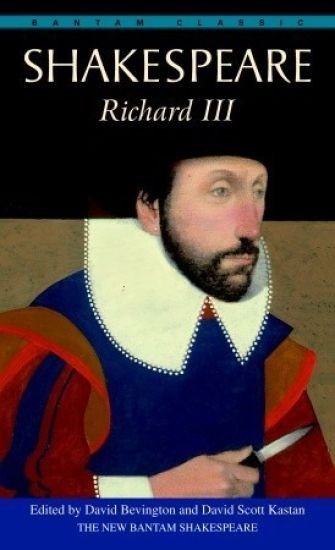
An exciting new edition of the complete works of Shakespeare with these features: Illustrated with photographs from New York Shakespeare Festival productions, vivid readable readable introductions for each play by noted scholar David Bevington, a lively personal foreword by Joseph Papp, an insightful essay on the play in performance, modern spelling and pronunciation, up-to-date annotated bibliographies, and convenient listing of key passages.
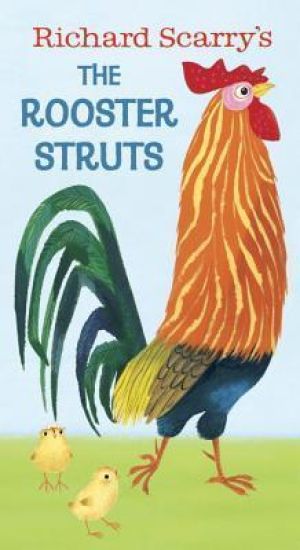
Richard Scarry's The Rooster Struts
Richard Scarry
Golden Books Publishing Company, Inc.
2015
pahvisivuinen
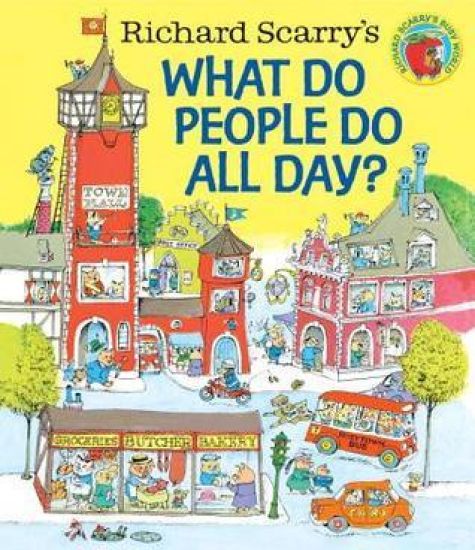
Richard Scarry's What Do People Do All Day?
Richard Scarry
Golden Books Publishing Company, Inc.
2015
sidottu
Find out what everyone in Busytown does all day in this Richard Scarry classic Go on a fun visit to Busytown and find out how everyone spends their days. Full of fun and adventure, this classic picture book will keep the attention of little readers from page to page as they find out how construction workers, fire fighters, farmers, doctors, and more, help Busytown run smoothly each and every day.

Richard Hooker’s Of the Laws of Ecclesiastical Polity has long been acknowledged as an influential philosophical, theological and literary text. While scholars have commonly noted the presence of participatory language in selected passages of Hooker’s Laws, Paul Anthony Dominiak is the first to trace how participation lends a sense of system and coherency across the whole work.Dominiak analyses how Hooker uses an architectural framework of ‘participation in God’ to build a cohesive vision of the Elizabethan Church as the most fitting way to reconcile and lead English believers to the shared participation of God. First exploring Hooker’s metaphysical architecture of participation in his accounts of law and the sacraments, Dominiak then traces how this architecture structures cognitive participation in God, as well as Hooker’s political vision of the Church and Commonwealth. The volume culminates with a summary of how Hooker provides a salutary resource for modern ecumenical dialogue and contemporary political retrievals of participation.
Richard Hooker’s Of the Laws of Ecclesiastical Polity has long been acknowledged as an influential philosophical, theological and literary text. While scholars have commonly noted the presence of participatory language in selected passages of Hooker’s Laws, Paul Anthony Dominiak is the first to trace how participation lends a sense of system and coherency across the whole work.Dominiak analyses how Hooker uses an architectural framework of ‘participation in God’ to build a cohesive vision of the Elizabethan Church as the most fitting way to reconcile and lead English believers to the shared participation of God. First exploring Hooker’s metaphysical architecture of participation in his accounts of law and the sacraments, Dominiak then traces how this architecture structures cognitive participation in God, as well as Hooker’s political vision of the Church and Commonwealth. The volume culminates with a summary of how Hooker provides a salutary resource for modern ecumenical dialogue and contemporary political retrievals of participation.
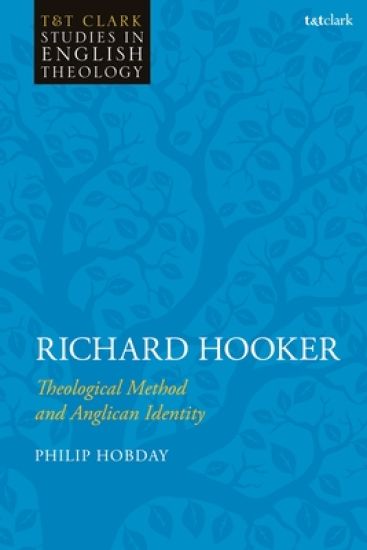
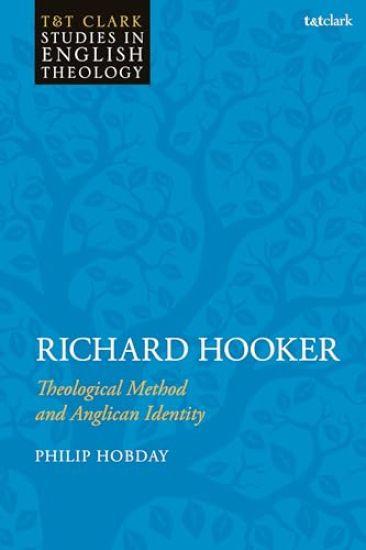
For some, Hooker and Anglicanism are basically reformed; for others, fundamentally Catholic; for some embodying a ‘middle way’ between Roman Catholic and Protestant extremes; and for others simply confused and incoherent. This book challenges those perceptions by showing that ‘reformed’ and ‘catholic’ are not intrinsically opposed. Reading Hooker alongside a representative theologian of each tradition (the ‘catholic’ Aquinas and the ‘reformed’ Calvin) on theological method, Hobday shows there is much greater congruity between theologies and theologians often considered in tension.On the role of scripture in theology, the theological capacity of human reason, and the place of tradition, these 3 theologians have far more in common than many subsequent commentators have understood. This book shows how both Hooker and the Anglicanism he defended in such elegant prose, can be coherently both ‘catholic’ and ‘reformed’ (rather than one, or the other, or some middle way). Relocating Hooker, and Anglicanism, in this way reveals them to be rich, fruitful conversation partners in ecumenical dialogue and theological debates across Christian traditions.
For some, Hooker and Anglicanism are basically reformed; for others, fundamentally Catholic; for some embodying a ‘middle way’ between Roman Catholic and Protestant extremes; and for others simply confused and incoherent. This book challenges those perceptions by showing that ‘reformed’ and ‘catholic’ are not intrinsically opposed. Reading Hooker alongside a representative theologian of each tradition (the ‘catholic’ Aquinas and the ‘reformed’ Calvin) on theological method, Hobday shows there is much greater congruity between theologies and theologians often considered in tension.On the role of scripture in theology, the theological capacity of human reason, and the place of tradition, these 3 theologians have far more in common than many subsequent commentators have understood. This book shows how both Hooker and the Anglicanism he defended in such elegant prose, can be coherently both ‘catholic’ and ‘reformed’ (rather than one, or the other, or some middle way). Relocating Hooker, and Anglicanism, in this way reveals them to be rich, fruitful conversation partners in ecumenical dialogue and theological debates across Christian traditions.
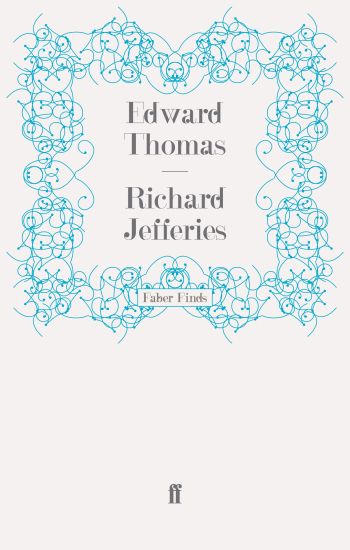
For Edward Thomas, Richard Jefferies (1848-87) was more than a nature writer: he was a guiding spirit of the English landscape who affected a profound influence upon Thomas's own writings. From his boyhood days, Thomas regarded Jefferies' The Amateur Poacher (1879) among his favourite books for its eerie capture of 'the free air-open', and as Thomas himself grew into an adept chronicler of the English countryside he would return to his mentor with this astute critical biography. First published in 1909, Richard Jefferies is a subtle account of the nineteenth-century writer's life and an illuminating study of a body of work which Thomas once described as 'a gospel, an incantation'.
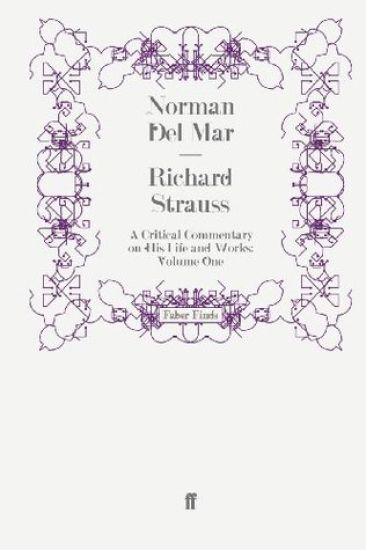
Norman Del Mar (1919-1994) was universally recognised as a leading authority on the music of Richard Strauss, and his masterly three-volume study of his life and works remains a classic.Volume I deals with the years from the composer's birth (1864) to Der Rosenkavalier (1912), discussing the early orchestral and chamber music, the tone poems and the operas Guntram, Feuersnot, Salome and Elektra.'Deploying a well-nigh encyclopaedic knowledge, Mr Del Mar acquits himself brilliantly of his task of disentangling and reassembling the numerous strands that make up the backcloth of poetry and philosophy which Strauss, while not always understanding every intricacy, yet needed as a constant reference map for his composing. The three volumes of this magnificent book should be studied by all lovers of the late-romantic music, amateurs and professionals alike...a monumental achievement.' Times Literary Supplement'A brilliant and copiously analytical study ... a constant fascination.' Guardian
Norman Del Mar (1919-1994) was universally recognised as a leading authority on the music of Richard Strauss, and his masterly three-volume study of his life and works remains a classic.Volume II spans the years 1912 to 1933 (the premiere of Arabella), taking in the Ariadne versions, Die Frau ohne Schatten, the ballets and much incidental music.'Deploying a well-nigh encyclopaedic knowledge, Mr Del Mar acquits himself brilliantly of his task of disentangling and reassembling the numerous strands that make up the backcloth of poetry and philosophy which Strauss, while not always understanding every intricacy, yet needed as a constant reference map for his composing. The three volumes of this magnificent book should be studied by all lovers of the late-romantic music, amateurs and professionals alike ... a monumental achievement.' Times Literary Supplement'A brilliant and copiously analytical study ... a constant fascination.' Guardian
Norman Del Mar (1919-1994) was universally recognised as a leading authority on the music of Richard Strauss, and his masterly three-volume study of his life and works remains a classic.Volume Three spans from 1934 to Strauss's death in 1949, taking in the last five operas, the late instrumental music, all the songs from early youth to the Vier letzte Lieder, and concluding with eight appendixes of works, dates and opus numbers, and a meticulous index.'Deploying a well-nigh encyclopaedic knowledge, Mr Del Mar acquits himself brilliantly of his task of disentangling and reassembling the numerous strands that make up the backcloth of poetry and philosophy which Strauss, while not always understanding every intricacy, yet needed as a constant reference map for his composing. The three volumes of this magnificent book should be studied by all lovers of the late-romantic music, amateurs and professionals alike ... a monumental achievement.' Times Literary Supplement'A brilliant and copiously analytical study ... a constant fascination.' Guardian