

Kirjahaku
Etsi kirjoja tekijän nimen, kirjan nimen tai ISBN:n perusteella.
1000 tulosta hakusanalla Robson David












Originally published in 1959, this book examines the shifting role of attorneys and solicitors in the eighteenth century, a period that saw the growth and development of the professional classes and their affiliated organizations. Robson describes the changing social character of lawyers, the methods by which they were trained and the part they played in affairs of banking, politics and other public spheres. This book will be of value to anyone with an interest in British social or legal history.
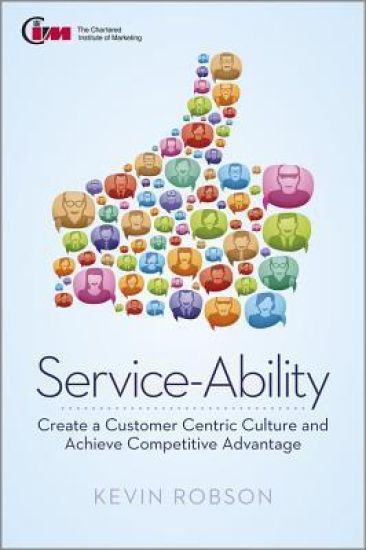
Times have changed. Long gone are our days of being kings of the manufacturing industry, we are now immersed in the world of ‘service’ where the relationship between an organization and the customer is an integral part of the "product" offering. The nation is suffering from a widespread lack of truly customer-satisfying service. We lack the very thing that we need to make this new paradigm work efficiently: service-ability. Organizations of all kinds are facing high customer churn, serious customer antagonism, loss of consumer confidence and plummeting customer satisfaction. Research shows that totally satisfying the customer is the only thing that will secure loyalty and offer significant competitive advantage. Yet still, on a daily basis we encounter service that frustrates us. Whilst the emergence of technology has no doubt brought efficiency to many areas of business activity, including the third sector, it has led to the standardised and indifferent service we regularly receive. We appear to have lost sight that people do business with people. Through efficient technology, our organisations may be serviceable but they are not service able. The arrival of Generation Y and the developments in social media, provide businesses with a whole new way to engage with their customers, but also provide a new way for customers to rate companies, products and services: not always in a positive manner. 'Like' or '#Fail' have become part of our social language. Organizations that refocus on the need to treat customers in a way that satisfies them, and not the technology, will have better customer retention, lower costs of replacement and will build their brand value through better reputations. Service-Ability delves deeply into these areas to show how today's managers need to re-think the way we structure, manage, lead and organize our companies to achieve total 'customer-centric' work cultures that develop lasting relationships with customers.

Written specifically to address the needs and concerns of the undergraduate, this tightly focused volume guides students through the process of conducting and completing a research project. Friendly and accessible, this fully-updated second edition includes a number of accompanying student support materials to aid students further. Closely integrated sets of end-of-chapter tasks covering all aspects of research projects from design to completion, as well as suggested further reading, enhance each chapter. A wide range of additional helpful materials relevant to particular subject areas is also available on the accompanying website at www.wiley.com/college/robson. This textbook is an invaluable resource for students in a wide range of disciplines and fields of study, particularly those planning to use social research methods or to carry out a library-based study, for their undergraduate research project.



Hinduism And Its Relations To Christianity (1893)
John Robson
KESSINGER PUBLISHING, LLC
2009
pokkari
How to manage change, and how to ensure continuous improvement: these are perhaps the two most important challenges confronting businesses today. And increasingly facilitating is being seen as the best way to deal with both. Facilitators - and managers operating in a facilitative style - work on helping individuals, groups and organizations to enhance their performance. This book shows how that can be done. The first part deals with the nature of facilitation and why those involved need to understand the basis of human behaviour. The second covers the management of change at different levels. The third provides practical guidelines on the relevant skills. The fourth looks at the kinds of situation where facilitators can be effective and includes case studies from a wide variety of settings. The final part deals with facilitative styles of management. For any manager or trainer determined to release the unfulfilled potential of their organization and the people in it, this book is the ideal starting point.

Originally published in 1976, Welfare State and Welfare Society breaks away from the prevailing notion that the welfare state is mainly concerned with the well-being of the entire nation. The book distinguishes the welfare state from the welfare society, and shows that there is often a yawning gulf between public policy and how people feel, think and behave. The book examines critically, the policies which have been adopted or advocated as relevant to a welfare state, and inquires how far the hopes and expectations centred on it have been realised.