Be inspired by the story of Elizabeth Blackwell, the first woman doctor in the United States. Blackwell worked her to make the field of medicine accessible to women during a time when women's rights was still being tackled. How did she change the medical field? Learn about her story by reading this book today.
This book has been considered by academicians and scholars of great significance and value to literature. This forms a part of the knowledge base for future generations. So that the book is never forgotten we have represented this book in a print format as the same form as it was originally first published. Hence any marks or annotations seen are left intentionally to preserve its true nature.
The 18th century was a wealth of knowledge, exploration and rapidly growing technology and expanding record-keeping made possible by advances in the printing press. In its determination to preserve the century of revolution, Gale initiated a revolution of its own: digitization of epic proportions to preserve these invaluable works in the largest archive of its kind. Now for the first time these high-quality digital copies of original 18th century manuscripts are available in print, making them highly accessible to libraries, undergraduate students, and independent scholars.Delve into what it was like to live during the eighteenth century by reading the first-hand accounts of everyday people, including city dwellers and farmers, businessmen and bankers, artisans and merchants, artists and their patrons, politicians and their constituents. Original texts make the American, French, and Industrial revolutions vividly contemporary.++++The below data was compiled from various identification fields in the bibliographic record of this title. This data is provided as an additional tool in helping to insure edition identification: ++++Bodleian Library (Oxford)T194358 Gillingham?]: Printed in the year, 1798. 29, 1]p.; 8
After Daisy returns from the cottage for her hurt foot, she realizes that her mother has given away one of her most precious gifts, an Egyptian spoon given to her by a close friend. Daisy confronts her mother only to be told "Do not oblige me to remind you that your things are mine." Daisy knows that her mother has always favored her brother. She resolves to be free of her, but can she do so without ruining her soul as well?.... Susan Bogert Warner (July 11, 1819 - March 17, 1885), was an American evangelical writer of religious fiction, children's fiction, and theological works. Biography edit] Born in New York City, she wrote, under the name of "Elizabeth Wetherell", thirty novels, many of which went into multiple editions. However, her first novel, The Wide, Wide World (1850), was the most popular. It was translated into several other languages, including French, German, and Dutch. Other than Uncle Tom's Cabin, it was perhaps the most widely circulated story of American authorship. Other works include Queechy (1852), The Law and the Testimony, (1853), The Hills of the Shatemuc, (1856), The Old Helmet (1863), and Melbourne House (1864). In the nineteenth century, critics admired the depictions of rural American life in her early novels. American reviewers also praised Warner's Christian and moral teachings, while London reviewers tended not to favor her didacticism. Early twentieth-century critics classified Warner's work as "sentimental" and thus lacking in literary value. In the later twentieth century, feminist critics rediscovered The Wide, Wide World, discussing it as a quintessential domestic novel and focusing on analyzing its portrayal of gender dynamics. Some of her works were written jointly with her younger sister Anna Bartlett Warner, who sometimes wrote under the pseudonym "Amy Lothrop". The Warner sisters also wrote famous children's Christian songs. Susan wrote "Jesus Bids Us Shine" while Anna was author of the first verse of the well-known children's song "Jesus Loves Me", which she wrote at Susan's request. Both sisters became devout Christians in the late 1830s. After their conversion, they became confirmed members of the Mercer Street Presbyterian church, although in later life, Warner became drawn into Methodist circles. The sisters also held Bible studies for the West Point cadets. When they were on military duty, the cadets would sing "Jesus Loves Me." The popularity of the song was so great that upon Warner's death, she was buried in the West Point Cemetery. Warner could trace her lineage back to the Puritans on both sides. Her father was Henry Warner, a New York City lawyer originally from New England, and her mother was Anna Bartlett, from a wealthy, fashionable family in New York's Hudson Square. When Warner was a young child, her mother died, and her father's sister Fanny came to live with the Warners. Although Henry Warner had been a successful lawyer, he lost most of his fortune in the Panic of 1837 and in subsequent lawsuits and poor investments. The family had to leave their mansion at St. Mark's Place in New York and move to an old Revolutionary War-era farmhouse on Constitution Island, near West Point, NY. In 1849, seeing little change in their family's financial situation, Susan and Anna started writing to earn income. Susan Warner died in Highland Falls, New York and is buried in the West Point Cemetery.
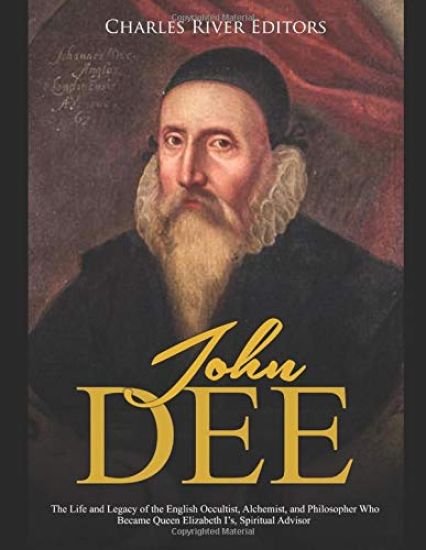
*Includes pictures*Includes excerpts of contemporary accounts*Includes a bibliography for further reading"Who does not understand should either learn, or be silent." - John DeeWith the golden glow of the candlelight kissing his cheeks, he hovered over a spirit mirror, a flat, exquisitely lustrous "shew-stone" fashioned out of raven-black obsidian. Gazing intently upon his reflection in the dark volcanic glass, he chanted in hushed tones as he ran his fingers across the engravings on the oat-colored wax wheel next to him, the Sigilla iEmeth, which featured a septogram and runic carvings and symbols in minuscule print. Contrary to what one might expect, it was not a phantom, hobgoblin, or demon that he sought, but rather, the seraphic voice, and perhaps even the face of an angel - the one bridge between mankind and their Creator, one who holds the key to all of life's unanswerable questions. Was this man delusional? Perhaps so, but perhaps not. But there was no question among those on hand that this was not an ignorant, philistine, unlettered buffoon of a man who readily boarded the train of groundless superstition. Far from it, this was a man who held not only a master's degree, but a doctorate, and his simultaneously stimulating and mesmerizing lectures drew crowds of royals and nobles from near and far. This was a man who was well-versed in a host of academic fields, and he would go on to serve as one of his queen's foremost personal advisers. He was also a prolific author whose revolutionary ideas helped charted the path for the burgeoning British Empire. The man in question is none other than John Dee, one of the greatest scientific minds of his time, but also one of the most controversial. He was a learned man in fields as varied as mathematics and astronomy, centuries before they became formalized fields of study, but he is better remembered for performing magic and alchemy. Instead of astronomy, he became renowned across England for astrology, and he was one of the country's most notorious occult writers during his life. Given the variety that the Elizabethan Era had to offer, it should come as little surprise that some eccentric characters with seemingly unique skills pushed to the forefront and became lauded members of society. Over the course of her long reign, Queen Elizabeth I became one of England's most famous and influential rulers, and it was an age when the arts, commerce, and trade flourished. It was the epoch of gallantry and great, enduring literature. It was also an age of wars and military conflicts in which men were the primary drivers and women often were pawns. John Dee himself has been credited with coming up with the name "British Empire" in the first place. As all of this suggests, to say that John Dee was a storied man would be a grave understatement, to say the least. His multifaceted reputation preceded him, and his name became synonymous with both brilliance and disconcerting eccentricity. By all means, he certainly looked the part - the occultist towered over his peers, his wiry frame cloaked in a charcoal-black "artist's gown" with a ruffled white collar, his veined hands peeking out of his flared sleeves. He bore a pasty, pallid complexion, which seemed almost ghostly, paired with a magnificent beard that was "as white as milk." Chilling rumors about his immeasurable magical abilities have kept his name alive for centuries. Legend has it that this was a man who singlehandedly cast a crippling curse on the Spanish Armada as the fleet sailed towards England, conjuring up the merciless storms and violent waves that threatened to swallow the ill-starred convoy whole, and left them with no choice but to turn back. This was a man who was once branded "the greatest rogue in the neighborhood of London."
*Includes pictures*Includes excerpts of contemporary accounts*Includes a bibliography for further reading"Who does not understand should either learn, or be silent." - John DeeWith the golden glow of the candlelight kissing his cheeks, he hovered over a spirit mirror, a flat, exquisitely lustrous "shew-stone" fashioned out of raven-black obsidian. Gazing intently upon his reflection in the dark volcanic glass, he chanted in hushed tones as he ran his fingers across the engravings on the oat-colored wax wheel next to him, the Sigilla iEmeth, which featured a septogram and runic carvings and symbols in minuscule print. Contrary to what one might expect, it was not a phantom, hobgoblin, or demon that he sought, but rather, the seraphic voice, and perhaps even the face of an angel - the one bridge between mankind and their Creator, one who holds the key to all of life's unanswerable questions. Was this man delusional? Perhaps so, but perhaps not. But there was no question among those on hand that this was not an ignorant, philistine, unlettered buffoon of a man who readily boarded the train of groundless superstition. Far from it, this was a man who held not only a master's degree, but a doctorate, and his simultaneously stimulating and mesmerizing lectures drew crowds of royals and nobles from near and far. This was a man who was well-versed in a host of academic fields, and he would go on to serve as one of his queen's foremost personal advisers. He was also a prolific author whose revolutionary ideas helped charted the path for the burgeoning British Empire. The man in question is none other than John Dee, one of the greatest scientific minds of his time, but also one of the most controversial. He was a learned man in fields as varied as mathematics and astronomy, centuries before they became formalized fields of study, but he is better remembered for performing magic and alchemy. Instead of astronomy, he became renowned across England for astrology, and he was one of the country's most notorious occult writers during his life. Given the variety that the Elizabethan Era had to offer, it should come as little surprise that some eccentric characters with seemingly unique skills pushed to the forefront and became lauded members of society. Over the course of her long reign, Queen Elizabeth I became one of England's most famous and influential rulers, and it was an age when the arts, commerce, and trade flourished. It was the epoch of gallantry and great, enduring literature. It was also an age of wars and military conflicts in which men were the primary drivers and women often were pawns. John Dee himself has been credited with coming up with the name "British Empire" in the first place. As all of this suggests, to say that John Dee was a storied man would be a grave understatement, to say the least. His multifaceted reputation preceded him, and his name became synonymous with both brilliance and disconcerting eccentricity. By all means, he certainly looked the part - the occultist towered over his peers, his wiry frame cloaked in a charcoal-black "artist's gown" with a ruffled white collar, his veined hands peeking out of his flared sleeves. He bore a pasty, pallid complexion, which seemed almost ghostly, paired with a magnificent beard that was "as white as milk." Chilling rumors about his immeasurable magical abilities have kept his name alive for centuries. Legend has it that this was a man who singlehandedly cast a crippling curse on the Spanish Armada as the fleet sailed towards England, conjuring up the merciless storms and violent waves that threatened to swallow the ill-starred convoy whole, and left them with no choice but to turn back. This was a man who was once branded "the greatest rogue in the neighborhood of London."