
Kirjahaku
Etsi kirjoja tekijän nimen, kirjan nimen tai ISBN:n perusteella.
1000 tulosta hakusanalla Samuel Coleridge

Shakespeare - Ben Jonson - Beaumont and Fletcher
Samuel Taylor Coleridge
Createspace Independent Publishing Platform
2015
nidottu
The Rime of the Ancient Mariner
Samuel Taylor Coleridge
Createspace Independent Publishing Platform
2015
nidottu

The Rime of the Ancient Mariner
Samuel Taylor Coleridge
Createspace Independent Publishing Platform
2015
nidottu
The Rime of the Ancient Mariner (originally The Rime of the Ancyent Marinere) is the longest major poem by the English poet Samuel Taylor Coleridge, written in 1797-98 and published in 1798 in the first edition of Lyrical Ballads. Modern editions use a revised version printed in 1817 that featured a gloss. Along with other poems in Lyrical Ballads, it was a signal shift to modern poetry and the beginning of British Romantic literature. The Rime of the Ancient Mariner relates the experiences of a sailor who has returned from a long sea voyage. The mariner stops a man who is on the way to a wedding ceremony and begins to narrate a story. The wedding-guest's reaction turns from bemusement to impatience to fear to fascination as the mariner's story progresses, as can be seen in the language style: Coleridge uses narrative techniques such as personification and repetition to create a sense of danger, the supernatural, or serenity, depending on the mood in different parts of the poem. The mariner's tale begins with his ship departing on its journey. Despite initial good fortune, the ship is driven south by a storm and eventually reaches Antarctic waters. An albatross appears and leads them out of the ice jam where they are stuck, but even as the albatross is praised by the ship's crew, the mariner shoots the bird: With my cross-bow, I shot the albatross. The crew is angry with the mariner, believing the albatross brought the south wind that led them out of the Antarctic. However, the sailors change their minds when the weather becomes warmer and the mist disappears: 'Twas right, said they, such birds to slay, That bring the fog and mist. They soon find that they made a grave mistake in supporting this crime, as it arouses the wrath of spirits who then pursue the ship "from the land of mist and snow"; the south wind that had initially led them from the land of ice now sends the ship into uncharted waters near the equator, where it is becalmed. Day after day, day after day, We stuck, nor breath nor motion; As idle as a painted ship Upon a painted ocean. Water, water, every where, And all the boards did shrink; Water, water, every where, Nor any drop to drink. The very deep did rot - Oh Christ That ever this should be. Yea, slimy things did crawl with legs, Upon the slimy sea. The sailors change their minds again and blame the mariner for the torment of their thirst. In anger, the crew forces the mariner to wear the dead albatross about his neck, perhaps to illustrate the burden he must suffer from killing it, or perhaps as a sign of regret: Ah Well a-day What evil looks Had I from old and young Instead of the cross, the albatross About my neck was hung. Eventually, the ship encounters a ghostly hulk. On board are Death (a skeleton) and the "Night-mare Life-in-Death", a deathly-pale woman, who are playing dice for the souls of the crew. With a roll of the dice, Death wins the lives of the crew members and Life-in-Death the life of the mariner, a prize she considers more valuable. Her name is a clue to the mariner's fate: he will endure a fate worse than death as punishment for his killing of the albatross.
This work has been selected by scholars as being culturally important, and is part of the knowledge base of civilization as we know it. This work was reproduced from the original artifact, and remains as true to the original work as possible. Therefore, you will see the original copyright references, library stamps (as most of these works have been housed in our most important libraries around the world), and other notations in the work.This work is in the public domain in the United States of America, and possibly other nations. Within the United States, you may freely copy and distribute this work, as no entity (individual or corporate) has a copyright on the body of the work.As a reproduction of a historical artifact, this work may contain missing or blurred pages, poor pictures, errant marks, etc. Scholars believe, and we concur, that this work is important enough to be preserved, reproduced, and made generally available to the public. We appreciate your support of the preservation process, and thank you for being an important part of keeping this knowledge alive and relevant.

Anima Poetae from the Unpublished Note-Books of
Samuel Taylor Coleridge
Createspace Independent Publishing Platform
2015
nidottu
Confessions of an Inquiring Spirit
Samuel Taylor Coleridge
Createspace Independent Publishing Platform
2015
nidottu

Lyrical Ballads with a Few Other Poems
Samuel Taylor Coleridge
Createspace Independent Publishing Platform
2015
nidottu
Aids to Reflection and The Confessions of an Inquiring Spirit
Samuel Taylor Coleridge
Createspace Independent Publishing Platform
2015
nidottu
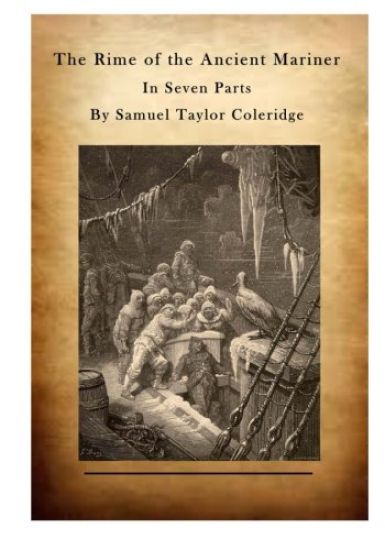
The Rime of the Ancient Mariner: In Seven Parts
Samuel Taylor Coleridge
Createspace Independent Publishing Platform
2016
nidottu

Biographia Literaria
Samuel Taylor Coleridge
Createspace Independent Publishing Platform
2016
nidottu
Biographia Literaria
Samuel Taylor Coleridge
Createspace Independent Publishing Platform
2016
nidottu
The work was originally intended as a mere preface to a collected volume of his poems, explaining and justifying his own style and practice in poetry. The work grew to a literary autobiography, including, together with many facts concerning his education and studies and his early literary adventures, an extended criticism of William Wordsworth's theory of poetry as given in the preface to the Lyrical Ballads (a work on which Coleridge collaborated), and a statement of Coleridge's philosophical views. In the first part of the work Coleridge is mainly concerned with showing the evolution of his philosophic creed. At first an adherent of the associational psychology of David Hartley, he came to discard this mechanical system for the belief that the mind is not a passive but an active agency in the apprehension of reality. The author believed in the "self-sufficing power of absolute Genius" and distinguished between genius and talent as between "an egg and an egg-shell". The discussion involves his definition of the imagination or "esemplastic power," the faculty by which the soul perceives the spiritual unity of the universe, as distinguished from the fancy or merely associative function. The book has numerous essays on philosophy. In particular, it discusses and engages the philosophy of Immanuel Kant, Johann Gottlieb Fichte, and Friedrich Wilhelm Joseph von Schelling. Being fluent in German, Coleridge was one of the first major English literary figures to translate and discuss Schelling, in particular. The later chapters of the book deal with the nature of poetry and with the question of diction raised by Wordsworth. While maintaining a general agreement with Wordsworth's point of view, Coleridge elaborately refutes his principle that the language of poetry should be one taken with due exceptions from the mouths of men in real life, and that there can be no essential difference between the language of prose and of metrical composition. A critique on the qualities of Wordsworth's poetry concludes the volume. The book contains Coleridge's celebrated and vexed distinction between "imagination" and "fancy". Chapter XIV is the origin of the famous critical concept of a "willing suspension of disbelief".
Lyrical Ballads, with a few other poems
Samuel Taylor Coleridge; William Wordsworth
Createspace Independent Publishing Platform
2016
nidottu
The Rime of the Ancient Mariner
Samuel Taylor Coleridge
Createspace Independent Publishing Platform
2016
nidottu
Biographia Literaria and The Rime of the Ancient Mariner
Samuel Taylor Coleridge
Createspace Independent Publishing Platform
2016
nidottu
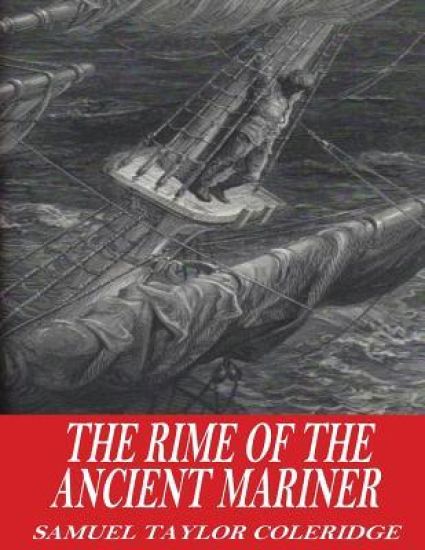
The Rime of the Ancient Mariner
Samuel Taylor Coleridge
Createspace Independent Publishing Platform
2016
nidottu
Rima del Anciano Marinero (Spanish Edition)
Samuel Taylor Coleridge
Createspace Independent Publishing Platform
2017
nidottu
Poema escrito por el poeta ingl s Samuel Taylor Coleridge en 1798 que en su traducci n al espa ol ha recibido diversos t tulos. Relata la fant stica aventura de un marino durante un largo viaje en el mar. Este se inicia con el marinero abordando a un hombre que va a un matrimonio, pidi ndole que escuche su historia. La historia se inicia con una partida venturosa, pero luego seguida de fuertes tormentas. El barco es llevado hacia el sur, llegando cerca de las costas de la Ant rtida. Es ah cuando la tripulaci n ve a un albatros, augurio de buena suerte. Sin embargo y sin raz n alguna, el marinero dispara al ave con su ballesta. La tripulaci n se inquieta, culpando al marino de un futuro desastre. Sin embargo, despu s de que el tiempo mejora y desaparece la niebla, la tripulaci n cambia de parecer, felicitando al marino por su acci n. Navegando a la deriva y sufriendo la escasez de agua, la tripulaci n vuelve a depositar su ira en el marino, castig ndole a colgar en su cuello al ave como se al de culpabilidad. Con el paso del tiempo, el barco tiene un encuentro fantasmal con la muerte y la muerte-en-vida. Estos juegan con los dados la vida de la tripulaci n, siendo la muerte-en-vida quien gana el alma del marinero. El castigo de ver a la tripulaci n perecer, hace que el marino cambie de actitud y bendiga a las criaturas del mar que encuentra. Es all donde el ave que colgaba de su cuello cae, liber ndolo de la maldici n. Despu s de esta liberaci n, el marino es rescatado del barco varado donde se encontraba para luego ser perdonado por un ermita o, poni ndole como penitencia el relatar su historia donde quiera que vaya.
Biographia Literaria
Samuel Taylor Coleridge
Createspace Independent Publishing Platform
2017
nidottu
AIDS to Reflection and Confessions of an Inquiring Spirit
Samuel Taylor Coleridge
Cosimo Classics
2005
pokkari