Kirjahaku
Etsi kirjoja tekijän nimen, kirjan nimen tai ISBN:n perusteella.
1000 tulosta hakusanalla Susan Cheever
Explore the diverse storytelling of Jane Austen in this beautiful collection featuring Lady Susan and The Watsons. Presented as a series of letters, Lady Susan tells the story of the beautiful yet notorious Lady Susan and her schemes to find an advantageous second marriage for herself, while also forcing her daughter into a loveless match. Meet the cunning and charismatic widow who masterfully manipulates those around her to secure advantageous marriages. The Watsons introduces Emma Watson, a young clergyman's daughter navigating the challenges of society and family dynamics after rejoining her estranged relatives. Together, these works showcase Austen's sharp wit, rich character development, and insightful social commentary, making this duo a must-read for fans of classic literature.

Lady Susan is a short epistolary novel by Jane Austen, possibly written in 1794 but not published until 1871. This epistolary novel, an early complete work that the author never submitted for publication, describes the schemes of the main character-the widowed Lady Susan-as she seeks a new husband for herself and one for her daughter. Although the theme, together with the focus on character study and moral issues, is close to Austen's published work (Sense and Sensibility was also originally written in the epistolary form), its outlook is very different, and the heroine has few parallels in 19th-century literature. Lady Susan is a selfish, unscrupulous and scheming woman, highly attractive to men, who tries to trap the best possible husband while maintaining a relationship with a married man. She subverts all the standards of the romantic novel: she has an active role, she is not only beautiful but intelligent and witty, and her suitors are significantly younger than she is (in contrast with Sense and Sensibility and Emma, which feature marriages by their female protagonists to men who are 16 years older). Although the ending includes a traditional reward for morality, Lady Susan herself is treated more leniently than the adulteress in Mansfield Park, who is severely punished.
This epistolary novel, an early complete work that the author never submitted for publication, describes the schemes of the main character
Lady Susan es una mujer muy atractiva para su edad (m s de treinta a os) pero ego sta, quien intenta atrapar al marido m s conveniente posible, mientras mantiene una relaci n con un hombre casado
Lady Susan Vernon es una viuda repleta de defectos que utiliza a su favor para conseguir sus objetivos a toda costa, tanto que su negativa reputaci n es tema de conversaciones. Ahora se ha propuesto conseguir un esposo poseedor de una gran fortuna para su hija, Frederica, quien se niega a contraer matrimonio. Mientras eval a los posibles candidatos para su hija, Lady Susan se da el gusto de coquetear, mantener un amante casado, tergiversar cualquier opini n negativa que se tenga de ella e incluso convencer hasta los m s reacios s lo por el placer de hacerlo. Mentiras, enga os y manipulaciones est n a la orden del d a con esta mujer tan particular y carente de los escr pulos como s lo Jane Austen podr a plasmarla.
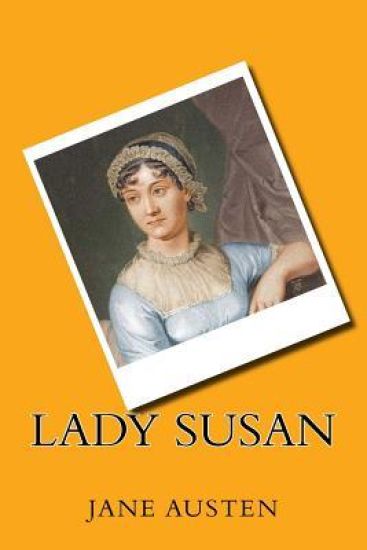
Lady Susan. NOVEL By: Jane Austen (Original Classics)
Jane Austen
Createspace Independent Publishing Platform
2016
nidottu
Lady Susan is a short epistolary novel by Jane Austen, possibly written in 1794 but not published until 1871.This epistolary novel, an early complete work that the author never submitted for publication, describes the schemes of the main character-the widowed Lady Susan-as she seeks a new husband for herself and one for her daughter. Although the theme, together with the focus on character study and moral issues, is close to Austen's published work (Sense and Sensibility was also originally written in the epistolary form), its outlook is very different, and the heroine has few parallels in 19th-century literature. Lady Susan is a selfish, unscrupulous and scheming woman, highly attractive to men, who tries to trap the best possible husband while maintaining a relationship with a married man. She subverts all the standards of the romantic novel: she has an active role, she is not only beautiful but intelligent and witty, and her suitors are significantly younger than she is (in contrast with Sense and Sensibility and Emma, which feature marriages by their female protagonists to men who are 16 years older). Although the ending includes a traditional reward for morality, Lady Susan herself is treated more leniently than the adulteress in Mansfield Park, who is severely punished The main character, aged about 35 or 36 years old, is a widow of just a few months, who is known to flagrantly manipulate and seduce single and married men alike. As she has been left in a financially precarious state due to the death of her first husband, she uses flirtation and seduction to gain her objectives and maintain a semblance of her former opulent lifestyle. As a widow and a mother, her main goals are to quickly marry off her daughter Frederica (of whom she is contemptuous and regards as stupid and stubborn) to a wealthy man, and to marry an even better match herself. Mrs. Vernon describes her as "...really excessively pretty. I have seldom seen so lovely a woman as Lady Susan. She is delicately fair, with fine grey eyes and dark eyelashes; and from her appearance one would not suppose her more than five and twenty, though she must in fact be ten years older. I was certainly not disposed to admire her...but I cannot help feeling that she possesses an uncommon union of symmetry, brilliancy and grace." Lady Susan is cold towards her daughter, for whom she feels little or no affection: she calls her "a stupid girl" who "has nothing to recommend her." It is possible that Jane Austen drew on the character of the mother of her neighbour, a beautiful Mrs. Craven, who had actually treated her daughters quite cruelly, locking them up, beating and starving them, till they ran away from home or married beneath their class to escape. 1] There is an ironic contrast between the beautiful but determinedly chaste Susannah of the Old Testament and Lady Susan.
Lady Susan Jane Austen (1775 - 1817) Jane Austen demonstrated her mastery of the epistolary novel genre in Lady Susan, which she wrote in 1795 but never published. Although the primary focus of this short novel is the selfish behavior of Lady Susan as she engages in affairs and searches for suitable husbands for herself and her young daughter, the actual action shares its importance with Austen
This epistolary novel, an early complete work that the author never submitted for publication, describes the schemes of the main character-the widowed Lady Susan-as she seeks a new husband for herself and one for her daughter. Although the theme, together with the focus on character study and moral issues, is close to Austen's published work (Sense and Sensibility was also originally written in the epistolary form), its outlook is very different, and the heroine has few parallels in 19th-century literature. Lady Susan is a selfish, unscrupulous and scheming woman, highly attractive to men, who tries to trap the best possible husband while maintaining a relationship with a married man. She subverts all the standards of the romantic novel: she has an active role, she is not only beautiful but intelligent and witty, and her suitors are significantly younger than she is (in contrast with Sense and Sensibility and Emma, which feature marriages by their female protagonists to men who are 16 years older). Although the ending includes a traditional reward for morality, Lady Susan herself is treated more leniently than the adulteress in Mansfield Park, who is severely punished.
Lady Susan by Jane Austen Lady Susan is a short epistolary novel by Jane Austen, possibly written in 1794 but not published until 1871. This epistolary novel, an early complete work that the author never submitted for publication, describes the schemes of the main character
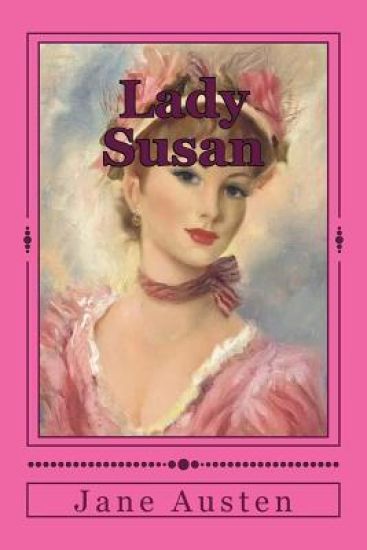
Lady Susan. epistolary NOVEL By: Jane Austen, ( possibly written in 1794 but not published until 1871.
Jane Austen
Createspace Independent Publishing Platform
2016
nidottu
Lady Susan is a short epistolary novel by Jane Austen, possibly written in 1794 but not published until 1871. his epistolary novel, an early complete work that the author never submitted for publication, describes the schemes of the main character-the widowed Lady Susan-as she seeks a new husband for herself and one for her daughter. Although the theme, together with the focus on character study and moral issues, is close to Austen's published work (Sense and Sensibility was also originally written in the epistolary form), its outlook is very different, and the heroine has few parallels in 19th-century literature. Lady Susan is a selfish, unscrupulous and scheming woman, highly attractive to men, who tries to trap the best possible husband while maintaining a relationship with a married man. She subverts all the standards of the romantic novel: she has an active role, she is not only beautiful but intelligent and witty, and her suitors are significantly younger than she is (in contrast with Sense and Sensibility and Emma, which feature marriages by their female protagonists to men who are 16 years older). Although the ending includes a traditional reward for morality, Lady Susan herself is treated more leniently than the adulteress in Mansfield Park, who is severely punished The main character is aged about 35 or 36 years old. Given her courtesy title, she is the daughter of either an Earl, Marquess or Duke. She is a widow of just a few months, who is known to flagrantly manipulate and seduce single and married men alike. As she has been left in a financially precarious state due to the death of her first husband, she uses flirtation and seduction to gain her objectives and maintain a semblance of her former opulent lifestyle. As a widow and a mother, her main goals are to quickly marry off her daughter Frederica (of whom she is contemptuous, regarding her as stupid and stubborn) to a wealthy man, and to marry an even better match herself. Mrs. Vernon describes her as "...really excessively pretty. I have seldom seen so lovely a woman as Lady Susan. She is delicately fair, with fine grey eyes and dark eyelashes; and from her appearance one would not suppose her more than five and twenty, though she must in fact be ten years older. I was certainly not disposed to admire her...but I cannot help feeling that she possesses an uncommon union of symmetry, brilliancy and grace." Lady Susan is cold towards her daughter, for whom she feels little or no affection: she calls her "a stupid girl" who "has nothing to recommend her." It is possible that Jane Austen drew on the character of the mother of her neighbour, a beautiful Mrs. Craven, who had actually treated her daughters quite cruelly, locking them up, beating and starving them, till they ran away from home or married beneath their class to escape.
Lady Susan. The Watsons By Jane Austen, (epistolary novel)
Jane Austen
Createspace Independent Publishing Platform
2016
nidottu
Lady Susan. The Watsons By Jane Austen (epistolary novel) Lady Susan is a short epistolary novel by Jane Austen, possibly written in 1794 but not published until 1871.This epistolary novel, an early complete work that the author never submitted for publication, describes the schemes of the main character-the widowed Lady Susan-as she seeks a new husband for herself and one for her daughter. Although the theme, together with the focus on character study and moral issues, is close to Austen's published work (Sense and Sensibility was also originally written in the epistolary form), its outlook is very different, and the heroine has few parallels in 19th-century literature. Lady Susan is a selfish, unscrupulous and scheming woman, highly attractive to men, who tries to trap the best possible husband while maintaining a relationship with a married man. She subverts all the standards of the romantic novel: she has an active role, she is not only beautiful but intelligent and witty, and her suitors are significantly younger than she is (in contrast with Sense and Sensibility and Emma, which feature marriages by their female protagonists to men who are 16 years older). Although the ending includes a traditional reward for morality, Lady Susan herself is treated more leniently than the adulteress in Mansfield Park, who is severely punished.The main character is aged about 35 or 36 years old. Given her courtesy title, she is the daughter of either an Earl, Marquess or Duke. She is a widow of just a few months, who is known to flagrantly manipulate and seduce single and married men alike. As she has been left in a financially precarious state due to the death of her first husband, she uses flirtation and seduction to gain her objectives and maintain a semblance of her former opulent lifestyle. As a widow and a mother, her main goals are to quickly marry off her daughter Frederica (of whom she is contemptuous, regarding her as stupid and stubborn) to a wealthy man, and to marry an even better match herself. Mrs. Vernon describes her as "...really excessively pretty. I have seldom seen so lovely a woman as Lady Susan. She is delicately fair, with fine grey eyes and dark eyelashes; and from her appearance one would not suppose her more than five and twenty, though she must in fact be ten years older. I was certainly not disposed to admire her...but I cannot help feeling that she possesses an uncommon union of symmetry, brilliancy and grace." Lady Susan is cold towards her daughter, for whom she feels little or no affection: she calls her "a stupid girl" who "has nothing to recommend her." It is possible that Jane Austen drew on the character of the mother of her neighbour, a beautiful Mrs. Craven, who had actually treated her daughters quite cruelly, locking them up, beating and starving them, till they ran away from home or married beneath their class to escape.There is an ironic contrast between the beautiful but determinedly chaste Susannah of the Old Testament and Lady Susan....
Es una novela corta epistolar de Jane Austen. Posiblemente escrita en 1794, fue publicada en 1871 en forma p stuma.
This epistolary novel, an early complete work that the author never submitted for publication, describes the schemes of the main character