Kirjojen hintavertailu. Mukana 12 016 292 kirjaa ja 12 kauppaa.

Kirjahaku

Etsi kirjoja tekijän nimen, kirjan nimen tai ISBN:n perusteella.

1000 tulosta hakusanalla Theodore Besterman

Theodore Roosevelt on Bravery

Theodore Roosevelt on Bravery

Theodore Roosevelt

Sky Pony Press
2015
sidottu
Teddy Roosevelt is the only president in history to deliver a ninety-minute speech directly after being shot in the chest. He’s a Nobel Prize recipient, a Harvard graduate, and he was the youngest President in history to be inaugurated into office. Roosevelt’s force took America by storm in the early twentieth century, and he is regarded as one of the finest leaders ever to take office.His wisdom even earned him a spot in Mount Rushmore, which has immortalized him along with George Washington, Thomas Jefferson, and Abraham Lincoln.As a sickly child, Roosevelt was home-schooled his entire life until enrolling at Harvard University, where he studied biology. A year after graduating, he began his political career as the New York City police commissioner, and later as a member of the New York State Assembly, where he led the reform division of the GOP. In the time since his presidency, Roosevelt’s bravery has inspired generations of Americans. ?A man who is good enough to shed his blood for the country is good enough to be given a square deal afterwards.”Skyhorse Publishing, as well as our Arcade imprint, are proud to publish a broad range of books for readers interested in history--books about World War II, the Third Reich, Hitler and his henchmen, the JFK assassination, conspiracies, the American Civil War, the American Revolution, gladiators, Vikings, ancient Rome, medieval times, the old West, and much more. While not every title we publish becomes a New York Times bestseller or a national bestseller, we are committed to books on subjects that are sometimes overlooked and to authors whose work might not otherwise find a home.
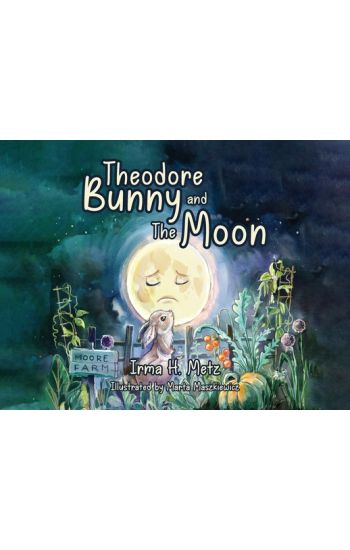
Theodore Bunny and The Moon

Theodore Bunny and The Moon

Irma H Metz

Halo Publishing International
2023
pokkari
Love is shown in many ways. Sometimes, all it takes is just for some-bunny to be there to play with. Follow Theodore Bunny as he wishes upon a star and selflessly gives of his time to bring joy to his lonely friend.
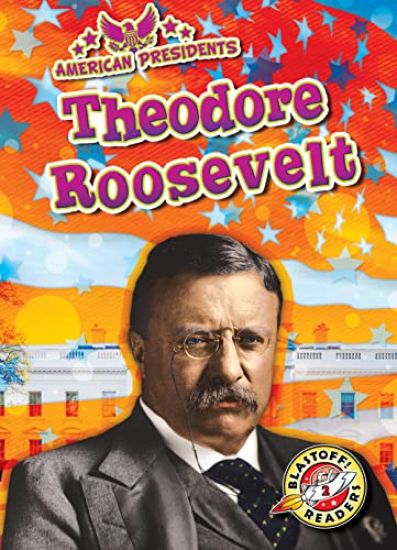
Theodore Roosevelt

Theodore Roosevelt

Rebecca Pettiford

Blastoff! Readers
2022
sidottu
Learn about the adventures and policies that defined President Theodore Roosevelt. This book's leveled text details Roosevelt's early life and far-reaching achievements while in office. Historical photos support the main text and allow Roosevelt's character and projects to shine off the page. Special features offer additional details about the president's life, map where his story began, and ask readers a question to engage what they have learned. This title is full of fascinating facts about a famous president
Theodore Roosevelt

Theodore Roosevelt

Jacob a Riis

Cosimo Classics
2020
pokkari
"Of the President I am proud with reason, but the friend I love. And if I can make you see him so, as a friend and a man, I have given you the master-key to him as a statesman as well." --Jacob Riis, Theodore Roosevelt--The CitizenTheodore Roosevelt--The Citizen (1904) was written by Jacob Riis, a journalist and good friend of Roosevelt's. Riis explained that his book was not going to be a formal biography as most people knew Roosevelt already. Neither would it be about the meaning of Roosevelt's life as there were still many more years to come. This biography would be about Roosevelt, the man and friend of Riis'. It became a wonderful and personable biography.Roosevelt and Riis met after Roosevelt had heard about Riis's book How the Other Half Lives (1890), about the poverty in the slums of New York City. A few years later, when Roosevelt was New York Police Commissioner and Riis a police reporter, the two often worked together. Both passionate for reform and improvement of people's lives, they became good friends.
Theodore Roosevelt

Theodore Roosevelt

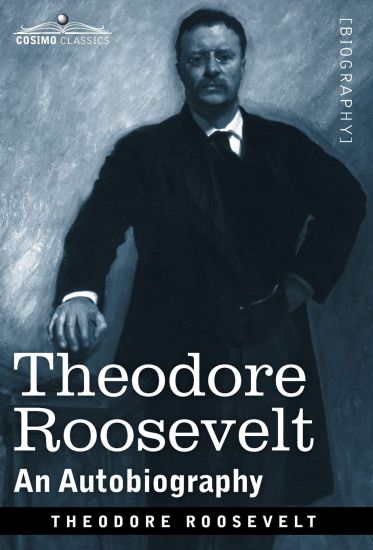
Theodore Roosevelt

Cosimo Classics
2020
sidottu
"Facing the immense complexity of modern social and industrial conditions, there is need to use freely and unhesitatingly the collective power of all of us; and yet no exercise of collective power will ever avail if the average individual does not keep his or her sense of personal duty, initiative, and responsibility." --Theodore Roosevelt, Foreword Theodore Roosevelt--An AutobiographyTheodore Roosevelt--An Autobiography written by Theodore Roosevelt in 1913, several years after his presidency of the US, is a wide-ranging book about a fascinating person. It begins with Roosevelt's childhood and how he grew from a sickly and weak youngster to a strong man; from working on ranches to leading the Rough Riders during the Spanish-American War; from being a New York governor to becoming the youngest President ever; from being a conservationist to being the first American to be awarded the Nobel Peace Prize for brokering peace in the Russo-Japanese War.Theodore Roosevelt was also a historian and author, and this well-written autobiography--in the original illustrated edition--is required reading for students of history and anyone interested in being inspired by a different kind of politician.
Theodore Roosevelt

Theodore Roosevelt

Theodore Roosevelt

Cosimo Classics
2020
pokkari
"Facing the immense complexity of modern social and industrial conditions, there is need to use freely and unhesitatingly the collective power of all of us; and yet no exercise of collective power will ever avail if the average individual does not keep his or her sense of personal duty, initiative, and responsibility." --Theodore Roosevelt, Foreword Theodore Roosevelt--An AutobiographyTheodore Roosevelt--An Autobiography written by Theodore Roosevelt in 1913, several years after his presidency of the US, is a wide-ranging book about a fascinating person. It begins with Roosevelt's childhood and how he grew from a sickly and weak youngster to a strong man; from working on ranches to leading the Rough Riders during the Spanish-American War; from being a New York governor to becoming the youngest President ever; from being a conservationist to being the first American to be awarded the Nobel Peace Prize for brokering peace in the Russo-Japanese War.Theodore Roosevelt was also a historian and author, and this well-written autobiography--in the original illustrated edition--is required reading for students of history and anyone interested in being inspired by a different kind of politician.
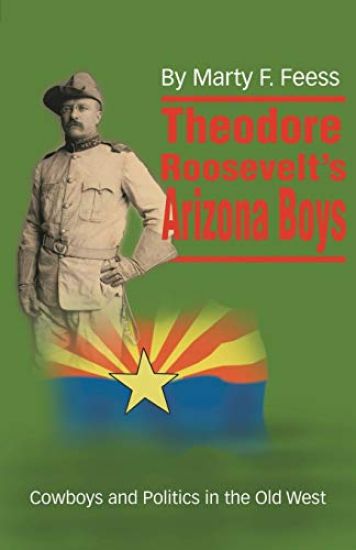
Theodore Roosevelt's Arizona Boys

Theodore Roosevelt's Arizona Boys

Marty F Feess

Go to Publish
2021
pokkari
About the BookTheodore Roosevelt reinvented the presidency for the twentieth century with his use of the "bully pulpit" and his emphasis on the "square deal." In so doing he enlivened American politics and made the federal government relevant for the common man. This was nowhere more true than in the southwest which had provided his famous Rough Riders. A great many former Rough Riders gained political appointment in Arizona after Roosevelt became president. This book is about the unique relationship between Roosevelt and his Rough Riders in Arizona and how Arizona politics and Roosevelt's administration and career were affected. Many of the characters are colorful and these true stories are rich in hope, humor, and humanity.About the AuthorMarty F. Feess taught history in Arizona high schools and community colleges for twenty years. He received his Ph.D. in history from Northern Arizona University in 1999. He is now retired and living in Sun City, Arizona with his wife, Karen. He has written four books.
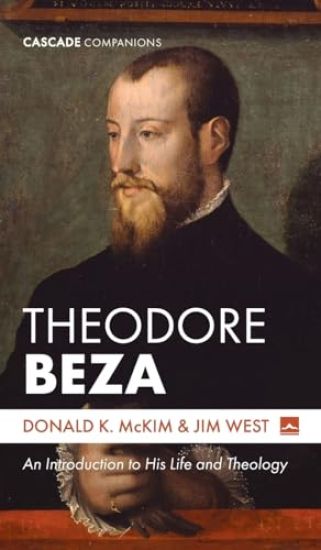
Theodore Beza

Theodore Beza

Donald K McKim; Jim West

Cascade Books
2023
pokkari
Theodore Beza (1519-1605) was an important sixteenth-century Protestant Reformer. This volume introduces his life and work and outlines his influential theological thought. McKim and West situate Beza's theology in its historical context and clarify how it was similar to and different from the theology of other Protestant Reformers. They also help readers consider the ongoing relevance of Beza's theology for contemporary Christian living.
Theodore Beza

Theodore Beza

Donald K McKim; Jim West

Cascade Books
2023
sidottu
Theodore Beza (1519-1605) was an important sixteenth-century Protestant Reformer. This volume introduces his life and work and outlines his influential theological thought. McKim and West situate Beza's theology in its historical context and clarify how it was similar to and different from the theology of other Protestant Reformers. They also help readers consider the ongoing relevance of Beza's theology for contemporary Christian living.
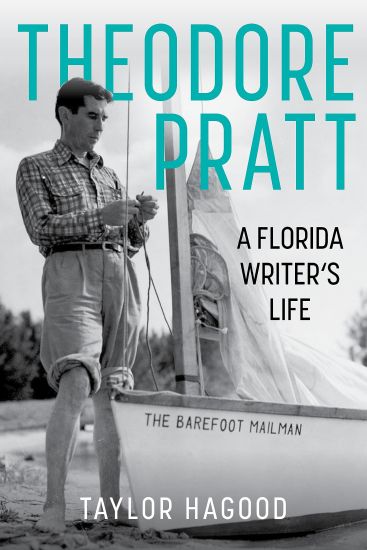
Theodore Pratt

Theodore Pratt

Taylor Hagood

ROWMAN LITTLEFIELD
2024
sidottu
The author of fifteen books set in the Sunshine State, Theodore Pratt (1901-1969) enjoyed an unofficial title of "Literary Laureate of Florida" in the middle of the twentieth century. His writings particularly capture the culture of south Florida, most famously in his "Florida Trilogy"--beginning with his most famous book, The Barefoot Mailman (1943), and running through The Flame Tree (1948) and The Big Bubble (1949)-- which covers south Florida's transition from early pioneering days to glittering playground of the wealthy. Along with the trilogy, he wrote powerfully of the Florida Keys in Mercy Island (1941), the Everglades in Escape to Eden (1953), and Chief Osceola in an outdoor drama and novel both entitled Seminole (1953/1954). Pratt conducted research for his books that resulted in an archive useful to researchers today and a story/essay collection, Florida Roundabout (1959), that provides a deeply revealing portrait of poor whites in the state. This biography brings Pratt's life and career to Florida enthusiasts, educators, the young writers he targeted, and literary scholars who focus on southern literature, Florida literature, and middlebrow twentieth-century American film and literature. Written as a narrative in reader-friendly prose, the biography captures the nostalgia of vintage Florida, promising appeal to general readers.
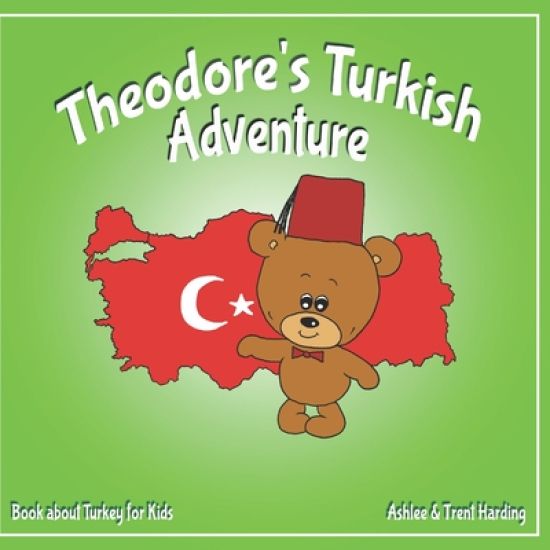
Theodore's Turkish Adventure: Book about Turkey for Kids

Theodore's Turkish Adventure: Book about Turkey for Kids

Trent Harding; Ashlee Harding

Independently Published
2019
nidottu
Join Theodore and discover what it's like to visit the country of Turkey in this fun and educational children's book. Theodore travels through historic towns such as Troy and Ephesus. He experiences the fun of oil wrestling, enjoys a Turkish bath and visits other beautiful places on his journey. Your child will love joining Theodore the bear in this country.
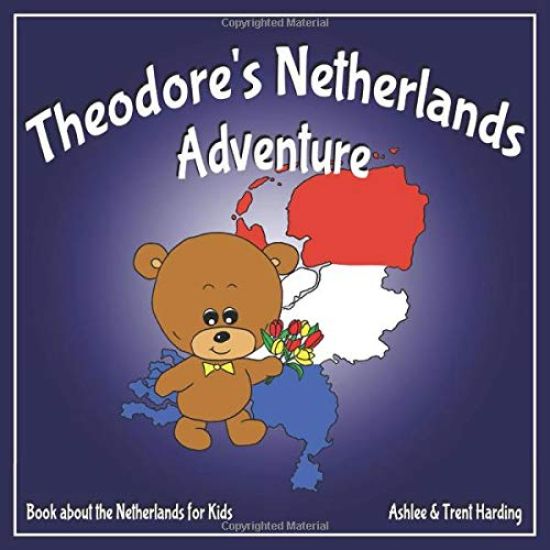
Theodore's Netherlands Adventure: Books about the Netherlands for Kids

Theodore's Netherlands Adventure: Books about the Netherlands for Kids

Trent Harding; Ashlee Harding

Independently Published
2019
nidottu
Join Theodore and discover what it's like to visit the Netherlands with this fun and educational children's book. Theodore travels around the country learning about its history, and its famous attractions such as the tulip festival, cheese markets, Delft and windmills. He experiences the fun of canal jumping and tastes some great Dutch food. Your child will love going on this adventure with cute and lovable Theodore.
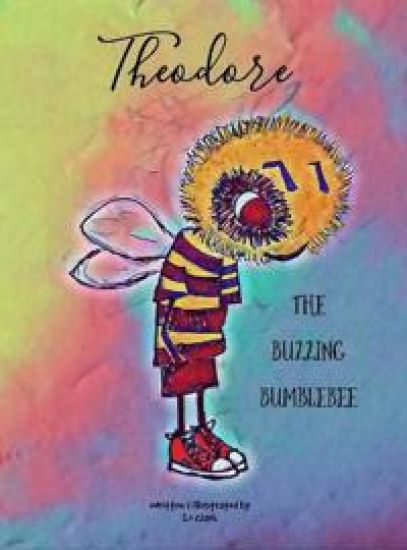
Theodore The Buzzing Bumblebee
Theodore the buzzing bumblebee embarks on an unexpected journey with his little sister Rosebud and a few friends. Together they seek the Giant Newt of Crystal Creek. It's a long journey and they will have to break a few rules to get there. What sort of adventures do you think little buzzing bumblebees have?
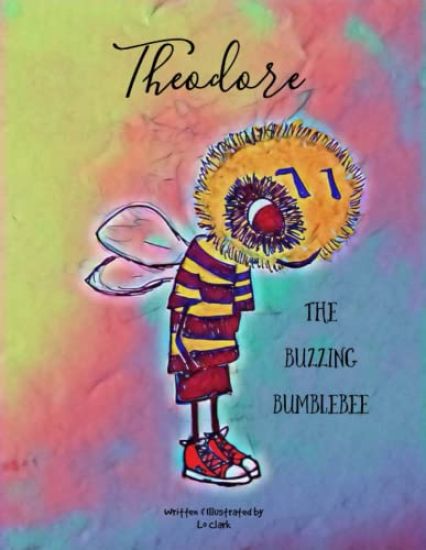
Theodore The Buzzing Bumblebee
Theodore the buzzing bumblebee embarks on an unexpected journey with his little sister Rosebud and a few friends. Together they seek the Giant Newt of Crystal Creek. It's a long journey and they will have to break a few rules to get there. What sort of adventures do you think little buzzing bumblebees have?
Discourses of Slavery, By: Theodore Parker: Theodore Parker (August 24, 1810 - May 10, 1860) was an American Transcendentalist and reforming mini
Theodore Parker (August 24, 1810 - May 10, 1860) was an American Transcendentalist and reforming minister of the Unitarian church. A reformer and abolitionist, his words and popular quotations would later inspire speeches by Abraham Lincoln and Martin Luther King, Jr. Early life, 1810-1829: Theodore Parker was born in Lexington, Massachusetts, the youngest child in a large farming family. His paternal grandfather was John Parker, the leader of the Lexington militia at the Battle of Lexington. Among his colonial Yankee ancestors were Thomas Hastings, who came from the East Anglia region of England to the Massachusetts Bay Colony in 1634, and Deacon Thomas Parker, who came from England in 1635 and was one of the founders of Reading. Most of Theodore's family had died by the time he was 27, probably due to tuberculosis. Out of eleven siblings, only five remained: three brothers, including Theodore, and two sisters. His mother, to whom he was emotionally close, died when he was eleven. He responded to these tragedies by refusing to lapse into what he called "the valley of tears," focusing instead on other events and demands, and by affirming "the immortality of the soul," later a benchmark of his theology. Descriptions of Parker as a teenager recall him as "raw" and rough, emotional and poetic, sincere, "arch," "roguish," volatile, witty, and quick. He excelled at academics and gained an early education through country schools and personal study. He studied long and late when farm chores allowed, tutoring himself in math, Latin, and other subjects. At seventeen he began teaching in local schools. He continued tutoring himself and private students in advanced and specialized subjects. He learned Hebrew from Joshua Seixas (son of Gershom Mendes Seixas and Hannah Manuel), whom he may have baptized in a covert conversion to Christianity. He also studied for a time under Convers Francis, who later preached at Parker's ordination. Death: Following a lifetime of overwork, Parker's ill health forced his retirement in 1859.He developed tuberculosis, then without effective treatment, and departed for Florence, Italy, where he died on May 10, 1860. He sought refuge in Florence because of his friendship with Elizabeth Barrett and Robert Browning, Isa Blagden and Frances Power Cobbe, but died scarcely a month following his arrival. It was less than a year before the outbreak of the American Civil War. Parker was a patient of William Wesselhoeft, who practiced homeopathy. Wesselhoeft gave the oration at Parker's funeral He is buried in the English Cemetery in Florence. When Frederick Douglass visited Florence, he went first from the railroad station to Parker's tomb. Parker's headstone by Joel Tanner Hart was later replaced by one by William Wetmore Story. Other Unitarians buried in the English Cemetery include Thomas Southwood Smith and Richard Hildreth. The British writer Fanny Trollope, also buried here, wrote the first anti-slavery novel and Hildreth wrote the second. Both books were used by Harriet Beecher Stowe for her antislavery novel Uncle Tom's Cabin (1852).
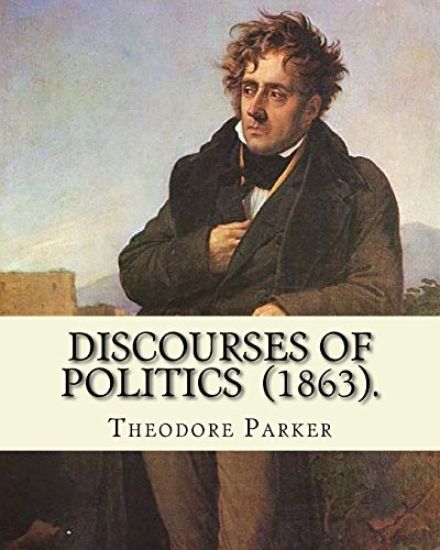
Discourses of Politics (1863). By: Theodore Parker: Volume 4: Discourses of Politics ...Collected works, Edited by Frances Power Cobbe
Theodore Parker (August 24, 1810 - May 10, 1860) was an American Transcendentalist and reforming minister of the Unitarian church. A reformer and abolitionist, his words and popular quotations would later inspire speeches by Abraham Lincoln and Martin Luther King, Jr. Early life, 1810-1829: Theodore Parker was born in Lexington, Massachusetts, the youngest child in a large farming family. His paternal grandfather was John Parker, the leader of the Lexington militia at the Battle of Lexington. Among his colonial Yankee ancestors were Thomas Hastings, who came from the East Anglia region of England to the Massachusetts Bay Colony in 1634, and Deacon Thomas Parker, who came from England in 1635 and was one of the founders of Reading. Most of Theodore's family had died by the time he was 27, probably due to tuberculosis. Out of eleven siblings, only five remained: three brothers, including Theodore, and two sisters. His mother, to whom he was emotionally close, died when he was eleven. He responded to these tragedies by refusing to lapse into what he called "the valley of tears," focusing instead on other events and demands, and by affirming "the immortality of the soul," later a benchmark of his theology. Descriptions of Parker as a teenager recall him as "raw" and rough, emotional and poetic, sincere, "arch," "roguish," volatile, witty, and quick. He excelled at academics and gained an early education through country schools and personal study. He studied long and late when farm chores allowed, tutoring himself in math, Latin, and other subjects. At seventeen he began teaching in local schools. He continued tutoring himself and private students in advanced and specialized subjects. He learned Hebrew from Joshua Seixas (son of Gershom Mendes Seixas and Hannah Manuel), whom he may have baptized in a covert conversion to Christianity. He also studied for a time under Convers Francis, who later preached at Parker's ordination. Death: Following a lifetime of overwork, Parker's ill health forced his retirement in 1859.He developed tuberculosis, then without effective treatment, and departed for Florence, Italy, where he died on May 10, 1860. He sought refuge in Florence because of his friendship with Elizabeth Barrett and Robert Browning, Isa Blagden and Frances Power Cobbe, but died scarcely a month following his arrival. It was less than a year before the outbreak of the American Civil War. Parker was a patient of William Wesselhoeft, who practiced homeopathy. Wesselhoeft gave the oration at Parker's funeral He is buried in the English Cemetery in Florence. When Frederick Douglass visited Florence, he went first from the railroad station to Parker's tomb. Parker's headstone by Joel Tanner Hart was later replaced by one by William Wetmore Story. Other Unitarians buried in the English Cemetery include Thomas Southwood Smith and Richard Hildreth. The British writer Fanny Trollope, also buried here, wrote the first anti-slavery novel and Hildreth wrote the second. Both books were used by Harriet Beecher Stowe for her antislavery novel Uncle Tom's Cabin (1852).
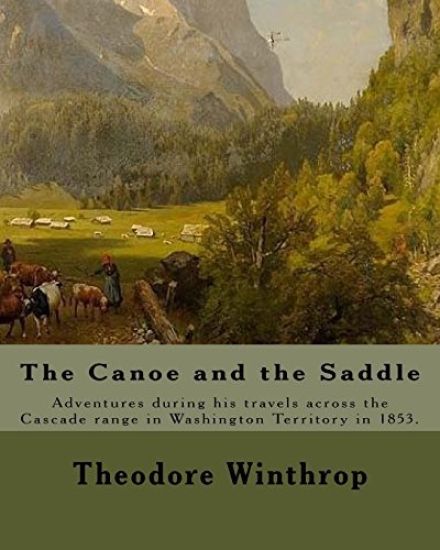
The Canoe and the Saddle, By: Theodore Winthrop: This work is subtitled "Adventures Among the Northwestern Rivers and Forests". It is an account of
This work is subtitled "Adventures Among the Northwestern Rivers and Forests". It is an account of the author's adventures during his travels across the Cascade range in Washington Territory in 1853.................... Major Theodore Woolsey Winthrop (September 22, 1828 - June 10, 1861) was a writer, lawyer, and world traveller. He was one of the first Union officers killed in the American Civil War. Biography: Winthrop was born in New Haven, Connecticut. He was descended through his father from Governor John Winthrop and through his mother from George (Joris) Woolsey, one of the earliest settlers of New Amsterdam, Thomas Cornell (settler) 1] and Jonathan Edwards. He graduated in 1848 from Yale University, where his uncle Theodore Dwight Woolsey was President and he was a member of the Phi Chapter of the Delta Kappa Epsilon Fraternity, he travelled for a year in Great Britain and Europe and then through the United States. After contributing to periodicals, short sketches, and stories, which attracted little attention, Winthrop enlisted in the 7th Regiment, New York State Militia, an early volunteer unit of the Federal Army that answered President Abraham Lincoln's call for troops in 1861. He wrote a popular essay about the experience titled "Our March to Washington." He was appointed Major and soon became an aide-de-camp to Maj. Gen. Benjamin Butler, commander of the Department of Virginia headquartered at Fort Monroe. Battle of Big Bethel: At the Battle of Big Bethel on June 10, 1861, he volunteered for General Ebenezer W. Peirce's staff and drew up a crude plan of battle. After a Federal attack to the enemy right flank was foiled, Winthrop led an ill-fated assault on the Confederate left held by four companies of the 1st Regiment North Carolina Infantry, under the command of Colonel (later Lieutenant General) Daniel Harvey Hill. In the heat of battle, Major Winthrop leapt onto the trunk of a fallen tree and reportedly yelled, "One more charge boys, and the day is ours." Soon thereafter, he was killed by a musket ball to the heart and became the first casualty of rank for the Northern side in what history regards as the first pitched land battle of the Civil War. Ironically, ardent abolitionist Winthrop may have been shot by the African-American slave of a Confederate officer in the 1st North Carolina Infantry. (Three different soldiers, as well as this slave, referred to in the records only as "Sam," claimed to have killed him.)................