
Kirjahaku
Etsi kirjoja tekijän nimen, kirjan nimen tai ISBN:n perusteella.
1000 tulosta hakusanalla Timothy Lockyer
1–2 Timothy and Titus: Evangelical Biblical Theolo gy Commentary
Andreas Kstenberger
Faithlife Corporation
2021
sidottu
Paul's letters to Timothy and Titus provide all churches with much-needed direction. In this EBTC volume, Andreas J. K stenberger captures the rich theological contributions of Paul's oft-overlooked letters to Timothy and Titus. K stenberger highlights Paul's mature reflections on doctrine, the church's nature, mission, relationships, dynamics, and oversight, the Christian life, and the last days. K stenberger analyzes these letters against the Old Testament and the rest of the New Testament, particularly Paul's other letters and Acts. The Evangelical Biblical Theology Commentary (EBTC) series locates each biblical book within redemptive history and illuminates its unique theological contributions. All EBTC volumes feature informed exegetical treatment of the biblical book and thorough discussion of its most important theological themes in relation to the canon--all in a style that is useful and accessible to students of Scripture.
Yale President Timothy Dwight, A Biography: Memoir of the Life of Timothy Dwight (1752-1817)
Steven Hudgik; Unknown Anonymous
Independently Published
2019
nidottu
Timothy Dwight, Father to New EnglandSometimes the good man, by the uncommon powers of his mind, by peculiar incidents in his life, by having exerted a commanding influence on the interests of the public, or by having acquired an unusual share in their affections; presents the most attractive subject of biography. That good man is Timothy Dwight.The grandson of Jonathan Edwards. Although for most of his life he was without sight, unable to see well enough to read or write, he was a major force for change in American history. Blind for most of his life, Timothy Dwight will doubtless be ranked among the first men in the history of our country. In the acquisition of knowledge, we have seen that the earliest efforts of his mind, even in infancy, were singular and extraordinary; and that his talents were as strongly marked at this early stage of his existence, as perhaps at any subsequent period of his life. He learned the alphabet in a single lesson; and before he was four years old he was reading the Bible with ease, favoring the historical books. He was admitted as a student at Yale at 13 years of age. At 19 he was teaching at Yale. What was most extraordinary was that when he started as president at Yale, the school was in decline and students were rebellious and embracing sin. A few short years later enrollment had more than doubled and attendance at the College Church increased from three students to over 50% of the students. Timothy Dwight was a teacher, pastor, and father to the students, and by the time of his death was known as the father to New England. The following description is from the memoir of Timothy Dwight: "Timothy Dwight was truly an extraordinary man.He was, indeed, a father to New England and her moral legislator. His life is an era in her history, To the churches of his persuasion in that country, he was a guardian, a friend, a counselor. In the hour of trial, they found support in his firmness, assistance in his wisdom, and encouragement in his prayers. As a peacemaker, he was eminently blessed; for his advice was asked, and given in the spirit of Christian humility and justice.""As a minister and preacher of the gospel, it is not easy to convey an adequate idea of his characteristic excellence. Having been compelled, from the weakness of his eyes, to adopt the plan of preaching without notes; his sermons, except those designed for extraordinary occasions, were for the first twenty years chiefly unwritten. Usually, he barely noted the general divisions, and some of the most important and leading ideas. There is no doubt, that this mode had its peculiar advantages; nor that his style and manner, as an extemporaneous preacher, were more popular and captivating, than at a later period, when his discourses were written at length.""When unconfined by notes, the whole field of thought was before him. Into that field he entered; conscious where his subject lay, and by what metes and bounds it was limited; and enjoying also that calm self-possession and confidence of success, which trial alone can give, and which every successive effort had only served to increase.""When we add, that these were accompanied by the utmost fluency and force of language, a piercing eye, a countenance deeply marked with intellect, a strong emphasis, a voice singular for its compass and melody, an enunciation remarkably clear and distinct, a person dignified and commanding, and gestures graceful and happy; we need not inform the reader, that his pulpit efforts, at this period, possessed every characteristic of animated and powerful eloquence."Timothy Dwight was an extraordinary man, and this book tells his story.
Commentary on Timothy by Saint John Chrysostom
Lulu.com
2020
pokkari
John Chrysostom (c. 347 - 14 September 407) Archbishop of Constantinople, was an important Early Church Father. He is known for his preaching and public speaking, his denunciation of abuse of authority by both ecclesiastical and political leaders, the Divine Liturgy of Saint John Chrysostom, and his ascetic sensibilities. The epithet Χρυσόστομος (Chrysostomos, anglicized as Chrysostom) means "golden-mouthed" in Greek and denotes his celebrated eloquence. Chrysostom was among the most prolific authors in the early Christian Church.

The Tale of Timothy Turtle
Arthur Scott Bailey
Createspace Independent Publishing Platform
2018
nidottu
The Tale of Timothy Turtle By Arthur Scott Bailey
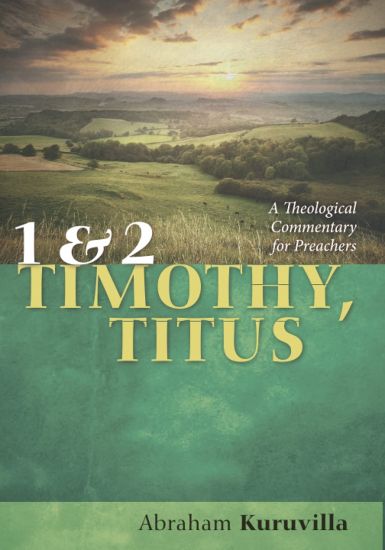
1 and 2 Timothy, Titus: A Theological Commentary for Preachers engages hermeneutics for preaching, employing theological exegesis that enables the preacher to utilize all the units of these epistles to craft effective sermons. This commentary unpacks the crucial link between Scripture and application: the theology of each preaching text (pericope). The three letters--collectively, the Pastoral Epistles--are divided into eighteen pericopes, and what the author is doing with what he is saying in each is explored. The overall theological trajectory of the Pastoral Epistles concerns the promotion of God's economy by the community of God's people. The specific theological thrust of individual preaching units is captured in this commentary, making possible a sequential homiletical movement through each pericope of the three epistles. While the primary goal of the commentary is to take the preacher from text to theology, it also provides two sermon outlines for each of the eighteen preaching units of the Pastoral Epistles. The unique approach of this work results in a theology-for-preaching commentary that promises to be useful for anyone teaching through 1 and 2 Timothy and Titus with an emphasis on application.
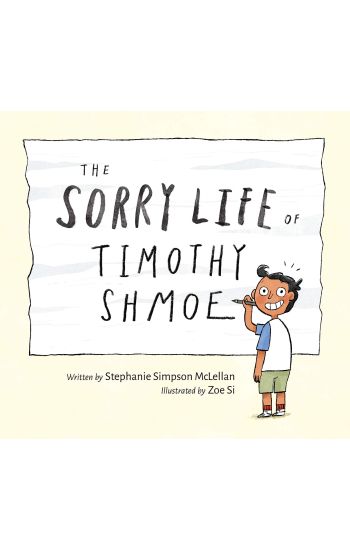
An impulsive little boy experiences the power of unconditional love Timothy Shmoe isn't a bad kid, but sometimes he makes honest (and not-so-honest) mistakes. Time after time, Timothy finds himself in disasters of his own creation, leaving a trail of broken heirlooms, torn tutus, and innocent bystanders (including his cat, Fluffy). Told in a series of letters, readers follow Timothy through his hilarious antics and missteps. When his pocketful of marbles wreaks havoc at his sister's ballet recital, Timothy realizes he's gone too far. In one final, remorseful letter, Timothy apologizes for the ballet blunder and says his father probably wishes Timothy had never been born. What follows is a touching lesson about the redeeming power of acceptance. Bright, comic-like illustrations and hand-lettered text bring Timothy and his shenanigans to life. Hilarious and heartwarming, The Sorry Life of Timothy Shmoe is a call to empathy for children who struggle with impulse control, and a tribute to unconditional love.
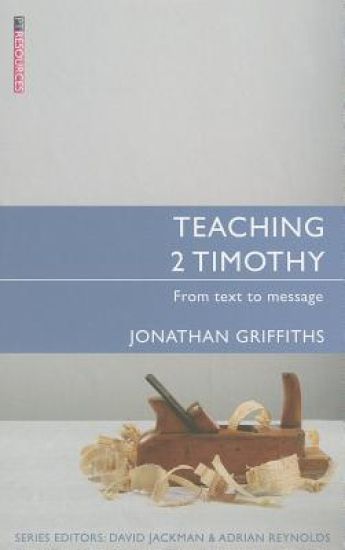
Paul's second letter to Timothy is a letter written from one pastor to another, and it is designed to train, equip and encourage Timothy for the work of ministry. This volume is not an academic study of 2 Timothy, but rather an accessible and easily navigable teaching resource which will aid those examining 2 Timothy both to teach and for their own study. This is intended to accompany Introducing 2 Timothy.
Life in first-century Ephesus and Corinth had enough parallels with the twenty-first century world that there's much to learn from Paul's letters to Timothy and Titus. Paul's confidence in the gospel models hope and leadership in some difficult situations.
Paul's second letter to Timothy was the last one he wrote. Paul was back in prison and about to be executed. What was on his mind? What was important? What did he want to tell Timothy, the young man who had been with him for many years and who had proved so useful? This letter contains words of advice and encouragement for Timothy but much of it is so applicable to today. Our society is not so different from the educated, yet barbaric, athletic, yet permissive, Greco-Roman world of the first century. The problems, difficulties and temptations which beset Timothy and others, plague many people today, especially new and young Christians. The teaching in this letter, together with the other two pastoral Epistles - 1 Timothy and Titus - contain wisdom and advice which are so relevant, and so needed, for Christian leaders and for Christendom today, yet all too often this lovely letter is ignored in Christian circles. This is such a shame for this is not a weighty theological epistle. Rather it is a lovely letter from an older, mature Christian to a younger one; one whom he dearly loved and cared for.

Phillip Jensen takes us through Paul's letters to Timothy in these seven bible studies for small groups. Listen to the apostle, nearing the end of his life, exhort and equip his protege to continue the gospel work. In every generation, we need to heed this call to guard, live out and pass on the gospel. Features close attention to the text, a focus on real-life application, and questions that really open up discussion.
John Stott writes, 'During the gestation of this book I seem to have lived inside the second letter of Paul to Timothy. In imagination I have sat down beside Timothy and have tried myself to hear and heed this final charge from the ageing apostle ... 'On each occasion I have been impressed afresh by the timeliness for today of what the apostle writes, especially for young Christian leaders. For our era is one of theological and moral confusion, even of apostasy. And the apostle summons us, as he summoned Timothy, to be strong, brave and steadfast.'
Truth matters. The apostle Paul’s passion for truth runs throughout his Pastoral Letters - that it may be faithfully guarded and handed on. John Stott is at pains to convey Paul's passionate concern for the future of the gospel, and for younger pastors charged with its care. Contemporary culture, John Stott points out, is being overtaken and submerged by relativism and pluralism - an attitude that all so-called 'truth' in fact can make no demand that others be converted to its particular view. The apostle's unambiguous commitment to the definite truth of the gospel is in stark contrast to the contemporary spirit, and his concern for its future needs to grip us today.
Questions about the nature of Christian leadership and authority, attitudes toward wealth and materialism, proper responses to cults, the role of women in the church, and even the validity of the institution of marriage are not new. Paul addressed these issues in personal letters to Timothy and Titus as leaders of first-century congregations in Ephesus and Crete. What he had to say to them is as relevant to us as today's newspaper headlines.
Timothy from Lystra was known as Paul the Apostle's 'son' and apprentice who was to learn the things of the faith from him. Timothy was later to be sent to Ephesus serving as Paul's representative. The Ephesians had lost their focus on the message of the gospel. They were materialistic and their lives were marked by ungodly living. Timothy's task was to call them back to the cross and what Jesus Christ had done for them, setting their sights on what they would receive when Christ returned for them. Until then they were to live lives of godliness and holiness. This book will help you to teach 1 Timothy, showing how we can navigate a godly life even in today's culture.This useful resource, alongside the others in this growing Teaching the Bible series, is for those who have the privilege and the joy of teaching or preaching a particular book or theme from the Bible. Whether you are a small group leader, preacher or a youth worker, it will help you to communicate the message from 1 Timothy. This book will provide a useful launching pad for Biblical exposition planning and executing a lesson or sermon in particular with background, structure, key points and application.
Talk outlines for the book of 2 Timothy.
A flagbearer for the increasingly fashionable genre of "transnational history," Timothy Snyder's Bloodlands is, first and foremost, a stunning example of the critical thinking skill of evaluation. Snyder's linguistic precocity allows him to cite evidence in 10 languages, putting fresh twists on the familiar story of World War II fighting on the Eastern Front from 1941-45. In doing so, he works to humanize the estimated 14 million people who lost their lives as their lands were fought over repeatedly by the Nazis and their Soviet opponents. Snyder also works to link more closely the atrocities committed by Hitler and Stalin, which he insists are far too often viewed in isolation. He focuses heavily on the adequacy and relevance of his evidence, but he also uses the materials he has culled from so many different archives as fuel for an exemplary work of reasoning, forcing readers to confront the grim realities that lie behind terms such as ‘cannibalism’ and ‘liquidation.’ In consequence, Bloodlands has emerged, only a few years after its publication, as one of the seminal works of its era, one that is key to Holocaust studies, genocide studies and area studies, and to sociology as well as to history. A masterly work of literature as well as of history, Bloodlands will continue to be read for decades.