
![Eye of the Earthquake Dragon [With Battery]](/covers/9781094291406.jpg)
Kirjahaku
Etsi kirjoja tekijän nimen, kirjan nimen tai ISBN:n perusteella.
1000 tulosta hakusanalla Tracey Sinclair

A revolutionary new look into everything "Scottie"; a MUST-READ that includes practical tips, tricks, and insights to help a new (or seasoned) Scottish Terrier owner. Using interviews with several top Scottish Terrier breeders, author Tracey Squaire has created an in-depth look at what it REALLY takes to successfully live with, raise, and train a Scottish Terrier. Covering all the Scottie-specific topics you NEED TO KNOW, such as: The unique characteristics and quirks of the Scottish Terrier breedEarly training (including housebreaking) strategies for Scottish TerriersChoosing the proper supplies and food for a Scottie puppyHelpful strategies for socializing a Scottish Terrier with other dogsHealth care advice for each stage of your Scottish Terriers lifeGrooming tips that a Scottie owner needs to know If you are considering bringing a Scottish Terrier into your home (or already have ) then you need to read this book as soon as possible "Just wanted to say thank you for sending the book, The Complete Guide to Scottish Terriers, out to me. The book itself is nicely written and captures the essence of the Scottish Terrier perfectly." - Yvonne Maddocks, Scottish Terrier Owner In this comprehensive guide, you'll learn the history of the Scottish Terrier, how to identify this specific breed from other Terrier breeds, what makes Scottish Terriers different from other Terrier breeds, and how to care for this diligent canine companion. Instead of settling for an overly hyper or annoyingly-yappy dog, invest your time, money, and love into the Scottish Terrier. This book will teach you all about the Scottish Terrier temperament, the right animal companions for him, and everything else you need to know in order to keep your loyal friend happy, healthy, and by your side for as long as possible. You'll also learn how this breed isn't especially friendly with strangers, so with a Scottish Terrier in your life, you can feel safe knowing that your home is protected. Topics covered include: Is a Scottish Terrier the right dog for me?Should I buy from a breeder or adopt from a rescue?I brought my Scottie home. What now?How can I best train my Scottie?What are some common mistakes should I avoid?This book will guide you through the sophisticated Scottie history, explain the Scottie's personality and needs, and teach you what you need to know to to ensure a well-socialized, dignified, and confident Scottish Terrier. Chapters include all the basics such as: Scottish Terrier HistoryChoosing a Scottish TerrierPreparing your Home for your Scottish TerrierBringing Home your Scottish TerrierBeing a Puppy ParentHousetrainingSocializing with People and AnimalsScottish Terriers and Your Other PetsPhysical and Mental ExerciseTraining your Scottish TerrierBasic CommandsDealing With Unwanted BehaviorsTraveling with Scottish TerriersNutritionGrooming your Scottish TerrierBasic Health CareAdvanced Scottish Terrier Health and Aging Dog CareScottish Terriers have long been popular in America with several U.S. presidents claiming these compact hunters as part of their families. Scottish Terriers need attentive socialization if they're to be around children and other dogs. Otherwise, this breed is best suited for a serious and solitary household. Their bold and somewhat-serious nature keeps them in demand as watchdogs, hunting companions, and lifelong friends. This dog is independent and doesn't need your attention, but you can be sure that your Scottish Terrier will quickly become attached and remain loyal.

Luckily for Cinderella, the Seven Dwarfs discover their talents with sewing needle and hairbrush in time to whisk her off to the ball, but then she stumbles, leaving Helpful's boot behind. Aligned to Common Core Standards and correlated to state standards. Picture Books is an imprint of Spotlight, a division of ABDO.

When she knocks on the door of their brick house, Goldilocks is not the visitor the Three Little Pigs were expecting, but it isn't long before the Big Bad Wolf arrives. Aligned to Common Core Standards and correlated to state standards. Picture Books is an imprint of Spotlight, a division of ABDO.

Jack is not expecting to bump into Baby Bear in the Giant's castle, but with the Giant's steps getting closer, Jack and the Three Bears will have to save the day. Aligned to Common Core Standards and correlated to state standards. Picture Books is an imprint of Spotlight, a division of ABDO.

Red Riding Hood and her new goat friends discover not Grandma, not even the wolf, but a very, very cross troll, and the friends team up to take care of him once and for all. Aligned to Common Core Standards and correlated to state standards. Picture Books is an imprint of Spotlight, a division of ABDO.
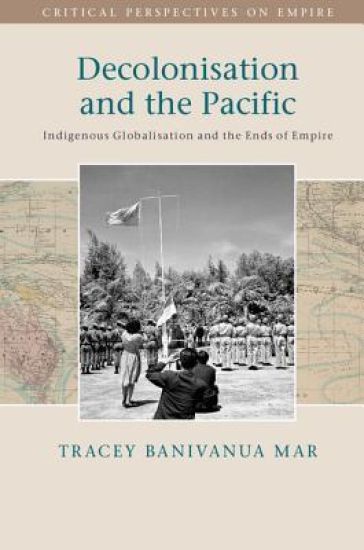
This book charts the previously untold story of decolonisation in the oceanic world of the Pacific, Australia and New Zealand, presenting it both as an indigenous and an international phenomenon. Tracey Banivanua Mar reveals how the inherent limits of decolonisation were laid bare by the historical peculiarities of colonialism in the region, and demonstrates the way imperial powers conceived of decolonisation as a new form of imperialism. She shows how Indigenous peoples responded to these limits by developing rich intellectual, political and cultural networks transcending colonial and national borders, with localised traditions of protest and dialogue connected to the global ferment of the twentieth century. The individual stories told here shed new light on the forces that shaped twentieth-century global history, and reconfigure the history of decolonisation, presenting it not as an historic event, but as a fragile, contingent and ongoing process continuing well into the postcolonial era.

Shell-Shock and Medical Culture in First World War Britain
Tracey Loughran
Cambridge University Press
2017
sidottu
Shell-Shock and Medical Culture in First World War Britain is a thought-provoking reassessment of medical responses to war-related psychological breakdown in the early twentieth century. Dr Loughran places shell-shock within the historical context of British psychological medicine to examine the intellectual resources doctors drew on as they struggled to make sense of nervous collapse. She reveals how medical approaches to shell-shock were formulated within an evolutionary framework which viewed mental breakdown as regression to a level characteristic of earlier stages of individual or racial development, but also ultimately resulted in greater understanding and acceptance of psychoanalytic approaches to human mind and behaviour. Through its demonstration of the crucial importance of concepts of mind-body relations, gender, willpower and instinct to the diagnosis of shell-shock, this book locates the disorder within a series of debates on human identity dating back to the Darwinian revolution and extending far beyond the medical sphere.

Shell-Shock and Medical Culture in First World War Britain
Tracey Loughran
Cambridge University Press
2020
pokkari
Shell-Shock and Medical Culture in First World War Britain is a thought-provoking reassessment of medical responses to war-related psychological breakdown in the early twentieth century. Dr Loughran places shell-shock within the historical context of British psychological medicine to examine the intellectual resources doctors drew on as they struggled to make sense of nervous collapse. She reveals how medical approaches to shell-shock were formulated within an evolutionary framework which viewed mental breakdown as regression to a level characteristic of earlier stages of individual or racial development, but also ultimately resulted in greater understanding and acceptance of psychoanalytic approaches to human mind and behaviour. Through its demonstration of the crucial importance of concepts of mind-body relations, gender, willpower and instinct to the diagnosis of shell-shock, this book locates the disorder within a series of debates on human identity dating back to the Darwinian revolution and extending far beyond the medical sphere.
This book charts the previously untold story of decolonisation in the oceanic world of the Pacific, Australia and New Zealand, presenting it both as an indigenous and an international phenomenon. Tracey Banivanua Mar reveals how the inherent limits of decolonisation were laid bare by the historical peculiarities of colonialism in the region, and demonstrates the way imperial powers conceived of decolonisation as a new form of imperialism. She shows how Indigenous peoples responded to these limits by developing rich intellectual, political and cultural networks transcending colonial and national borders, with localised traditions of protest and dialogue connected to the global ferment of the twentieth century. The individual stories told here shed new light on the forces that shaped twentieth-century global history, and reconfigure the history of decolonisation, presenting it not as an historic event, but as a fragile, contingent and ongoing process continuing well into the postcolonial era.
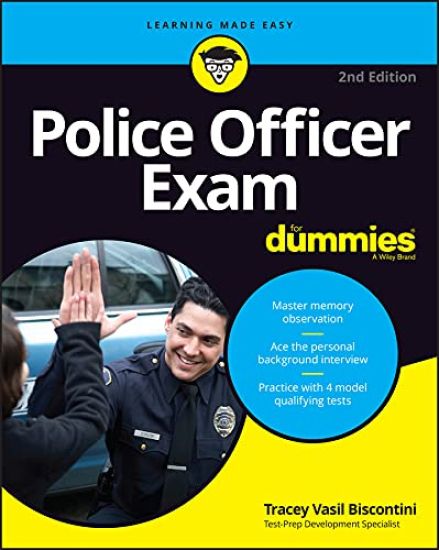
Prepare to serve your community with this easy-to-follow guide for future police officers Open positions for police officers and detectives are expected to expand dramatically over the next decade. The time is right if you're looking to become a new police officer in your town or city. And whether you're hoping to become a local, county, state, or federal law enforcement official, the Police Officer Exam For Dummies has all the info you need to prepare for and pass the National Police Officer Selection Test or your local police officer exam with flying colors. From the low-down on physical ability testing and the personal background interview, to targeted reviews of judgment skills, map reading, memory, observation, and recall, this guide will whip you into shape for the police officer test in no time at all. In this book, you'll: Get the instruction you need to find your confidence and banish test anxiety for goodLearn memory aids and tips so you can master the observation and recall testGet actionable and practicable test-taking strategies that actually improve your performance on the exam So, stop rubbing that rabbit's foot and start preparing like the pros do, with the Police Officer Exam For Dummies!
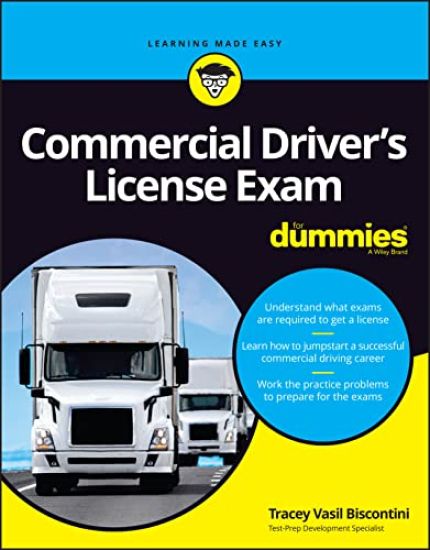
Commercial Driver's License Exam For Dummies
Tracey Vasil Biscontini
JOHN WILEY SONS INC
2025
nidottu
Get the comprehensive info you need to pass your CDL exam and begin your new career on the road Commercial Driver's License Exam For Dummies is the must-have reference for anyone contemplating getting a CDL. This straightforward resource helps you prep for the CDL exam, so you can drive your career forward (pun intended). Skip the outdated online articles and get the latest, real-deal information, right here. Important safety regulations, different commercial vehicles, required knowledge—we make it all easy, helping you conquer the material in no time. Plus, you'll learn what you need to achieve a high score, understand the different components of the exam, and prepare using practice tests. Understand what exams are required to get your commercial licenseWork through practice problems to prepare for the examJumpstart a successful career as a commercial driver, locally or long-distanceLearn the ins and outs of the test, so you're ready on the day of Ace your CDL exam and get on the road, with Dummies.

This book shows that escalating climate destruction today is not the product of public indifference, but of the blocked democratic freedoms of peoples across the world to resist unwanted degrees of capitalist interference with their ecological fate or capacity to change the course of ecological disaster. The author assesses how this state of affairs might be reversed and the societal relevance of universal human rights rejuvenated. It explores how freedom from want, war, persecution and fear of ecological catastrophe might be better secured in the future through a democratic reorganization of procedures of natural resource management and problem resolution amongst self-determining communities. It looks at how increasing human vulnerability to climate destruction forms the basis of a new peoples-powered demand for greater climate justice, as well as a global movement for preventative action and reflexive societal learning.

Since the Munro report (2011), a greater emphasis has been placed on the value of child-centred practice in social work with children, young people and families. It has come to be recognised that social workers cannot make an assessment or intervene to safeguard children and promote positive outcomes without engaging with the children themselves. This involves recognising the rights of the child, getting to know who they are, what they need, how they feel about their situation, and what they want for their future.Split into two distinct sections, this authoritative text focuses on the foundational knowledge required for child-centred work, unpacking the ethical and theoretical principles that form the basis of the approach and exploring current debates around working with children and families. Benefitting from the authors’ extensive experience in academia and practice settings, each chapter:- Provides insightful practitioner testimonials and case study examples to help the reader apply what they have learned to everyday practice.-Highlights important research studies that give voice to children and young people, providing the reader with background knowledge of the evidence base for child-centred approaches.- Includes engaging questions and activities to enable the reader to reflect on what they have learned, and make links to their own practice, values and beliefs.With a strong focus on developing the reader’s practice skills, particularly in engaging and communicating with children, Child-Centred Practice is an essential handbook for students and professionals involved in this complex yet rewarding area of social work practice.
The Mental Capacity Act 2005 (MCA) provides a legal framework for acting on behalf of individuals who lack the capacity to make decisions for themselves. The Mental Capacity Casebook showcases numerous real-life case studies in accordance to this Act. Through the exploration of various mental capacity assessments, this book highlights the psychological needs of the individuals who are supported and protected by the MCA. Dr. Tracey Ryan-Morgan, a Consultant Clinical Neuropsychologist, is the first to bridge the gap between the individual’s psychological requirements and the legal framework surrounding them. Not only does this book present true, often complex, mental capacity assessments, it does so with legitimate corresponding commentaries. Each case outlines the presented problem along with its background, social context, psychological matters, the overriding opinion and concluding learning points. This book provides a unique standpoint, offering insight into the complexities of the Act and practical guidance on how to conduct assessments. It serves as essential reading for those looking for guidance whilst making complex capacity decisions, such as Clinical Neuropsychologists, Social Workers, and Legal Professionals.

The Mental Capacity Act 2005 (MCA) provides a legal framework for acting on behalf of individuals who lack the capacity to make decisions for themselves. The Mental Capacity Casebook showcases numerous real-life case studies in accordance to this Act. Through the exploration of various mental capacity assessments, this book highlights the psychological needs of the individuals who are supported and protected by the MCA. Dr. Tracey Ryan-Morgan, a Consultant Clinical Neuropsychologist, is the first to bridge the gap between the individual’s psychological requirements and the legal framework surrounding them. Not only does this book present true, often complex, mental capacity assessments, it does so with legitimate corresponding commentaries. Each case outlines the presented problem along with its background, social context, psychological matters, the overriding opinion and concluding learning points. This book provides a unique standpoint, offering insight into the complexities of the Act and practical guidance on how to conduct assessments. It serves as essential reading for those looking for guidance whilst making complex capacity decisions, such as Clinical Neuropsychologists, Social Workers, and Legal Professionals.
From the earliest museums established by Western missionaries in order to implement religious and political power, to the role they have played in the formation of the modern Chinese state, the origin and development of museums in mainland China differ significantly from those in the West. The occurrence of museums in mainland China in the late nineteenth century was primarily a result of internal and external conflicts, Westernization and colonialism, and as such they were never established solely for enjoyment and leisure.Using a historical and anthropological framework, this book provides a holistic and critical review on the establishment and development of museums in mainland China from 1840 to the present day, and shows how museums in China have been used by a wide range of social, political, and state actors for a number of economic, religious, political and ideological purposes. Indeed, Tracey L-D Lu examines the key role played by museums in reinforcing social segmentation, influencing the economy, protecting cultural heritage and the construction and enhancement of ethnic identities and nationalism, and how they have throughout their history helped the powerful to govern the less powerful or the powerless. More broadly, this book provides important comparative insights on museology and heritage management, and questions who the key stakeholders are, how museums reflect broader social and cultural changes, and the relationship between museum and heritage management. Drawing on extensive archival research and anthropological fieldwork, as well as the author’s experience working as a museum curator in mainland China in the late 1980s, Museums in China such will be of great interest to students and scholars working across museology, heritage studies, tourism studies Chinese culture and Chinese history.

Story Money Impact: Funding Media for Social Change by Tracey Friesen is a practical guide for media-makers, funders, and activists who share the common goal of creating an impact with their work. Today, social-issues storytellers are sharpening their craft, while funders with finite resources focus on reach, and strategic innovators bring more robust evaluation tools. Friesen illuminates the spark at the core of these three pursuits. Structured around stories from the front lines, Story Money Impact reveals best practices in the areas of documentary, digital content, and independent journalism.Here you will find:• Twenty-one stories from people behind such powerful works as CITIZENFOUR, The Corporation, Virunga, Being Caribou, Age of Stupid, and Food Inc.• Six key story ingredients for creating compelling content.• Six possible money sources for financing your work.• Six impact outcome goals to further your reach.• Seven practical worksheets for your own projects.• A companion website located at www.storymoneyimpact.com containing up-to-date information for those seeking the tools and inspiration to use media for social change.
Synonymous with catastrophe and destructive tendencies, the Anthropocene provokes reflection on the limits of existing applications of ideas of responsibility, ecological agency and democratic justice. Youth campaigners, in particular, make emerging insights on the Anthropocene of central importance to an intersubjectively generated redefinition of the just society of the future. Given their span of affectedness, escalating rates of greenhouse gas emissions shape the ecological circumstances of generations to come and implicate them in harm relations they had no hand in creating. The realization is that human-inspired climate-destructive practices reverberate across plural time frames, thereby raising serious questions about the value of conventional interpretations of the copresence of sources of climate harm and their effects on the health and environmental living standards of all peoples. If injuries provoked by environmental degradation emerge across multiple time frames and affect generations differentially, where do we draw the boundaries of the just society, and how do we identify its most relevant subjects?This book explores how such questions have ignited one of the most important debates on democratic justice in recent years – that between generations. For mobilized youth and future justice coalitions campaigning internationally, expanding resource inequalities (regionally and intergenerationally) are fundamentally issues of unfair exclusions and asymmetries in relations of power between generations. The book offers a comprehensive overview of new insights being generated through such debate on the limitations of democratic presentism, as well as current institutional applications of civil and human rights norms. It assesses overall how the metapolitical relevance of modernity’s democratic project is being creatively redefined in terms more relevant to Anthropocene futures.
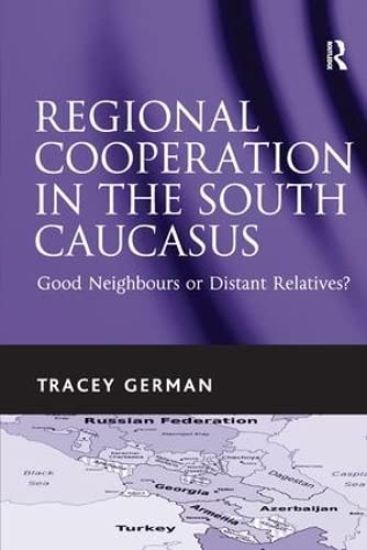
The South Caucasus region, comprising the former Soviet states of Armenia, Azerbaijan and Georgia occupies a key strategic location, squeezed between the Black and Caspian Seas, Iran, Russia and Turkey. Since the disintegration of the Soviet Union in 1991, the region has become an arena of geopolitical confrontation with regional powers such as Russia, Turkey and Iran vying for influence in the face of growing Western involvement. The Russian military intervention in Georgia in 2008 not only raised questions about Moscow's intentions towards its 'Near Abroad' and the future direction of its foreign policy, it also demonstrated that ostensibly local separatist disputes have serious ramifications for regional relations and the wider international community. In this book, German explores the extent of regional cooperation in the South Caucasus, analyses the reasons for the relative lack of regional cooperation and assesses the potential for deeper cooperation in the future.