Kirjojen hintavertailu. Mukana 11 699 587 kirjaa ja 12 kauppaa.

Kirjahaku

Etsi kirjoja tekijän nimen, kirjan nimen tai ISBN:n perusteella.

1000 tulosta hakusanalla Vector Hasting

Algebraic Surfaces and Holomorphic Vector Bundles

Algebraic Surfaces and Holomorphic Vector Bundles

Robert Friedman

Springer-Verlag New York Inc.
2012
nidottu
This book is based on courses given at Columbia University on vector bun­ dles (1988) and on the theory of algebraic surfaces (1992), as well as lectures in the Park City lIAS Mathematics Institute on 4-manifolds and Donald­ son invariants. The goal of these lectures was to acquaint researchers in 4-manifold topology with the classification of algebraic surfaces and with methods for describing moduli spaces of holomorphic bundles on algebraic surfaces with a view toward computing Donaldson invariants. Since that time, the focus of 4-manifold topology has shifted dramatically, at first be­ cause topological methods have largely superseded algebro-geometric meth­ ods in computing Donaldson invariants, and more importantly because of and Witten, which have greatly sim­ the new invariants defined by Seiberg plified the theory and led to proofs of the basic conjectures concerning the 4-manifold topology of algebraic surfaces. However, the study of algebraic surfaces and the moduli spaces ofbundles on them remains a fundamen­ tal problem in algebraic geometry, and I hope that this book will make this subject more accessible. Moreover, the recent applications of Seiberg­ Witten theory to symplectic 4-manifolds suggest that there is room for yet another treatment of the classification of algebraic surfaces. In particular, despite the number of excellent books concerning algebraic surfaces, I hope that the half of this book devoted to them will serve as an introduction to the subject.

Advances in Disease Vector Research

Advances in Disease Vector Research

Springer-Verlag New York Inc.
2011
nidottu
Volume 10 of Advances in Disease Vector Research consists of seven chapters on vectors that affect human or animal health and six chapters on plant pathogens and their vectors. In Chapter 1, Yasuo Chinzei and DeMar Taylor discuss hormonal regulation of vitellogenesis in ticks. Many blood sucking insects and ticks transmit pathogens by engorgement, which induces vitellogenesis and oviposition in adult animals. To investigate the pathogen transmission mechanism in vector animals, information on the host physiological and endocrinological conditions after engorgement is useful and important because pathogen development or proliferation occurs in the vector hosts at the same time as the host reproduction. Chinzei and Taylor have shown that in ticks, juvenile hormone (JH) is not involved in the endocrinological processes inducing vitellogenin biosynthesis. Synganglion (tick brain) factor(s) (vitellogenesis inducing factor, VIF) is more important to initiate vitellogenesis after engorgement, and ecdysteroids are also related to induction of vitellogenin synthesis. In their chapter, based mainly on their own experimental data, the authors discuss the characterization of main yolk protein, vitellogenin (Vg) , biosynthesis and processing in the fat body, and hormonal regulation of Vg synthesis in tick systems, including ixodid and argasid ticks.
Advances in Disease Vector Research

Advances in Disease Vector Research

Springer-Verlag New York Inc.
2011
nidottu
Volume 9 in this series consists of four chapters on vectors that affect human or animal health and six chapters on plant pathogens and their vectors. In Chapter 1, Alex S. Raikhel discusses vitellogenesis in mosquitoes: the cornerstone of the reproductive cycle involving massive production of yolk precursors by the fat body and their accumulation in developing oocytes. In anautogeneous mosquitoes, vitellogenesis is dependent on the availability of a blood meal and, as a consequence, is linked to transmission of pathogens. Therefore, elucidation of mechanisms governing the mosquito vitellogenesis is critical for the successful development of novel strategies in vector and disease management. Previous reviews on mosquito vitellogenesis have dealt predominantly with hormonal control. The goal of this review, however, is to summarize significant progress which has been achieved in understanding mosquito vitellogenesis at the cellular, biochemical and molecular levels. It is with these disciplines that we expect to fully understand the mechanisms governing this key process in mosquito reproduction.
Advances in Disease Vector Research

Advances in Disease Vector Research

Springer-Verlag New York Inc.
2011
nidottu
Entomology, plant pathology and virology are a few of the disciplines covered by this well-reviewed series. It also covers the spectrum of vectors from mosquitos and leafhoppers to nematodes, and pathogens from viruses to mycoplasmas to protozoa. Articles deal with the emerging science of vector ecology, and consider both biotic and abiotic environmental influences on disease transmission. As a form to present current thinking in this field, the series is an important resource for researchers and students involved in understanding and overcoming the many vector-borne diseases of plants, animals, and humans.
Advances in Disease Vector Research

Advances in Disease Vector Research

Springer-Verlag New York Inc.
2011
nidottu
I think the reader will agree that we have attained a good balance in Volume 6 between human-or animal-host and plant-host-related topics from outstanding research scientists. In Chapter 1, Frank Collins, Susan Paskewitz, and Victoria Finnerty explore the potential of recombinant DNA technology to distinguish indi­ vidual species and to establish phylogenetic relationships among member species in the Anopheles gambiae species complex, which includes the principal malaria vectors. Currently, relatively little is known about these morphologically identical species that are sympatric over most of their range but are not always equally involved in malaria transmission. With respect to individual species identification, the researchers have thus far described two DNA fragments, derived from the ribosomal DNA interge­ nic spacer region, that reliably distinguish five species in the complex by means of an RFLP visualized on a Southern blot. They have also described other species-specific fragments derived from a ribosomal DNA intron that could form the basis for a rapid dot blot assay. With respect to the phylogenetic relationships among member species in the complex, Collins, Paskewitz, and Finnerty focus on a comparison at the level of restriction site mapping and Southern analysis of the rDNA intergenic spacer regions. As expected, the two spacer regions near the coding region junctions are well conserved among the species, whereas the central regions tend to be highly variable among member species in the complex.
Current Topics in Vector Research

Current Topics in Vector Research

Springer-Verlag New York Inc.
2013
nidottu
Vector transmission of pathogens affecting human, animal, and plant health continues to plague mankind both in industrialized and Third World coun­ tries. The diseases caused by these pathogens cost billions of dollars an­ nually in medical expenses and lost productivity. Some cause widespread of food-and fiber-producing plants and animals, whereas others destruction present direct and immediate threats to human life and further development in Third World countries. During the past 15 years or so, we have witnessed an explosive increase in interest in how vectors acquire, carry, and subsequently inoculate dis­ ease agents to human, animal, and plant hosts. This interest transcends the boundaries of anyone discipline and involves researchers from such varied fields as human and veterinary medicine, entomology, plant pa­ thology, virology, physiology, microbiology, parasitology, biochemistry, molecular biology, genetic engineering, ultrastructure, biophysics, bio­ systematics, biogeography, ecology, behavioral sciences, and others. Ac­ companying and perhaps generating this renewed interest is the realization that fundamental knowledge of pathogen-vector-host interrelationships is a first and necessary step in our quest for efficient, safe methods of disease control.
Current Topics in Vector Research

Current Topics in Vector Research

Springer-Verlag New York Inc.
2011
nidottu
Current Topics in Vector Research is based on the premise that to un­ derstand the whole, one must first understand the component parts and how they interact. Here in Volume 4, as well as in future volumes, vector, pathogen, and host will be treated both individually and as integral parts of multifaceted transmission systems. It is our intention to present up-to­ date, coherent syntheses of the latest findings in vector research, suggest promising frontiers for future research, and call attention to possible prac­ tical applications of our present understandings of pathogen-vector-host interactions. To realize our goals, we invite world-renowned, veteran sci­ entists as well as neophytes to report on their individual areas of expertise. Where appropriate, authors are encouraged to draw conclusions and pro­ pose hypotheses that stimulate additional thinking and research or oth­ erwise further our understanding of vector transmission cycles and how such cycles might be interrupted. It isour hope that readers will agree that we are serving these objectives and creating a milieu for specialists and generalists in vector research to maintain rapport and understanding.
Advances in Disease Vector Research

Advances in Disease Vector Research

Springer-Verlag New York Inc.
2011
nidottu
We open Volume 7 with a series of four chapters on plant virus transmission by insects. In Chapter 1, Karen Gibb and John Randles present preliminary information about an association between the plant bug Cyrtopeitis nicotianae (Heteroptera: Miridae) and velvet tobacco mottle virus (VTMo V): the only reported instance of mirid transmission of a known virus. Mirids could be considered as likely vectors of plant viruses because they are phytophagous, possess a piercing-sucking-feeding apparatus, have winged adults, and are cosmopolitan pests of a wide range of crops. Surprisingly, however, there are only three plant viruses purportedly transmitted by heteropterous vectors, compared with the nearly 250 by homopterous ones. To what extent these figures reflect actual differences in the abilities of members of the two suborders to transmit plant pathogens remains to be determined. Compared with the Homop- tera, the Heteroptera have been ignored by researchers as potential vectors of plant viruses. The authors are quick to point out that additional studies are needed before generalizations can be made about virus-mirid-plant interactions and that virus transmission by mirids is not easily characterized using the conventional transmission criteria and terminology established for such homopterous vectors as aphids and leafhoppers. Transmission of VTMoV by C. nicotianae appears to have characteristics in common with both nonpersistent noncirculative and circulative (persistent) transmission.
Calculus on Normed Vector Spaces

Calculus on Normed Vector Spaces

Rodney Coleman

Springer-Verlag New York Inc.
2012
nidottu
This book serves as an introduction to calculus on normed vector spaces at a higher undergraduate or beginning graduate level. The prerequisites include basic calculus and linear algebra, as well as a certain mathematical maturity. All the important topology and functional analysis topics are introduced where necessary.In its attempt to show how calculus on normed vector spaces extends the basic calculus of functions of several variables, this book is one of the few textbooks to bridge the gap between the available elementary texts and high level texts. The inclusion of many non-trivial applications of the theory and interesting exercises provides motivation for the reader.
Moduli Spaces and Vector Bundles -- New Trends
This volume contains the proceedings of the VBAC 2022 Conference on Moduli Spaces and Vector Bundles-New Trends, held in honor of Peter Newstead's 80th birthday, from July 25-29, 2022, at the University of Warwick, Coventry, United Kingdom.The papers focus on the theory of stability conditions in derived categories, non-reductive geometric invariant theory, Brill-Noether theory, and Higgs bundles and character varieties. The volume includes both survey and original research articles. Most articles contain substantial background and will be helpful to both novices and experts.
Hydrogen as an Energy Vector

Hydrogen as an Energy Vector

Edmond Mkaratigwa; Andrew Barron

Lulu.com
2022
pokkari
This book outlines the developments taking place in the energy sector. The main focus remains on hydrogen, but a discussion on the other en-ergy sources that exist provided a comparative analysis on the possibil-ity of use of hydrogen globally. There is adequate evidence that the trend is positive towards the use of hydrogen as energy in the industries and households because of the many advantages associated with it. The disadvantages are, to a larger extent, being worked on to ensure it is universally adopted for use. Threats of climate change to human surviv-al are the main drivers to innovation, as well as the distribution of the source of hydrogen, despite the location of the technologies in fewer parts of the globe. This book discusses the evolution of hydrogen, tech-nologies and methods being used in its manufacture, as well as existing challenges and breakthroughs.
Stargrave: Death Vector

Stargrave: Death Vector

Joseph A. McCullough

BLOOMSBURY PUBLISHING PLC
2025
nidottu
A supplement for Stargrave that explores the ideas of artificial intelligence run amok, soulless cyborg killers, and cyberpunk hacking.Welcome to the Outlaw Technology Sector, a vast region of space cut off from the rest of the Ravaged Galaxy. Once a haven to criminals, political dissidents, and rogue scientists, it was overrun by an artificial intelligence intent on wiping out all organic life. Only through the combined might of the pre-Last War great empires was this menace brought down, and their retribution was terrible. Now the Outlaw Technology Sector is a dead place, a nightmare place. Navigational systems refuse to chart a course there, calling such paths ‘death vectors’. But the independent crews survive by going where others fear to tread, and the Sector contains technology not found anywhere else… Death Vector is a supplement for Stargrave, containing 8 new scenarios set inside the Outlaw Technology Sector. Instead of the pirate fleets, the players contend with the legions of cyborg automatons that still prowl the region, hunting organic life. Paired with these scenarios is a new campaign element, ‘The Network’, which brings cyberpunk hacking into the game. This book also includes a new space encounters table to be used for adventures in the OTS, a new advanced technology table, and a bestiary filled with cybernetic horrors.
Modelling Interactions Between Vector-Borne Diseases and Environment Using GIS

Modelling Interactions Between Vector-Borne Diseases and Environment Using GIS

Hassan M. Khormi; Lalit Kumar

Apple Academic Press Inc.
2015
sidottu
Master GIS Applications on Modelling and Mapping the Risks of DiseasesInfections transmitted by mosquitoes, ticks, triatomine bugs, sandflies, and black flies cause significant rates of death and disease, especially in developing countries. Why are certain places more susceptible to vector-borne diseases? Modelling Interactions Between Vector-Borne Diseases and Environment Using GIS reveals how using geographic information systems (GISs) can provide a greater understanding of how vector-borne diseases are spread and explores the use of geographical techniques in vector-borne disease monitoring, management, and control. This text provides readers with a better understanding of the vector-borne disease problem and its impact on public health. Introduces New Spatial Approaches Based on Location and EnvironmentThe book exposes readers to information on how to identify vector hotspots, determine when and where they can occur, and eliminate vector breeding sites. Utilizing simple illustrations based on real data, as well as the authors’ more than 20 years of experience in the field, this text combines key spatial analysis techniques available in modern GIS with real-world applications. It offers step-by-step instruction on developing vector-borne disease risk models at different spatial and temporal scales and helps practitioners formulate disease causation hypotheses and identify areas at risk. In addition, it addresses medical geography, GIS, spatial analysis, and modelling, and covers other factors related to the spread of vector-borne diseases.This book: Gives an overview of common vector-borne diseases, GIS-based mapping and modelling, impacts of climate change on vector distributions, and availability and importance of accurate epidemiologically relevant spatial dataDescribes modelling and simulating the prevalence of vector-borne diseases around the worldSummarizes some key spatial techniques and how they can be used to aid in the analysis of geographical and attributed dataDefines the concept of establishing and characterizing spatial data systems, including their quality, errors, references, and issues of scale, and building such a system from often quite separate, disparate sourcesShows how to develop weather-based predictive modelling, which can be used to predict the weekly trend of vector abundanceProvides a GIS case study for modelling the future potential distribution of vector-borne disease based on different climatic change scenariosModelling Interactions Between Vector-Borne Diseases and Environment Using GIS combines spatial analysis techniques available in modern GIS, together with real-world applications to provide you with a better understanding of ways to map, model, prevent, and control vector-borne diseases.
The Chronicles Of Lord Vector

The Chronicles Of Lord Vector

Kimberly K Brown

Createspace Independent Publishing Platform
2013
pokkari
In a universe gripped by darkness and chaos, Iyyov-a man of unshakable faith-undergoes a series of unimaginable trials, only to be chosen by the Divine as Lord Vector, a celestial commander appointed to bring restoration and hope across galaxies.As Iyyov endures loss, betrayal, and spiritual warfare on Earth (Aerith), he is tested like the biblical Job-his wealth, children, and health stripped from him by the enemy Satanomous. Yet through this spiritual refining, he emerges stronger, anointed, and clothed in divine authority.Lord Haven, a representation of divine power and love, bestows upon Iyyov the command of angels and supernatural abilities. With his amulet, sword, and a heart still humble, Iyyov transforms into Lord Vector, a being tasked with leading realms back into balance.Meanwhile, evil brews on Planet Yakh, ruled by the tyrant King Aeron-manipulated by Satanomous. As rebellion and pain grow, brave souls like Safira, a fiery-hearted young woman, rise to resist the oppression. A powerful ensemble of allies including mystical wolves, courageous warriors, and elemental beings join forces in a war between righteousness and corruption.Through titanic battles, angelic interventions, and a storm of miracles, Iyyov as Lord Vector must face beasts, demons, and a dying world-all while proclaiming the name of the Creator and restoring virtue and justice.
Introduction to Parallel and Vector Solution of Linear Systems

Introduction to Parallel and Vector Solution of Linear Systems

James M. Ortega

Springer-Verlag New York Inc.
2013
nidottu
Although the origins of parallel computing go back to the last century, it was only in the 1970s that parallel and vector computers became available to the scientific community. The first of these machines-the 64 processor llliac IV and the vector computers built by Texas Instruments, Control Data Corporation, and then CRA Y Research Corporation-had a somewhat limited impact. They were few in number and available mostly to workers in a few government laboratories. By now, however, the trickle has become a flood. There are over 200 large-scale vector computers now installed, not only in government laboratories but also in universities and in an increasing diversity of industries. Moreover, the National Science Foundation's Super­ computing Centers have made large vector computers widely available to the academic community. In addition, smaller, very cost-effective vector computers are being manufactured by a number of companies. Parallelism in computers has also progressed rapidly. The largest super­ computers now consist of several vector processors working in parallel. Although the number of processors in such machines is still relatively small (up to 8), it is expected that an increasing number of processors will be added in the near future (to a total of 16 or 32). Moreover, there are a myriad of research projects to build machines with hundreds, thousands, or even more processors. Indeed, several companies are now selling parallel machines, some with as many as hundreds, or even tens of thousands, of processors.
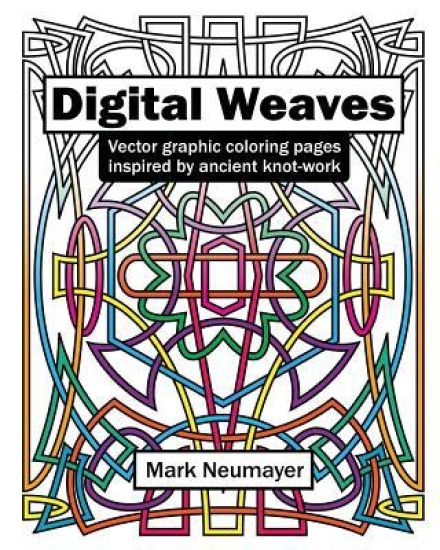
Digital Weaves: Vector Graphic Coloring Pages Inspired by Ancient Knot-work

Digital Weaves: Vector Graphic Coloring Pages Inspired by Ancient Knot-work

Mark Neumayer

Createspace Independent Publishing Platform
2015
nidottu
Coloring therapy might be a new buzz word but the idea of coloring to reduce stress isn't - Carl Jung, the famous psychiatrist had patients color in pictures 100 years ago. Various forms of decorative knot-work have been used for centuries. From the intricate cording of the Chinese to the illuminated manuscripts of the Celts to the wildly imaginative carvings of the Norse, these patterns of lines have provided an endless source of fascination. Digital Weaves combines these two ideas into one book that soothes the mind. It uses the newest digital technology to create stunningly complicated artwork inspired by the knots of old. Ease away your stress and tension as you indulge your inner artist.