Kirjojen hintavertailu. Mukana 12 241 991 kirjaa ja 12 kauppaa.

Kirjahaku

Etsi kirjoja tekijän nimen, kirjan nimen tai ISBN:n perusteella.

1000 tulosta hakusanalla Wilson Muoha Maina

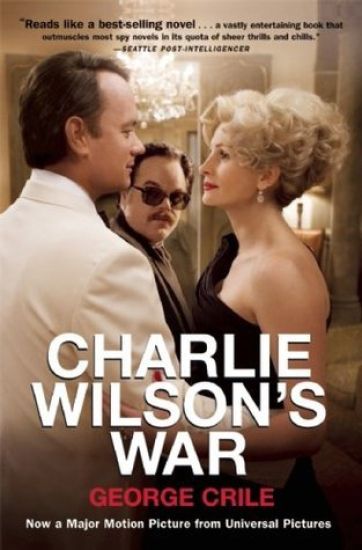
Charlie Wilson's War

Charlie Wilson's War

George Crile

Grove Press / Atlantic Monthly Press
2007
nidottu
A bestseller in hardcover, "Charlie Wilsons War" tells what became of the largest covert operation in history. Moving from the back rooms of the Capitol to arms-dealer conventions to the Khyber Pass, this is a compulsively readable account of the inside workings of the CIA.
Woodrow Wilson, 1913-1921

Woodrow Wilson, 1913-1921

H. W. Brands

Times Books
2003
sidottu
A noted historian offers a definitive account of the administration of Woodrow Wilson, detailing Wilson's unusual route to the White House, his campaign against corporate interests, his influential shaping of American foreign policy, his political successes and failures, and his decline in popularity and health after Congress's rejection of his League of Nations. 25,000 first printing.
After Wilson

After Wilson

Craig Douglas B.

The University of North Carolina Press
2010
nidottu
Craig examines the bitter disputes that shook the Democratic Party in the 1920s and early 1930s and stressed ideological conflicts between conservative and progressive Democrats over economic and social policy. He provides insights into the nature of Democratic dissension during the years after Woodrow Wilson's progressive tenure and thus places the later revolt of conservative Democrats against the New Deal in an ideological and political context.A UNC Press Enduring Edition -- UNC Press Enduring Editions use the latest in digital technology to make available again books from our distinguished backlist that were previously out of print. These editions are published unaltered from the original, and are presented in affordable paperback formats, bringing readers both historical and cultural value.
The Wilson Era

The Wilson Era

Daniels Josephus

The University of North Carolina Press
2011
nidottu
In this volume, Daniels tells how Wilson, having fought against war with monumental patience, finally led this country into world conflict. He proved himself a militant fighter and strategist, and when victory came he believed that it had made possible a warless world. Wilson's fight for the League of Nations is vigorously told, as is the deep damnation of its defeat.A UNC Press Enduring Edition -- UNC Press Enduring Editions use the latest in digital technology to make available again books from our distinguished backlist that were previously out of print. These editions are published unaltered from the original, and are presented in affordable paperback formats, bringing readers both historical and cultural value.
The Wilson Era

The Wilson Era

Daniels Josephus

The University of North Carolina Press
2011
nidottu
This volume presents a crowded story. When Wilson entered the White House, China and Japan were on the agenda, revolution was flaming in Mexico, and Europe was on the verge of war. With the outbreak of war in 1914, the struggle for neutrality and preparedness began. The book includes lively portraits of a young FDR, a great Bryan, a grand old Admiral Dewey, and inexplicable Lodge, and a memorable Edison.A UNC Press Enduring Edition -- UNC Press Enduring Editions use the latest in digital technology to make available again books from our distinguished backlist that were previously out of print. These editions are published unaltered from the original, and are presented in affordable paperback formats, bringing readers both historical and cultural value.
Woodrow Wilson and a Revolutionary World, 1913-1921

Woodrow Wilson and a Revolutionary World, 1913-1921

Link Arthur S.

The University of North Carolina Press
2011
nidottu
In a dazzling array of the most recent research and writing, the contributors deal with Wilson's approach to the Mexican and Russian revolutions; his Polish policy; his relationship with the European Left, world order, and the League of Nations; and Wilson and the problems of world peace. They show that Wilson was in many ways the pivot of twentieth-century world affairs; his commitment to anticolonialism, antiimperialism, and self-determination still guides U.S. foreign policy.A UNC Press Enduring Edition -- UNC Press Enduring Editions use the latest in digital technology to make available again books from our distinguished backlist that were previously out of print. These editions are published unaltered from the original, and are presented in affordable paperback formats, bringing readers both historical and cultural value.
Woodrow Wilson, Revolutionary Germany, and Peacemaking, 1918-1919

Woodrow Wilson, Revolutionary Germany, and Peacemaking, 1918-1919

Schwabe Klaus

The University of North Carolina Press
2011
nidottu
Schwabe examines the political, economic, and ideological motivations that prompted American and German leaders to adopt strategies that led to discord during this period of transition from war to peace in the international field and from monarchy to republic in Germany. He disputes the interpretation that Wilson betrayed his ideals at Versailles and the thesis that a secret conspiracy between the United States and Germany attempted to contain the Bolshevik threat.A UNC Press Enduring Edition -- UNC Press Enduring Editions use the latest in digital technology to make available again books from our distinguished backlist that were previously out of print. These editions are published unaltered from the original, and are presented in affordable paperback formats, bringing readers both historical and cultural value.
James Wilson

James Wilson

Smith Charles Page

The University of North Carolina Press
2011
nidottu
James Wilson, signer of the federal constitution and one of the most influential leaders in the formative period of the republic, has been the only great figure of his age to be without a biography. As a consequence his name is virtually unknown to the general public. It was in the task of framing a sound government for the republic that Wilson, one of the principal theorists of federalism, made his greatest contribution to the future welfare and stability of his country.A UNC Press Enduring Edition -- UNC Press Enduring Editions use the latest in digital technology to make available again books from our distinguished backlist that were previously out of print. These editions are published unaltered from the original, and are presented in affordable paperback formats, bringing readers both historical and cultural value.
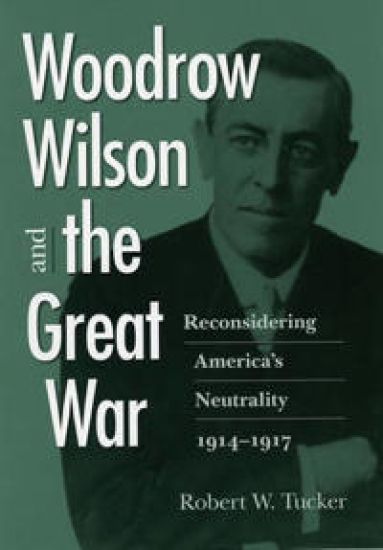
Woodrow Wilson and the Great War

Woodrow Wilson and the Great War

Robert W. Tucker

University of Virginia Press
2007
sidottu
In recent years, and in light of U.S. attempts to project power in the world, the presidency of Woodrow Wilson has been more commonly invoked than ever before. Yet ""Wilsonianism"" has often been distorted by a concentration on American involvement in the First World War. In ""Woodrow Wilson and the Great War: Reconsidering America's Neutrality, 1914-1917"", prominent scholar Robert Tucker turns the focus to the years of neutrality. Arguing that our neglect of this prewar period has reduced the complexity of the historical Wilson to a caricature or stereotype, Tucker reveals the importance that the law of neutrality played in Wilson's foreign policy during the fateful years from 1914 to 1917, and in doing so he provides a more complete portrait of our nation's twenty-eighth president. By focusing on the years leading up to America's involvement in the Great War, Tucker reveals that Wilson's internationalism was always highly qualified, dependent from the start upon the advent of an international order that would forever remove the specter of another major war. World War I was the last conflict in which the law of neutrality played an important role in the calculations of belligerents and neutrals, and it is scarcely an exaggeration to say that this law - or rather Woodrow Wilson's version of it - constituted almost the whole of his foreign policy with regard to the war. Wilson's refusal to find any significance, moral or otherwise, in the conflict beyond the law and its violation led him to see the war as meaningless, save for the immense suffering and sense of utter futility it fostered. Treating issues of enduring interest, such as the advisability and effectiveness of U.S. interventions in, or initiation of, conflicts beyond its borders, ""Woodrow Wilson and the Great War"" will appeal to anyone interested in the president's power to determine foreign policy, and in constitutional history in general.
Woodrow Wilson and the Great War

Woodrow Wilson and the Great War

Robert W. Tucker

University of Virginia Press
2015
nidottu
In recent years, and in light of U.S. attempts to project power in the world, the presidency of Woodrow Wilson has been more commonly invoked than ever before. Yet ""Wilsonianism"" has often been distorted by a concentration on American involvement in the First World War. In Woodrow Wilson and the Great War: Reconsidering America’s Neutrality, 1914-1917, prominent scholar Robert Tucker turns the focus to the years of neutrality. Arguing that our neglect of this prewar period has reduced the complexity of the historical Wilson to a caricature or stereotype, Tucker reveals the importance that the law of neutrality played in Wilson’s foreign policy during the fateful years from 1914 to 1917, and in doing so he provides a more complete portrait of our nation’s twenty-eighth president.By focusing on the years leading up to America’s involvement in the Great War, Tucker reveals that Wilson’s internationalism was always highly qualified, dependent from the start upon the advent of an international order that would forever remove the specter of another major war. World War I was the last conflict in which the law of neutrality played an important role in the calculations of belligerents and neutrals, and it is scarcely an exaggeration to say that this law?or rather Woodrow Wilson’s version of it?constituted almost the whole of his foreign policy with regard to the war. Wilson’s refusal to find any significance, moral or otherwise, in the conflict beyond the law and its violation led him to see the war as meaningless, save for the immense suffering and sense of utter futility it fostered.Treating issues of enduring interest, such as the advisability and effectiveness of U.S. interventions in, or initiation of, conflicts beyond its borders, Woodrow Wilson and the Great War will appeal to anyone interested in the president’s power to determine foreign policy, and in constitutional history in general.
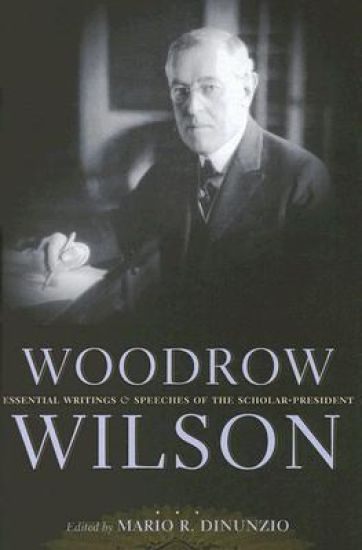
Woodrow Wilson

Woodrow Wilson

New York University Press
2006
sidottu
From the Ivy League to the oval office, Woodrow Wilson was the only professional scholar to become a U.S. president. A professor of history and political science, Wilson became the dynamic president of Princeton University in 1902 and was one of its most prolific scholars before entering active politics. Through his labors as student, scholar, and statesman, he left a legacy of elegant writings on everything from educational reform to religion to history and politics. Woodrow Wilson: Essential Writings and Speeches of the Scholar-President collects Wilson's most influential work, from early essays on religion to his famous "Fourteen Points" speech, which introduced the idea of the League of Nations. Among the last of the presidents to write his own speeches, Wilson left behind works which offer impressive insights into his mind and his age. Deeply religious, Wilson looked to his faith to guide his life and wrote candidly about the connection. A passionate advocate of liberal learning, he broadcast his ideas on educational reform with missionary intensity. In politics he moved from a traditional nineteenth-century conservative view of government to a progressive, international vision which transformed American politics in the new century. His writings allow us to trace the intellectual struggle that took the nation from a position of neutrality in World War I to its role as a central player on the world stage. Penetrating and eloquent, the works gathered here represent the best and the most important of Wilson's writings that retain enduring interest. A rich repository of ideas on the American people and America's purpose in the world, these works reveal the thoughts of one of the most acute analysts and actors in the drama of American politics.
August Wilson

August Wilson

CRC Press Inc
2000
nidottu
The only African American playwright to win the Pulitzer Prize twice, Wilson has yet to receive the critical attention that he merits. With 12 original essays, this volume provides a thorough introduction to his body of work.
Edmund Wilson

Edmund Wilson

Jeffrey Meyers

Cooper Square Publishers Inc.,U.S.
2003
pokkari
This comprehensive biography of prolific critic, essayist, historian, and novelist Edmund Wilson (1895-1972) posits, quite successfully, that the subject lived a life as romantic and chaotic as his friend F. Scott Fitzgerald's. Wilson suffered a nervous breakdown and the tragic death of his second wife (he was married four times, among them, Mary McCarthy); had affairs with numerous beautiful women, including Edna St. Vincent Millay; and was friend to literary giants such as John Dos Passos, Vladimir Nabakov, and W.H. Auden.
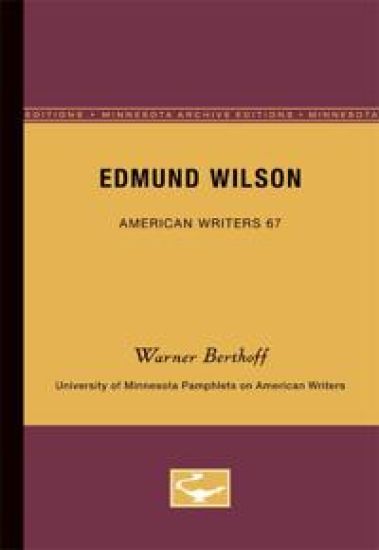
Edmund Wilson - American Writers 67

Edmund Wilson - American Writers 67

Berthoff Warner

UNIVERSITY OF MINNESOTA PRESS
1968
nidottu
Edmund Wilson - American Writers 67 was first published in 1968. Minnesota Archive Editions uses digital technology to make long-unavailable books once again accessible, and are published unaltered from the original University of Minnesota Press editions.
Fitzgerald-Wilson-Hemingway

Fitzgerald-Wilson-Hemingway

Ronald Berman

The University of Alabama Press
2016
nidottu
In this study, Ronald Berman examines the work of the critic/novelist Edmund Wilson and the art of F. Scott Fitzgerald and Ernest Hemingway as they wrestled with the problems of language, experience, perception and reality in the ""age of jazz."" By focusing specifically on aesthetics—the ways these writers translated everyday reality into language—Berman challenges and redefines many routinely accepted ideas concerning the legacy of these authors.Fitzgerald is generally thought of as a romantic, but Berman shows that we need to expand the idea of Romanticism to include its philosophy. Hemingway, widely viewed as a stylist who captured experience by simplifying language, is revealed as consciously demonstrating reality's resistance to language. Between these two renowned writers stands Wilson, who is critically influenced by Alfred North Whitehead, as well as Dewey, James, Santayana, and Freud.By patiently mapping the correctness of these philosophers, historians, literary critics and writers, Berman aims to open a gateway into the era. This work should be of interest to scholars of American literature, philosophy and aesthetics; to academic libraries; to students of intellectual history; and to general readers interested in Fitzgerald, Hemingway and Wilson.
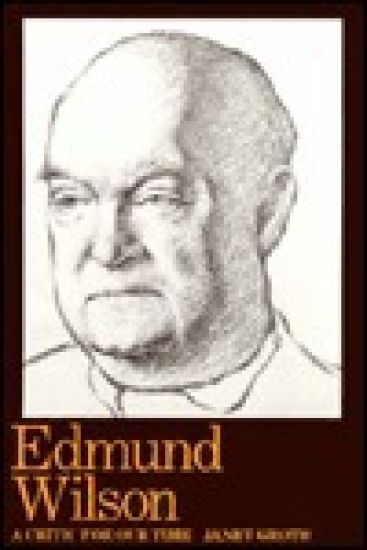
Edmund Wilson

Edmund Wilson

Janet Groth

Ohio University Press
1991
sidottu
In the course of a career that spanned five decades, Edmund Wilson’s literary output was impressive. His life’s work includes five volumes of poetry, two works of fiction, thirteen plays, and more than twenty volumes of social commentary on travel, politics, history, religion, anthropology, and economics. It is, however, his criticism for which Wilson is best known. To note a few of his accomplishments as a critic, Wilson furthered the understanding and appreciation of the poetry of W.B. Yeats and T. S. Eliot, promoted the enigmatic prose of Marcel Proust and James Joyce, and pioneered the study of women writers such as Harriet Beecher Stowe, Edith Wharton, and Kate Chopin. With the advent of contemporary concerns in literary criticism, the work of Edmund Wilson is frequently relegated to a lesser role. In this energetic and convincing study of one of America’s most distinguished literary critics, Janet Groth sets out to restore Wilson’s work to a place of prominence amongst current critical modes. She offers extended and rigorous treatments of Wilson’s most important critical works and traces his roots as a critic in the work of Matthew Arnold, Sainte-Beuve and Taine, demonstrating how Wilson used the work of Freud and Marx to update this tradition. Most importantly, however, Groth demonstrates that Wilson’s work has significance today and that lasting value in Wilson’s critical studies is his constant belief in the close relationship between life and literature.
From the Uncollected Edmund Wilson

From the Uncollected Edmund Wilson

Edmund Wilson

Ohio University Press
1995
sidottu
Many of Wilson's writings have been anthologized. But there is another body of work — over fifty fine essays on aspects of contemporary literature and ideas — that have been scattered in a variety of magazines, including The New Yorker, The New Republic, Vanity Fair, and The Nation. The editors, who recognize Wilson (1895-1972) as one of America's greatest men of letters of the twentieth century, also view his writing as a powerful antidote to late twentieth-century trends and fads and have collected his pieces here in the conviction that Wilson's writing is a permanently important model. Now a new generation of readers — as well as his loyal followers — will have access to this rich literary heritage in a single volume. The collection is organized chronologically and leads the reader through the journeyman writing at Hill School and Princeton, the essays on literary modernism and contemporary culture written in the 1920s, the socially-focused critiques of the 1930s, and the diverse assortment of book reviews of the late period. Across this full range of moods and literary styles. Wilson is a powerful spokesman for writers and a guardian of imagination and decency for the informed citizen.
Edmund Wilson, the Man in Letters

Edmund Wilson, the Man in Letters

Edmund Wilson

Ohio University Press
2002
sidottu
Among the major writers of the Hemingway and Fitzgerald generation, Edmund Wilson defied categorization. He wrote essays, stories and novels, cultural criticism, and contemporary chronicles, as well as journals and thousands of letters about the literary life and his own private world. Here for the first time in print is Wilson's personal correspondence to his parents, lovers and wives, children, literary comrades, and friends from the different corners of his life. Various writers and thinkers—including Alfred Kazin, Vladimir Nabokov, and Isaiah Berlin—take their places alongside upstate New York neighbors in this gallery of letters that extends from the teens to the early 1970s. These letters complete the picture of Wilson the man, offering unguarded moments and flinty opinions that enrich our understanding of a complex and troubled personality. Four times married and many times in love; traveling through Depression America, the USSR, postwar Europe, the Middle East, and Haiti; and writing on a Balzacian scale, Wilson as a correspondent reveals the exhilaration and chaos of being himself. Arranged by correspondent and moving through the phases of his career, Edmund Wilson, the Man in Letters constitutes an exemplary autobiography cum cultural history. The writing itself is vintage Wilson—a blending of classical and conversational styles that stands as part of the modern American canon and is filled with the emotions and tastes of a master.