Kirjojen hintavertailu. Mukana 12 016 292 kirjaa ja 12 kauppaa.

Kirjahaku

Etsi kirjoja tekijän nimen, kirjan nimen tai ISBN:n perusteella.

1000 tulosta hakusanalla ART WIEDERHOLD

Art History and Its Institutions
Art History and Its Institutions focuses on the institutional discourses that shaped and continue to shape the field from its foundations in the nineteenth century. From museums and universities to law courts, labour organizations and photography studios, contributors examine a range of institutions, considering their impact on movements such as modernism; their role in conveying or denying legitimacy; and their impact on defining the parameters of the discipline.
Art History and Its Institutions
Art History and Its Institutions focuses on the institutional discourses that shaped and continue to shape the field from its foundations in the nineteenth century. From museums and universities to law courts, labour organizations and photography studios, contributors examine a range of institutions, considering their impact on movements such as modernism; their role in conveying or denying legitimacy; and their impact on defining the parameters of the discipline.
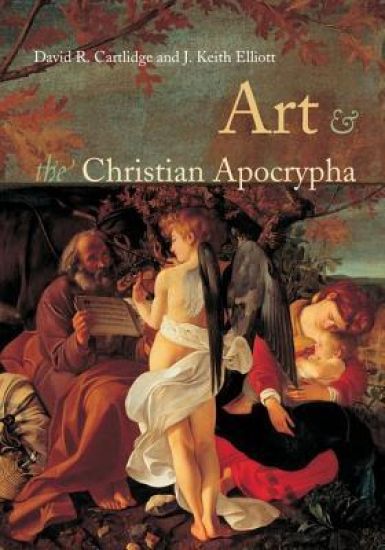
Art and the Christian Apocrypha

Art and the Christian Apocrypha

David R. Cartlidge; J. Keith Elliot

Routledge
2001
sidottu
The Christian canon of scripture, known as the New Testament, excluded many of the Church's traditional stories about its origins. Although not in the Bible, these popular stories have had a powerful influence on the Church's traditions and theology, and a particularly marked effect on visual representations of Christian belief. This book provides a lucid introduction to the relationship between the apocryphal texts and the paintings, mosaics, and sculpture in which they are frequently paralleled, and which have been so significant in transmitting these non-Biblical stories to generations of churchgoers.
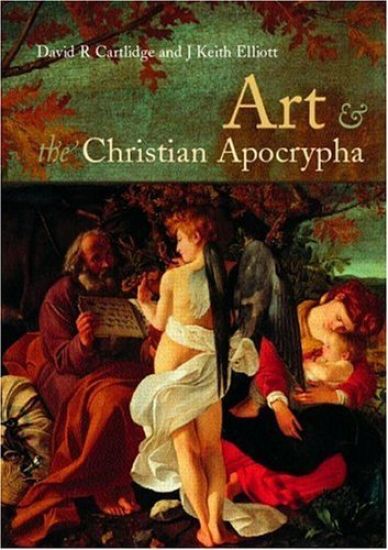
Art and the Christian Apocrypha

Art and the Christian Apocrypha

David R. Cartlidge; J. Keith Elliot

Routledge
2001
nidottu
The Christian canon of scripture, known as the New Testament, excluded many of the Church's traditional stories about its origins. Although not in the Bible, these popular stories have had a powerful influence on the Church's traditions and theology, and a particularly marked effect on visual representations of Christian belief. This book provides a lucid introduction to the relationship between the apocryphal texts and the paintings, mosaics, and sculpture in which they are frequently paralleled, and which have been so significant in transmitting these non-Biblical stories to generations of churchgoers.
Art In Its Time

Art In Its Time

Paul Mattick

Routledge
2003
sidottu
Art In Its Time takes a close look at the way in which art has become integral to the everyday 'ordinary' life of modern society. It explores the prevalent notion of art as transcending its historical moment, and argues that art cannot be separated from the everyday as it often provides material to represent social struggles and class, to explore sexuality, and to think about modern industry and our economic relationships.
Art In Its Time

Art In Its Time

Paul Mattick

Routledge
2003
nidottu
Art In Its Time takes a close look at the way in which art has become integral to the everyday 'ordinary' life of modern society. It explores the prevalent notion of art as transcending its historical moment, and argues that art cannot be separated from the everyday as it often provides material to represent social struggles and class, to explore sexuality, and to think about modern industry and our economic relationships.
Art and Knowledge

Art and Knowledge

James O. Young

Routledge
2001
sidottu
Almost all of us would agree that the experience of art is deeply rewarding. Why this is the case remains a puzzle; nor does it explain why many of us find works of art much more important than other sources of pleasure. Art and Knowledge argues that the experience of art is so rewarding because it can be an important source of knowledge about ourselves and our relation to each other and to the world. The view that art is a source of knowledge can be traced as far back as Aristotle and Horace. Artists as various as Tasso, Sidney, Henry James and Mendelssohn have believed that art contributes to knowledge. As attractive as this view may be, it has never been satisfactorily defended, either by artists or philosophers. Art and Knowledge reflects on the essence of art and argues that it ought to provide insight as well as pleasure. It argues that all the arts, including music, are importantly representational. This kind of representation is fundamentally different from that found in the sciences, but it can provide insights as important and profound as available from the sciences. Once we recognise that works of art can contribute to knowledge we can avoid thorough relativism about aesthetic value and we can be in a position to evaluate the avant-garde art of the past 100 years. Art and Knowledge is an exceptionally clear and interesting, as well as controversial, exploration of what art is and why it is valuable. It will be of interest to all philosophers of art, artists and art critics.
Art and Knowledge

Art and Knowledge

James O. Young

Routledge
2001
nidottu
Almost all of us would agree that the experience of art is deeply rewarding. Why this is the case remains a puzzle; nor does it explain why many of us find works of art much more important than other sources of pleasure. Art and Knowledge argues that the experience of art is so rewarding because it can be an important source of knowledge about ourselves and our relation to each other and to the world. The view that art is a source of knowledge can be traced as far back as Aristotle and Horace. Artists as various as Tasso, Sidney, Henry James and Mendelssohn have believed that art contributes to knowledge. As attractive as this view may be, it has never been satisfactorily defended, either by artists or philosophers. Art and Knowledge reflects on the essence of art and argues that it ought to provide insight as well as pleasure. It argues that all the arts, including music, are importantly representational. This kind of representation is fundamentally different from that found in the sciences, but it can provide insights as important and profound as available from the sciences. Once we recognise that works of art can contribute to knowledge we can avoid thorough relativism about aesthetic value and we can be in a position to evaluate the avant-garde art of the past 100 years. Art and Knowledge is an exceptionally clear and interesting, as well as controversial, exploration of what art is and why it is valuable. It will be of interest to all philosophers of art, artists and art critics.
Art and Morality
Featuring contributions from Matthew Kieran, Aaron Ridley, Roger Scruton and Mary Mothersill to name but a few, this collection of groundbreaking new papers on aesthetics and ethics, highlights the link between the two subjects. These leading figures tackle the important questions that arise when one thinks about the moral dimensions of art and the aesthetic dimension of moral life.The volume is a significant contribution to philosophical literature, opening up unexplored questions and shedding new light on more traditional debates in aesthetics. The topics explored include: the relation of aesthetic to ethical judgment the relation of artistic experience to moral consciousness the moral status of fiction the concepts of sentimentality and decadence the moral dimension of critical practice, pictorial art and music the moral significance of tragedy the connections between artistic and moral issues elaborated in the writings of central figures in modern philosophy, such as Kant, Schopenhauer and Nietzsche.The contributors share the view that progress in aesthetics requires detailed study of the practice of criticism. This volume will appeal to both the philosophical community and to researchers in areas such as literary theory, musicology and the theory of art.
Art of Smooth Pasting

Art of Smooth Pasting

A. Dixit

Routledge
2001
sidottu
This book aims to widen the understanding of stochastic dynamic choice and equilibrium models. It offers a simplified and heuristic exposition of the theory of Brownian motion and its control or regulation, rendering such methods more accessible to economists who do not require a detailed, mathematical treatment of the subject. The main mathematical ideas are presented in a context which with which economists will be familiar. Using a binomial approach to Brownian motion, the mathematics is reduced to simple algebra, progressing to some equally simple limits. The starting point of the calculus of Brownian motion - 'Ito's Lemma' - emerges by analogy with the economics of risk-aversion. Conditions for the optimal regulation of Brownian motion, including the important, but often mysterious, 'smooth pasting' condition, are derived in a similar way. Each theoretical derivation is illustrated by developing a significant economic application, drawn mainly from recent research in macroeconomics and international economics.
Art and the Performance of Memory
This book investigates the role that the visual and performing arts play in our experience and understanding of the past. Expanding upon longstanding concerns in cultural history about the relation of text and image, the book highlights the distinction between enactive and cognitive memory and the implications of this for artists and their publics.
Art in the Early Years

Art in the Early Years

Kristen Ali Eglinton

Routledge
2003
nidottu
For all involved in teaching young children, this timely book offers the necessary tool with which to develop a broad, creative and inspirational visual arts programme. Presented in two parts, this text covers both theoretical and practical angles:part one investigates contemporary early childhood art education, challenging what is traditionally considered an early years art experiencepart two puts theory to text by presenting the reader with numerous inventive visual art lessons that imaginatively meet goals for creative development issued by the QCA.The author strikes the perfect balance between discussion of the subject and provision of hands-on material for use in lessons, which makes this book a complete art education resource for all involved in early years art education. Teachers, trainee teachers, or nursery teachers, who wish to implement a more holistic art curriculum in the classroom whilst meeting all the required standards, will find this an essential companion.
Art in Zion

Art in Zion

Dalia Manor

Routledge
2005
sidottu
Art in Zion deals with the link between art and national ideology and specifically between the artistic activity that emerged in Jewish Palestine in the first decades of the twentieth century and the Zionist movement. In order to examine the development of national art in Jewish Palestine, the book focuses on direct and indirect expressions of Zionist ideology in the artistic activity in the yishuv (the Jewish community in Palestine). In particular, the book explores two major phases in the early development of Jewish art in Palestine: the activity of the Bezalel School of Art and Crafts, and the emergence during the 1920s of a group of artists known as the Modernists.
Art History: The Key Concepts

Art History: The Key Concepts

Jonathan Harris

Routledge
2006
sidottu
Art History: The Key Concepts is a systematic, reliable and accessible reference guide to the disciplines of art history and visual culture. Containing entries on over 200 terms integral to the historical and theoretical study of art, design and culture in general, it is an indispensable source of knowledge for all students, scholars and teachers. Covering the development, present status and future direction of art history, entries span a wide variety of terms and concepts such as abstract expressionism, epoch, hybridity, semiology and zeitgeist.Key features include:a user-friendly A-Z formatfully cross-referenced entriessuggestions for further reading.Engaging and insightful, as well as easy to follow and use, Art History: The Key Concepts builds a radical intellectual synthesis for understanding and teaching art, art history and visual culture.
Art History: The Key Concepts

Art History: The Key Concepts

Jonathan Harris

Routledge
2006
nidottu
Art History: The Key Concepts is a systematic, reliable and accessible reference guide to the disciplines of art history and visual culture. Containing entries on over 200 terms integral to the historical and theoretical study of art, design and culture in general, it is an indispensable source of knowledge for all students, scholars and teachers. Covering the development, present status and future direction of art history, entries span a wide variety of terms and concepts such as abstract expressionism, epoch, hybridity, semiology and zeitgeist.Key features include:a user-friendly A-Z formatfully cross-referenced entriessuggestions for further reading.Engaging and insightful, as well as easy to follow and use, Art History: The Key Concepts builds a radical intellectual synthesis for understanding and teaching art, art history and visual culture.
Art and Ventriloquism

Art and Ventriloquism

David Goldblatt

Routledge
2005
sidottu
This exciting collection of David Goldblatt's essays, available for the first time in one volume, uses the metaphor of ventriloquism to help understand a variety of art world phenomena. It examines how the vocal vacillation between ventriloquist and dummy works within the roles of artist, artwork and audience as a conveyance to the audience of the performer's intentions, emotions and beliefs through a created performative persona. Considering key works, including those of Nietzsche, Foucault, Socrates, Derrida, Cavell and Wittgenstein, Goldblatt examines how the authors use the framework of ventriloquism to construct and negate issues in art and architecture. He ponders 'self-plagiarism'; why the classic philosopher cannot speak for himself, but must voice his thoughts through fictional characters or inanimate objects and works. With a close analysis of two ventriloquist paintings by Jasper Johns and Paul Klee, a critical commentary by Garry L. Hagberg, and preface by series editor Saul Ostrow, Goldblatt's thoroughly fascinating book will be an invaluable asset to students of cultural studies, art, and philosophy.
Art and Ventriloquism

Art and Ventriloquism

David Goldblatt

Routledge
2005
nidottu
This exciting collection of David Goldblatt's essays, available for the first time in one volume, uses the metaphor of ventriloquism to help understand a variety of art world phenomena. It examines how the vocal vacillation between ventriloquist and dummy works within the roles of artist, artwork and audience as a conveyance to the audience of the performer's intentions, emotions and beliefs through a created performative persona. Considering key works, including those of Nietzsche, Foucault, Socrates, Derrida, Cavell and Wittgenstein, Goldblatt examines how the authors use the framework of ventriloquism to construct and negate issues in art and architecture. He ponders 'self-plagiarism'; why the classic philosopher cannot speak for himself, but must voice his thoughts through fictional characters or inanimate objects and works. With a close analysis of two ventriloquist paintings by Jasper Johns and Paul Klee, a critical commentary by Garry L. Hagberg, and preface by series editor Saul Ostrow, Goldblatt's thoroughly fascinating book will be an invaluable asset to students of cultural studies, art, and philosophy.
Art Therapy with Children
Art Therapy with Children: From Infancy to Adolescence takes the reader through the child’s development by describing the specialist work of the art therapist in each developmental stage. This passionate and exciting book demonstrates the wide theoretical base of art therapy presenting new areas of clinical practice.New to the literature is innovative work with mothers and babies, a study of the sibling bond in looked after children, trans-generational work in kinship fostering, gender disorder and multi-family work with anorexic young people.The detail of clinical process brings alive the significance of the relationship between the art therapist, child and the art forms made. More general topics include:the value of art for the pre-verbal childthe preventative role of art therapy in schools.the development of imagination in ‘hard to reach’ and dyspraxic childrenthe importance of working with the family and professional network in the different settings of health, social services, education and voluntary sector.Art Therapy with Children: From Infancy to Adolescence will inspire the student, encourage the clinician and interest an international readership of all professionals working with children and young people.
Art Therapy with Children
Art Therapy with Children: From Infancy to Adolescence takes the reader through the child’s development by describing the specialist work of the art therapist in each developmental stage. This passionate and exciting book demonstrates the wide theoretical base of art therapy presenting new areas of clinical practice.New to the literature is innovative work with mothers and babies, a study of the sibling bond in looked after children, trans-generational work in kinship fostering, gender disorder and multi-family work with anorexic young people.The detail of clinical process brings alive the significance of the relationship between the art therapist, child and the art forms made. More general topics include:the value of art for the pre-verbal childthe preventative role of art therapy in schools.the development of imagination in ‘hard to reach’ and dyspraxic childrenthe importance of working with the family and professional network in the different settings of health, social services, education and voluntary sector.Art Therapy with Children: From Infancy to Adolescence will inspire the student, encourage the clinician and interest an international readership of all professionals working with children and young people.
Art and Aesthetics
Under what social conditions do particular sorts of arts and aesthetics arise and flourish, and under what conditions do they decline and disappear? What types of artistic and aesthetic practices exist outside of museums, galleries, and other high-cultural institutions? In what ways are social relations and broader cultural forces embedded within particular artworks, or specific artistic genres and forms? What roles can—and do—aesthetic orientations and artistic processes and products play in social life? In what ways are arts and aesthetics socially organized, regulated, distributed, and utilized? How are ‘art worlds’ connected to other major social institutions, such as politics and the economy, and has art become just an offshoot of consumer and celebrity culture?Serious work on dizzying questions such as these has a long pedigree, stretching back at least to the writings of Giambattista Vico and Madame de Staël in the eighteenth century. Very simply put, both these authors were concerned with tracing the manifold relations that can pertain between the arts—and, more broadly, ‘aesthetics’—on the one hand, and ‘society’ on the other. Since then, social scientists in many disciplines have had compelling things to say about art and aesthetics. In some disciplines—such as anthropology—this is a fact of long standing, while in others—like human geography—it is of more recent provenance. But the most striking recent surge of interest in the area has taken place in sociology, where never before have cultural forces and phenomena been so centrally on the research agenda.Addressing the need for an authoritative reference work to make sense of this rapidly growing and ever more complex corpus of scholarly literature, Art and Aesthetics is a new title in the Routledge series, Critical Concepts in the Social Sciences. Edited by two leading scholars, this new Major Work from Routledge brings together in four volumes foundational and the very best cutting-edge scholarship to provide a synoptic view of all the key issues and current debates.In particular, this new collection brings together for the first time the most important research on how social relations are embodied in artistic and aesthetic products and processes, and how these in turn can affect social life and societal organization. Rooted in sociology, but also embracing a broad range of diverse contributions from other disciplines—such as anthropology, philosophy, art history, cultural studies, media studies, film studies, gender studies, and postcolonial studies—Art and Aesthetics demonstrates the great vitality of this area of research and teaching. It highlights both how social scientists are increasingly developing sophisticated ways of understanding artistic and aesthetic issues, and also how scholars in the humanities are drawing upon social-scientific ideas and methods in order more fully to engage with such matters than hitherto was possible.Art and Aesthetics is fully indexed and has a comprehensive introduction, newly written by the editors, which places the material in its historical and intellectual context. It is an essential work of reference and is destined to be valued by scholars and students interested in the relations between arts, aesthetics, culture, and society as a vital one-stop research and pedagogic resource.