Happy birthday, Carl But can Mom surprise him? No way. As hard as Mom tries, Madeleine and her canine babysitter extraordinaire are hot on her trail, tasting the party punch, peeking at presents, and adding some of their own favorite decorations.
Historian Alexandra Rich presents the full untold story of how one of history's bravest revolts ended in one of its greatest crimes.In 1943, the Nazis liquidated Warsaw's Jewish ghetto. A year later, they threatened to complete the city's destruction by deporting its remaining residents. A sophisticated and cosmopolitan community a thousand years old was facing its final days--and then opportunity struck. As Soviet soldiers turned back the Nazi invasion of Russia and began pressing west, the underground Polish Home Army decided to act. Taking advantage of German disarray and seeking to forestall the absorption of their country into the Soviet empire, they chose to liberate the city of Warsaw for themselves. Warsaw 1944 tells the story of this brave, and errant, calculation. For more than sixty days, the Polish fighters took over large parts of the city and held off the SS's most brutal forces. But in the end, their efforts were doomed. Scorned by Stalin and unable to win significant support from the Western Allies, the Polish Home Army was left to face the full fury of Hitler, Himmler, and the SS. The crackdown that followed was among the most brutal episodes of history's most brutal war, and the celebrated historian Alexandra Richie depicts this tragedy in riveting detail. Using a rich trove of primary sources, Richie relates the terrible experiences of individuals who fought in the uprising and perished in it. Her clear-eyed narrative reveals the fraught choices and complex legacy of some of World War II's most unsung heroes.
"In Don't Let's Go to the Dogs Tonight, Alexandra Fuller remembers her African childhood with candor and sensitivity. Though it is a diary of an unruly life in an often inhospitable place, it is suffused with Fuller's endearing ability to find laughter, even when there is little to celebrate. Fuller's debut is unsentimental and unflinching but always captivating. In wry and sometimes hilarious prose, she stares down disaster and looks back with rage and love at the life of an extraordinary family in an extraordinary time." From 1972 to 1990, Alexandra Fuller - known to friends and family as Bobo - grew up on several farms in southern and central Africa. Her father joined up on the side of the white government in the Rhodesian civil war, and was often away fighting against the powerful black guerrilla factions. Her mother, in turn, flung herself into their African life and its rugged farm work with the same passion and maniacal energy she brought to everything else. Though she loved her children, she was no hand-holder and had little tolerance for neediness. She nurtured her daughters in other ways: She taught them, by example, to be resilient and self-sufficient, to have strong wills and strong opinions, and to embrace life wholeheartedly, despite and because of difficult circumstances. And she instilled in Bobo, particularly, a love of reading and of storytelling that proved to be her salvation.
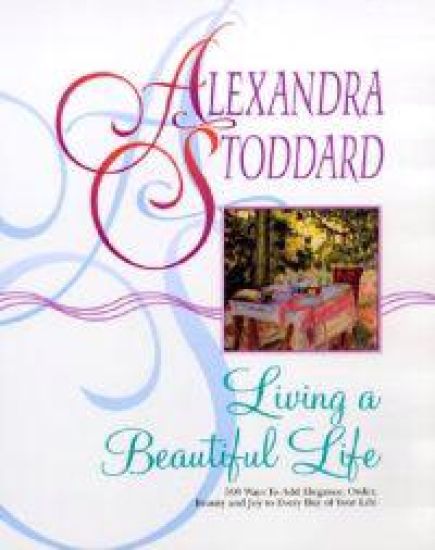
With the publication of Living A Beautiful Life, Alexandra Stoddard originated the idea of creating an atmosphere of beauty and tranquility with simple touches that turn the ordinary into the extraordinary. As a world-famous interior decorator, she has worked her magic on interiors large and small, from mansions and embassies to cottages and studio apartments. Through her writing and lectures, she has encouraged millions to brighten their lives and their homes by turning mundane tasks into small pleasurable rituals that add beauty and joy to everything they do. Alexandra Stoddard's secrets of Living A Beautiful Life are yours. With the publication of Living A Beautiful Life, Alexandra Stoddard originated the idea of creating an atmosphere of beauty and tranquillity with simple touches that turn the ordinary into the extraordinary.As a world-famous interior decorator, she has worked her madic on interiors large and small, from mansions and embassies to cottages and studio apartments. Though her writing and lectures, she has encouraged millions to brighten their lives and their homes by turning mundane tasks into small pleasurable rituals that add beauty and joy to everything they do. Alexandra Stoddard's secrets of Living A Beautiful Life are yours.
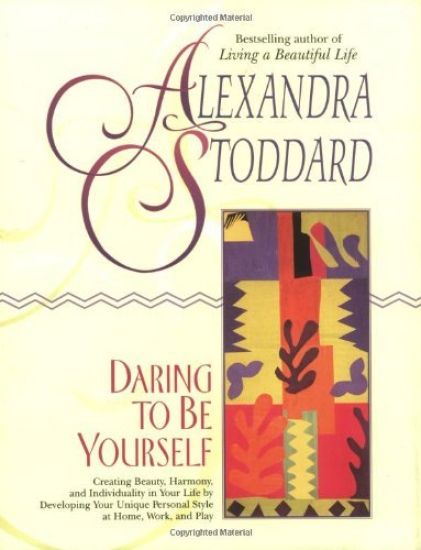
Alexandra Stoddard, internationally celebrated interior designer and bestselling author of the groundbreaking Living a Beautiful Life, has guided people from all walks of life in their quest for creating a home of beauty and grace. Now, in Daring to Be Yourself, this world famous decorator helps you reach new plateaus of immagination, creativity, and personal style. Once you have opened the doors to self-expression, you will enter a boundless new world of beauty, harmony, and indivuality in your home and in the way you dress, entertain, and travel that will become uniquely your own.
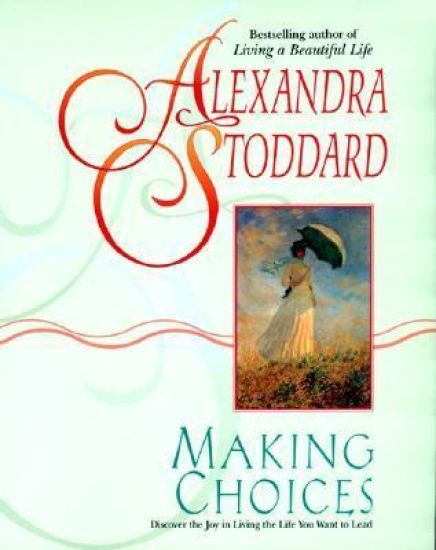
Alexandra Stoddard, world famous interior decorator, author and lecturer, originally opened the eyes of millions to the beauty and grace of simplicity in her phenomenal bestseller Living a Beautiful Life and the books that followed. Now, in Making Choices, she teaches us to widen our horizons by helping us feel the pleasure, satifaction, and joy of creative decision making and self-reliance and to discover our inner being, our own destiny, the lifestyle that is ours, and the art of living in the light of self-expression and fulfillment.
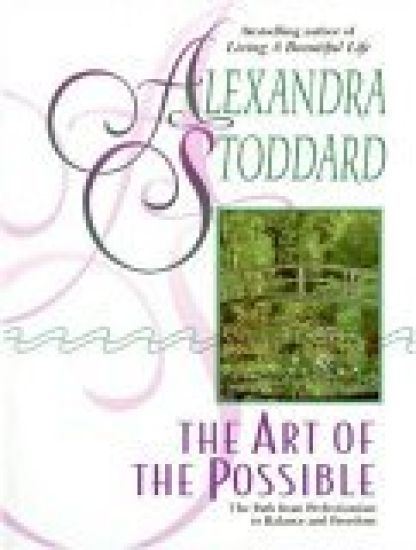
As a speaker, author, and world-famous interior designer, Alexandra Stoddard was the first to show millions of of people how to turn the place they live in into an oasis of tranquility, beauty, and joy. Beginning with her bestselling Living A Beautiful Life, and followed by other highly successful books, she demonstrates the magic that transforms living space, from cottages to mansions, not into showrooms, but into homes that reflect the comfort and joy of those who live there. Now in The Art of the Possible she adds wise words to the dream of creating a perfectly beautiful home, reminding all those who seek beauty to overcome the confines of perfectionism in favor of freedom that allows creativity to flourish.
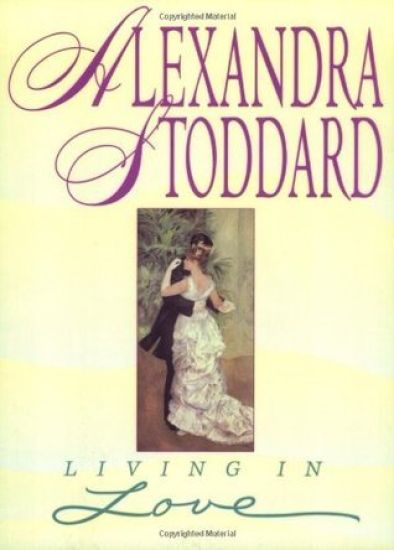
Love is a wondrous miracle. It has power to heal and to overcome pain; to transform our struggles into opportunities for joy and a deeper appreciation of life. The first step we take on our miraculous journey toward greater love is to open the wellspring of love within ourselves. Living in love is an attitude and a way. It requires living up to our fullest possibilities and giving birth to our higher power. Over the years I've found certain truths that have been helpful to me and may be helpful to you. I offer them to you, with love--Alexandra Stoddard
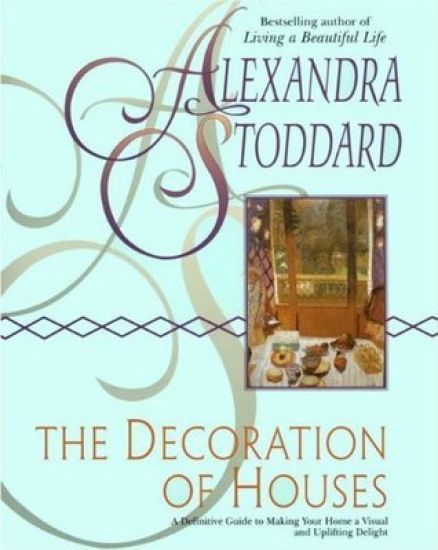
Alexandra Stoddard continues her creative and insightful guidance by showing us how to make our homes a real expression of our true selves. Starting with the Fifteen Defining Principles of Interior Design, Stoddard grounds us in the classic standards that make any home timeless and follows with inventive suggestions. Her own bold ideas about color, pattern, and texture are affordable tips from her own vast experience involving every imaginable decoration problem. From lighting a room to adding fabrics, furnishings, and the perfect finishing touches, she offers her expertise while always encouraging us to listen to our inner voice for the final answer.
"Whom do I tell when I tell a blank page?" Virginia Woolf's question is one that generations of readers and writers searching to map a creative life have asked of their own diaries. No other document quite compares with the intimacies and yearnings, the confessions and desires, revealed in the pages of a diary. Presenting seven portraits of literary and creative lives, Alexandra Johnson illuminates the secret world of writers and their diaries, and shows how over generations these writers have used the diary to solve a common set of creative and life questions. In Sonya Tolstoy's diary, we witness the conflict between love and vocation; in Katherine Mansfield and Virginia Woolf's friendship, the nettle of rivalry among writing equals is revealed; and inAlice James's diary, begun at age forty, the feelings of competition within a creative family are explored. The Hidden Writer shows how the diaries of Marjory Fleming, Sonya Tolstoy, Alice James, Katherine Mansfield, Virginia Woolf, Anais Nin, and May Sarton negotiated the obstacle course of silence, ambition, envy, and fame. Destined to become a classic on writing and the diary as literary form, this is an essential book for anyone interested in the evolution of creative life."
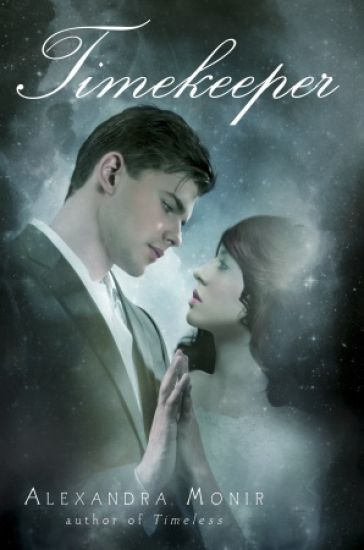
Colleen Houck, New York Times bestselling author of the Tiger's Curse series said, "Timekeeper is a haunting, mysterious dream; a book you don't want to miss "This sequel to Timeless combines breathtaking romance with a tale of complex magic in a story that will have every reader believing in the transcendent power of love. When Philip Walker appears as a new student in Michele Windsor's high school class, she is floored. He is the love she thought she lost forever when they said goodbye during her time travels last century. Overjoyed that they can resume the relationship they had a lifetime ago, Michele eagerly approaches him and discovers the unthinkable: he doesn't remember her. In fact, he doesn't seem to remember anything about the Philip Walker of 1910. Michele then finds her father's journals, which tell stories of his time-traveling past. As she digs deeper, she learns about his entanglement with a mysterious and powerful organization called the Time Society and his dealings with a vengeful Windsor ancestor. Michele soon finds herself at the center of a rift over 120 years in the making, one whose resolution will have life-or-death consequences.
In Nothing Is Wrong and Here Is Why, acclaimed The Washington Post satirist Alexandra Petri offers perfectly logical, reassuring reasons for everything that has happened in recent American politics and culture that will in no way unsettle your world view. In essays both new and adapted from her viral columns, Petri reports that the Trump administration is as competent as it is uncorrupted, white supremacy has never been less rampant and men have been silenced for too long. Q-Anon makes perfect sense! At the centre of the book is a virtuosic account of the past four years, a history as surreal and deranged as the Trump administration itself. This Panglossian venture into the swampy present will soothe— and terrify readers.
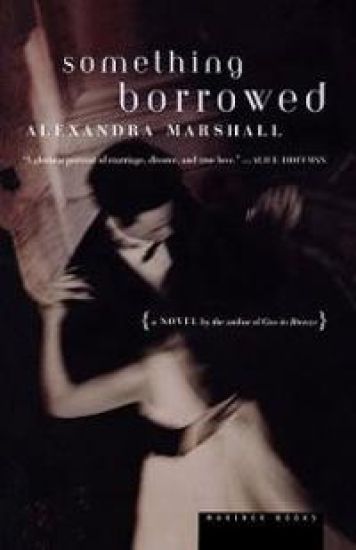
"Finally, a book about grown-ups," said Ellen Goodman of Something Borrowed, a sparkling love story of unresolved relationships and unexpected second chances. Gale and Gary are a divorced couple reunited, after fifteen years, at their son's wedding--where, to their own astonishment, old passions are rekindled. It's a novel "full of wise observation, mordant wit, and a fine comic sense...a pleasure to read" (San Francisco Chronicle).
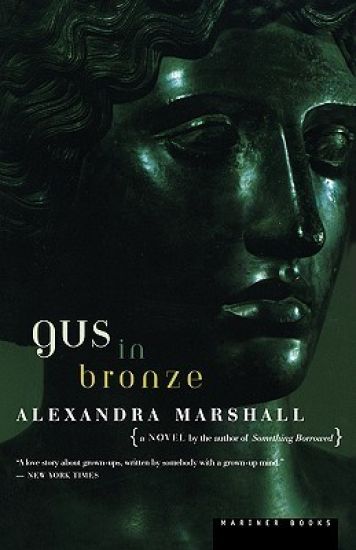
At the center of this "straight-to-the-gut" (Publishers Weekly) novel is strong, lovely Augusta--Gus--wife and mother of three children, who is dying of cancer. In her last weeks she sits for a sculptor capturing her spirit in bronze--a brave final gesture for her young family. "Above all, this poetic story is about the small, strange, and important ways people have of expressing love" (Christian Science Monitor).
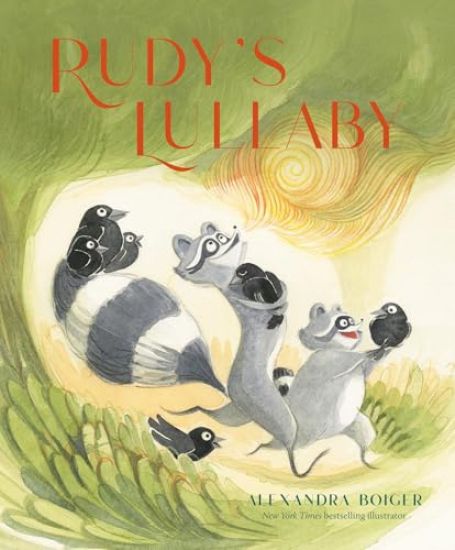
A funny and poignant picture book about working parents, babysitters, love, and the power of music by the #1 New York Times bestselling artist of the She Persisted series. Two raccoons live at the bottom of a tree where a mama bird and her family of chicks move in. Rudy the raccoon is not impressed at all--not by Mama Bird, not by her chicks, and certainly not by the singing school she starts in the hollow of the tree. But when Mama Bird's work at the singing school sends her on a business trip to another forest, Rudy must step up and care for the chicks. When he does, he learns a thing or two about love . . . and the power of music. From the #1 New York Times bestselling illustrator of the She Persisted series, this gorgeously illustrated book is a must-read for all kids who spend time with babysitters while their parents are away.
The practical followup to the acclaimed bestseller In 2001, the groundbreaking book Quarterlife Crisis(R) addressed the unique and unsettling trials of entering modern adulthood. For the first time, it identified how twentysomethings were lost and confused, and lamented the absence of a guide-a roadmap with solutions for how to emerge from the crisis successful, happy, and sane. Now, the author of Quarterlife Crisis(R) delivers that roadmap. Alexandra Robbins goes beyond defining the problem of the quarterlife crisis and puts readers on the path to conquering it. She asks-and answers-the tough, soul-searching questions that keep young adults awake at night: - How do I weigh doing what I love versus making money? - Will I ever find my "soul mate"? - Why is it so hard to make friends? - Why are my twenties so different from what I expected? With new voices as well as follow-up interviews with some of the original Quarterlife Crisis(R) twentysomethings, Conquering Your Quarterlife Crisis(R) is the new go-to guide for people who want it all...but just aren't sure what that is yet.
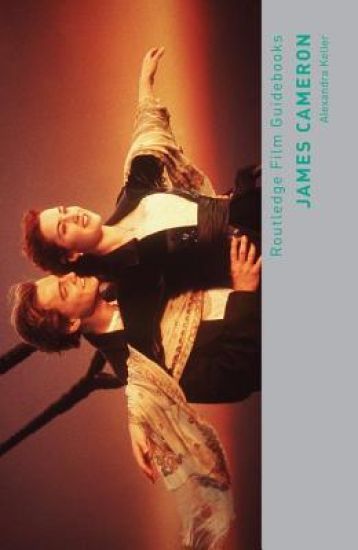
Featuring excerpts from interviews and frame-by-frame analysis of important scenes from films such as Terminator, Aliens, True Lies, and Titanic, Alexandra Keller provides the first critical study of James Cameron as an auteur. Considering in particular his treatment of gender and preoccupation with capital, both in his films and his filmmaking practice, Keller offers an overview of Cameron's work and its significance within cinematic history. Sections in the book include:ChronologyKey DebatesKey ScenesSourcesResources.This is a fascinating insight into the work of one of Hollywood's top directors, and will prove invalubale to students of film studies and media studies all over the English-speaking world.
Featuring excerpts from interviews and frame-by-frame analysis of important scenes from films such as Terminator, Aliens, True Lies, and Titanic, Alexandra Keller provides the first critical study of James Cameron as an auteur. Considering in particular his treatment of gender and preoccupation with capital, both in his films and his filmmaking practice, Keller offers an overview of Cameron's work and its significance within cinematic history. Sections in the book include:ChronologyKey DebatesKey ScenesSourcesResources.This is a fascinating insight into the work of one of Hollywood's top directors, and will prove invalubale to students of film studies and media studies all over the English-speaking world.
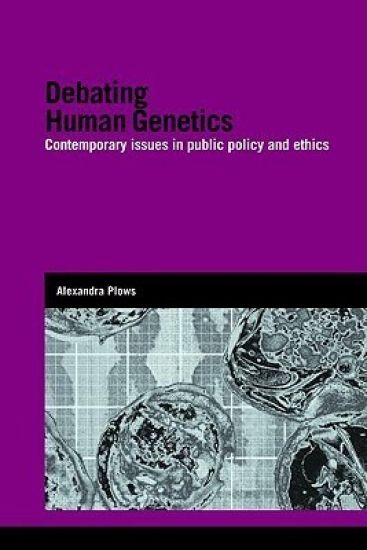
Debating Human Genetics is based on ethnographic research focusing primarily on the UK publics who are debating and engaging with human genetics, and related bio and techno-science. Drawing on recent interviews and data, collated in a range of public settings, it provides a unique overview of multiple publics as they ‘frame’ the stake of the debates in this emerging, complex and controversial arena.The book outlines key sites and applications of human genetics that have sparked public interest, such as biobanks, stem cells, genetic screening and genomics. It also addresses the ‘scientific contoversies’ that have made considerable impact in the public sphere – the UK police DNA database, gene patenting, ‘saviour siblings’, and human cloning. By grounding the concepts and issues of human genetics in the real life narratives and actions of patient groups, genetic watchdogs, scientists, policy makers, and many other public groups, the book exemplifies how human genetics is a site where public knowledge and value claims converge and collide, and identifies the emergence of ‘hybrid publics’ who are engaging with this hybrid science.
Debating Human Genetics is based on ethnographic research focusing primarily on the UK publics who are debating and engaging with human genetics, and related bio and techno-science. Drawing on recent interviews and data, collated in a range of public settings, it provides a unique overview of multiple publics as they ‘frame’ the stake of the debates in this emerging, complex and controversial arena.The book outlines key sites and applications of human genetics that have sparked public interest, such as biobanks, stem cells, genetic screening and genomics. It also addresses the ‘scientific contoversies’ that have made considerable impact in the public sphere – the UK police DNA database, gene patenting, ‘saviour siblings’, and human cloning. By grounding the concepts and issues of human genetics in the real life narratives and actions of patient groups, genetic watchdogs, scientists, policy makers, and many other public groups, the book exemplifies how human genetics is a site where public knowledge and value claims converge and collide, and identifies the emergence of ‘hybrid publics’ who are engaging with this hybrid science.