Kirjojen hintavertailu. Mukana 12 390 323 kirjaa ja 12 kauppaa.

Kirjahaku

Etsi kirjoja tekijän nimen, kirjan nimen tai ISBN:n perusteella.

1000 tulosta hakusanalla Alison Case

Much Ado About Nothing

Much Ado About Nothing

Alison Findlay

Red Globe Press
2011
nidottu
This Handbook provides an introductory guide to the play offering a scene-by-scene theatrically aware commentary, contextual documents, a brief history of the text and first performances, case studies of key performances and productions, a survey of film and TV adaptation, a wide sampling of critical opinion and annotated further reading.
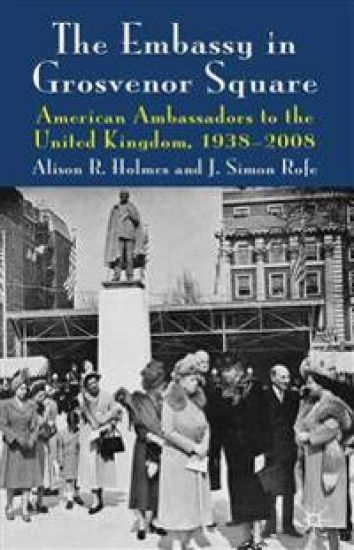
The Embassy in Grosvenor Square

The Embassy in Grosvenor Square

Alison R. Holmes; J. Rofe

Palgrave Macmillan
2012
sidottu
Covering the period 1938 to 2008, The Embassy in Grosvenor Square explores the role of the embassy in the Anglo-American 'special relationship', both in terms of transatlantic affairs and issues of international relations.
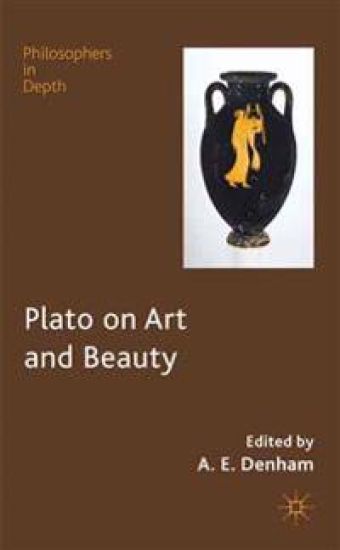
Plato on Art and Beauty

Plato on Art and Beauty

Alison Denham

Palgrave Macmillan
2012
sidottu
This unique collection of essays focuses on various aspects of Plato's Philosophy of Art, not only in The Republic , but in the Phaedrus, Symposium, Laws and related dialogues. The range of issues addressed includes the contest between philosophy and poetry, the moral status of music, the love of beauty, censorship, motivated emotions.
Total Sustainability in the Built Environment

Total Sustainability in the Built Environment

Alison Cotgrave; Mike Riley

Red Globe Press
2012
nidottu
The first textbook in sustainable construction bringing together the whole range of topics from planning through to facilities management in an accessible and engaging way, and complete with illustrations and photographs. Written by experts and including real-world case studies, this book can be used as a core text or across several modules. The book begins with planning issues, after which each chapter charts the different stages of the construction process through to refurbishment of existing buildings. This textbook is aimed at undergraduate Built Environment and Construction students or pre-degree HND/FD students in Architectural Technology and Architecture, Building Surveying, General Practice Surveying, Urban Planning, Property Management, Quantity Surveying, Construction Management, Facilities Management and general programmes focussed on the environment. It will also be of interest to professionals working for construction and property companies as there are so few resources that give a complete overview of sustainability in construction.
Academy Stars Level 3 Pupil's Book Pack

Academy Stars Level 3 Pupil's Book Pack

Alison Blair; Jane Cadwallader

Macmillan Education
2017
muu
•The unique Graphic Grammar animations allow young learners to interact visually with various grammar structures in easy-to-understand contexts.•A strong learning skills strand and Be a Star! Review activities promote critical thinking and learner autonomy.•Cambridge Young Learners test-style practice activities provide teachers with ready-to-use materials preparing students for international exams.•The Think about it lessons help develop decision making and problem solving skills.•The thought-provoking Values box and Me activities help children develop social values, promote personal reflection and highlight notions of responsibility and consequence.•This blended solution enables teachers to switch seamlessly between face-to-face and online delivery of classes allowing full flexibility in any scenario.
Academy Stars Level 4 Pupil's Book Pack

Academy Stars Level 4 Pupil's Book Pack

Alison Blair; Jane Cadwallader

Macmillan Education
2017
muu
•The unique Graphic Grammar animations allow young learners to interact visually with various grammar structures in easy-to-understand contexts.•A strong learning skills strand and Be a Star! Review activities promote critical thinking and learner autonomy.•Cambridge Young Learners test-style practice activities provide teachers with ready-to-use materials preparing students for international exams.•The Think about it lessons help develop decision making and problem solving skills.•The thought-provoking Values box and Me activities help children develop social values, promote personal reflection and highlight notions of responsibility and consequence.•This blended solution enables teachers to switch seamlessly between face-to-face and online delivery of classes allowing full flexibility in any scenario.
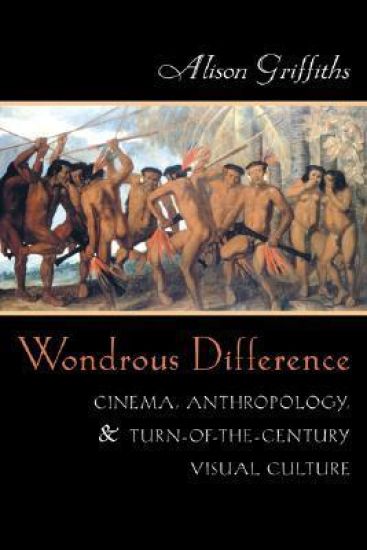
Wondrous Difference

Wondrous Difference

Alison Griffiths

Columbia University Press
2002
sidottu
The ethical and ideological implications of cross-cultural image-making continue to stir debate among anthropologists, film scholars, and museum professionals. This innovative book focuses on the contested origins of ethnographic film from the late nineteenth century to the 1920s, vividly depicting the dynamic visual culture of the period as it collided with the emerging discipline of anthropology and the new technology of motion pictures. Featuring more than 100 illustrations, the book examines museums of natural history, world's fairs, scientific and popular photography, and the early filmmaking efforts of anthropologists and commercial producers to investigate how cinema came to assume the role of mediator of cultural difference at the beginning of the twentieth century.
Wondrous Difference

Wondrous Difference

Alison Griffiths

Columbia University Press
2002
pokkari
The ethical and ideological implications of cross-cultural image-making continue to stir debate among anthropologists, film scholars, and museum professionals. This innovative book focuses on the contested origins of ethnographic film from the late nineteenth century to the 1920s, vividly depicting the dynamic visual culture of the period as it collided with the emerging discipline of anthropology and the new technology of motion pictures. Featuring more than 100 illustrations, the book examines museums of natural history, world's fairs, scientific and popular photography, and the early filmmaking efforts of anthropologists and commercial producers to investigate how cinema came to assume the role of mediator of cultural difference at the beginning of the twentieth century.
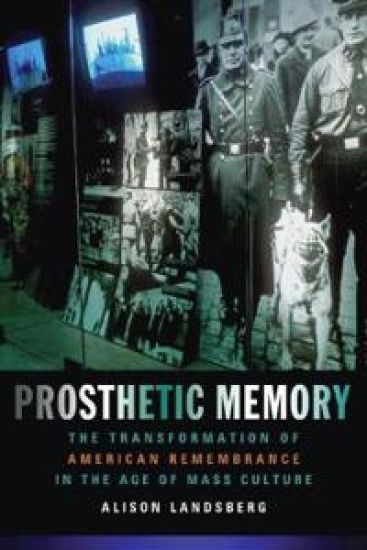
Prosthetic Memory

Prosthetic Memory

Alison Landsberg

Columbia University Press
2004
sidottu
Instead of compartmentalizing American experience, the technologies of mass culture make it possible for anyone, regardless of race, ethnicity, or gender to share collective memories-to assimilate as personal experience historical events through which they themselves did not live. That's the provocative argument of this book, which examines the formation and potential of privately felt public memories. Alison Landsberg argues that mass cultural forms such as cinema and television in fact contain the still-unrealized potential for a progressive politics based on empathy for the historical experiences of others. The result is a new form of public cultural memory-"prosthetic" memory-that awakens the potential in American society for increased social responsibility and political alliances that transcend the essentialism and ethnic particularism of contemporary identity politics.
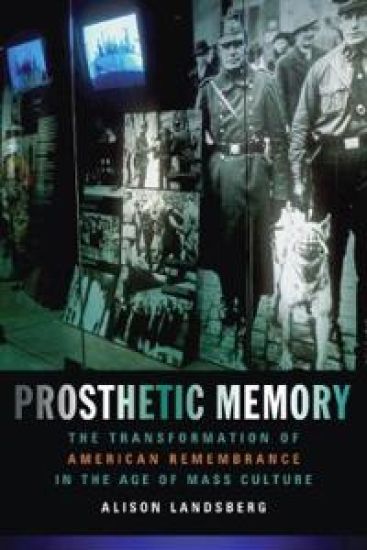
Prosthetic Memory

Prosthetic Memory

Alison Landsberg

Columbia University Press
2004
pokkari
Instead of compartmentalizing American experience, the technologies of mass culture make it possible for anyone, regardless of race, ethnicity, or gender to share collective memories-to assimilate as personal experience historical events through which they themselves did not live. That's the provocative argument of this book, which examines the formation and potential of privately felt public memories. Alison Landsberg argues that mass cultural forms such as cinema and television in fact contain the still-unrealized potential for a progressive politics based on empathy for the historical experiences of others. The result is a new form of public cultural memory-"prosthetic" memory-that awakens the potential in American society for increased social responsibility and political alliances that transcend the essentialism and ethnic particularism of contemporary identity politics.
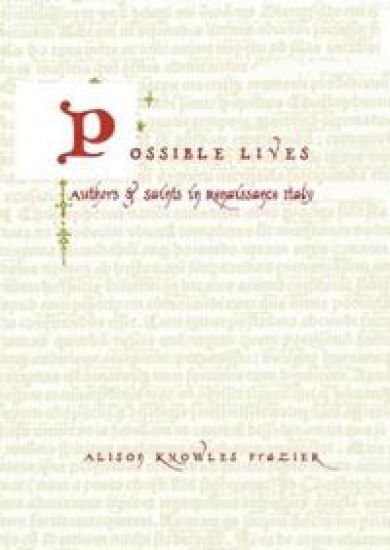
Possible Lives

Possible Lives

Alison Knowles Frazier

Columbia University Press
2005
sidottu
Possible Lives uses the saints'lives written by humanists of the Italian Renaissance to explore the intertwining of classical and religious cultures on the eve of the European Reformation. The lives of saints were among the most reproduced and widely distributed literatures of medieval and early modern Europe. During the century before the Reformation, these narratives of impossible goodness fell into the hands of classicizing intellectuals known as humanists. This study examines how the humanist authors received, criticized, and rewrote the traditional stories of exemplary virtue for patrons and audiences who were surprisingly open to their textual experiments. Drawn from a newly constructed catalog of primary sources in manuscript and print, the cases in this book range from the lure of martyrdom as the West confronted Islam to the use of saints'lives in local politics and the rhetorician's classroom. Frazier discusses the writers'perceptions of historical sanctity, the commanding place of the mendicant friars, and one unique account of a contemporary holy woman. Possible Lives shows that the classical Renaissance was also a saintly Renaissance, as humanists deployed their rhetorical and philological skills to "renew the persuasive force of Christian virtue" and "save the cult of the saints." Combining quantitative and anecdotal approaches in a highly readable series of case studies, Frazier reveals the contextual richness of this little-known and unexpectedly large body of Latin hagiography.
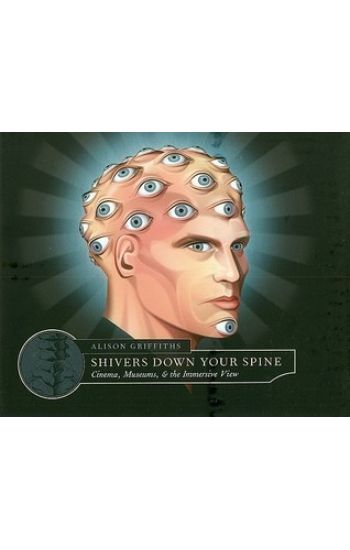
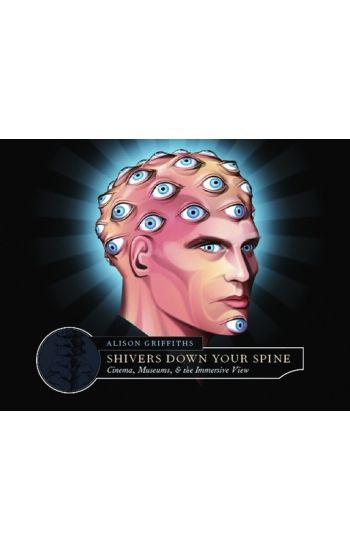
Shivers Down Your Spine

Shivers Down Your Spine

Alison Griffiths

Columbia University Press
2008
sidottu
From the architectural spectacle of the medieval cathedral and the romantic sublime of the nineteenth-century panorama to the techno-fetishism of today's London Science Museum, humans have gained a deeper understanding of the natural world through highly illusionistic representations that engender new modes of seeing, listening, and thinking. What unites and defines many of these wondrous spaces is an immersive view-an invitation to step inside the virtual world of the image and become a part of its universe, if only for a short time. Since their inception, museums of science and natural history have mixed education and entertainment, often to incredible, eye-opening effect. Immersive spaces of visual display and modes of exhibition send "shivers" down our spines, engaging the distinct cognitive and embodied mapping skills we bring to spectacular architecture and illusionistic media. They also force us to reconsider traditional models of film spectatorship in the context of a mobile and interactive spectator. Through a series of detailed historical case studies, Alison Griffiths masterfully explores the uncanny and unforgettable visceral power of the medieval cathedral, the panorama, the planetarium, the IMAX theater, and the science museum. Examining these structures as exemplary spaces of immersion and interactivity, Griffiths reveals the sometimes surprising antecedents of modern media forms, suggesting the spectator's deep-seated desire to become immersed in a virtual world. Shivers Down Your Spine demonstrates how immersive and interactive museum display techniques such as large video displays, reconstructed environments, and touch-screen computer interactives have redefined the museum space, fueling the opposition between public and private, science and spectacle, civic and corporate interests, voice and text, and life and death. In her remarkable study of sensual spaces, Griffiths explains why, for centuries, we keep coming back for more.
Shivers Down Your Spine

Shivers Down Your Spine

Alison Griffiths

Columbia University Press
2013
pokkari
From the architectural spectacle of the medieval cathedral and the romantic sublime of the nineteenth-century panorama to the techno-fetishism of today's London Science Museum, humans have gained a deeper understanding of the natural world through highly illusionistic representations that engender new modes of seeing, listening, and thinking. What unites and defines many of these wondrous spaces is an immersive view-an invitation to step inside the virtual world of the image and become a part of its universe, if only for a short time. Since their inception, museums of science and natural history have mixed education and entertainment, often to incredible, eye-opening effect. Immersive spaces of visual display and modes of exhibition send "shivers" down our spines, engaging the distinct cognitive and embodied mapping skills we bring to spectacular architecture and illusionistic media. They also force us to reconsider traditional models of film spectatorship in the context of a mobile and interactive spectator. Through a series of detailed historical case studies, Alison Griffiths masterfully explores the uncanny and unforgettable visceral power of the medieval cathedral, the panorama, the planetarium, the IMAX theater, and the science museum. Examining these structures as exemplary spaces of immersion and interactivity, Griffiths reveals the sometimes surprising antecedents of modern media forms, suggesting the spectator's deep-seated desire to become immersed in a virtual world. Shivers Down Your Spine demonstrates how immersive and interactive museum display techniques such as large video displays, reconstructed environments, and touch-screen computer interactives have redefined the museum space, fueling the opposition between public and private, science and spectacle, civic and corporate interests, voice and text, and life and death. In her remarkable study of sensual spaces, Griffiths explains why, for centuries, we keep coming back for more.
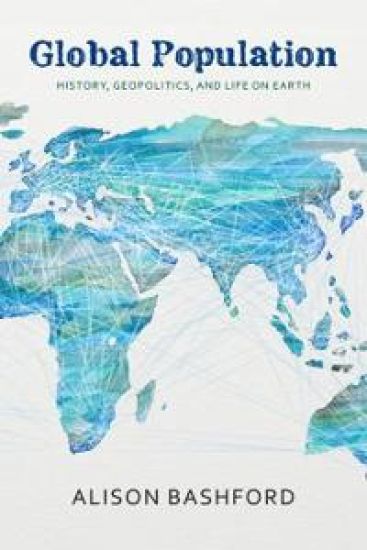
Global Population

Global Population

Alison Bashford

Columbia University Press
2014
sidottu
Concern about the size of the world's population did not begin with the "population bomb" in 1968. It arose in the aftermath of World War I and was understood as an issue with far-reaching ecological, agricultural, economic, and geopolitical consequences. The world population problem concerned the fertility of soil as much as the fertility of women, always involving both "earth" and "life." Global Population traces the idea of a world population problem as it evolved from the 1920s through the 1960s. The growth and distribution of the human population over the planet's surface came deeply to shape the characterization of "civilizations" with different standards of living. It forged the very ideas of development, demographically defined three worlds, and, for some, an aspirational "one world." Drawing on international conference transcripts and personal and organizational archives, this book reconstructs the twentieth-century population problem in terms of migration, colonial expansion, globalization, and world food plans. Population was a problem in which international relations and intimate relations were one. Global Population ultimately shows how a geopolitical problem about sovereignty over land morphed into a biopolitical solution, entailing sovereignty over one's person.
Global Population

Global Population

Alison Bashford

Columbia University Press
2016
pokkari
Concern about the size of the world's population did not begin with the "population bomb" in 1968. It arose in the aftermath of World War I and was understood as an issue with far-reaching ecological, agricultural, economic, and geopolitical consequences. The world population problem concerned the fertility of soil as much as the fertility of women, always involving both "earth" and "life." Global Population traces the idea of a world population problem as it evolved from the 1920s through the 1960s. The growth and distribution of the human population over the planet's surface came deeply to shape the characterization of "civilizations" with different standards of living. It forged the very ideas of development, demographically defined three worlds, and, for some, an aspirational "one world." Drawing on international conference transcripts and personal and organizational archives, this book reconstructs the twentieth-century population problem in terms of migration, colonial expansion, globalization, and world food plans. Population was a problem in which international relations and intimate relations were one. Global Population ultimately shows how a geopolitical problem about sovereignty over land morphed into a biopolitical solution, entailing sovereignty over one's person.
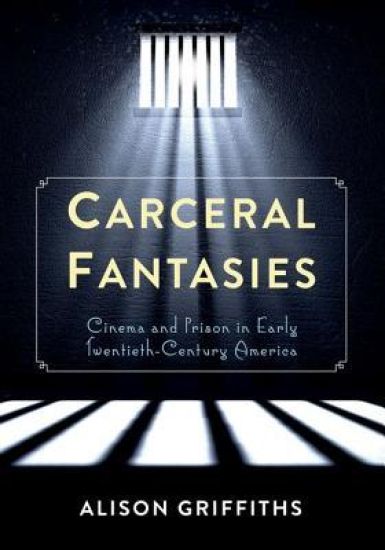
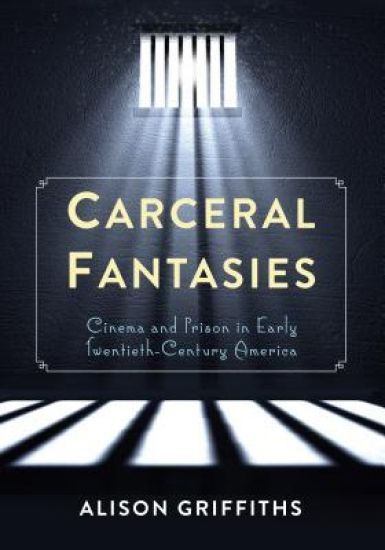
Carceral Fantasies

Carceral Fantasies

Alison Griffiths

Columbia University Press
2016
sidottu
A groundbreaking contribution to the study of nontheatrical film exhibition, Carceral Fantasies tells the little-known story of how cinema found a home in the U.S. penitentiary system and how the prison emerged as a setting and narrative trope in modern cinema. Focusing on films shown in prisons before 1935, Alison Griffiths explores the unique experience of viewing cinema while incarcerated and the complex cultural roots of cinematic renderings of prison life. Griffiths considers a diverse mix of cinematic genres, from early actualities and reenactments of notorious executions to reformist exposes of the 1920s.She connects an early fascination with cinematic images of punishment and execution, especially electrocutions, to the attractions of the nineteenth-century carnival electrical wonder show and Phantasmagoria (a ghost show using magic lantern projections and special effects). Griffiths draws upon convict writing, prison annual reports, and the popular press obsession with prison-house cinema to document the integration of film into existing reformist and educational activities and film's psychic extension of flights of fancy undertaken by inmates in their cells. Combining penal history with visual and film studies and theories surrounding media's sensual effects, Carceral Fantasies illuminates how filmic representations of the penal system enacted ideas about modernity, gender, the body, and the public, shaping both the social experience of cinema and the public's understanding of the modern prison.
Carceral Fantasies

Carceral Fantasies

Alison Griffiths

Columbia University Press
2019
pokkari
A groundbreaking contribution to the study of nontheatrical film exhibition, Carceral Fantasies tells the little-known story of how cinema found a home in the U.S. penitentiary system and how the prison emerged as a setting and narrative trope in modern cinema. Focusing on films shown in prisons before 1935, Alison Griffiths explores the unique experience of viewing cinema while incarcerated and the complex cultural roots of cinematic renderings of prison life.Griffiths considers a diverse mix of cinematic genres, from early actualities and reenactments of notorious executions to reformist exposés of the 1920s. She connects an early fascination with cinematic images of punishment and execution, especially electrocutions, to the attractions of the nineteenth-century carnival electrical wonder show and Phantasmagoria (a ghost show using magic lantern projections and special effects). Griffiths draws upon convict writing, prison annual reports, and the popular press obsession with prison-house cinema to document the integration of film into existing reformist and educational activities and film's psychic extension of flights of fancy undertaken by inmates in their cells. Combining penal history with visual and film studies and theories surrounding media's sensual effects, Carceral Fantasies illuminates how filmic representations of the penal system enacted ideas about modernity, gender, the body, and the public, shaping both the social experience of cinema and the public's understanding of the modern prison.
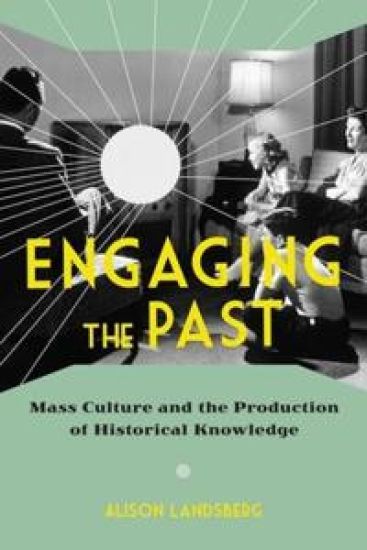
Engaging the Past

Engaging the Past

Alison Landsberg

Columbia University Press
2015
sidottu
Reading films, television dramas, reality shows, and virtual exhibits, among other popular texts, Engaging the Past examines the making and meaning of history for everyday viewers. Contemporary media can encourage complex interactions with the past that have far-reaching consequences for history and politics. Viewers experience these representations personally, cognitively, and bodily, but, as this book reveals, not just by identifying with the characters portrayed. Some of the works considered in this volume include the films Hotel Rwanda (2004), Good Night and Good Luck (2005), and Milk (2008); the television dramas Deadwood, Mad Men, and Rome; the reality shows Frontier House, Colonial House, and Texas Ranch House; and The Secret Annex Online, accessed through the Anne Frank House website, and the Kristallnacht exhibit, accessed through the Unites States Holocaust Museum website. These mass cultural texts cultivate what Alison Landsberg calls an "affective engagement" with the past, tying the viewer to an event or person and fostering a sense of intimacy that does more than transport the viewer back in time. Affect, she suggests, can also work to disorient the viewer, forcibly pushing him or her out of the narrative and back into his or her own body. By analyzing these specific popular history formats, Landsberg shows the unique way they provoke historical thinking and produce historical knowledge, prompting a reconsideration of what constitutes history and an understanding of how history works in the contemporary mediated public sphere.
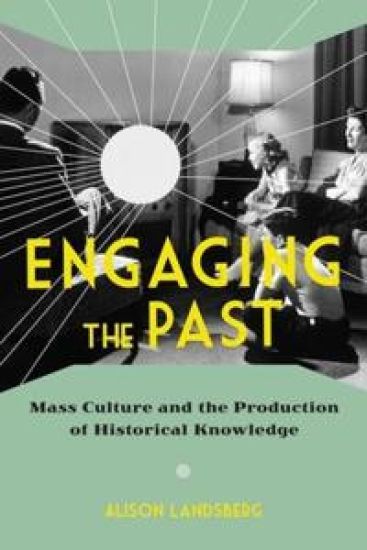
Engaging the Past

Engaging the Past

Alison Landsberg

Columbia University Press
2015
pokkari
Reading films, television dramas, reality shows, and virtual exhibits, among other popular texts, Engaging the Past examines the making and meaning of history for everyday viewers. Contemporary media can encourage complex interactions with the past that have far-reaching consequences for history and politics. Viewers experience these representations personally, cognitively, and bodily, but, as this book reveals, not just by identifying with the characters portrayed. Some of the works considered in this volume include the films Hotel Rwanda (2004), Good Night and Good Luck (2005), and Milk (2008); the television dramas Deadwood, Mad Men, and Rome; the reality shows Frontier House, Colonial House, and Texas Ranch House; and The Secret Annex Online, accessed through the Anne Frank House website, and the Kristallnacht exhibit, accessed through the Unites States Holocaust Museum website. These mass cultural texts cultivate what Alison Landsberg calls an "affective engagement" with the past, tying the viewer to an event or person and fostering a sense of intimacy that does more than transport the viewer back in time. Affect, she suggests, can also work to disorient the viewer, forcibly pushing him or her out of the narrative and back into his or her own body. By analyzing these specific popular history formats, Landsberg shows the unique way they provoke historical thinking and produce historical knowledge, prompting a reconsideration of what constitutes history and an understanding of how history works in the contemporary mediated public sphere.
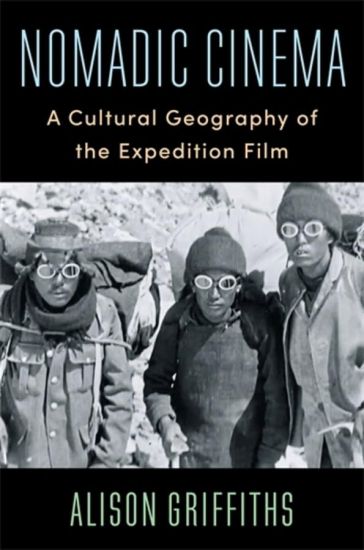
Nomadic Cinema

Nomadic Cinema

Alison Griffiths

Columbia University Press
2025
sidottu
From In Borneo, the Land of the Head-Hunters to The Epic of Everest to Camping Among the Indians, the early twentieth century was the heyday of expedition filmmaking. As new technologies transformed global transportation and opened new avenues for documentation, and as imperialism and capitalism expanded their reach, Western filmmakers embarked on journeys to places they saw as exotic, seeking to capture both the monumental and the mundane. Their films portrayed far-flung locales, the hardships of travel, and the day-to-day lives of Indigenous people through a deeply colonial lens.Nomadic Cinema is a groundbreaking history of these films, analyzing them as visual records of colonialism that also offer new possibilities for recognizing Indigenous histories. Alison Griffiths examines expedition films made in Borneo, Central Asia, Tibet, Polynesia, and the American Southwest, reinterpreting them from decolonial perspectives to provide alternative accounts of exploration. She considers the individuals and institutions—including the American Museum of Natural History—responsible for creating the films, the spectators who sought them out, and the Indigenous intermediaries whose roles white explorers minimized. Ambitious and interdisciplinary, Nomadic Cinema ranges widely, from the roots of expedition films in medieval cartography and travel writing to still-emerging technologies of virtual and augmented reality. Highlighting the material conditions of filmmaking and the environmental footprint left by exploration, this book recovers Indigenous memory and sovereignty from within long-buried sources.