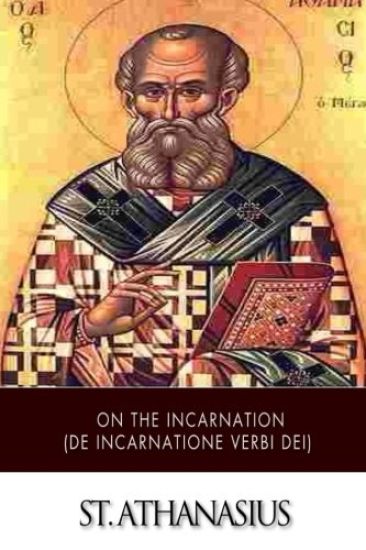
On the Incarnation of the Word of God is an ancient text by Saint Athanasius, who expounds upon the divine and eternal wisdom offered by Lord. First penned during the early 4th century AD, this early book of Christian wisdom is both an inspiring reflection upon the spiritual tenets of the faith, and a stern rebuke to the ideas of Arianism which at the time were opposed widely by the early Christian church. For following his beliefs, St. Athanasius also suffered condemnation from an antagonistic Roman Empire, which at the time had not converted to Christianity under the guidance of Emperor Constantine. Athanasius thought that believers of Christianity had the power to unite themselves and devote their collective praise to Jesus Christ, whose pureness of virtue is beyond any other Earthly being. By so devoting themselves to the Son of God, believers in the tenets and doctrine of Christian lore could ascend to immortality in the next life.
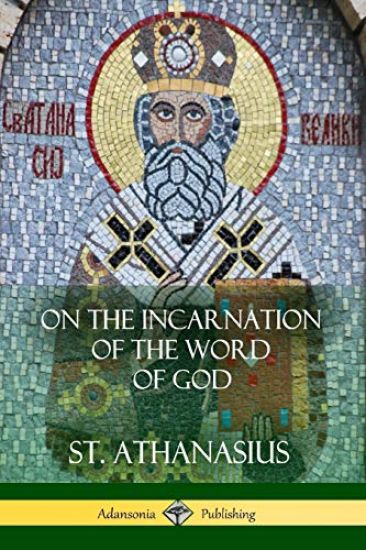
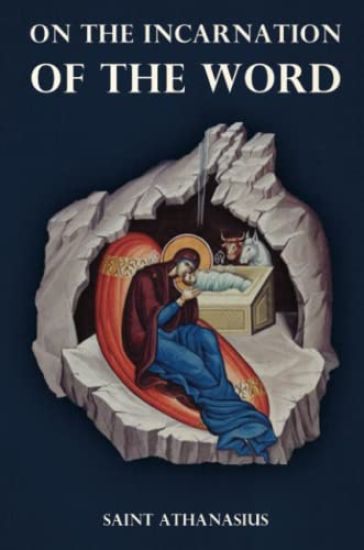
On the Incarnation of the Word of God is an ancient text by Saint Athanasius, who expounds upon the divine and eternal wisdom offered by Lord. First penned during the early 4th century AD, this early book of Christian wisdom is both an inspiring reflection upon the spiritual tenets of the faith, and a stern rebuke to the ideas of Arianism which at the time were opposed widely by the early Christian church. For following his beliefs, St. Athanasius also suffered condemnation from an antagonistic Roman Empire, which at the time had not converted to Christianity under the guidance of Emperor Constantine. Athanasius thought that believers of Christianity had the power to unite themselves and devote their collective praise to Jesus Christ, whose pureness of virtue is beyond any other Earthly being. By so devoting themselves to the Son of God, believers in the tenets and doctrine of Christian lore could ascend to immortality in the next life.
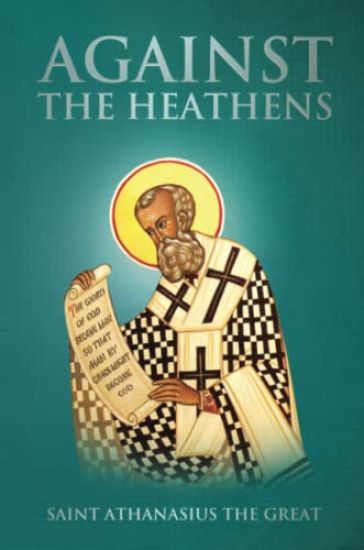
One of the most important works of Christian theology, the treatise "On the Incarnation" was written by the fourth century Egyptian religious leader St. Athanasius of Alexandria. An influential Christian theologian and church elder, St. Athanasius, also known as Athanasius the Great, Athanasius the Confessor, and Athanasius the Apostolic, was the twentieth bishop of Alexandria from 328 AD to 373 AD. St. Athanasius played an important role in the First Council of Nicaea in 325 AD where Roman Emperor Constantine the Great convened the council to address the question of whether Jesus of Nazareth was the son of God and distinct from his Father. "On the Incarnation" expands with clarity on the conclusion reached by the First Council of Nicaea, that God became man through His son, Jesus of Nazareth, and through Jesus, we too may become one with God. While brief, St. Athanasius explores in detail why God became flesh through Jesus and why this transformation was necessary to save the corrupted human soul and prepare it for a perfect and immortal union with God. This treatise, by one of the most important and influential teachers of Christian philosophy, is an essential read for all students of the Christian faith. This edition is printed on premium acid-free paper and follows the translation of Archibald Robertson.
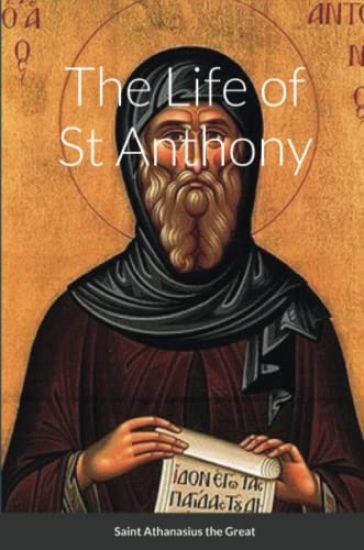
Saint Anthony or Antony c. 12 January 251 - 17 January 356, was a Christian monk from Egypt, revered since his death as a saint. For his importance among the Desert Fathers and to all later Christian monasticism, he is also known as the Father of All Monks. The biography of Anthony's life by Athanasius of Alexandria helped to spread the concept of Christian monasticism, particularly in Western Europe via its Latin translations. He is often erroneously considered the first Christian monk, but as his biography and other sources make clear, there were many ascetics before him. Anthony was, however, among the first known to go into the wilderness (about ad 270), which has contributed to his renown. Accounts of Anthony enduring supernatural temptation during his sojourn in the Eastern Desert of Egypt inspired the often-repeated subject of the temptation of St. Anthony in Western art and literature.
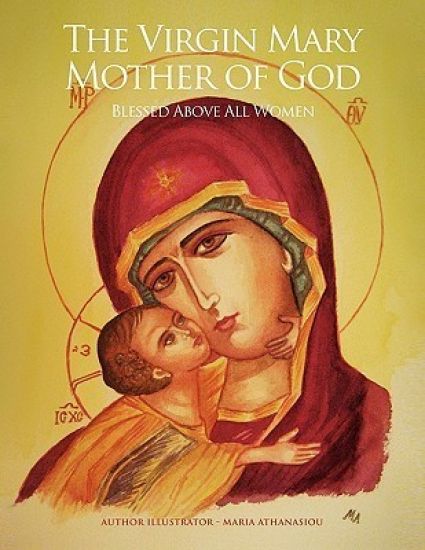
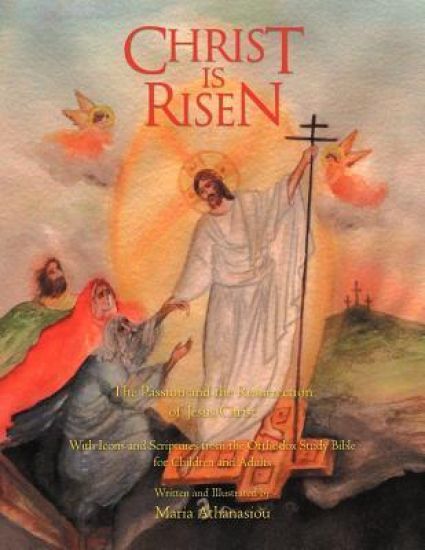
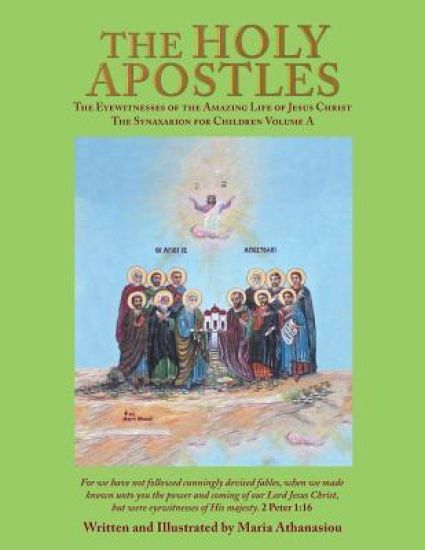
Children of all ages and adults from all walks of life are in for a spirit-nourishing read as author Maria Athanasiou presents her third Christian picture book "The Virgin Mary Mother of God" Blessed Above All Women. This colorful picture book with its glowing iconographic illustrations and with the Scriptures offers readers a chance to know more about Mary Theotokos, the Mother of Jesus Christ our God. Each image is accompanied by a biblical text and explanation showing the fulfilled prophecy. Keepsake gift for all ages (children and adults).t, and the Holy Scriptures. This is also highly recommended to be used as a teaching tool.
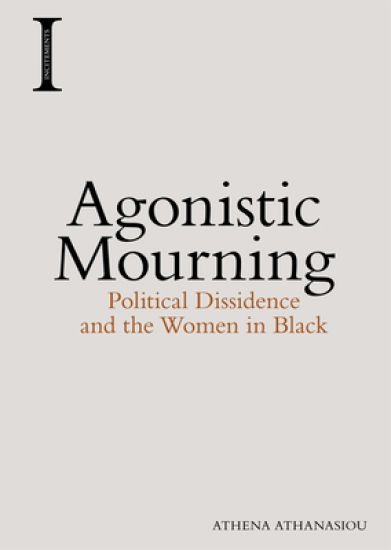
Drawing on a range of philosophical, anthropological and political theories, Athena Athanasiou offers a new way of thinking about agonistic performativity with its critical connections to national and gender politics and alongside the political intricacies of affectivity, courage and justice. Through an ethnographic account of the urban feminist and antinationalist movement Women in Black of Belgrade during the Yugoslav wars, she shows that we might understand their dissident politics of mourning as a means to refigure political life beyond sovereign accounts of subjectivity and agency.
Athena Athanasiou departs from recent discussions of mourning, including in the work of Judith Butler, by raising an altogether original question which both challenges and extends the current orthodoxy: what would it be like to mourn the dead of the enemy? She draws on a wide range of philosophical and political theories to develop a new notion of agonistic democracy. Through an ethnographic account of the urban feminist and antinationalist movement Women in Black of Belgrade, Serbia {Zene u Crnom), she suggests that we can understand their desire for the political as a means to refigure political life beyond sovereign accounts of subjectivity and agency.
No. 1 - The original black and white comics as they were intended to be viewed in their full-page comic book style version. Reefer-Toking Bigfoots, Talking Joints, Pot-Smoking Mice... and those are just the minor characters in this chronic-packed book of NEW Underground Comix done in that classic early 1970's style Follow the daily adventures of a carefree pot farmer, 69, and the stoner gang that thrive in his green world. All represented in authentic black and white, and executed with the influential spirit of the genuine masters of the underground comix generation. Artist/Author Tom Athanasiou has re-created something vintage, which is now something excitingly new to a young (and believe it or not, old) generation of marijuana admirers. Which we know involves a heck of lot of the populace. So break out your bong and get ready to read some fun, and mind-altering adventures in this, the first packed volume of marijuana-flavored comics, All You Need Is Weed. - Check out Facebook.com/AllYouNeedIsWeedComics for updates on news, comic-con events, shows. -- For more merchandise (awesome T-Shirts) check out Etsy.com/AllYouNeedIsWeed
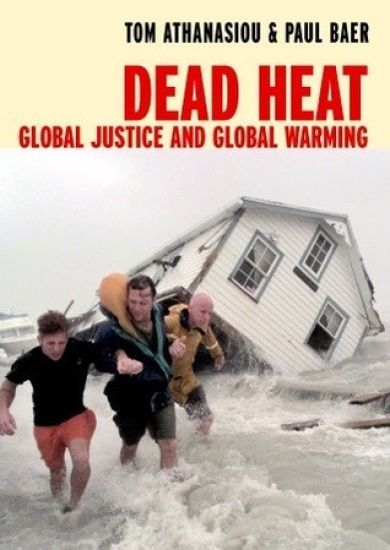
At first the Bush administration said the jury was still out—that no one could be sure if the Earth was warming, and, even if it was, no one could be certain that human pollution was to blame. Then, unable to line up any real scientific support for this now absurd position, it quietly changed its tune. These days, Bush says that we must adapt to climate change. U.S. climate policy, in other words, is: get used to it. Tom Athanasiou and Paul Baer couldn’t disagree more. In their brilliantly argued new book, Dead Heat: Global Justice and Global Warming, they explain that, even in the face of accelerating climate change, we still have intelligent choices available, and can still hold the warming below catastrophic levels. The book explains how. Today's “extreme weather events” (record-breaking heat waves, droughts, and melting ice caps) foreshadow an increasingly unstable and dire future. Yet, despite all, the Bush administration continues to reject the Kyoto Protocol, to deny the catastrophic consequences of oil dependency, and to define the politics of oil as the politics of U.S. unilateralism, domination, and war. In Dead Heat, Tom Athanasiou and Paul Baer explain the threat and the science of drawing the line before it becomes real. This science (and their sources are the very latest) demonstrates that, if greenhouse pollution is not drastically reduced, the earth's climate system is likely to shift—and perhaps soon—onto a terrifying and irreversible path. Then, on this grim ground, they proceed to argue that only a social justice approach can shape the necessary compromise between the rich world and the poor; that, in effect, justice can make it possible to cut a path to sustainability, even on this, a planet riven with explosive national, ideological, and class divides. The problem is time. Today, the global average surface warming is only 0.6 degrees Centigrade, and already the climate is changing fast. And the science shows that any future in which we hold the warming to a maximum of 2º C (and 2º C, by the way, would mean massive destruction) will require decisive global action; something like a “global Marshall Plan” but tuned, particularly, to sustainable energy development. It comes to this: the emissions trajectories and climate sensitivity indexes show, in mercilessly unambiguous terms, that even if we move quickly to cap global carbon emissions, the impact of the warming will soon become quite severe, and that in the more pessimistic case, where the fossil-fuel cartel remains in power, its impact will be shattering. Dead Heat argues that justice—not rhetoric and “aid” but real developmental justice for the people of developing world—is going to be necessary, and surprisingly soon. It argues, more particularly, that such a justice must involve a phased transition from the Kyoto Protocol to a new climate treaty based on equal human rights to emit greenhouse pollutants. Dead Heat makes the case for climate justice, but insists that justice and equity, for all their manifold ethical and humanitarian attractions, must also be seen as the most “realistic” of virtues. It insists, in other words, that our limited environmental space will itself show that it isthe dream of a “business as usual” future that is naïve and utopian. Athanasiou and Baer argue that the battle against global warming is key to the larger battle for global justice. Dead Heat isn’t simply about understanding the political and social arguments about global warming, it’s about winning them.