Kirjahaku
Etsi kirjoja tekijän nimen, kirjan nimen tai ISBN:n perusteella.
1000 tulosta hakusanalla Brian P. Simpson

P.O.W.E.R. Struggle Book 1: Fragile Warriors
Shaun Bryan
Createspace Independent Publishing Platform
2017
nidottu
A History of the Brain tells the full story of neuroscience, from antiquity to the present day. It describes how we have come to understand the biological nature of the brain, beginning in prehistoric times, and progressing to the twentieth century with the development of Modern Neuroscience. This is the first time a history of the brain has been written in a narrative way, emphasizing how our understanding of the brain and nervous system has developed over time, with the development of the disciplines of anatomy, pharmacology, physiology, psychology and neurosurgery. The book covers: beliefs about the brain in ancient Egypt, Greece and Rome the Medieval period, Renaissance and Enlightenment the nineteenth century the most important advances in the twentieth century and future directions in neuroscience.The discoveries leading to the development of modern neuroscience gave rise to one of the most exciting and fascinating stories in the whole of science. Written for readers with no prior knowledge of the brain or history, the book will delight students, and will also be of great interest to researchers and lecturers with an interest in understanding how we have arrived at our present knowledge of the brain.
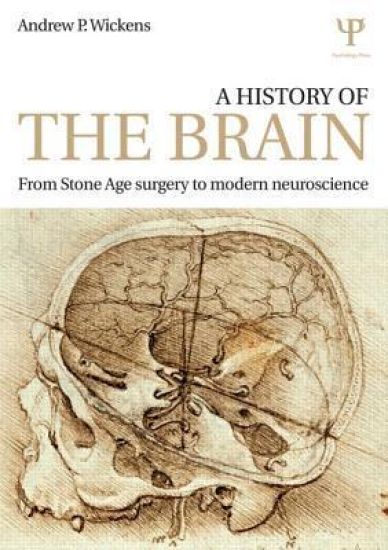
A History of the Brain tells the full story of neuroscience, from antiquity to the present day. It describes how we have come to understand the biological nature of the brain, beginning in prehistoric times, and progressing to the twentieth century with the development of Modern Neuroscience. This is the first time a history of the brain has been written in a narrative way, emphasizing how our understanding of the brain and nervous system has developed over time, with the development of the disciplines of anatomy, pharmacology, physiology, psychology and neurosurgery. The book covers: beliefs about the brain in ancient Egypt, Greece and Rome the Medieval period, Renaissance and Enlightenment the nineteenth century the most important advances in the twentieth century and future directions in neuroscience.The discoveries leading to the development of modern neuroscience gave rise to one of the most exciting and fascinating stories in the whole of science. Written for readers with no prior knowledge of the brain or history, the book will delight students, and will also be of great interest to researchers and lecturers with an interest in understanding how we have arrived at our present knowledge of the brain.

It is well known and researched, that deprivation of oxygen to the brain can quickly result in irreversible damage and death. What is less well known, is that some vertebrate species are exceptionally tolerant of brain hypoxia. The Brain Without Oxygen: Causes of failure - Physiological and molecular mechanisms for survival, Third edition, discusses the mechanisms of brain hypoxia tolerance in these exceptional vertebrates, which include diving marine mammals, high altitude dwellers and the hibernating mammal. Special attention is given to the extraordinary adaptations that allow a few turtle and fish species to tolerate months of brain anoxia. This third, fully updated edition addresses the potential of these animal models as targets for human clinical intervention. Perhaps the most interesting of these, are those involved in the suppression of metabolic activities to new set points well below their normoxic minima or maintenance levels. This volume will be valuable reading for researchers in physiology, medicine and general biological sciences, and of great importance to pharmaceutical companies researching novel models for stroke and brain ischemia.
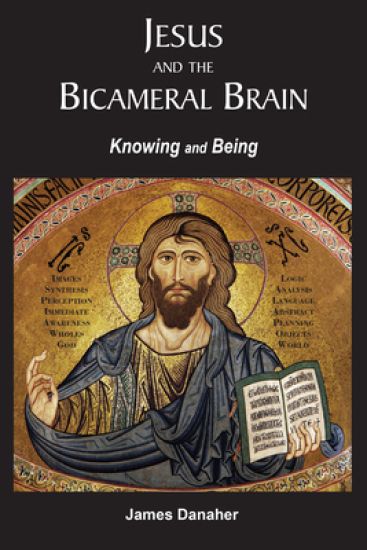
Jesus and the Bicameral Brain: Knowing and Being
James P. Danaher
PARAGON HOUSE PUBLISHERS
2021
nidottu
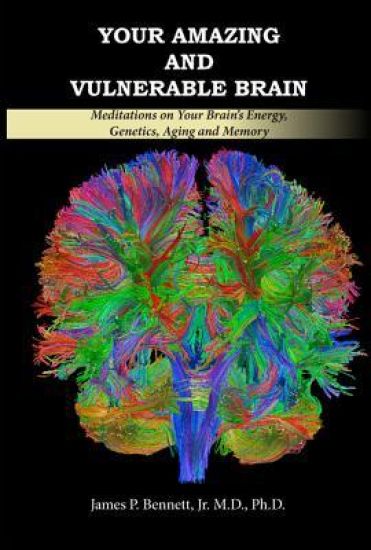
Your Amazing and Vulnerable Brain: Meditations on Your Brain's Energy, Genetics, Aging and Memory
James P. Jr. M. D. Bennett
Dementi Milestone Publishing
2018
nidottu
This book deals with the results of theoretical and ex perimental studies of the emotions which my colleagues and I carried out over the last two decades. An interest in the psychology of emotions prompted us to undertake an analysis of the creative legacy of K. S. Stanislavsky. A result of this analysis was the book, The Method of K. s. StanisZavsky and the PhysioZogy of Emotions, written in 1955-1956 and published by the Academy of Sciences of the USSR in 1962. I am grateful to the first reader and critic of the manuscript, Leon Abgarovich Orbeli. In 1960, having transferred to the Institute of Higher Nervous Activ ity and Neurophysiology of the Academy of Sciences of the USSR, I had the opportunity to conduct experiments on prob lems that had interested me for a long time. In close scien tific association with Peter Mikhailovich Ershov, director and teacher of theater, I began a systematic study of the in voluntary and electrophysiological shifts in actors during voluntary production of various emotional states. Here comparatively quickly we became convinced that the fruitfulness of such studies rests on an absence of any kind of developed, systematic, and sound generaZ theory of the emotions of man and the higher mammals. We will illustrate our difficulties if only with one example. We had frequently read of the so-called "emotional memory.

Sudoku Pocket Size Books (Easy): Brain puzzles road trip games for adults
Andy P. Wiley
Independently Published
2019
nidottu
Puzzle Challenge For Grown-Ups and Young Adults with a variety of Easy Puzzles And Perfect for Traveling.
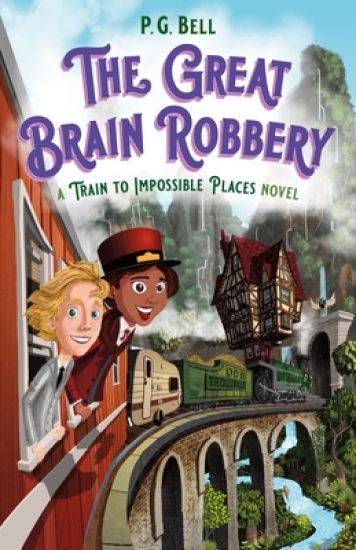
The adventure continues in book two of the stunning The Train to Impossible Places middle-grade fantasy series Suzy Smith and her friends have gathered again for the re-launch of The Impossible Postal Express. The celebrations don't last long though, before Trollville is rocked by a violent tremor--one of a series growing more powerful by the day. It's clear something sinister is underfoot. Nevertheless Suzy's got a long overdue package that the Express must deliver, and it may just lead her to some answers. In P. G. Bell's The Great Brain Robbery: A Train to Impossible Places Novel, Suzy and the Express will travel deep under Trollville through the Uncanny Valley, and sky-high to new impossible places like Cloud Forge. She and the gang will test out its kinks, er, new features, and meet new allies and enemies alike, from a sentient cloud-consciousness to an obnoxious magician.
This book deals with the results of theoretical and ex perimental studies of the emotions which my colleagues and I carried out over the last two decades. An interest in the psychology of emotions prompted us to undertake an analysis of the creative legacy of K. S. Stanislavsky. A result of this analysis was the book, The Method of K. s. StanisZavsky and the PhysioZogy of Emotions, written in 1955-1956 and published by the Academy of Sciences of the USSR in 1962. I am grateful to the first reader and critic of the manuscript, Leon Abgarovich Orbeli. In 1960, having transferred to the Institute of Higher Nervous Activ ity and Neurophysiology of the Academy of Sciences of the USSR, I had the opportunity to conduct experiments on prob lems that had interested me for a long time. In close scien tific association with Peter Mikhailovich Ershov, director and teacher of theater, I began a systematic study of the in voluntary and electrophysiological shifts in actors during voluntary production of various emotional states. Here comparatively quickly we became convinced that the fruitfulness of such studies rests on an absence of any kind of developed, systematic, and sound generaZ theory of the emotions of man and the higher mammals. We will illustrate our difficulties if only with one example. We had frequently read of the so-called "emotional memory.
A Message to Bria: "A Fathers Guide to Life"
P. J. Mays
Createspace Independent Publishing Platform
2014
nidottu

Negation of the paint 1820: By P. M. GAULT OF SAINT-GERMAIN, above Boarder of the King of Poland, ex-Professor of The above College of Clermont
Bryan W. Strong
Createspace Independent Publishing Platform
2014
nidottu