America's problem with race has deep roots, with the country's foundation tied to the near extermination of one race of people and the enslavement of another. Racism is truly our nation's original sin."It's time we right this unacceptable wrong," says bestselling author and leading Christian activist Jim Wallis. Fifty years ago, Wallis was driven away from his faith by a white church that considered dealing with racism to be taboo. His participation in the civil rights movement brought him back when he discovered a faith that commands racial justice. Yet as recent tragedies confirm, we continue to suffer from the legacy of racism. The old patterns of white privilege are colliding with the changing demographics of a diverse nation. The church has been slow to respond, and Sunday morning is still the most segregated hour of the week.In America's Original Sin, Wallis offers a prophetic and deeply personal call to action in overcoming the racism so ingrained in American society. He speaks candidly to Christians--particularly white Christians--urging them to cross a new bridge toward racial justice and healing.Whenever divided cultures and gridlocked power structures fail to end systemic sin, faith communities can help lead the way to grassroots change. Probing yet positive, biblically rooted yet highly practical, this book shows people of faith how they can work together to overcome the embedded racism in America, galvanizing a movement to cross the bridge to a multiracial church and a new America.
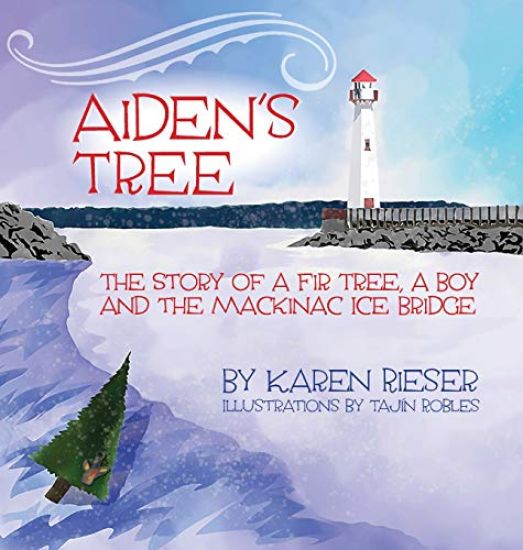
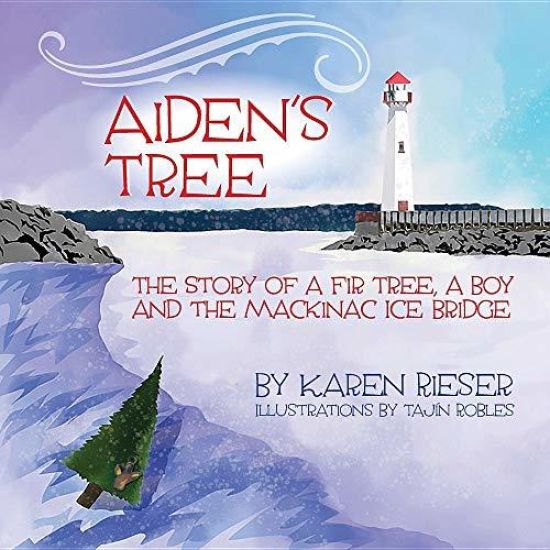
A Christmas tree is brought into Aiden's home with great pomp and ceremony. It lights up the darkness of winter, fills the home with a cold piney scent, glistens with ornaments and is the protector of all gifts beneath it.But, what life does a tree live prior to entering a home? What happens to the tree after it leaves? Aiden's Tree is the story of a Michigan fir -- from seedling to Christmas tree to a marker on the Mackinaw Ice Bridge and more. Mackinac Island sits in Lake Huron at the eastern end of the Straits of Mackinac. To get to and from the island, Michigan's tourists and residents must cross the water using a water vessel. During the winter, boats and ferries are incapable of crossing the ice, leaving residents isolated. The Straits of Mackinac freeze and ice forms what has become known as an "ice bridge." For hundreds of years, people have used this ice bridge to move between Mackinac Island and the city of St. Ignace on the mainland, but the crossing can be very dangerous. Years ago, two young girls walking across the ice bridge from St. Ignace to their home on Mackinac Island were caught in an unexpected blizzard. The girls lost their way and perished. Heartbroken by this event, the people of St. Ignace and Mackinac Island began marking out a safe path across the ice using their Christmas trees. The trees were dropped off at Doud's Market in St. Ignace and later secured in the ice, thus guiding the way from one point to another. The ice bridge is still used today by snowmobilers and cross-country skiers.
A Christmas tree is brought into Aiden's home with great pomp and ceremony. It lights up the darkness of winter, fills the home with a cold piney scent, glistens with ornaments and is the protector of all gifts beneath it.But, what life does a tree live prior to entering a home? What happens to the tree after it leaves? Aiden's Tree is the story of a Michigan fir -- from seedling to Christmas tree to a marker on the Mackinaw Ice Bridge and more. Mackinac Island sits in Lake Huron at the eastern end of the Straits of Mackinac. To get to and from the island, Michigan's tourists and residents must cross the water using a water vessel. During the winter, boats and ferries are incapable of crossing the ice, leaving residents isolated. The Straits of Mackinac freeze and ice forms what has become known as an "ice bridge." For hundreds of years, people have used this ice bridge to move between Mackinac Island and the city of St. Ignace on the mainland, but the crossing can be very dangerous. Years ago, two young girls walking across the ice bridge from St. Ignace to their home on Mackinac Island were caught in an unexpected blizzard. The girls lost their way and perished. Heartbroken by this event, the people of St. Ignace and Mackinac Island began marking out a safe path across the ice using their Christmas trees. The trees were dropped off at Doud's Market in St. Ignace and later secured in the ice, thus guiding the way from one point to another. The ice bridge is still used today by snowmobilers and cross-country skiers.
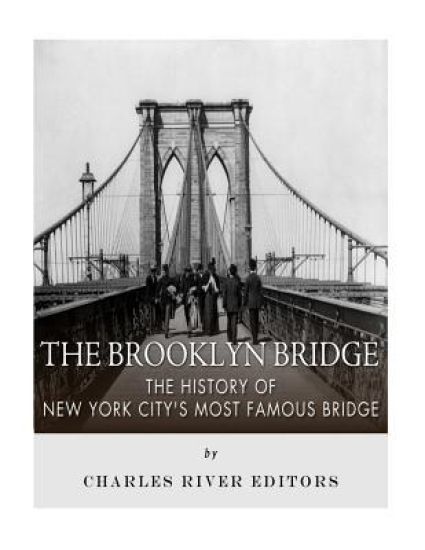
*Includes pictures *Includes descriptions of the bridge's construction by workers and officials *Includes a bibliography for further reading *Includes a table of contents "Spring and fall in New York are the best seasons here to get out and about. I like the little park in Dumbo between the Manhattan and Brooklyn bridge. I like Prospect Park.." - Paul Dano New York City has countless landmarks and tourist spots, but few are as old or as associated with the city as the Brooklyn Bridge, the giant suspension bridge that spans nearly 1,600 feet as it connects lower Manhattan to Brooklyn. Indeed, the bridge is so old that Manhattan and Brooklyn represented the largest and third largest cities in America at the time of its construction, and the East River posed a formidable enough challenge that taking a ferry across could be dangerous. Originally known as the New York and Brooklyn Bridge and then later as the East River Bridge, the iconic bridge wasn't formally dubbed the Brooklyn Bridge until about 30 years after it was completed in the early 1880s. As the first steel suspension bridge built in America, it represented an enormous engineering feat that claimed the lives of several workers, including its original designer, but by the time it was finished, the Brooklyn Bridge towered nearly 300 feet above the water at over 80 feet wide. With those dimensions, it was over 50% larger than any suspension bridge to date. From its inception, the Brooklyn Bridge has been celebrated as one of the things that makes New York City unique. President Chester Arthur attended its opening, and P.T. Barnum famously walked Jumbo the Elephant across the bridge as a publicity stunt. Yet despite its age and the fact that so many contemporary bridges have fallen into disrepair or were destroyed, the Brooklyn Bridge continues to be not just an instantly identifiable landmark in New York City but also a crucially valuable one that is still used by thousands of people a day. The Brooklyn Bridge chronicles the story of how one of America's most famous bridges was built. Along with pictures of important people, places, and events, you will learn about the Brooklyn Bridge like never before, in no time at all.
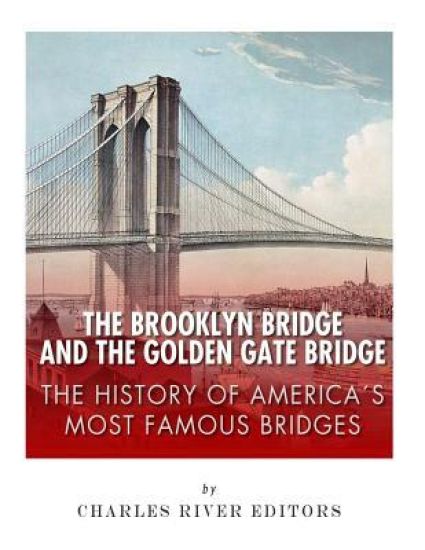
*Includes pictures *Includes accounts of the bridges' construction written by those who worked on the projects *Includes bibliographies for further reading *Includes a table of contents " A] perpetual monument that will make this city's name ring around the world and renew the magical fame which the Golden Gate enjoyed in the days of '49." - S.F. Examiner editorial, March 24, 1925 New York City has countless landmarks and tourist spots, but few are as old or as associated with the city as the Brooklyn Bridge, the giant suspension bridge that spans nearly 1,600 feet as it connects lower Manhattan to Brooklyn. Indeed, the bridge is so old that Manhattan and Brooklyn represented the largest and third largest cities in America at the time of its construction, and the East River posed a formidable enough challenge that taking a ferry across could be dangerous. Originally known as the New York and Brooklyn Bridge and then later as the East River Bridge, the iconic bridge wasn't formally dubbed the Brooklyn Bridge until about 30 years after it was completed in the early 1880s. As the first steel suspension bridge built in America, it represented an enormous engineering feat that claimed the lives of several workers, including its original designer, but by the time it was finished, the Brooklyn Bridge towered nearly 300 feet above the water at over 80 feet wide. With those dimensions, it was over 50% larger than any suspension bridge to date. From its inception, the Brooklyn Bridge has been celebrated as one of the things that makes New York City unique. President Chester Arthur attended its opening, and P.T. Barnum famously walked Jumbo the Elephant across the bridge as a publicity stunt. Yet despite its age and the fact that so many contemporary bridges have fallen into disrepair or were destroyed, the Brooklyn Bridge continues to be not just an instantly identifiable landmark in New York City but also a crucially valuable one that is still used by thousands of people a day. Likewise, the Golden Gate Bridge in San Francisco is one of the modern world's engineering marvels. The giant suspension bridge spans the San Francisco Bay, with a length of over 1.5 miles, a height of nearly 750 feet, and a width of around 100 feet. While it is a beautiful and instantly recognizable landmark, the Golden Gate Bridge was also a very practical one born of necessity. After the California Gold Rush helped turn San Francisco into a destination site, connecting people on both sides of the beautiful Golden Gate Strait became vitally important. There was a consistent ferry service in the area, but the advent of automobiles made a bridge even more imperative. At the same time, no one in the world had ever successfully built a bridge as long as this one would be, and indeed, no one else would for another three decades after the Golden Gate Bridge opened. Given its size, it should come as little surprise that the Golden Gate Bridge was one of the most ambitious and expensive projects of its age. Indeed, it would take nearly 20 years from the time the bridge was proposed to its grand opening, and it cost hundreds of millions of dollars (the equivalent of several billion today). When it finally opened in 1937, Joseph Strauss, the man most responsible for the bridge, remarked, "This bridge needs neither praise, eulogy nor encomium. It speaks for itself. We who have labored long are grateful. What Nature rent asunder long ago, man has joined today." The Brooklyn Bridge and the Golden Gate Bridge: The History of America's Most Famous Bridges chronicles the story of how one of America's most famous bridges was built. Along with pictures of important people, places, and events, you will learn about the Golden Gate Bridge like never before, in no time at all.
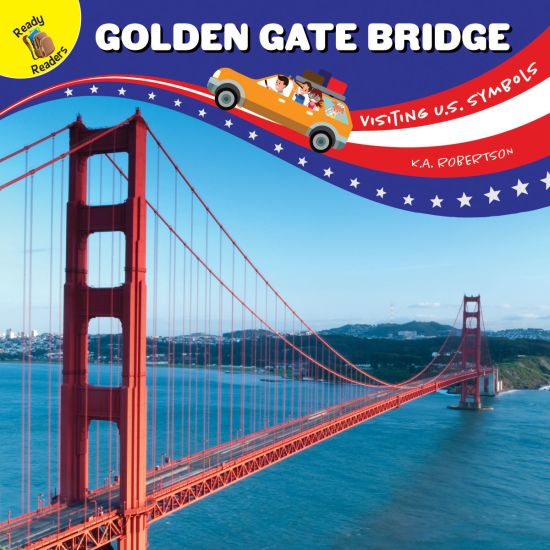
In Golden Gate Bridge, readers will explore the meaning behind this world famous suspension bridge located in San Francisco, California. This 16-page book uses colorful images and informative text to explain the history and symbolism of this structure as a symbol of creativity in the United States. The Visiting U.S. Symbols series for prekindergarten through grade 2 introduces young readers to important U.S. symbols and their locations, while also exploring the history and significance of each. By using language that early readers can understand, these colorful pages capture a child's attention while offering an in-depth look into some of America's most prized symbols
This 2015 Status of the Nation's Highways, Bridges, and Transit: Conditions and Performance report to Congress (C&P report) draws primarily on 2012 data. The prospective analyses presented in this authoritative report generally cover the 20-year period ending in 2032. This report was developed to provide decision makers with an objective appraisal of the physical conditions, operational performance, and financing mechanisms of highways, bridges, and transit systems based on both their current state and their projected future state under a set of alternative future investment scenarios. This report offers a comprehensive, data-driven background context to support the development and evaluation of legislative, program, and budget options at all levels of government. Policy analysts, fiscal managers, financial forecasters, economists, municipal, state, and federal transportation department strategic planning and construction/civil engineering contractors as well as national and international news media, transportation associations, and industry personnel, such as transportation planners, specialists, and field inspectors may be interested in this volume to examine America's roads, bridges and transit systems into the future and the role it may play on the economy. Additionally, students pursuing coursework for degrees in Transportation Infrastructure and Engineering, and integrated infrastructure design courses may also find this volume useful for research. Related products: Sign up to a print subscription for Public Roads bimonthly print magazine here: https: //bookstore.gpo.gov/products/sku/750-005-00000-4?ctid=Smartphone Applications to Influence Travel Choices: Practices and Policies is available here: https: //bookstore.gpo.gov/products/sku/050-001-00349-0Bridges & Tunnels resources collection can be found here: https: //bookstore.gpo.gov/catalog/science-technology/engineering/bridges-tunnels Other products produced by the U.S. Department of Transportation can be found here: https: //bookstore.gpo.gov/agency/department-transportation-dot
Engaging fiction and non-fiction fully aligned to each stage of the Floppy's Phonics teaching programme, allowing children to consolidate their phonic knowledge through reading in context. Find out about some incredible bridges and what they're made of.





![[Etchings of Coade's Artificial Stone Manufacture Narrow Wall Lambeth Near Westminster Bridge].](/covers/9781170220528.jpg)