
Kirjahaku
Etsi kirjoja tekijän nimen, kirjan nimen tai ISBN:n perusteella.
1000 tulosta hakusanalla C. David Heymann



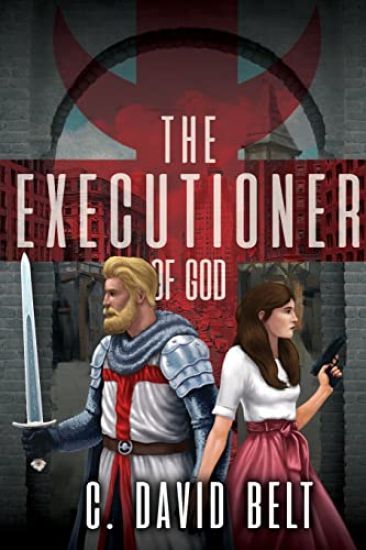
Through the mists of time, the last Templar and an Irish nun hunt an ancient, immortal evil. Tormond MacDonald, the last of the Templar Knights, was commissioned as Carnifex Dei, the Executioner of God, at Acre in the 13th century. His sacred mission - family, love, even his brother Templars - to fulfill his sacred vow, and he has pursued the enemy, a trio of witches, through the centuries. But always they elude him. Maebh O Broin, a 15th century nun, fleeing a different, undying evil, encounters the fearsome Executioner. They are thrown together by fate - or perhaps by Providence - and together, they travel the centuries. Every time they appear, they find a wrong to right, an evil to combat. But every time, the witches escape them.They run afoul of a demon, dealing a crippling blow to her malevolent designs. The demon plans her fiendish revenge upon Tormond and Maebh, and though it takes centuries . . . she will have them.
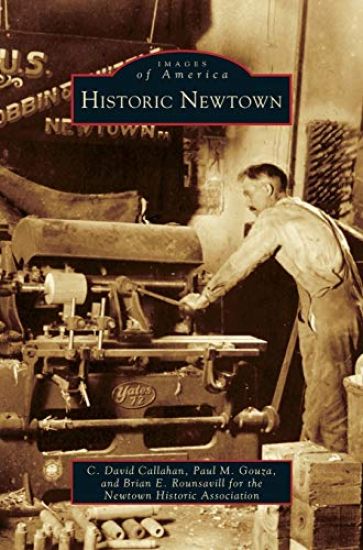
Historic Newtown
C David Callahan; Paul M Gouza; Brian E Rounsavill
Arcadia Publishing Library Editions
2001
sidottu

Rockland Area Lime Industries
Courtney C MacLachlan; David R Hoch; Paul G Merriam
Arcadia Publishing Library Editions
2006
sidottu

Oil Creek and Titusville Railroad
Kenneth C Springirth; David L Weber
Arcadia Publishing Library Editions
2011
sidottu

Reading's Big League Exhibition Games
Brian C Engelhardt; David Q Voigt; Charles J Adams
Arcadia Publishing Library Editions
2015
sidottu

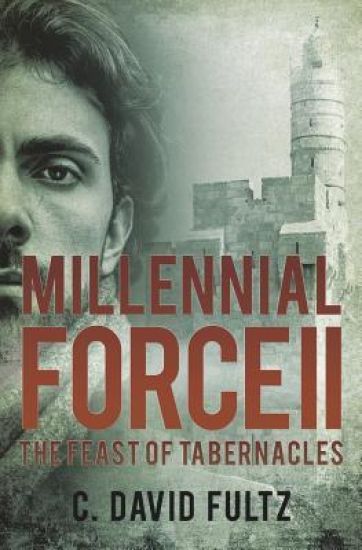
In Millennial Force, the Battle of Armageddon was ended by the return of the King. The King began setting up his global Millennial Kingdom by sending out Regents to govern for him in places around the world. Prince Charles became the Regent of the West Virginia region. Now in his fourth year of governing he still is challenged by saboteurs and assassins, but he is also blessed by leading a delegation to the Feast of Tabernacles.
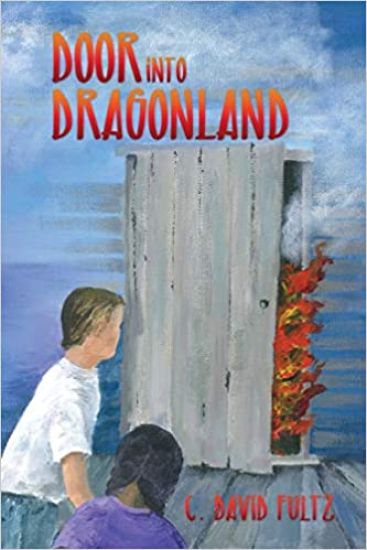
Jeremy and Rhonda live at the edge of woods where they have many adventures. The greatest adventure started when Rhonda discovered a magic door in an old farmhouse. This door opened into a land of talking animals and a terrifying dragon. Most mysterious of all was the mystical creature LIAM and the mission he called them to carry out.C. David Fultz is a pastor with over 40 years of experience. He worked as an electronics field engineer and was a petty officer in the U.S. Navy. He is a graduate of the University of South Florida and Lexington Theological Seminary. He was born and reared in Charleston, W. Va. He currently resides with his wife, Sue, in Lexington, Kentucky. You can contact the author at David Fultz Author @Facebook.com
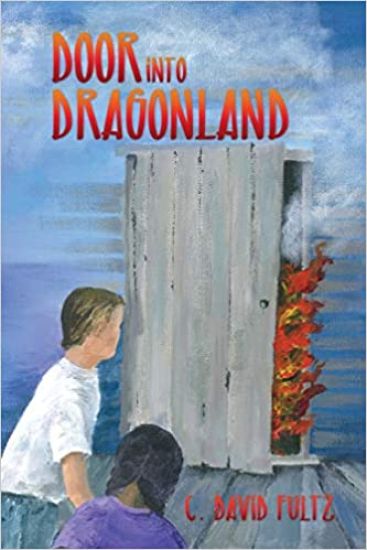
Jeremy and Rhonda live at the edge of woods where they have many adventures. The greatest adventure started when Rhonda discovered a magic door in an old farmhouse. This door opened into a land of talking animals and a terrifying dragon. Most mysterious of all was the mystical creature LIAM and the mission he called them to carry out.C. David Fultz is a pastor with over 40 years of experience. He worked as an electronics field engineer and was a petty officer in the U.S. Navy. He is a graduate of the University of South Florida and Lexington Theological Seminary. He was born and reared in Charleston, W. Va. He currently resides with his wife, Sue, in Lexington, Kentucky. You can contact the author at David Fultz Author @Facebook.com
Poertry of Life: Poetry Lies Within
Cherie /C Selena/S David
Createspace Independent Publishing Platform
2017
nidottu
The poetry of life book to inspire and embrace Gods love and life battles through real life poetry.
The Uncertain Center
Arthur C McGill; David William Cain; Stanley Hauerwas
Cascade Books
2015
pokkari
Arthur McGill did not write very much, but what he did write is as theologically suggestive and startling today as it was when it was written in the 1960s and 1970s. He was not well known during his lifetime, but those who cared about the work of theology knew Arthur McGill. Writing during the ascendency of the ""Death of God"" theologies, McGill's words have a freshness that the more widely known theological writing of that time has lost. McGill wrote only two short books during his life, and just a handful of scattered essays, often published in obscure places. We are fortunate that Kent Dunnington has collected and introduced those essays here. The essays reveal a theologian with an uncanny and intrepid resolve to make theological claims illumine and unsettle our lives. As Stanley Hauerwas writes in his afterword to the collection, ""To read McGill is to discover a way to do theology without fear. God knows from where he came, but McGill, as the chapters in this welcome and important book demonstrate, had the ability to make theology do work so that we might better negotiate the imponderable reality we call 'our life.'"" ""Latent beneath the topical occasions of these engaging texts lies a disposition that is not so revolutionary as it is a welcome return to patristic wisdom, a recovery of the life-giving conversation of which we are but a part, if an essential part. If ever we are to know who we are, and who we are called to become, it would be because we also know those whose lives of prayer preceded ours."" --Scott Cairns, author of The End of Suffering and Slow Pilgrim ""From Descartes forward, the West has equated truth with the acquisition of certainty. Scientists and fundamentalists alike assert it. Laypeople look to experts to convert their uncertainties into certainty, whether in the boardroom or the hospital bedroom. McGill brilliantly breaks the thrall of certainty and fixes attention on the Christ who shoulders uncertainty on our behalf. A gifted writer, McGill lets readers venture out beyond their decentering securities and attend to the center that holds."" --Bill May, Retired Cary M. Maguire Professor of Ethics, Southern Methodist University Kent Dunnington is Associate Professor of Philosophy at Greenville College in Illinois. He is the author of Addiction and Virtue (2011).
Philo of Alexandria, On Cultivation
Albert C Geljon; David T Runia
Society of Biblical Literature
2024
pokkari
This fourth volume of the Philo of Alexandria Commentary Series, originally published by Brill in hardcover, presents the first readable, modern English translation and commentary on Philo's De agricultura (On Cultivation), which gives an elaborate allegorical interpretation of Genesis 9:20. Albert C. Geljon and David T. Runia focus on the treatise's structure, biblical sources, and exegetical and philosophical contents. The volume provides valuable insights into Philo's highly influential allegorical method of biblical interpretation.
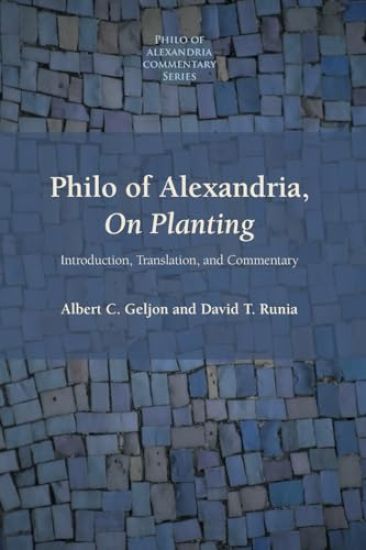
Philo of Alexandria, On Planting
Albert C Geljon; David T Runia
Society of Biblical Literature
2024
pokkari
In this fifth volume of the Philo of Alexandria Commentary Series, originally published by Brill in hardcover, Albert C. Geljon and David T. Runia present the first readable, modern English translation and commentary on Philo's De plantatione (On Planting). In this allegorical treatise, Philo first turns to theological and cosmological interpretations of Noah's planting of a vineyard in Genesis 9:20. He then moves to the spiritual quest of advanced souls and those beginning their journey. The commentary pays particular attention to the treatise's structure, its biblical basis, and its exegetical and philosophical contents.