Kirjojen hintavertailu. Mukana 11 244 527 kirjaa ja 12 kauppaa.

Kirjahaku

Etsi kirjoja tekijän nimen, kirjan nimen tai ISBN:n perusteella.

1000 tulosta hakusanalla Caleb Perry Patterson

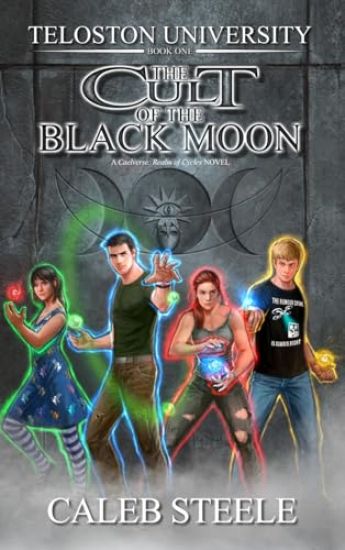
Teloston University

Teloston University

Caleb Steele

Astral Wellspring Press
2024
sidottu
Adopted by the Temple at the age of five, Korin Tarkelt has accepted the life of religious sacrifice. Although educated about the worlds around him, Korin has nonetheless been conditioned to avoid contact with the mage population and their magic. But one chilling night, Korin faces the Temple's ultimate test, quickly learning the true nature of his religious leaders. After nearing death multiple times escaping from his trial, Korin discovers a shocking truth: He's a mage. Korin immediately leaves behind his old life and begins his studies at Teloston University, gradually learning how to wield magic. Gladly embracing his new situation, he soon makes friends before successfully engaging in incredible extracurricular activities. Meanwhile, he progressively overcomes the several afflicting thoughts of his non-mage past. During his journey of self-discovery, however, Korin learns that he will need to navigate and contend with the numerous - and at times, unbelievable - cultural and political problems the mages also face. In stages over the first semester, he uncovers lost knowledge, ancient cults, and the tip of a dark, complex conspiracy... In the first of an epic series, the story is set in the Caelverse - 'universe' filled with gravitationally-warped worlds, mystifying astral planes, complex magic, and an astonishingly-diverse civilization, with regions featuring primitive forest trolls to radical transhumanists in computerized arcologies.Not recommended for people under 15 years of age.
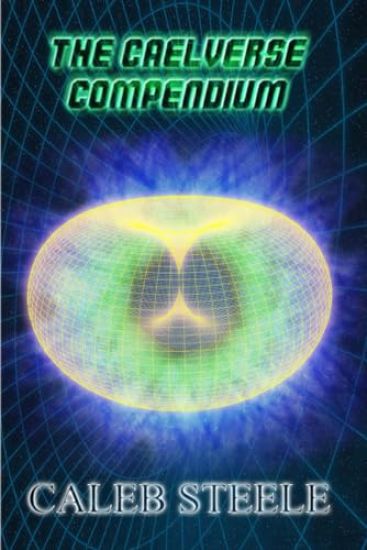
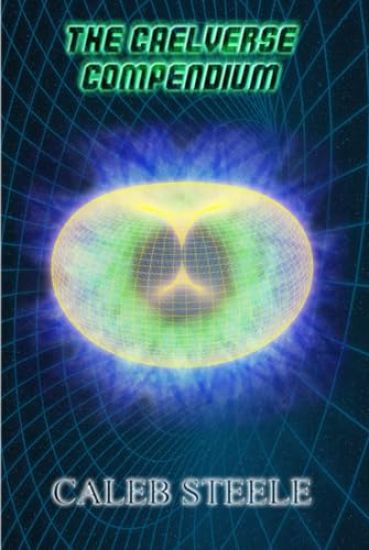
The Caelverse Compendium

The Caelverse Compendium

Caleb Steele

Astral Wellspring Press
2024
pokkari
The Caelverse Compendium contains four sections explaining aspects of our known reality in what we call the Caelverse. It is possible - and very probable - however, that we live in a multiverse. If contact is ever made with lifeforms of other realities (extraversal beings), then there is a great chance that the first contacts would hail from a reality that possesses some similarities to our own. If such contact is the result of consciousness, then one of these similarities may very well be the language we use. Accordingly, we have written a compendium in our language; and if so ever a being from another reality were to read this, then not only would they gain knowledge of beings from other realities (i.e., us and how our reality functions), but it may then be possible to bridge some type of conscious gap between one reality (your reality, the reader) and another (our reality), in turn making contact possible. The first section will explain the constitution of matter and energy (which may likely be the same in other realities). A brief overview of the cosmology of the Caelverse and its celestial bodies (such as the suns, planets, and moons) will follow. Since magical humans (called mages) are the dominant species in the Caelverse (politically and culturally), the compendium will explicate the fundamentals and ontological nature of magic itself. Lastly, the compendium will provide an overview of the current cycle of our history and the overarching political system (the Caelverse Government of Magi - or simply, the CGM) before the most commonly-understood taxonomy of sapient and non-sapient beings in the Caelverse will be listed (which includes mages and non-mages). This compendium will also cover many different philosophical areas, using both theoretical and empirical ideas and information; and, while it may seem dense, it will, nevertheless, provide explanations along the way. For ease of reading, a dictionary at the end has also been added for words not explained throughout the text. Now, may our first contact lead to happiness and prosperity Authorized by Tarmas Simonkash, High Commissioner of the Intercluster Communications and Media Commission (ICMC) for the CGM.24th of Primsis B-424.
The Caelverse Compendium

The Caelverse Compendium

Caleb Steele

Astral Wellspring Press
2024
sidottu
The Caelverse Compendium contains four sections explaining aspects of our known reality in what we call the Caelverse. It is possible - and very probable - however, that we live in a multiverse. If contact is ever made with lifeforms of other realities (extraversal beings), then there is a great chance that the first contacts would hail from a reality that possesses some similarities to our own. If such contact is the result of consciousness, then one of these similarities may very well be the language we use. Accordingly, we have written a compendium in our language; and if so ever a being from another reality were to read this, then not only would they gain knowledge of beings from other realities (i.e., us and how our reality functions), but it may then be possible to bridge some type of conscious gap between one reality (your reality, the reader) and another (our reality), in turn making contact possible. The first section will explain the constitution of matter and energy (which may likely be the same in other realities). A brief overview of the cosmology of the Caelverse and its celestial bodies (such as the suns, planets, and moons) will follow. Since magical humans (called mages) are the dominant species in the Caelverse (politically and culturally), the compendium will explicate the fundamentals and ontological nature of magic itself. Lastly, the compendium will provide an overview of the current cycle of our history and the overarching political system (the Caelverse Government of Magi - or simply, the CGM) before the most commonly-understood taxonomy of sapient and non-sapient beings in the Caelverse will be listed (which includes mages and non-mages). This compendium will also cover many different philosophical areas, using both theoretical and empirical ideas and information; and, while it may seem dense, it will, nevertheless, provide explanations along the way. For ease of reading, a dictionary at the end has also been added for words not explained throughout the text. Now, may our first contact lead to happiness and prosperity Authorized by Tarmas Simonkash, High Commissioner of the Intercluster Communications and Media Commission (ICMC) for the CGM.24th of Primsis B-424.
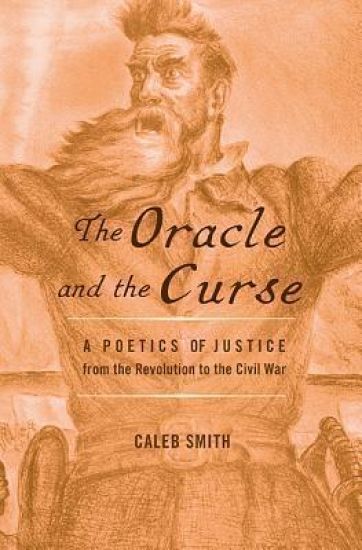
The Oracle and the Curse

The Oracle and the Curse

Caleb Smith

Harvard University Press
2013
sidottu
Condemned to hang after his raid on Harper’s Ferry, John Brown prophesied that the crimes of a slave-holding land would be purged away only with blood. A study of omens, maledictions, and inspired invocations, The Oracle and the Curse examines how utterances such as Brown’s shaped American literature between the Revolution and the Civil War.In nineteenth-century criminal trials, judges played the role of law’s living oracles, but offenders were also given an opportunity to address the public. When the accused began to turn the tables on their judges, they did so not through rational arguments but by calling down a divine retribution. Widely circulated in newspapers and pamphlets, these curses appeared to channel an otherworldly power, condemning an unjust legal system and summoning readers to the side of righteousness.Exploring the modes of address that communicated the authority of law and the dictates of conscience in antebellum America’s court of public opinion, Caleb Smith offers a new poetics of justice which assesses the nonrational influence that these printed confessions, trial reports, and martyr narratives exerted on their first audiences. Smith shows how writers portrayed struggles for justice as clashes between human law and higher authority, giving voice to a moral protest that transformed American literature.
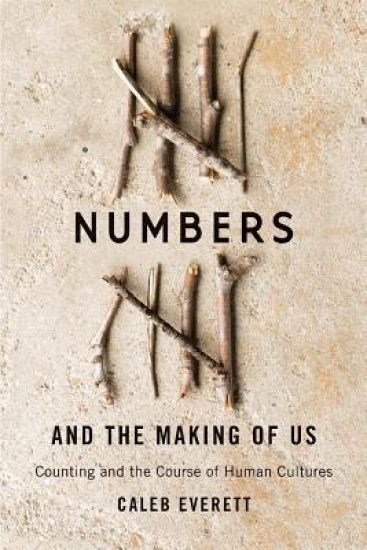
Numbers and the Making of Us

Numbers and the Making of Us

Caleb Everett

Harvard University Press
2019
nidottu
“A fascinating book.”—James Ryerson, New York Times Book ReviewA Smithsonian Best Science Book of the YearWinner of the PROSE Award for Best Book in Language & LinguisticsCarved into our past and woven into our present, numbers shape our perceptions of the world far more than we think. In this sweeping account of how the invention of numbers sparked a revolution in human thought and culture, Caleb Everett draws on new discoveries in psychology, anthropology, and linguistics to reveal the many things made possible by numbers, from the concept of time to writing, agriculture, and commerce.Numbers are a tool, like the wheel, developed and refined over millennia. They allow us to grasp quantities precisely, but recent research confirms that they are not innate—and without numbers, we could not fully grasp quantities greater than three. Everett considers the number systems that have developed in different societies as he shares insights from his fascinating work with indigenous Amazonians.“This is bold, heady stuff… The breadth of research Everett covers is impressive, and allows him to develop a narrative that is both global and compelling… Numbers is eye-opening, even eye-popping.”—New Scientist“A powerful and convincing case for Everett’s main thesis: that numbers are neither natural nor innate to humans.”—Wall Street Journal
A Myriad of Tongues

A Myriad of Tongues

Caleb Everett

HARVARD UNIVERSITY PRESS
2026
nidottu
Exploring breakthroughs in language and cognition research, Caleb Everett finds that fundamentals of human perception are culturally encoded by the words and sentences we use. The experience of time, space, color, odor, and taste is substantially influenced by language, so that basic interactions with the world vary greatly across peoples.
Numbers and the Making of Us

Numbers and the Making of Us

Caleb Everett

Harvard University Press
2017
sidottu
Carved into our past, woven into our present, numbers shape our perceptions of the world and of ourselves much more than we commonly think. Numbers and the Making of Us is a sweeping account of how numbers radically enhanced our species’ cognitive capabilities and sparked a revolution in human culture. Caleb Everett brings new insights in psychology, anthropology, primatology, linguistics, and other disciplines to bear in explaining the myriad human behaviors and modes of thought numbers have made possible, from enabling us to conceptualize time in new ways to facilitating the development of writing, agriculture, and other advances of civilization.Number concepts are a human invention—a tool, much like the wheel, developed and refined over millennia. Numbers allow us to grasp quantities precisely, but they are not innate. Recent research confirms that most specific quantities are not perceived in the absence of a number system. In fact, without the use of numbers, we cannot precisely grasp quantities greater than three; our minds can only estimate beyond this surprisingly minuscule limit.Everett examines the various types of numbers that have developed in different societies, showing how most number systems derived from anatomical factors such as the number of fingers on each hand. He details fascinating work with indigenous Amazonians who demonstrate that, unlike language, numbers are not a universal human endowment. Yet without numbers, the world as we know it would not exist.
A Myriad of Tongues

A Myriad of Tongues

Caleb Everett

HARVARD UNIVERSITY PRESS
2023
sidottu
"An assured guide" (New Scientist) to the relationship between the language we speak and our perception of such fundamentals of experience as time, space, color, and smells. We tend to assume that all languages categorize ideas and objects similarly, reflecting our common human experience. But this isn’t the case. When we look closely, we find that many basic concepts are not universal, and that speakers of different languages literally see and think about the world differently.Caleb Everett takes readers around the globe, explaining what linguistic diversity tells us about human culture, overturning conventional wisdom along the way. For instance, though it may seem that everybody refers to time in spatial terms—in English, for example, we speak of time “passing us by”—speakers of the Amazonian language Tupi Kawahib never do. In fact, Tupi Kawahib has no word for “time” at all. And while it has long been understood that languages categorize colors based on those that speakers regularly encounter, evidence suggests that the color words we have at our disposal affect how we discriminate colors themselves: a rose may not appear as rosy by any other name. What’s more, the terms available to us even determine the range of smells we can identify. European languages tend to have just a few abstract odor words, like “floral” or “stinky,” whereas Indigenous languages often have well over a dozen.Why do some cultures talk anthropocentrically about things being to one’s “left” or “right,” while others use geocentric words like “east” and “west”? What is the connection between what we eat and the sounds we make? A Myriad of Tongues answers these and other questions, yielding profound insights into the fundamentals of human communication and experience.
Thoreau's Axe

Thoreau's Axe

Caleb Smith

PRINCETON UNIVERSITY PRESS
2023
sidottu
How nineteenth-century “disciplines of attention” anticipated the contemporary concern with mindfulness and being “spiritual but not religious”Today, we’re driven to distraction, our attention overwhelmed by the many demands upon it—most of which emanate from our beeping and blinking digital devices. This may seem like a decidedly twenty-first-century problem, but, as Caleb Smith shows in this elegantly written, meditative work, distraction was also a serious concern in American culture two centuries ago. In Thoreau’s Axe, Smith explores the strange, beautiful archives of the nineteenth-century attention revival—from a Protestant minister’s warning against frivolous thoughts to Thoreau’s reflections on wakefulness at Walden Pond. Smith examines how Americans came to embrace attention, mindfulness, and other ways of being “spiritual but not religious,” and how older Christian ideas about temptation and spiritual devotion endure in our modern ideas about distraction and attention.Smith explains that nineteenth-century worries over attention developed in response to what were seen as the damaging mental effects of new technologies and economic systems. A “wandering mind,” once diagnosed, was in need of therapy or rehabilitation. Modeling his text after nineteenth-century books of devotion, Smith offers close readings of twenty-eight short passages about attention. Considering social reformers who designed moral training for the masses, religious leaders who organized Christian revivals, and spiritual seekers like Thoreau who experimented with regimens of simplified living and transcendental mysticism, Smith shows how disciplines of attention became the spiritual exercises of a distracted age.
Thoreau's Axe

Thoreau's Axe

Caleb Smith

PRINCETON UNIVERSITY PRESS
2024
pokkari
How nineteenth-century “disciplines of attention” anticipated the contemporary concern with mindfulness and being “spiritual but not religious”Today, we’re driven to distraction, our attention overwhelmed by the many demands upon it—most of which emanate from our beeping and blinking digital devices. This may seem like a decidedly twenty-first-century problem, but, as Caleb Smith shows in this elegantly written, meditative work, distraction was also a serious concern in American culture two centuries ago. In Thoreau’s Axe, Smith explores the strange, beautiful archives of the nineteenth-century attention revival—from a Protestant minister’s warning against frivolous thoughts to Thoreau’s reflections on wakefulness at Walden Pond. Smith examines how Americans came to embrace attention, mindfulness, and other ways of being “spiritual but not religious,” and how older Christian ideas about temptation and spiritual devotion endure in our modern ideas about distraction and attention.Smith explains that nineteenth-century worries over attention developed in response to what were seen as the damaging mental effects of new technologies and economic systems. A “wandering mind,” once diagnosed, was in need of therapy or rehabilitation. Modeling his text after nineteenth-century books of devotion, Smith offers close readings of twenty-eight short passages about attention. Considering social reformers who designed moral training for the masses, religious leaders who organized Christian revivals, and spiritual seekers like Thoreau who experimented with regimens of simplified living and transcendental mysticism, Smith shows how disciplines of attention became the spiritual exercises of a distracted age.
The Prologue: Perfecting No

The Prologue: Perfecting No

Caleb Thomas

Prologue: Perfecting No
2018
nidottu
The Prologue: PERFECTING NO is a story of rejection. It is a true depiction of how Caleb, a young African American boy who was born in Monroe, Louisiana who learns to EXPERIENCE the inevitable woes of rejection but refuses to internalize and RECEIVE it. It is a heart-wrenching account of how he used the rejection from his peers, city, coaches and school to build a bridge that announces his understanding of the strategic process of beginning his path that leads to him becoming a world- changer.
The Rules of Romance Before Marriage

The Rules of Romance Before Marriage

Caleb Pierce; Ali Pierce

TLC Publishing (VA)
2018
pokkari
For too long the Church has been ignoring the questions of the unmarried. What's right? What's wrong? What does the Bible say? In The Rules of Romance Before Marriage, you will find practical answers to all of your questions as Caleb and Ali Pierce tackle the top 50 most controversial questions the unmarried want answered. Have you ever asked yourself: - Am I ready to start dating?- Does everyone have a soulmate?- What should I look for in a date?- Could God be calling me to be single?- What is the best way to break up with someone?- Is it wrong to have feelings for the same sex?- How far is too far?- Is oral sex "technically" sex?- Is it ok to live together before marriage?- Will God really bless my sex-life if I wait until marriage to have sex?If so, The Rules of Romance Before Marriage is for you. As you read through each chapter, you will laugh, you will cry, and you will even blush as each question is candidly answered. This is a simple and informative read for all who have yet to tie the knot, both singles and those who are dating. Get the answers you have been searching for
What if...

What if...

Caleb Suko

Dovare Publishing
2014
pokkari
Did you know that excessive worry and anxiety can lead to real physical problems like memory loss, a weak immune system and even heart attack? Worry isn't something you can afford to ignore, it's dangerous and if you don't take care of it it really could kill you In this book Caleb takes you beyond the outward symptoms of worry to understand it's root causes. He shows you that worry isn't just an annoying personality trait. It's a problem that must be dealt with at the heart level, the longer you let worry go on the more damage it will do in your life and the lives of those around you Thankfully there is a way out Caleb doesn't offer superficial tricks or temporary fixes These are real solutions that you can put to practice now and reap the benefits from for years to come This book will open your eyes to the shocking truth of what worry really is and where it comes from. It will expand your understanding of how worry destroys lives from the inside out. It will teach you to recognize worry it all it's ugly forms and then it will give you the tools you need to kill it before it does any more damage to your life Do you worry about your loved ones? If so then this book is for you. Caleb gives practical advice about how to overcome anxiety that we often experience over our children, spouses or other loved ones.Do you worry about your possessions? In the book you'll find real examples of others who've struggled with this same issue and solid advice about how to find your way out.Do you worry about about your image? Many people struggle with anxiety over how they look and what others think of them. "What if..." Shows you where the problem really is and how to change your thinking.Do you worry about your finances? You're certainly not alone in this one Consumer debt is a source of anxiety for millions of households today. But having your debts paid off doesn't mean your exempt from worry. Caleb explains how we need to change our attitude and our actions toward money in order to kill worry over finances.Do you worry about your health and safety? You'll find out that no matter how many safety precautions you take life is still a risk and often playing it safe will not ease your worries.In his book Caleb also teaches you how to stop fretting over decisions by simplifying the processes and using the knowledge you have to make that decision and move forward with your life."What if..." also gives you the four basic tools you need to do battle with worry every day and to become victorious.
Sermon Crunch

Sermon Crunch

Caleb Breakey

Sermontobook.com
2014
pokkari
#1 Amazon Best-Seller in Preaching and Pastoral Resources Equip yourself with one of the most practical and profound sermon prep books you'll ever read Preaching sermons and writing sermon outlines is difficult for many pastors, and can negatively effects their pastoral leadership. That's why Sermon Crunch exists.If receiving your sermon message comes easy to you but preaching it in a coherent, flowing, powerful delivery does not, then this book is for you. Sermon Crunch will help you tremendously in sermon writing and preaching Fashioned from 10 years of studying how to communicate and preach powerfully, Sermon Crunch provides you with 7 structural pillars that help you: -Preach sermons at a deeper level than the normal introduction / body / conclusion-Give yourself an excellent base from which to write sermons-Eliminate time wasted deciding how to arrange your preaching prepA must-have book to add to your pastoral resources, Sermon Crunch revolutionizes your preaching and the way you prepare your sermons for Sunday Categories: Religion, Christian Ministry, Pastoral Resources, Preaching