Kirjojen hintavertailu. Mukana 12 390 323 kirjaa ja 12 kauppaa.

Kirjahaku

Etsi kirjoja tekijän nimen, kirjan nimen tai ISBN:n perusteella.

1000 tulosta hakusanalla Carlo Gozzi

A Guide to Monte Carlo Simulations in Statistical Physics

A Guide to Monte Carlo Simulations in Statistical Physics

Landau David P.; Binder Kurt

Cambridge University Press
2000
sidottu
This book deals with all aspects of Monte Carlo simulation of complex physical systems encountered in condensed-matter physics and statistical mechanics as well as in related fields, for example polymer science and lattice gauge theory. After briefly recalling essential background in statistical mechanics and probability theory, the authors give a succinct overview of simple sampling methods. The next several chapters develop the importance sampling method. The concepts behind the various simulation algorithms are explained. The fact that simulations deal with small systems is emphasized. Other chapters also provide introductions to quantum Monte Carlo methods, aspects of simulations of growth phenomena and other systems far from equilibrium, and the Monte Carlo Renormalization Group approach to critical phenomena. Throughout the book there are many applications, examples, and exercises to help the reader in a thorough study of this book; furthermore, up-to-date references to more specialized literature are also provided.
A Guide to Monte Carlo Simulations in Statistical Physics

A Guide to Monte Carlo Simulations in Statistical Physics

Landau David P.; Binder Kurt

Cambridge University Press
2000
pokkari
This book deals with all aspects of Monte Carlo simulation of complex physical systems encountered in condensed-matter physics and statistical mechanics as well as in related fields, for example polymer science and lattice gauge theory. After briefly recalling essential background in statistical mechanics and probability theory, the authors give a succinct overview of simple sampling methods. The next several chapters develop the importance sampling method. The concepts behind the various simulation algorithms are explained. The fact that simulations deal with small systems is emphasized. Other chapters also provide introductions to quantum Monte Carlo methods, aspects of simulations of growth phenomena and other systems far from equilibrium, and the Monte Carlo Renormalization Group approach to critical phenomena. Throughout the book there are many applications, examples, and exercises to help the reader in a thorough study of this book; furthermore, up-to-date references to more specialized literature are also provided.

The Guns of Monte Carlo

The Guns of Monte Carlo

Ray S Christie

Haus Des Santis
2022
pokkari
Witnessing dark horrors, the CIA and British SIS kill team deploy to the streets of Europe. The savage trail of death forces these covert operatives to cross the line from elite warriors, once shrouded in secrecy, to deadly assassins.A Chinese special forces operative, Zhang Xiaopeng, travels to Europe with a specific mission to accomplish. His sole objective, backed by high-ranking Chinese General Zhou Kai, is to assassinate Western scientists and leaders in a bid to inflame tensions and provoke Western powers into war.As Zhang moves on to Monte Carlo after his first hit in Florence, Matt Carver of the British Secret Intelligence Service, and CIA paramilitary operations officer Sean Flynn are both sent on their own missions, to eliminate a Chinese spy network that is causing great concern.However, due to leaks from within the US Intelligence family, the two realize that they will have to work together and off grid if they are to have any chance of stopping the one-man killing machine and prevent a new world war.But as their mission drags them from one European country to another, following Zhang's trail of destruction, it becomes apparent that the stakes are even higher than they had guessed. Time is running out and solving a deadly puzzle becomes a game of cat and mouse, with the future of civilization being the ultimate prize.The Guns of Monte Carlo - A modern classic spy novel
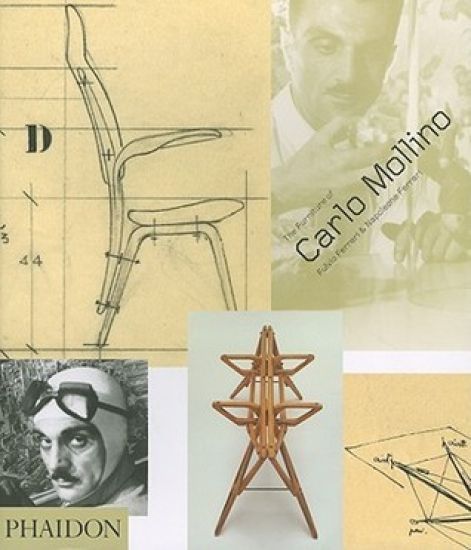
The Furniture of Carlo Mollino

The Furniture of Carlo Mollino

Ferrari Napoleone; Ferrari Fulvio

Phaidon Press Ltd
2009
nidottu
A new paperback version of the first monograph on the furniture and interior design of Carlo Mollino, one of the most original Italian designers of the twentieth century. Realized in collaboration with the Museo Casa Mollino, it is extensively illustrated with over 400 sketches, drawings and archival photographs.
Giorgio Strehler Directs Carlo Goldoni

Giorgio Strehler Directs Carlo Goldoni

Scott Malia

Lexington Books
2013
sidottu
Giorgio Strehler Directs Carlo Goldoni uses Giorgio Strehler’s Goldoni productions (and Arlecchino servitore di due padroni in particular) as a means to defining his directorial aesthetic. The book provides a framework for examining the director’s career that is expansive rather than restrictive, using Goldoni and Arlecchino servitore di due padroni as a through-line for Strehler’s fifty-year career at the Piccolo Teatro di Milano. This research defines Strehler’s multifaceted style and brings to light interrelationships among his various works, creating a base from which a variety of subsequent critical inquiries can be made. It also establishes Strehler’s identity within the larger scope of the Italian theatre as a whole. Finally, it creates the critical challenge of finding more expansive notions of directorial style and concept that unite diverse ideologies without delimiting our understanding of the director. Crucial to understanding Strehler’s work with Arlecchino servitore di due padroni is his consistent reinterpretation of the play, which received no less than five distinct productions during Strehler’s lengthy career. His repeated reworking of existing productions provides a baseline for examining what elements were maintained and what elements changed or evolved. The four key influences that defined Strehler’s aesthetic in his work with Arlecchino were commedia dell’Arte, Bertolt Brecht, “refractive theatricality” and Jacques Copeau. Through these productions, Strehler created a dialogue with his audience and helped change the reputation of Carlo Goldoni both in his own country and abroad.
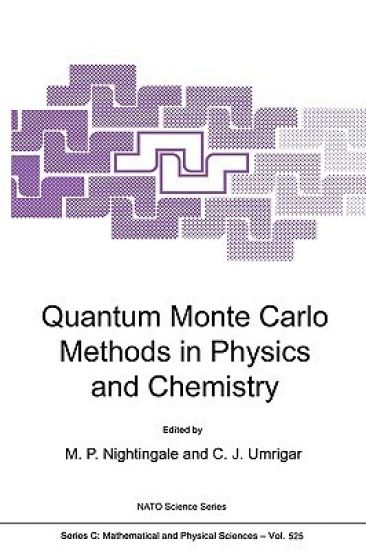
Quantum Monte Carlo Methods in Physics and Chemistry
In recent years there has been a considerable growth in interest in Monte Carlo methods, and quantum Monte Carlo methods in particlular. Clearly, the ever-increasing computational power available to researchers, has stimulated the development of improved algorithms, and almost all fields in computational physics and chemistry are affected by their applications. Here we just mention some fields that are covered in the lecture notes contained in this volume, viz. electronic structure studies of atoms, molecules and solids, nuclear structure, and low- or zero-temperature studies of strongly-correlated quantum systems, both of the continuum and lattice variety, and cooperative phenomena in classical systems. Although each area of application may have its own peculiarities, requiring specialized solutions, all share the same basic methodology. It was with the intention of bringing together researchers and students from these various areas that the NATO Advanced Study Institute on Quantum Monte Carlo Methods in Physics and Chemistry was held at Cornell University from 12 to 24 July, 1998. This book contains material presented at the Institute in a series of mini courses in quantum Monte Carlo methods. The program consisted of lectures predominantly of a pedagogical nature, and of more specialized seminars. The levels varied from introductory to advanced, and from basic methods to applications; the program was intended for an audience working towards the Ph.D. level and above. Despite the essentially pedagogic nature of the Institute, several of the lectures and seminars contained in this volume present recent developments not previously published.
Quantum Monte Carlo Methods in Physics and Chemistry
In recent years there has been a considerable growth in interest in Monte Carlo methods, and quantum Monte Carlo methods in particlular. Clearly, the ever-increasing computational power available to researchers, has stimulated the development of improved algorithms, and almost all fields in computational physics and chemistry are affected by their applications. Here we just mention some fields that are covered in the lecture notes contained in this volume, viz. electronic structure studies of atoms, molecules and solids, nuclear structure, and low- or zero-temperature studies of strongly-correlated quantum systems, both of the continuum and lattice variety, and cooperative phenomena in classical systems. Although each area of application may have its own peculiarities, requiring specialized solutions, all share the same basic methodology. It was with the intention of bringing together researchers and students from these various areas that the NATO Advanced Study Institute on Quantum Monte Carlo Methods in Physics and Chemistry was held at Cornell University from 12 to 24 July, 1998. This book contains material presented at the Institute in a series of mini courses in quantum Monte Carlo methods. The program consisted of lectures predominantly of a pedagogical nature, and of more specialized seminars. The levels varied from introductory to advanced, and from basic methods to applications; the program was intended for an audience working towards the Ph.D. level and above. Despite the essentially pedagogic nature of the Institute, several of the lectures and seminars contained in this volume present recent developments not previously published.
Strategies for Quasi-Monte Carlo

Strategies for Quasi-Monte Carlo

Bennett L. Fox

Springer
1999
sidottu
Strategies for Quasi-Monte Carlo builds a framework to design and analyze strategies for randomized quasi-Monte Carlo (RQMC). One key to efficient simulation using RQMC is to structure problems to reveal a small set of important variables, their number being the effective dimension, while the other variables collectively are relatively insignificant. Another is smoothing. The book provides many illustrations of both keys, in particular for problems involving Poisson processes or Gaussian processes. RQMC beats grids by a huge margin. With low effective dimension, RQMC is an order-of-magnitude more efficient than standard Monte Carlo. With, in addition, certain smoothness - perhaps induced - RQMC is an order-of-magnitude more efficient than deterministic QMC. Unlike the latter, RQMC permits error estimation via the central limit theorem. For random-dimensional problems, such as occur with discrete-event simulation, RQMC gets judiciously combined with standard Monte Carlo to keep memory requirements bounded. This monograph has been designed to appeal to a diverse audience, including those with applications in queueing, operations research, computational finance, mathematical programming, partial differential equations (both deterministic and stochastic), and particle transport, as well as to probabilists and statisticians wanting to know how to apply effectively a powerful tool, and to those interested in numerical integration or optimization in their own right. It recognizes that the heart of practical application is algorithms, so pseudocodes appear throughout the book. While not primarily a textbook, it is suitable as a supplementary text for certain graduate courses. As a reference, it belongs on the shelf of everyone with a serious interest in improving simulation efficiency. Moreover, it will be a valuable reference to all those individuals interested in improving simulation efficiency with more than incremental increases.
Conditional Monte Carlo

Conditional Monte Carlo

Michael C. Fu

Springer
1997
sidottu
Conditional Monte Carlo: Gradient Estimation and Optimization Applications deals with various gradient estimation techniques of perturbation analysis based on the use of conditional expectation. The primary setting is discrete-event stochastic simulation. This book presents applications to queueing and inventory, and to other diverse areas such as financial derivatives, pricing and statistical quality control. To researchers already in the area, this book offers a unified perspective and adequately summarizes the state of the art. To researchers new to the area, this book offers a more systematic and accessible means of understanding the techniques without having to scour through the immense literature and learn a new set of notation with each paper. To practitioners, this book provides a number of diverse application areas that makes the intuition accessible without having to fully commit to understanding all the theoretical niceties. In sum, the objectives of this monograph are two-fold: to bring together many of the interesting developments in perturbation analysis based on conditioning under a more unified framework, and to illustrate the diversity of applications to which these techniques can be applied. Conditional Monte Carlo: Gradient Estimation and Optimization Applications is suitable as a secondary text for graduate level courses on stochastic simulations, and as a reference for researchers and practitioners in industry.
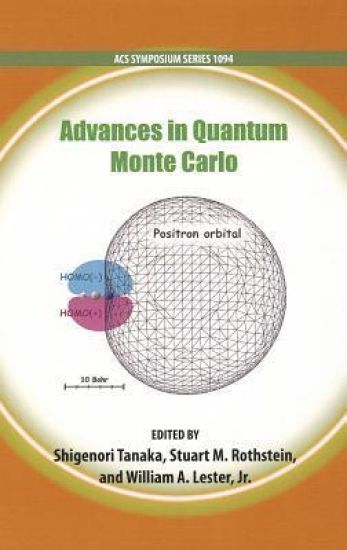
Advances in Quantum Monte Carlo

Advances in Quantum Monte Carlo

Oxford University Press Inc
2013
sidottu
The chapters in this monograph are contributions from the Advances in Quantum Monte Carlo symposium held at Pacifichem 2010, International Chemical Congress of Pacific Basin Societies. The symposium was dedicated to celebrate the career of James B. Anderson, a notable researcher in the field. Quantum Monte Carlo provides an ab initio solution to the Schroedinger equation by performing a random walk through configuration space in imaginary time. Benchmark calculations suggest that its most commonly-used variant, "fixed-node" diffusion Monte Carlo, estimates energies with an accuracy comparable to that of high-level coupled-cluster calculations. These two methods, each having advantages and disadvantages, are complementary "gold-standards" of quantum chemistry. There are challenges facing researchers in the field, several of which are addressed in the chapters in this monograph. These include improving the accuracy and precision of quantum Monte Carlo calculations; understanding the exchange nodes and utilizing the simulated electron distribution; extending the method to large and/or experimentally-challenging systems; and developing hybrid molecular mechanics/dynamics and Monte Carlo algorithms.
Advances in Quantum Monte Carlo

Advances in Quantum Monte Carlo

Oxford University Press Inc
2007
sidottu
This book will describe recent advances in Quantum Monte Carlo methods including improvements to existing techniques and developments of new techniques. Advances in Quantum Monte Carlo will also include a complete spectrum of applications.
Scalable Monte Carlo for Bayesian Learning

Scalable Monte Carlo for Bayesian Learning

Paul Fearnhead; Christopher Nemeth; Chris J. Oates; Chris Sherlock

Cambridge University Press
2025
sidottu
A graduate-level introduction to advanced topics in Markov chain Monte Carlo (MCMC), as applied broadly in the Bayesian computational context. The topics covered have emerged as recently as the last decade and include stochastic gradient MCMC, non-reversible MCMC, continuous time MCMC, and new techniques for convergence assessment. A particular focus is on cutting-edge methods that are scalable with respect to either the amount of data, or the data dimension, motivated by the emerging high-priority application areas in machine learning and AI. Examples are woven throughout the text to demonstrate how scalable Bayesian learning methods can be implemented. This text could form the basis for a course and is sure to be an invaluable resource for researchers in the field.