""Stories of Great American Scouts"" is a collection of biographical accounts of some of the most legendary figures in American history. Written by John Jay Jones, this book tells the stories of Daniel Boone, Simon Kenton, Davy Crockett, Sam Houston, Lewis and Clark, Kit Carson, Wild Bill Hickok, and Buffalo Bill. Each chapter delves into the life and adventures of these famous scouts, exploring their accomplishments, challenges, and contributions to American history. From Boone's exploration of the Kentucky wilderness to Buffalo Bill's Wild West shows, this book provides a captivating look at the lives of some of the most iconic figures in American folklore. With vivid descriptions and engaging storytelling, ""Stories of Great American Scouts"" is a must-read for anyone interested in the history of the American West and the legends that helped shape it.This is a new release of the original 1924 edition.This scarce antiquarian book is a facsimile reprint of the old original and may contain some imperfections such as library marks and notations. Because we believe this work is culturally important, we have made it available as part of our commitment for protecting, preserving, and promoting the world's literature in affordable, high quality, modern editions, that are true to their original work.
Hickory Grove is heating up, but can Nikki Carson take the heat?Talk about bad hair days Discovering a murder at an estate auction in the quaint village of Hickory Grove is enough to tousle Nikki's or anyone's new do--not to mention an ex who is trying to exploit her, friends suddenly acting strange, and a murderer lurking on her doorsteps. How much worse can things get? When Lieutenant Corso marks Nikki as a leading murder suspect, she finds that only the Edwards and her two kitties, Inky and Dinky, come to her defense. Forced to clear her name, Nikki's sleuthing proves nearly fatal as she untangles a web of intrigue to uncover whose hand held the deadly dagger won at the auction.SUSPECT LISTChuck Wood - Auctioneer whose deals are often shadyBarry Dynel - He follows Ken's lead, no matter the priceCyndi Comings - Fire Sign waitress who plays with fireBrett Nielson - A magnetic personality with a hidden pastDenise Barrington - Hickory Grove's biggest gossipTraci North - A mysterious woman-in-black. Friend or foe?Carole Winter - She'll do anything for money...Kurt Manners - He plays the field by his own rules
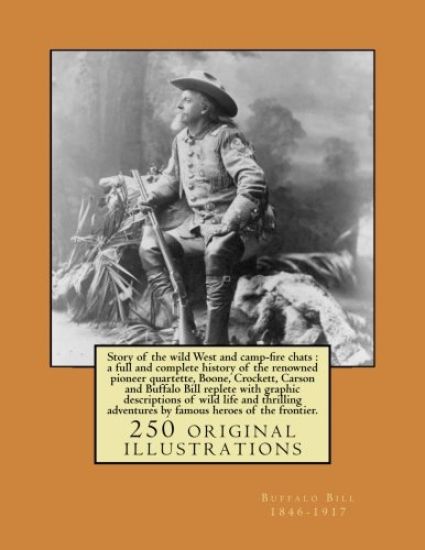
William Frederick "Buffalo Bill" Cody (February 26, 1846 - January 10, 1917) was an American scout, bison hunter, and showman. He was born in Le Claire, Iowa Territory (now the U.S. state of Iowa), but he lived for several years in his father's hometown in Toronto, Ontario, Canada, before the family returned to the Midwest and settled in the Kansas Territory.Buffalo Bill started working at the age of eleven, after his father's death, and became a rider for the Pony Express at age 14. During the American Civil War, he served the Union from 1863 to the end of the war in 1865. Later he served as a civilian scout for the US Army during the Indian Wars, receiving the Medal of Honor in 1872.One of the most colorful figures of the American Old West, Buffalo Bill's legend began to spread when he was only twenty-three. Shortly thereafter he started performing in shows that displayed cowboy themes and episodes from the frontier and Indian Wars. He founded Buffalo Bill's Wild West in 1883, taking his large company on tours in the United States and, beginning in 1887, in Great Britain and continental Europe.Early life and education edit]Cody was born on February 26, 1846, on a farm just outside Le Claire, Iowa. His father, Isaac Cody, was born on September 5, 1811, in Toronto Township, Upper Canada, now part of Mississauga, Ontario, directly west of Toronto. Mary Ann Bonsell Laycock, Bill's mother, was born about 1817 in New Jersey, near Philadelphia. She moved to Cincinnati to teach school, and there she met and married Isaac. She was a descendant of Josiah Bunting, a Quaker who had settled in Pennsylvania. There is no evidence to indicate Buffalo Bill was raised as a Quaker. In 1847 the couple moved to Ontario, having their son baptized in 1847, as William Cody, at the Dixie Union Chapel in Peel County (present-day Peel Region, of which Mississauga is part), not far from the farm of his father's family. The chapel was built with Cody money, and the land was donated by Philip Cody of Toronto Township.They lived in Ontario for several years.In 1853, Isaac Cody sold his land in rural Scott County, Iowa, for $2000, and the family moved to Fort Leavenworth, Kansas Territory. In the years before the Civil War, Kansas was overtaken by political and physical conflict over the slavery question. Isaac Cody was against slavery. He was invited to speak at Rively's store, a local trading post where pro-slavery men often held meetings. His antislavery speech so angered the crowd that they threatened to kill him if he didn't step down. A man jumped up and stabbed him twice with a Bowie knife. Rively, the store's owner, rushed Cody to get treatment, but he never fully recovered from his injuries.In Kansas, the family was frequently persecuted by pro-slavery supporters. Cody's father spent time away from home for his safety. His enemies learned of a planned visit to his family and plotted to kill him on the way. Bill, despite his youth and being ill at the time, rode 30 miles (48 km) to warn his father. Isaac Cody went to Cleveland, Ohio, to organize a group of thirty families to bring back to Kansas, in order to add to the antislavery population. During his return trip he caught a respiratory infection which, compounded by the lingering effects of his stabbing and complications from kidney disease, led to his death in April 1857.After his death, the family suffered financially. At age 11, Bill took a job with a freight carrier as a "boy extra". On horseback he would ride up and down the length of a wagon train and deliver messages between the drivers and workmen. Next he joined Johnston's Army as an unofficial member of the scouts assigned to guide the United States Army to Utah, to put down a rumored rebellion by the Mormon population of Salt Lake City.According to Cody's account in Buffalo Bill's Own Story, the Utah War was where he began his career as an "Indian fighter" ....
Humanity is failing at solving complex socio-ecological problems like global climate change, biodiversity loss and population growth. The existing 'sustainable development' paradigm and its reliance on trade-offs between the three pillars of environment, economics, and equity is not robust enough to maintain global carrying capacity. In this timely intervention, Thomas argues that the holistic and transdisciplinary thinking of four iconic American naturalists – Henry David Thoreau, Aldo Leopold, Rachel Carson, and Edward O. Wilson – can instead help to solve our biggest twenty-first century challenges by synthesizing values from four eras of cultural and environmental history.
The Mortgaged Heart is an important collection of Carson McCullers"s work, including stories, essays, articles, poems, and her writing on writing. These pieces, written mostly before McCullers was nineteen, provide invaluable insight into her life and her gifts and growth as a writer. The collection also contains the the working outline of "The Mute," which became her best-selling novel The Heart Is a Lonely Hunter.
'Impeccable ... The most impressive of her novels' Atlantic MonthlyIn this thoughtful and moving novel, four men find themselves inextricably bound together by their past histories. The aged Judge Clane dreams of resurrecting the confederacy, while his grandson, Jester, is involuntarily drawn to Sherman, a volatile black orphan who feels the sharp sting of racial injustice, especially when he finds out the truth about his parentage. Through the eyes of these individuals Carson McCullers explores the roots of racial prejudice and the dual moralities of the town's leading whites.
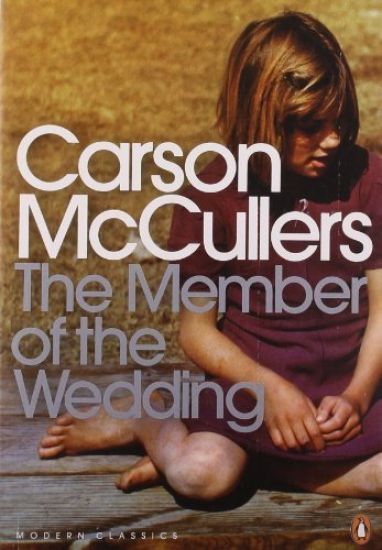
'Rarely has emotional turbulence been so delicately conveyed' The New York TimesWith delicacy of perception and memory, humour and pathos, Carson McCullers spreads before us the three phases of a weekend crisis in the life of a motherless twelve-year-old girl. Within the span of a few hours, the irresistible, hoydenish Frankie passionately plays out her fantasies at her elder brother's wedding. Through a perilous skylight we look into the mind of a child torn between her yearning to belong and the urge to run away.
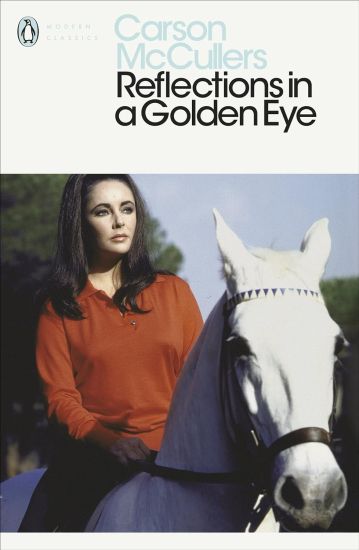
'A masterpiece . . . as mature and finished as Henry James's The Turn of the Screw' TimeSet on a Southern army base in the 1930s, Reflections in a Golden Eye tells the story of Captain Penderton, a bisexual whose life is upset by the arrival of Major Langdon, a charming womanizer who has an affair with Penderton's tempestuous and flirtatious wife, Leonora. Upon the novel's publication in 1941, reviewers were unsure of what to make of its relatively scandalous subject matter. But a critic for Time magazine wrote, "In almost any hands, such material would yield a rank fruitcake of mere arty melodrama. But Carson McCullers tells her tale with simplicity, insight, and a rare gift of phrase." Written during a time when McCullers's own marriage to Reeves was on the brink of collapse