
Kirjahaku
Etsi kirjoja tekijän nimen, kirjan nimen tai ISBN:n perusteella.
1000 tulosta hakusanalla Catherine Carson

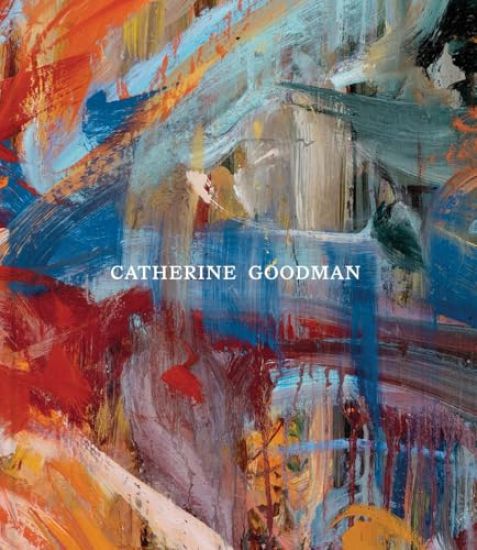
Catherine Goodman
Hauser Wirth
2025
sidottu
An insight into the development of British artist’s Catherine Goodman’s distinct visual language and her new series of abstract paintings Charting recent developments in the practice of the London-based artist, this book focuses on a new body of work by Catherine Goodman: monumental abstract paintings that mark a significant shift in the artist’s visual language. Known for expressionistic landscape paintings, portraits, and drawings that are united by their animated surfaces, energic brushstrokes, and distinct vitality, Goodman’s work takes on a vertiginous immersive power and spiritual depth as she moves into abstraction. Featuring works recently on view in the artist’s solo exhibition New Work at Hauser & Wirth Downtown Los Angeles and even newer works on view from 30 January 2025 at Hauser & Wirth in New York, this monograph pairs rich illustrations of Goodman’s paintings with an illuminating essay by Jennifer Higgie, former editor of frieze magazine and author of The Other Side: A Story of Women in Art and the Spirit World. It also includes an “as told to” with Goodman that reveals the fascinating connection between drawing—a daily practice she has maintained for decades—and painting in her deeply intuitive mode of artmaking.
An accompaniment to artist Catherine Biocca's exhibition Bonsai Feeling at the Kunstverein N rnberg. Featuring an essay by Simone Neuenschwander and an interview with Biocca, this publication investigates the artist's dealings with digitization and the Schadenfreude that permeates contemporary capitalist society.
Catherine Anglade
Bellum Publishing
2012
nidottu
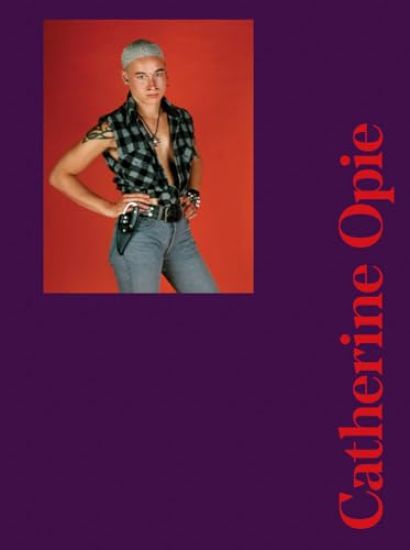
Catherine Opie: Genre / Gender / Portraiture
Masp
2025
sidottu
Nearly four decades of work from the photographer who redefined the expression of gender in contemporary queer portraiture A leading voice in contemporary photography, Catherine Opie has been known for her portraits of the queer scene in California since the late 1980s. A fundamental element of Opie’s work is the observation of different gender performances through a critical revision of the genre of portraiture. Her photography emphasizes how portraiture has the power to both reinforce and deconstruct conventional and binary expressions of gender. The title of this publication and the MASP exhibition it accompanies is based on the double meaning of the word gênero in Portuguese, meaning both “gender” and “genre.” For her first solo show in Brazil, Opie enters into dialogue with the tradition of the portrait—a way of representing the human figure that dates to the 15th century in the West—producing an archive of diverse presentations of gender and sexuality. Around 60 photographs from her most iconic series are displayed alongside a selection of around 15 emblematic portraits from MASP’s collection. Strongly marked by figuration and the formal constraint of portraiture, the juxtaposition of these works accentuates the dialogues, tensions and reformulations that Opie’s photographic oeuvre proposes. Catherine Opie was born in Ohio in 1961 and is currently a professor of photography and the chair of the art department at UCLA. Opie’s work has been exhibited extensively throughout the United States, Europe and Japan. She has had solo exhibitions of her work at the Walker Art Center, Minneapolis; St. Louis Art Museum; Museum of Contemporary Art, Chicago; and the Museum of Contemporary Art, Los Angeles, among many others.
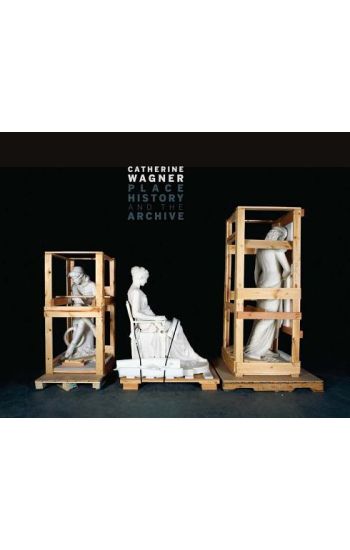
Place History and the Archive provides a forty-year survey of Catherine Wagner’s photographic work. This is the first volume to contain Wagner’s major bodies of work, dating from 1974 to 2016, in one compelling publication. Wagner’s incisive photographs move seamlessly and elegantly between different approaches and content following her interest in the ways in which knowledge is transferred. This expansive new publication surveys nineteen series and includes early projects in which Wagner began working with strategies she calls “archeology in reverse”. Early California Landscape (1974), Moscone Site (1978), and 1275 Minnesota Street (2016) employ a strategy of considered observation that interrogates the built environment. Physical and cultural architecture along with its core materials, are reimagined as metaphors for how we construct our cultural identities. Wagner further extends the notion of construction as she examines institutions as various as art museums, science labs, classrooms, the home, and Disneyland. Scientific, cultural, and natural histories are key realms of this exploration. At several Human Genome Project sites, Wagner explored scientific inquiry; while at the Stanford Linear Accelerator she worked on a reimagining of Mary Shelley’s Frankenstein . Projects such as Re-Classifying History (2005), Rome Works (2014), and A Narrative History of the Light Bulb (2006), recontextualize archives and collections of various cultural and historical institutions; questioning the representations of how history is recorded. Reparations (2010), and Trans/literate (2013) investigate the processes of cultural change and redefinition by looking at collections of medical splints and Braille books, respectively.
Catherine II et Gustave III Une correspondance retrouvée
Gunnar von Proschwitz
Nationalmuseum
1998
sidottu
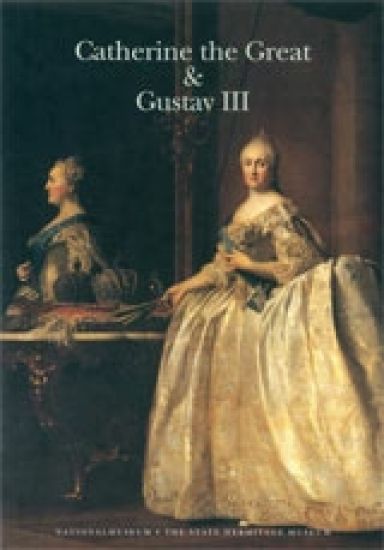

This book has been considered by academicians and scholars of great significance and value to literature. This forms a part of the knowledge base for future generations. So that the book is never forgotten we have represented this book in a print format as the same form as it was originally first published. Hence any marks or annotations seen are left intentionally to preserve its true nature.


NEW PRINT WITH PROFESSIONAL TYPE-SET IN CONTRAST TO SCANNED PRINTS OFFERED BY OTHERS Catherine Booth: A Sketch With A Preface By General Bramwell Booth This book is a result of an effort made by us towards making a contribution to the preservation and repair of original classic literature. In an attempt to preserve, improve and recreate the original content, we have worked towards: 1. Type-setting & Reformatting: The complete work has been re-designed via professional layout, formatting and type-setting tools to re-create the same edition with rich typography, graphics, high quality images, and table elements, giving our readers the feel of holding a fresh and newly reprinted and/or revised edition, as opposed to other scanned & printed (Optical Character Recognition - OCR) reproductions. 2. Correction of imperfections: As the work was re-created from the scratch, therefore, it was vetted to rectify certain conventional norms with regard to typographical mistakes, hyphenations, punctuations, blurred images, missing content/pages, and/or other related subject matters, upon our consideration. Every attempt was made to rectify the imperfections related to omitted constructs in the original edition via other references. However, a few of such imperfections which could not be rectified due to intentional\unintentional omission of content in the original edition, were inherited and preserved from the original work to maintain the authenticity and construct, relevant to the work.

The Turk and his lost provinces Greece, Bulgaria, Servia, Bosnia, is a classical book and has been considered important throughout the human history. So that this book is never forgotten we at Alpha Editions have made efforts in its preservation by republishing this again in a modern format book for present and future generations. This whole book has been reformatted, retyped and designed. These books are not made of scanned copies of their original work and hence the text is clear and readable.