Kirjojen hintavertailu. Mukana 12 513 698 kirjaa ja 12 kauppaa.

Kirjahaku

Etsi kirjoja tekijän nimen, kirjan nimen tai ISBN:n perusteella.

1000 tulosta hakusanalla Chasity Conley

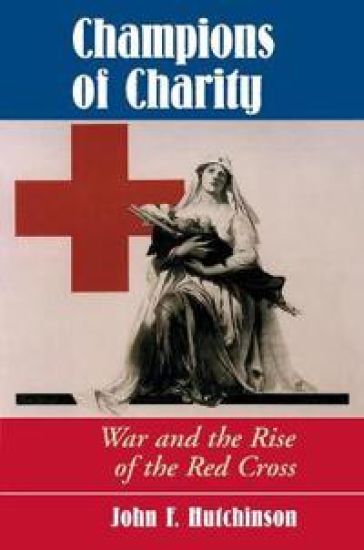
Champions Of Charity

Champions Of Charity

John Hutchinson

Routledge
2019
sidottu
A character in an Evelyn Waugh novel once remarked that ?There's nothing wrong with war?except the fighting.? In Champions of Charity, John Hutchinson argues that while they set out with a vision to make war more humane, the world's Red Cross organizations soon became enthusiastic promoters of militarism and sacrifice in time of war.The mass armies of the nineteenth century were stalked by disease and slaughtered by ever more destructive weaponry, arousing the indignation and humanitarian concern of self-appointed battlefield Samaritans, who envisioned a neutral corps of volunteer nurses who would aid and comfort wounded soldiers, regardless of nationality. But the champions of charity soon became champions of war.Florence Nightingale was among the few at the time to recognize the dangers lurking in the Red Cross vision. She refused to join, and warned its founders that the governments of the world would cooperate with the Red Cross because ?it would render war more easy.? She was right; starting in the late 19th century armies simply used the Red Cross to efficiently recycle wounded men back into the frontlines.In World War I, national Red Cross societies became enthusiastic wartime propagandists. This was true in every combatant nation, and it is a transformation well portrayed by the fascinating selection of art in this book. Soon Red Cross personnel were even sporting military-style uniforms, and in the United States, the Red Cross became so identified with the war effort that an American citizen was convicted of treason for criticising the Red Cross in time of war!The Red Cross played an especially important role in encouraging the mass involvement of women in the ?home front? for the first time. It did this through magazines, postcards, posters, bandage-rolling parties, and speeches that blended romantic images of humanitarianism and war into a unique brand of maternal militarism. A true pioneer in mass propaganda, the Red Cross taught millions that preparation for war was not just a patriotic duty, but a normal and desirable social activity.The Red Cross societies had proven their usefulness in mobilizing civilians in wartime, and most of their functions were taken over by government agencies by the time of World War II. Gradually the Red Cross became better known for its work in public health, disaster relief, and lifesaving classes. But the legacy of a darker past still lingers: the red cross on a white background found on army ambulances, or the unsubtle subtext of sacrifice and heroism in Red Cross television advertising.It is a legacy the Red Cross itself has preferred not to acknowledge in its own self-congratulatory literature. For not only was the humanitarian impulse that inspired the creation of the Red Cross easily distorted, but this urge to militarize came from within its own ranks. This startling and provocative history of the Red Cross reminds us of the hidden dangers that sometimes come cloaked in the best of intentions.

Human Rights and Charity Law

Human Rights and Charity Law

Kerry O'Halloran

Routledge
2020
nidottu
The 60 or so nations that subscribe to the common law tradition had for centuries broadly accepted the same legal definitions of what constitutes a charity. In recent years, however, a number of countries have embarked on charity law reform processes, designed to strengthen the regulatory framework and to review and encode common law concepts. A primary driver of reform was the need to modernise national charity law and ensure human rights compatibility. In light of these reforms, this book takes stock of how charity law is adapting to face the challenges presented by human rights.The book identifies the key areas where human rights and charity law intersect and examines the importance of those areas, the principles involved and their political significance. It offers a comparative analysis of selected common law countries including England, Wales, Ireland, US, Canada, Australia and New Zealand, assessing the extent of national human rights and charity compatibility. Kerry O’Halloran also goes on to consider tensions arising from the intersection of human rights and charity law, including the significance of cultural values and heritage, the importance of proportionality and striking a balance between public and private interests in current society.
Experiences of Charity, 1250-1650
For a number of years scholars who are concerned with issues of poverty and the poor have turned away from the study of charity and poor relief, in order to search for a view of the life of the poor from the point of view of the poor themselves. Great studies have been conducted using a variety of records, resulting in seminal works that have enriched our understanding of pauper experiences and the influence and impact of poverty on societies. If we return our gaze to ’charity’ with the benefit of those studies' questions, approaches, sources and findings, what might we see differently about how charity was experienced as a concept and in practice, at both community and personal levels? In this collection, contributors explore the experience of charity towards the poor, considering it in spiritual, intellectual, emotional, personal, social, cultural and material terms. The approach is a comparative one: across different time periods, nations, and faiths. Contributors pay particular attention to the way faith inflected charity in the different national environments of England and France, as Catholicism and Calvinism became outlawed and/or minority faith positions in these respective nations. They ask how different faith and beliefs defined or shaped the act of charity, and explore whether these changed over time even within one faith. The sources used to answer such questions go beyond the textual as contributors analyse a range of additional sources that include the visual, aural, and material.
Medicine and Charity Before the Welfare State
What have been the roles of charities and the state in supporting medical provision? These are issues of major relevance, as the assumptions and practices of the welfare state are increasingly thrown into doubt. This title offers a broad perspective on the relationship between charity and medicine in Western Europe, up to the advent of welfare states in the 20th century. Through detailed case studies, the authors highlight significant differences between Britain, France, Italy and Germany, and offer a critical vocabulary for grasping the issues raised. This volume reflects recent developments relating to the role of charity in medicine, particularly the revival of interest in the place of voluntary provision in contemporary social policy. It emphasizes the changing balance of "care" and "cure" as the aim of medical charity, and shows how economic and political factors influenced the various forms of charity.
Performing Virginity and Testing Chastity in the Middle Ages
This book challenges the belief that female virginity can be reliably and unambiguously defined, tested and verified. Kelly analyses a variety of medieval Western European texts - including medical treatises and their Classical antecedents - and historical and legal documents. The main focus is the representation of both male and female virgins in saints' legends and romances. The author also makes a comparative study of examples from contemporary fiction, television and film in which testing virginity is a theme. Performing Virginity and Testing Chastity in the Middle Ages presents a compelling and provocative study of the parodox of bodily and spiritual integrity as both presence and absence.
The Politics of Charity

The Politics of Charity

Kerry O'Halloran

Routledge
2011
sidottu
For the first time since 1601, a number of leading common law nations have almost simultaneously chosen to revise and place on the statute books the law relating to charity. The Politics of Charity examines the reasons for this and for the varying legislative outcomes. This book examines the legal framework and political significance of charity, as developed within England & Wales, contrasts this with the experiences of other common law nations and explores the resulting implications for government/sector relationships in those countries. It suggests that charity law lies at the heart of the relationship between government and the non profit sector, that there is an unmistakeable political agenda driving charity law reform and that the differential in legislative outcomes reflects important differences in the policies pursued by the governments concerned.Looking at fundamentally different approaches of government towards the sector in the UK, Ireland, the US, New Zealand, Canada, Singapore and Australia, O’Halloran argues the results will have implications for the present workings of parliamentary democracy. The Politics of Charity will be a valuable resource for academics, regulators and legal practitioners as well as advanced and postgraduate students in law, politics and public policy.
Performing Virginity and Testing Chastity in the Middle Ages
This book challenges the belief that female virginity can be reliably and unambiguously defined, tested and verified. Kelly analyses a variety of medieval Western European texts - including medical treatises and their Classical antecedents - and historical and legal documents. The main focus is the representation of both male and female virgins in saints' legends and romances. The author also makes a comparative study of examples from contemporary fiction, television and film in which testing virginity is a theme. Performing Virginity and Testing Chastity in the Middle Ages presents a compelling and provocative study of the parodox of bodily and spiritual integrity as both presence and absence.
Visions of Charity

Visions of Charity

Rebecca Anne Allahyari

University of California Press
2000
pokkari
In the United States, public talk about charity for the poor is highly moralistic, even in our era of welfare reform. But how do we understand the actual experience of caring for the poor? This study looks at the front lines of volunteer involvement with the poor and homeless to assess what volunteer work means for those who do it. Rebecca Allahyari profiles volunteers at two charities - Loaves & Fishes and The Salvation Army - to show how they think about themselves and their work, providing new ways for discussing charity and morality. Allahyari explores these agencies' differing ideological orientations and the raced, classed, and gendered contexts they provide volunteers for doing charitable work. Drawing on participant observation, intensive interviewing, and content analysis of organizational publications, she looks in particular at the process of self-improvement for these volunteers. The competing visions of charity Allahyari finds at these two organizations reveal the complicated and contradictory politics of caring for the poor in the United States today.
The National Charity Company

The National Charity Company

Charles F. Bahmueller

University of California Press
2018
pokkari
At the end of 1795 Jeremy Bentham, the English Utilitarian philosopher and reformer, began to compose a far-reaching plan. He proposed to restructure the English Poor Law, a set of laws for the relief of poverty first codified under Queen Elizabeth. Bentham's plan was to dispense poor relief through a national network of workhouses (the National Charity Company) constructed on the basis of his famous Panopticon architectural principle and coordinated through a single centralized administrative system. Charles F. Bahmueller analyzes the ethical, sociological, economic, and political aspects and implications of Bentham's proposal. Emphasizing that Bentham sought constantly to eliminate contingency from social life, Bahmueller shows how his scheme was a revealing harbinger of the modern welfare state. The National Charity Company shows us eighteenth-century politicians, economists, administrators, and reformers wrestling with the problems of distributive justice, economic instability, and repressive socioeconomic modes of organization that are central to contemporary political debate. The poor must be fed and clothed and employed—but they must also be ruled, from Bentham's point of view: they must, above all, be controlled. This book reveals tensions between order and freedom, paternalism and individualism, and social security and market forces that are of undeniable relevance to modern life. This title is part of UC Press's Voices Revived program, which commemorates University of California Press’s mission to seek out and cultivate the brightest minds and give them voice, reach, and impact. Drawing on a backlist dating to 1893, Voices Revived makes high-quality, peer-reviewed scholarship accessible once again using print-on-demand technology. This title was originally published in 1981.
The National Charity Company

The National Charity Company

Charles F. Bahmueller

University of California Press
2024
sidottu
At the end of 1795 Jeremy Bentham, the English Utilitarian philosopher and reformer, began to compose a far-reaching plan. He proposed to restructure the English Poor Law, a set of laws for the relief of poverty first codified under Queen Elizabeth. Bentham's plan was to dispense poor relief through a national network of workhouses (the National Charity Company) constructed on the basis of his famous Panopticon architectural principle and coordinated through a single centralized administrative system. Charles F. Bahmueller analyzes the ethical, sociological, economic, and political aspects and implications of Bentham's proposal. Emphasizing that Bentham sought constantly to eliminate contingency from social life, Bahmueller shows how his scheme was a revealing harbinger of the modern welfare state. The National Charity Company shows us eighteenth-century politicians, economists, administrators, and reformers wrestling with the problems of distributive justice, economic instability, and repressive socioeconomic modes of organization that are central to contemporary political debate. The poor must be fed and clothed and employed—but they must also be ruled, from Bentham's point of view: they must, above all, be controlled. This book reveals tensions between order and freedom, paternalism and individualism, and social security and market forces that are of undeniable relevance to modern life. This title is part of UC Press's Voices Revived program, which commemorates University of California Press’s mission to seek out and cultivate the brightest minds and give them voice, reach, and impact. Drawing on a backlist dating to 1893, Voices Revived makes high-quality, peer-reviewed scholarship accessible once again using print-on-demand technology. This title was originally published in 1981.
Poverty and Charity in Medieval Islam

Poverty and Charity in Medieval Islam

Adam Sabra

Cambridge University Press
2006
pokkari
The study of poverty and charity in Islamic history has made significant advances and Adam Sabra's book represents a full-length treatment of the subject. By focusing on Mamluk Cairo, the author explores the attitude of medieval Muslims to poverty - why and how did they give alms - and the experience of being poor in an Islamic society. He also considers the role of pious endowments (waqfs) in providing food, education and medical care to the poor of medieval Egypt. This is a fascinating account of a world far removed from the affairs of emirs and ulama usually the traditional province of Mamluk studies. This trend, in conjunction with the comparisons the author affords of poverty and destitution in Europe and China during the same period, will entice a broad range of scholars from within the field and beyond.
Poverty and Charity in Medieval Islam

Poverty and Charity in Medieval Islam

Adam Sabra

Cambridge University Press
2000
sidottu
The study of poverty and charity in Islamic history has made significant advances and Adam Sabra's book represents a full-length treatment of the subject. By focusing on Mamluk Cairo, the author explores the attitude of medieval Muslims to poverty - why and how did they give alms - and the experience of being poor in an Islamic society. He also considers the role of pious endowments (waqfs) in providing food, education and medical care to the poor of medieval Egypt. This is a fascinating account of a world far removed from the affairs of emirs and ulama usually the traditional province of Mamluk studies. This trend, in conjunction with the comparisons the author affords of poverty and destitution in Europe and China during the same period, will entice a broad range of scholars from within the field and beyond.