Kirjojen hintavertailu. Mukana 12 290 492 kirjaa ja 12 kauppaa.

Kirjahaku

Etsi kirjoja tekijän nimen, kirjan nimen tai ISBN:n perusteella.

1000 tulosta hakusanalla Clive Witham

Tom Kitwood on Dementia: A Reader and Critical Commentary

Tom Kitwood on Dementia: A Reader and Critical Commentary

Clive Baldwin; Andrea Capstick

Open University Press
2007
nidottu
"The book will be valuable for undergraduate and postgraduate students, researchers and lecturers involved in the field of dementia care and the health-care sciences. Furthermore, it provides a useful resource for clinicians who wish to explore their understanding of 'personhood', person-centred care and the nature of Kitwood's critical appraisal of how 'care' should be constructed and delivered."Ageing and Society"Baldwin and Capstick have produced an honest appraisal that is undeniably a reader and critical commentary, and have not shirked from any responsibilities. ... This paperback would serve two distinct strands of readership equally well - those coming afresh to dementia care, or practitioners steeped in the concepts, who are looking to reanalyse and consider future developments. As such, it is difficult to underestimate its value."Nursing in PracticeHow does Kitwood’s work contribute to our understanding of ‘the dementing process’ and the essentials of quality care?How was Kitwood’s thinking about dementia influenced by the wider context of his work in theology, psychology and biochemistry?What is the relevance today of key themes and issues in Kitwood’s work?Tom Kitwood was one of the most influential writers on dementia of the last 20 years. Key concepts and approaches from his work on person-centred care and well-being in dementia have gained international recognition and shaped much current thinking about practice development. The complexities of Kitwood’s work and the development of his thinking over time have, however, received less attention. This Reader brings together twenty original publications by Kitwood which span the entire period of his writing on dementia, and the different audiences for whom he wrote.Almost ten years after Kitwood’s death, it is now timely to review his contribution to the field of dementia studies in the light of more recent developments and from a critical and interdisciplinary perspective. The introduction to this Reader summarises and problematises some of the key characteristics of Kitwood’s writing. Each of the four themed sections begins with a commentary offering a balanced consideration of the strengths of Kitwood’s work, but also of its limitations and oversights. The Reader also includes a biography and annotated bibliography.Tom Kitwood on Dementia: A Reader and Critical Commentary is key reading for students of social work or mental health nursing, with an interest in dementia care. Professionals working with people with dementia will also find it invaluable.Additional Contributors: Habib Chaudhury, Deborah O’Connor, Alison Phinney, Barbara Purves, Ruth Bartlett.
Classroom Teaching in the 21st Century: Directions, Principles and Strategies
As technology becomes more widespread and the world continues to change in many other ways, teachers have adapted to allow education to evolve with the 21st century. This book provides theoretical foundations and highly practical strategies for classrooms tackling modern challenges, drawing in part on the ideas and experiences of practising teachers. The authors highlight how crucial education is for equipping future generations with the skills for individual, societal and planetary wellbeing, while still considering the pressures of ‘teaching to the test’. Every teacher balances a range of priorities as they enter a classroom which this book addresses:•Teaching for personal development, including autonomy, resilience, critical thinking, mental health and overall wellbeing•Teaching for social development, for the workplace but also for community participation and social life generally•Teaching for equity, inclusion and political and global/environmental commitment•Teaching for digital knowledge and skill, in ways that are technologically advanced and substantively relevant•Enhanced teacher identity, professionalism and wellbeing The book will be an essential companion for teachers, particularly those at the start of their training and in preservice roles, with plenty of practical suggestions and strategies.“Classroom Teaching in the 21st Century is a gift to school leaders and teachers who are looking for sound advice to improve teaching and learning.”Pak Tee NG, National Institute of Education, Nanyang Technological University, Singapore“If you are looking for fresh ideas about teaching for meaning and well-being, as well as for competence and content, look no further.”A. Lin Goodwin, Dean, Faculty of Education, The University of Hong Kong, Hong Kong“This is an important new book which will make a substantial contribution to the literature on education and schooling.”Keith F Punch, Emeritus Professor, Graduate School of Education, The University of Western Australia, AustraliaClive Beck is Emeritus Professor in Curriculum, Teaching and Learning at OISE/University of Toronto, Canada, teaching courses for preservice and in-service teachers and engaging in empirical research on teaching. He is a past-Coordinator of Graduate Studies at OISE and past-President of the American Philosophy of Education Society. Clare Kosnik is Professor in Curriculum, Teaching and Learning at OISE/University of Toronto, Canada, past-Director of Elementary Teacher Education at OISE and past-Director of the Jackman Institute of Child Study. She has researched extensively on teaching and teacher education, and has received University-wide Awards for Excellence in both teaching and graduate supervision.
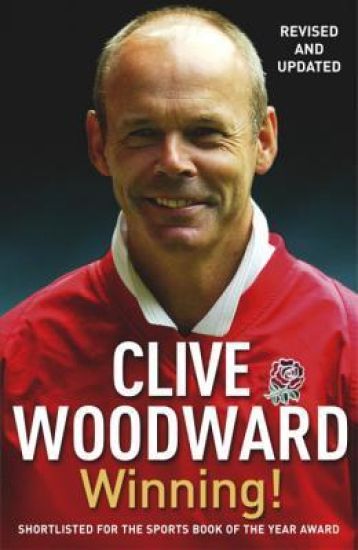
Winning!

Winning!

Clive Woodward

Hodder Paperback
2005
pokkari
'There is so much more to the man than single-minded determination.' Sunday Telegraph 'His first day in the job of England coach is superbly described, and thereafter he is forever going the extra yard to make his team great.' Sunday Times__________Winning! tells a remarkable story - an unforgettable journey that began in September 1997 and took the English Rugby Team team from the lower ranks of international first-class rugby to the top as World Cup Champions. Sir Clive Woodward and his team mounted a campaign of vast change, great learning, team building and clear vision to achieve their aim. 'We would question everything, change anything and leave no stone unturned,' he writes. WINNING! will talk about the team's journey of innovation and discovery and will reveal exactly how it happened, the fundamentals of their success and how these principles can be applied to any human endeavour. 'We changed the way we coached, the way we played and, of equal importance, how we operated off the field.' Bringing his business management skills to the game, Woodward simplified the entire approach to the structure of the team and created new management systems both on and off the pitch.In an anecdotal style, Clive Woodward entertains and informs while he describes the thrilling build-up to England's World Cup triumph in 2003.
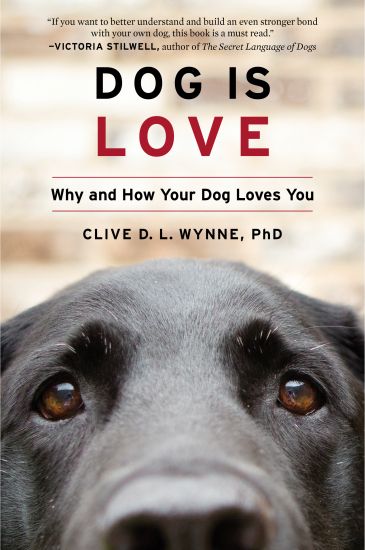
Dog Is Love: Why and How Your Dog Loves You

Dog Is Love: Why and How Your Dog Loves You

Clive D. L. Wynne

Mariner Books
2020
nidottu
A pioneering canine behaviorist draws on cutting-edge research to show that a single, simple trait--the capacity to love--is what makes dogs such perfect companions for humans, and explains how we can better reciprocate their affection. "Lively and fascinating . . . The reader comes away cheered, better informed, and with a new and deeper appreciation for our amazing canine companions and their enormous capacity for love." --Cat Warren, New York Times best-selling author of What the Dog Knows Does your dog love you? Every dog lover knows the feeling. The nuzzle of a dog's nose, the warmth of them lying at our feet, even their whining when they want to get up on the bed. It really seems like our dogs love us, too. But for years, scientists have resisted that conclusion, warning against anthropomorphizing our pets. Enter Clive Wynne, a pioneering canine behaviorist whose research is helping to usher in a new era: one in which love, not intelligence or submissiveness, is at the heart of the human-canine relationship. Drawing on cutting-edge studies from his lab and others around the world, Wynne shows that affection is the very essence of dogs, from their faces and tails to their brains, hormones, even DNA. This scientific revolution is revealing more about dogs' unique origins, behavior, needs, and hidden depths than we ever imagined possible. A humane, illuminating book, Dog Is Love is essential reading for anyone who has ever loved a dog--and experienced the wonder of being loved back.
One Damned Island After Another

One Damned Island After Another

Clive Howard; Joe Whitley

Lulu.com
2019
sidottu
Clive Howard and Joe Whitley were both sergeants and served as correspondents for the Seventh Air Force during World War 2. The men of the Seventh were forced to fly the longest missions in any theater of war, entirely over water and, at first, without fighter escort. They fought at Midway, Guadalcanal, Tarawa, Kwajalein, Eniwetok, Truk, Saipan, Palau, the Philippines, Iwo Jima, and finally Tokyo. One Damned Island After Another covers the history of this remarkable air force from the events at Pearl Harbor through to V-J Day, detailing events on every single island that the force landed on in between. This new 2019 edition of One Damned Island After Another includes annotations and original photographs from the Pacific campaigns.
The Tavistock Learning Group

The Tavistock Learning Group

Clive Hazell; Mark Kiel

Routledge
2019
sidottu
In The Tavistock Learning Group: Exploration Outside the Traditional Frame, the authors attempt to expand the heuristic, theoretical, and applied dimensions of Group Relations paradigms by pairing classical Group Relations concepts with typically non-Tavistock psychology paradigms and social sciences concepts. Under the broad domain of psychologically-informed constructs, Lacanian psychoanalysis, existential philosophy and bioenergetics are applied. Under a somewhat broader range of social science conceptualization, the capacity for abstraction is linked with anti-work in groups, the large group is re-imagined as an extension of community dynamics and dysfunction, and the role of symbol systems, symbology and semiotics are examined in relation to sophisticated work groups. Lastly, non-Tavistock models of group development and conceptualization are re-interpreted and explained using a group-as-a-whole framework.
The Changing Museum

The Changing Museum

Clive Gray

TAYLOR FRANCIS LTD
2022
sidottu
Using the example of New Walk Museum, Leicester, and its collections, the complexity, multi-causality, and reasons for change in museums are examined and explained. The 170 years history of New Walk provides an original basis and innovative approach to be adopted towards explaining museum change. The book makes use of original interview and archive material to examine how and why social, economic, political, and professional developments affected the work that was undertaken in New Walk. The time-span covered is much longer than is normal for a book on museum history and is longer than for almost all the national museums in the UK, with this allowing for a nuanced understanding of the causes and consequences of museum change over time. The problems and possibilities of undertaking museum history research are also discussed. Detailed examination of the ways in which a variety of societal developments fed into museum change is a key feature of the book. The book is aimed at all those with an interest in understanding how and why change affects museum practice and will be of interest to museum professionals, academics, and students in museum studies, history, politics, and sociology as well to the general museum visitor who would like to discover more about the institutions that they visit.
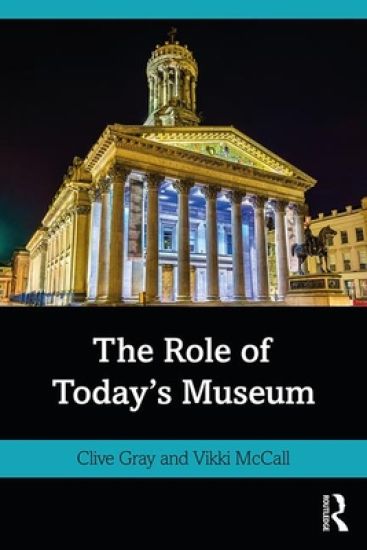
The Role of Today's Museum

The Role of Today's Museum

Clive Gray; Vikki McCall

Routledge
2020
sidottu
The Role of Today’s Museum provides a thorough investigation of what museums do and why. Arguing that museums are multifunctional institutions, the book examines the consequences of this for the services that museums provide, the publics to whom they are provided and the providers themselves.Adopting a wide perspective on understandings of the roles of museums and considering the different environments within which museums operate, Gray and McCall provide a new perspective on how transformations, as well as the gaps between intended policies and the actual work that is undertaken within museums, can be both identified and understood. By differentiating between social, economic and political visions and expectations of museums, the analysis in this book allows for a fuller understanding of what these organisations do and provide for their societies and the struggles and negotiations that surround their existence.The Role of Today’s Museum takes a critical, interdisciplinary approach to studying museums and museum policy. As a result, the book will be of interest to academics and students engaged in the study of museums, cultural policy, social policy, cultural sociology, public policy and cultural and political economy. Highlighting the gaps that exist between policy ideals and museum practices, the book also provides valuable insights to policy-makers and practitioners.
The Role of Today's Museum

The Role of Today's Museum

Clive Gray; Vikki McCall

Routledge
2020
nidottu
The Role of Today’s Museum provides a thorough investigation of what museums do and why. Arguing that museums are multifunctional institutions, the book examines the consequences of this for the services that museums provide, the publics to whom they are provided and the providers themselves.Adopting a wide perspective on understandings of the roles of museums and considering the different environments within which museums operate, Gray and McCall provide a new perspective on how transformations, as well as the gaps between intended policies and the actual work that is undertaken within museums, can be both identified and understood. By differentiating between social, economic and political visions and expectations of museums, the analysis in this book allows for a fuller understanding of what these organisations do and provide for their societies and the struggles and negotiations that surround their existence.The Role of Today’s Museum takes a critical, interdisciplinary approach to studying museums and museum policy. As a result, the book will be of interest to academics and students engaged in the study of museums, cultural policy, social policy, cultural sociology, public policy and cultural and political economy. Highlighting the gaps that exist between policy ideals and museum practices, the book also provides valuable insights to policy-makers and practitioners.
An Introduction to Human–Animal Relationships
An Introduction to Human–Animal Relationships is a comprehensive introduction to the field of human–animal interaction from a psychological perspective across a wide range of themes.Hollin examines the topic of the relationships between humans and animals as seen in owning a companion animal alongside more indirect relationships such as our approaches to eating meat. The core issues under discussion include the moral and ethical issues raised in using animals for entertainment, in therapy, to keep us safe, and in sports such as horse racing. The justifications for hunting and killing animals as sport and using animals in scientific experimentation are considered. The closing chapter looks to the future and considers how conservation and climate change may influence human–animal relationships. This key text brings an important perspective to the field of human–animal studies and will be useful to students and scholars in the fields of psychology, sociology, animal welfare, anthrozoology, veterinary science, and zoology.
An Introduction to Human–Animal Relationships
An Introduction to Human–Animal Relationships is a comprehensive introduction to the field of human–animal interaction from a psychological perspective across a wide range of themes.Hollin examines the topic of the relationships between humans and animals as seen in owning a companion animal alongside more indirect relationships such as our approaches to eating meat. The core issues under discussion include the moral and ethical issues raised in using animals for entertainment, in therapy, to keep us safe, and in sports such as horse racing. The justifications for hunting and killing animals as sport and using animals in scientific experimentation are considered. The closing chapter looks to the future and considers how conservation and climate change may influence human–animal relationships. This key text brings an important perspective to the field of human–animal studies and will be useful to students and scholars in the fields of psychology, sociology, animal welfare, anthrozoology, veterinary science, and zoology.
Primary Health Care In Africa

Primary Health Care In Africa

Clive Gray; Jacques Baudouy; Kelsey Martin; Molly Bang

Routledge
2019
sidottu
The Mali Rural Health Project was designed as a model effort within the US foreign aid programme for extending rudimentary health services in rural areas of developing nations. Although some success was achieved, the programme proved to be too costly for nation-wide implementation, thus failing to achieve its immediate goals.
Primary Health Care In Africa

Primary Health Care In Africa

Clive Gray; Jacques Baudouy; Kelsey Martin; Molly Bang

Routledge
2021
nidottu
The Mali Rural Health Project was designed as a model effort within the US foreign aid programme for extending rudimentary health services in rural areas of developing nations. Although some success was achieved, the programme proved to be too costly for nation-wide implementation, thus failing to achieve its immediate goals. The authors' assessmen
Analytical Estimates of Structural Behavior

Analytical Estimates of Structural Behavior

Clive L. Dym; Harry E. Williams

CRC Press
2019
nidottu
Explicitly reintroducing the idea of modeling to the analysis of structures, Analytical Estimates of Structural Behavior presents an integrated approach to modeling and estimating the behavior of structures. With the increasing reliance on computer-based approaches in structural analysis, it is becoming even more important for structural engineers to recognize that they are dealing with models of structures, not with the actual structures. As tempting as it is to run innumerable simulations, closed-form estimates can be effectively used to guide and check numerical results, and to confirm physical insights and intuitions.Spend Less Time Generating Numbers, and More Time Understanding What They MeanThis book encourages readers to think about structures and their models in a way that is rooted in classic elementary elasticity—depending less on advanced mathematical techniques and more on the dimensions and magnitudes of the underlying physics. The authors stretch the mold, emphasizing and more explicitly describing the modeling process. The focus is on learning which calculations to perform and how to validate and interpret the results—skills that will be increasingly useful for professional engineers.Chapters cover: Key principles and techniques of mathematical modeling, including dimensional analysis, scaling, linearity, and balance and conservation lawsBasic structural modelsHow to develop and express physical intuitionHow to track the behavior of arches under lateral loadTwo methods of analyzing coupled discrete systems—Castigliano’s theorems and Rayleigh’s quotient—to lay a foundation for their application to continuous systemsHow to derive simple, accurate estimates of the transverse displacements of structures modeled in terms of coupled Timoshenko beamsHow to
Thomas Wride and Wesley’s Methodist Connexion
This book highlights the life and writings of an itinerant preacher in John Wesley’s Methodist Connexion, Thomas Wride (1733-1807). Detailed studies of such rank and file preachers are rare, as Methodist history has largely been written by and about its leadership. However, Wride’s ministry shows us that the development of this worldwide movement was more complicated and uncertain than many accounts suggest.Wride’s attitude was distinctive. He was no respecter of persons, freely criticising almost everyone he came across, and in doing so exposing debates and tensions within both Methodism and wider society. However, being so combative also led him into conflict with the very movement he sought to promote. Wride is an authentic, self-educated, and non-élite voice that illuminates important features of Eighteenth-Century life well beyond his religious activities. He sheds light on his contemporaries’ attitudes to issues such as the role of women, attitudes towards and the practice of medicine, and the experience and interpretation of dreams and supernatural occurrences. This is a detailed insight into the everyday reality of being an Eighteenth-Century Methodist minister. As such, this text will be of interest to academics working in Methodist Studies and Religious History, as well as Eighteenth-Century History more generally.
Policing Ethically

Policing Ethically

Clive Harfield; Allyson Macvean

TAYLOR FRANCIS LTD
2025
sidottu
At a time when much in UK policing is the subject of intense public and media scrutiny, there prevails a practitioner discourse about policing ethically that is ongoing formally in police ethics committee discussions, and probably informally in station offices, canteens, classrooms, and police vehicles. Since January 2024, these conversations have added emphasis with the publication of the College of Policing’s revised Code of Ethics with which policing practitioners in England and Wales are coming to grips. This book explores thinking about policing ethically for those who have to use and implement the ideas – to those who, when law and policy is silent on the matter before them, nevertheless have to make a justifiable decision and act upon it.Applicable to policing generally, not just to the UK, Part 1 of this book presents conceptual contextualization for thinking about policing ethically. Following which, Part 2 considers practical implications of policing ethically.Some of the key topics that the book covers are as follows:• Discussions of managing power and vulnerability• Implementing frontline ethics in practice• The process of making ethically informed decisions• Considerations around ethics and the use of artificial intelligence by policing practitioners• Prerequisites to ethical leadership• Considering “public interest” in relation to policing ethically• Risk management as a moral obligationDrawing upon the policing practitioner and policymaking experience of the authors, this book will be of interest and use to all those involved in delivering policing: constables of all ranks (student, probationary, and experienced), policing community support officers, professional support staff, policing ethics committee members, and policymakers. The book is also a contribution to the wider academic literature on policing and ethics, and will be of interest not only to policing ethicists and ethnographers but also to students and policymakers in the fields of criminology, sociology, and governance.
Policing Ethically

Policing Ethically

Clive Harfield; Allyson Macvean

TAYLOR FRANCIS LTD
2025
nidottu
At a time when much in UK policing is the subject of intense public and media scrutiny, there prevails a practitioner discourse about policing ethically that is ongoing formally in police ethics committee discussions, and probably informally in station offices, canteens, classrooms, and police vehicles. Since January 2024, these conversations have added emphasis with the publication of the College of Policing’s revised Code of Ethics with which policing practitioners in England and Wales are coming to grips. This book explores thinking about policing ethically for those who have to use and implement the ideas – to those who, when law and policy is silent on the matter before them, nevertheless have to make a justifiable decision and act upon it.Applicable to policing generally, not just to the UK, Part 1 of this book presents conceptual contextualization for thinking about policing ethically. Following which, Part 2 considers practical implications of policing ethically.Some of the key topics that the book covers are as follows:• Discussions of managing power and vulnerability• Implementing frontline ethics in practice• The process of making ethically informed decisions• Considerations around ethics and the use of artificial intelligence by policing practitioners• Prerequisites to ethical leadership• Considering “public interest” in relation to policing ethically• Risk management as a moral obligationDrawing upon the policing practitioner and policymaking experience of the authors, this book will be of interest and use to all those involved in delivering policing: constables of all ranks (student, probationary, and experienced), policing community support officers, professional support staff, policing ethics committee members, and policymakers. The book is also a contribution to the wider academic literature on policing and ethics, and will be of interest not only to policing ethicists and ethnographers but also to students and policymakers in the fields of criminology, sociology, and governance.
Next Generation Safety Leadership
Next Generation Safety Leadership illustrates practical applications that bring theory to life through case studies and stories from the author's years of experience in high-risk industries. The book provides safety leaders and their organisations with a compelling case for change. A key predictor of safety performance is trust, and its associated components of integrity, ability and benevolence (care). The next generation of safety leaders will take the profession forward by creating trust and psychological safety. The book provides safety leaders with actionable goals to enable positive change and translates academic languages into practical applications. It leaves the reader with a clear strategy to move forward in developing a safety plan and utilizes stories, humor, and case studies set in high-risk industries. Written primarily for the safety community and can be used to influence day to day safety operations in high-risk organisations.
Next Generation Safety Leadership
Next Generation Safety Leadership illustrates practical applications that bring theory to life through case studies and stories from the author's years of experience in high-risk industries. The book provides safety leaders and their organisations with a compelling case for change. A key predictor of safety performance is trust, and its associated components of integrity, ability and benevolence (care). The next generation of safety leaders will take the profession forward by creating trust and psychological safety. The book provides safety leaders with actionable goals to enable positive change and translates academic languages into practical applications. It leaves the reader with a clear strategy to move forward in developing a safety plan and utilizes stories, humor, and case studies set in high-risk industries. Written primarily for the safety community and can be used to influence day to day safety operations in high-risk organisations.
Translating the Perception of Text
This book is about translating the perception of text; but that involves the elaboration, from reading, of a text of perception, a text capable of registering the complexities of language-based perception. It offers the phenomenology that has its primary source in the work of Merleau-Ponty.