A collection of essays on a key figure in postminimalist art, with texts spanning thirty years. Since the 1960s, Dan Graham's heterogeneous practice has touched on such disparate subjects as tract housing, the Shakers, punk music, and architectural theory; he has made videos, architectural models, closed-circuit installations, and glass pavilions. Graham, who came of age during the emergence of earth art, minimalism, and conceptualism, has situated his work on the borders between these different strains of contemporary practice. Although varying widely in subject and medium, Graham's artwork and writings display a consistent interest in spectatorship, public-private relationships, and the constructed environment. Graham's extensive writings on his own work (collected in Rock My Religion and Two-Way Mirror Power, both published by the MIT Press) have made him, by default, the primary interpreter of his own art. This October Files volume provides a counterweight, gathering key texts by critics and theorists that offer alternative accounts of Graham's art. The essays span thirty years and include hard-to-find texts from exhibition catalogs and journals. The authors include such distinguished theorists, critics, and artists as Benjamin H. D. Buchloh, Beatriz Colomina, Thierry de Duve, and Jeff Wall.
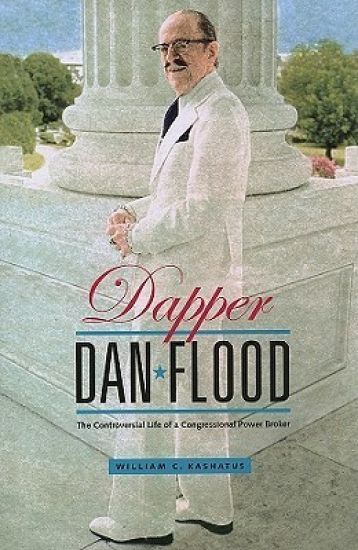
Daniel J. Flood was among the last of the oldtime movers and shakers on Capitol Hill. Known for his wardrobe of white linen suits, dark shirts, white ties, silk top hats, and dark, flowing capes, as a vaudevillian who became a Democratic congressman from Pennsylvania, Flood was a flamboyant sight on the floor of the House. He presented his addresses and arguments with the overly precise and clipped accent of an old-fashioned stage actor, and he reveled in the attention he attracted for each and every performance. At the same time, 'Dapper Dan' understood the complexities of the old power politics and played the legislative game with sheer genius. He worked his will by employing the common practices that greased the wheels of the political process in the post - World War II era: persuasion, manipulation, arm-twisting, and grandiloquent oratory rarely matched by his congressional colleagues. Between 1945 and 1980, Flood used his clout as a senior member of the House Appropriations Committee to wield near veto power over the $300 billion federal budget. Flood was instrumental in funding the Cold War as well as the 'Great Society' social reforms of the 1960s. A consummate pork-barrel politician, the mustachioed congressman channeled billions of dollars into a northeast Pennsylvania district suffering from a declining anthracite coal industry. As a result, the well-educated scion of the middle class was accepted by his blue-collar constituents as 'one of their own' and elected to the U.S. House of Representatives for sixteen terms. Accused of improprieties in arranging federal contracts, Flood became the subject of sweeping investigations by the U.S. Attorney General and the House Ethics Committee. A federal court case resulted in a mistrial in February 1979. Stripped of his congressional power, ravaged by illness, and facing a second bribery trial, Flood resigned from Congress on January 31, 1980. Based on recently declassified FBI documents, court records, public papers, and contemporary newspaper accounts, as well as more than thirty interviews of Flood's widow, congressional colleagues, and Capitol Hill staff, ""Dapper Dan Flood"" explodes the myths surrounding Pennsylvania's controversial - and colorful - congressman. It is a story of power, accomplishment, and, ultimately, failure and humiliation.