Kirjojen hintavertailu. Mukana 12 016 292 kirjaa ja 12 kauppaa.

Kirjahaku

Etsi kirjoja tekijän nimen, kirjan nimen tai ISBN:n perusteella.

1000 tulosta hakusanalla Dan E. Perry

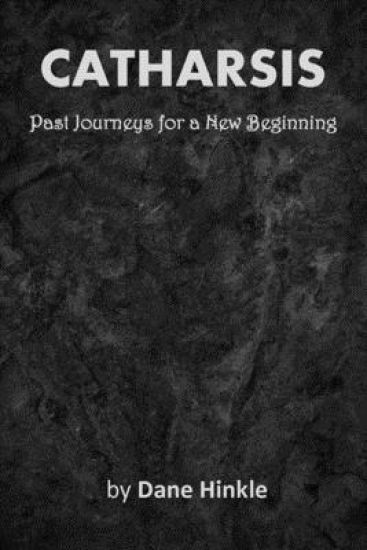
Catharsis

Catharsis

Dane Hinkle

Lulu.com
2020
nidottu
For years, Joe has been plagued with dreams of a past that does not belong to his present life. But dreams and nightmares, are they the same thing? As he delves into psychoanalysis, he discovers that the people inhabiting his dreams may have more to do with his present life than he expects.
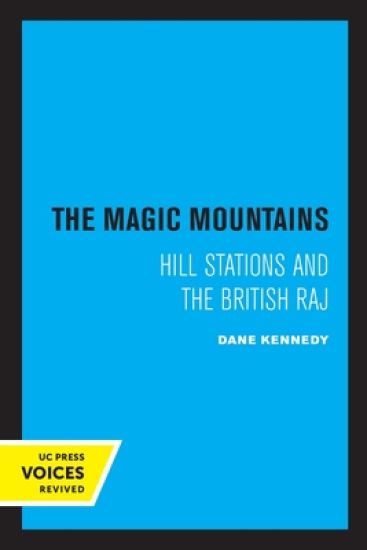
The Magic Mountains

The Magic Mountains

Dane Kennedy

University of California Press
2022
pokkari
Perched among peaks that loom over heat-shimmering plains, hill stations remain among the most curious monuments to the British colonial presence in India. In this engaging and meticulously researched study, Dane Kennedy explores the development and history of the hill stations of the raj. He shows that these cloud-enshrouded havens were sites of both refuge and surveillance for British expatriates: sanctuaries from the harsh climate as well as an alien culture; artificial environments where colonial rulers could nurture, educate, and reproduce themselves; commanding heights from which orders could be issued with an Olympian authority. Kennedy charts the symbolic and sociopolitical functions of the hill stations over the course of the nineteenth and early twentieth centuries, arguing that these highland communities became much more significant to the British colonial government than mere places for rest and play. Particularly after the revolt of 1857, they became headquarters for colonial political and military authorities. In addition, the hill stations provided employment to countless Indians who worked as porters, merchants, government clerks, domestics, and carpenters. The isolation of British authorities at the hill stations reflected the paradoxical character of the British raj itself, Kennedy argues. While attempting to control its subjects, it remained aloof from Indian society. Ironically, as more Indians were drawn to these mountain areas for work, and later for vacation, the carefully guarded boundaries between the British and their subjects eroded. Kennedy argues that after the turn of the century, the hill stations were increasingly incorporated into the landscape of Indian social and cultural life. This title is part of UC Press's Voices Revived program, which commemorates University of California Press's mission to seek out and cultivate the brightest minds and give them voice, reach, and impact. Drawing on a backlist dating to 1893, Voices Revived makes high-quality, peer-reviewed scholarship accessible once again using print-on-demand technology. This title was originally published in 1996.
The Magic Mountains

The Magic Mountains

Dane Kennedy

University of California Press
2022
sidottu
Perched among peaks that loom over heat-shimmering plains, hill stations remain among the most curious monuments to the British colonial presence in India. In this engaging and meticulously researched study, Dane Kennedy explores the development and history of the hill stations of the raj. He shows that these cloud-enshrouded havens were sites of both refuge and surveillance for British expatriates: sanctuaries from the harsh climate as well as an alien culture; artificial environments where colonial rulers could nurture, educate, and reproduce themselves; commanding heights from which orders could be issued with an Olympian authority. Kennedy charts the symbolic and sociopolitical functions of the hill stations over the course of the nineteenth and early twentieth centuries, arguing that these highland communities became much more significant to the British colonial government than mere places for rest and play. Particularly after the revolt of 1857, they became headquarters for colonial political and military authorities. In addition, the hill stations provided employment to countless Indians who worked as porters, merchants, government clerks, domestics, and carpenters. The isolation of British authorities at the hill stations reflected the paradoxical character of the British raj itself, Kennedy argues. While attempting to control its subjects, it remained aloof from Indian society. Ironically, as more Indians were drawn to these mountain areas for work, and later for vacation, the carefully guarded boundaries between the British and their subjects eroded. Kennedy argues that after the turn of the century, the hill stations were increasingly incorporated into the landscape of Indian social and cultural life. This title is part of UC Press's Voices Revived program, which commemorates University of California Press's mission to seek out and cultivate the brightest minds and give them voice, reach, and impact. Drawing on a backlist dating to 1893, Voices Revived makes high-quality, peer-reviewed scholarship accessible once again using print-on-demand technology. This title was originally published in 1996.
Zeal Without Knowledge

Zeal Without Knowledge

Dane C. Ortlund

T. T.Clark Ltd
2014
nidottu
This book examines the concept of ‘zeal' in three Pauline texts (Rom 10:2; Gal 1:14; Phil 3:6) as a way-in to discussion of the ‘New Perspective' on Paul. The concept of zeal has been discussed in a sustained way by James D. G. Dunn, who argues that Paul was drawing on a long and venerable tradition of Jewish zeal for the nation of Israel, that is, a concern to maintain Israel's distinction from the surrounding nations by defending and reinforcing its boundaries. Ortlund interacts with Dunn, agreeing that this concern for distinctiveness was a crucial, and neglected, concern of Paul's before his conversion. Nevertheless, Ortlund contends that Dunn has presented an overly narrow understanding of Pauline zeal that does not sufficiently locate zeal in the broader picture of general obedience to Torah in Jewish tradition. As such, Ortlund shows in this work that zeal refers most immediately to general obedience to Torah - including, but not to be centrally circumscribed as, ethnic distinction.
Zeal Without Knowledge

Zeal Without Knowledge

Dane C. Ortlund

T. T.Clark Ltd
2012
sidottu
This book examines the concept of 'zeal' in three Pauline texts (Rom 10:2; Gal 1:14; Phil 3:6) as a way-in to discussion of the 'New Perspective' on Paul. The concept of zeal has been discussed in a sustained way by James D. G. Dunn, who argues that Paul was drawing on a long and venerable tradition of Jewish zeal for the nation of Israel, that is, a concern to maintain Israel's distinction from the surrounding nations by defending and reinforcing its boundaries. Ortlund interacts with Dunn, agreeing that this concern for distinctiveness was a crucial, and neglected, concern of Paul's before his conversion. Nevertheless, Ortlund contends that Dunn has presented an overly narrow understanding of Pauline zeal that does not sufficiently locate zeal in the broader picture of general obedience to Torah in Jewish tradition. As such, Ortlund shows in this work that zeal refers most immediately to general obedience to Torah - including, but not to be centrally circumscribed as, ethnic distinction.
Rage

Rage

Dane M Greene

Dane Greene
2020
pokkari
Hey, I'm Dane Greene I started writing when I was 16. To say I was talented, or my first project where anything close to readable would be a lie. If it were not for my love of writing I would never have improved, but here I am. If you were to ask me today if I was a good writer, I would tell you that I am better than I was yesterday. A total clich , but it's true for me. I'm always trying to improve my skills as a writer, and love to hear honest opinions of my stories. My biggest work is Rage: a story of survival. It took me many years to complete and I am proud of the work I put into finishing it. If you have read it, I hope you enjoyed it, if not I hope you do.
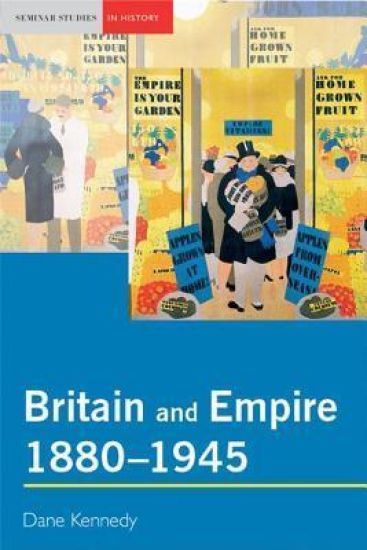
Britain and Empire, 1880-1945

Britain and Empire, 1880-1945

Dane Kennedy

Routledge
2002
nidottu
Britain and Empire, 1880-1945 traces the relationship between Britain and its empire during a period when the two spheres intersected with one another to an unprecedented degree. The story starts with the imperial expansion of the late nineteenth century and ends with the Second World War, at the end of which Britain was on the brink of decolonisation.The author shows how empire came to figure into almost every important development that marked Britain?s response to the upheavals of the late nineteenth century and first half of the twentieth century. He examines its influence on foreign policy, party politics, social reforms, cultural practices, and national identity. At the same time, he shows how domestic developments affected imperial policies.Written in an engaging and accessible manner, this book: integrates British and imperial history in a single narrative provides a useful synthesis of recent historical research in the area analyses topics ranging from ideology and culture to politics and foreign affairs contains a chronology, glossary, who?s who and guide to further readingBritain and Empire, 1880-1945 provides an up-to-date, accessible survey, ideal for students coming to the subject for the first time.
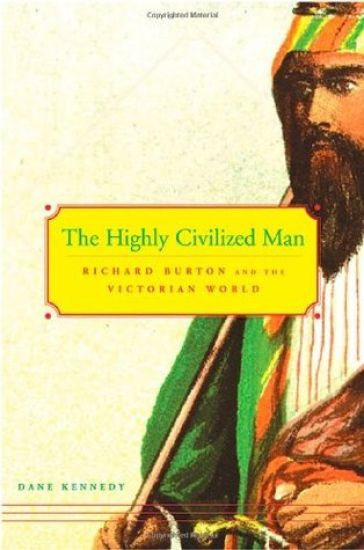
The Highly Civilized Man

The Highly Civilized Man

Dane Kennedy

Harvard University Press
2007
nidottu
Richard Burton was one of Victorian Britain's most protean figures. A soldier, explorer, ethnographer, and polyglot of rare power, as well as a poet, travel writer, and translator of the tales of the Arabian Nights and the Kama Sutra, Burton exercised his abundant talents in a diverse array of endeavors. Though best remembered as an adventurer who entered Mecca in disguise and sought the source of the White Nile, Burton traveled so widely, wrote so prolifically, and contributed so forcefully to his generation's most contentious debates that heprovides us with a singularly panoramic perspective on the world of theVictorians.One of the great challenges confronting the British in the nineteenth century was to make sense of the multiplicity of peoples and cultures they encountered in their imperial march around the globe. Burton played an important role in this mission. Drawing on his wide-ranging experiences in other lands and intense curiosity about their inhabitants, he conducted an intellectually ambitious, highly provocative inquiry into racial, religious, and sexual differences that exposed his own society's norms to scrutiny.Dane Kennedy offers a fresh and compelling examination of Burton and his contribution to the widening world of the Victorians. He advances the view that the Victorians' efforts to attach meaning to the differences they observed among other peoples had a profound influence on their own sense of self, destabilizing identities and reshaping consciousness. Engagingly written and vigorously argued, The Highly Civilized Man is an important contribution to our understanding of a remarkable man and a crucial era.
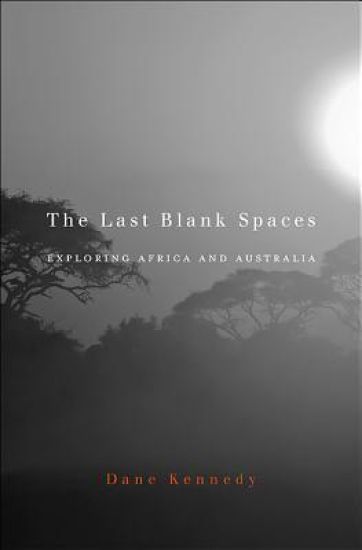
The Last Blank Spaces

The Last Blank Spaces

Dane Kennedy

Harvard University Press
2015
nidottu
For a British Empire that stretched across much of the globe at the start of the nineteenth century, the interiors of Africa and Australia remained intriguing mysteries. The challenge of opening these continents to imperial influence fell to a proto-professional coterie of determined explorers. They sought knowledge, adventure, and fame, but often experienced confusion, fear, and failure. The Last Blank Spaces follows the arc of these explorations, from idea to practice, from intention to outcome, from myth to reality.Those who conducted the hundreds of expeditions that probed Africa and Australia in the nineteenth century adopted a mode of scientific investigation that had been developed by previous generations of seaborne explorers. They likened the two continents to oceans, empty spaces that could be made truly knowable only by mapping, measuring, observing, and preserving. They found, however, that their survival and success depended less on this system of universal knowledge than it did on the local knowledge possessed by native peoples.While explorers sought to advance the interests of Britain and its emigrant communities, Dane Kennedy discovers a more complex outcome: expeditions that failed ignominiously, explorers whose loyalties proved ambivalent or divided, and, above all, local states and peoples who diverted expeditions to serve their own purposes. The collisions, and occasional convergences, between British and indigenous values, interests, and modes of knowing the world are brought to the fore in this fresh and engaging study.