Kirjojen hintavertailu. Mukana 12 390 066 kirjaa ja 12 kauppaa.

Kirjahaku

Etsi kirjoja tekijän nimen, kirjan nimen tai ISBN:n perusteella.

1000 tulosta hakusanalla David Musick

The Complete Guide to Music Lessons: Everything You Need to Know to Be Informed about Learning a New Instrument
Co-authored by David Martin and Marty Fort, this book is an easy-to-understand resource for anyone interested in learning to play an instrument or sing. This book covers the basics from A-Z and answers the most commonly asked questions people have. If you've ever thought about music lessons for yourself or your child, you should read this book.
A Philosophy of Music Education for the Era of AI

A Philosophy of Music Education for the Era of AI

Jiaxing Xie; David G. Hebert

TAYLOR FRANCIS LTD
2026
sidottu
This book outlines a philosophy of music education that is responsive to the age of artificial intelligence. Against the background of AI's challenges to human modes of production, the authors demonstrate how music education can become a tool for self-discovery in this transformative era. Taking the approach of a dialogue between Chinese and Western perspectives, the book addresses the relationships between the social functions of music education and individual development in different historical periods, and envisions the potential role of music education in a new environment shaped by AI. Integrating insights from recent research, it establishes a forward-thinking philosophy of music education that is oriented towards self-discovery and grounded in science. Bringing together philosophical perspectives from Chinese and Western scholars, this book shows how integrating these perspectives can clarify the values that shape music education practices, and enable scholars and educators to better address contemporary issues in the teaching of music.
Southern Music/American Music

Southern Music/American Music

Bill C. Malone; David Stricklin

The University Press of Kentucky
2003
nidottu
The South -- an inspiration for songwriters, a source of styles, and the birthplace of many of the nation's greatest musicians -- plays a defining role in American musical history. It is impossible to think of American music of the past century without such southern-derived forms as ragtime, jazz, blues, country, bluegrass, gospel, rhythm and blues, Cajun, zydeco, Tejano, rock'n'roll, and even rap. Musicians and listeners around the world have made these vibrant styles their own. Southern Music/American Music is the first book to investigate the facets of American music from the South and the many popular forms that emerged from it. In this substantially revised and updated edition, Bill C. Malone and David Stricklin bring this classic work into the twenty-first century, including new material on recent phenomena such as the huge success of the soundtrack to O Brother, Where Art Thou? and the renewed popularity of Southern music, as well as important new artists Lucinda Williams, Alejandro Escovedo, and the Dixie Chicks, among others. Extensive bibliographic notes and a new suggested listening guide complete this essential study.
Virtuoso Pieces for violoncello and piano. Volume 2. Senior grades of children music schools, colleges, conservatoires
ContentsBUTTERFLYFRENCH VILLAGE SONGELEGYSPINNING WHEEL (concert etude)David Popper (1843-1913) the Czech cellist and composer, one of the most prominent musicians of his epoch. The best ensembles and orchestras of the 19th century were proud of his participation. He was the first to perform Robert Schumann's cello concerto. Popper's pedagogical activity was marked by cello and quartet classes at the Budapest Conservatoire. Simultaneously he toured over Europe, not once he visited Russia. Popper's execution was distinct for enthrilling spirits and agitation peculiar to romanticism. However, this passionate impetuosity was expressed through refined captivating technique, i. e. graceful phrasing and luscious sound.Popper's creation includes four cello concertos, Requiem for three cellos with orchestra, fantasy to the Ukrainian songs, numerous compositions for cello solo and chamber ensembles.The offered collection is compiled of Popper's pieces for cello and piano. The pieces are distributed among three issues according to the gradual increasing technical skill. Therefore they would be useful for different steps of education - from music schools to conservatoires.
A Shakespeare Music Catalogue: Volume I

A Shakespeare Music Catalogue: Volume I

Gooch Bryan N. S.; David Thatcher

Clarendon Press
1991
sidottu
The five volumes of A Shakespeare Music Catalogue provide scholarship with an invaluable reference tool: a comprehensive and detailed documentation of all music - published and unpublished, from Shakespeare's day to our own - in any way related to Shakespeare's life and work. No single work has ever before attempted to draw together such a mass of information, from all countries of the world, on this neglected aspect of Shakespeare's dramatic art and cultural influence. The music includes operas, ballets, overtures, tone-poems, songs, and various types of incidental music (for stage, radio, film, and television productions). Each composition is cited with information on its vocal and instrumental requirements, its publication history, and, when known, its first performance. The first three volumes deal with music and musical stage-directions for the plays (arranged alphabetically) and settings of the sonnets and narrative poems. The fourth volume contains indices: of Shakespeare's titles and lines, the titles of musical works, and composers, arrangers, editors, librettists, etc. The final volume provides a further, and unprecedented, research tool: a selected, annotated bibliography of writings, in all languages, on the subject of Shakespeare and music. For the first time, readers of the Catalogue will have ready access to the broad range of musical works inspired by Shakespeare and to the diversity of critical viewpoints they have provoked. Theatrical directors will be able to consult it for appropriate music; musicologists and cultural historians study the history of taste; literary scholars examine any play or plays from a thoroughly documented musical standpoint. The Catalogue brings together the work of many scholars in the field, and goes far beyond existing available data.
A Shakespeare Music Catalogue: Volume III

A Shakespeare Music Catalogue: Volume III

Gooch Bryan N. S.; David Thatcher

Clarendon Press
1991
sidottu
The five volumes of "A Shakespeare Music Catalogue" provide documentation of all music, published and unpublished, from Shakespeare's day to the 20th century, relating to Shakespeare's life and work. The music includes operas, ballets, overtures, tone-poems, songs and various types of incidental music for stage, radio, film and television productions. Each composition is cited with information on its vocal and instrumental requirements, its publication history and, when known, its first performance. The first three deal with music and musical stage-directions for the plays and settings of the sonnets and narrative poems. The fourth volume contains indices of Shakespeare's titles and lines, the titles of musical works, composers, arrangers, editors and librettists. The final volume provides an annotated bilbiography of writings, in all language, on the subject of Shakespeare and music.
The Social and Applied Psychology of Music

The Social and Applied Psychology of Music

Adrian North; David Hargreaves

Oxford University Press
2008
nidottu
Music is so ubiquitous that it can be easy to overlook the powerful influence it exerts in so many areas of our lives - from birth, through childhood, to old age. The Social and Applied Psychology of Music is the successor to the bestselling and influential The Social Psychology of Music. It considers the value of music in everyday life, answering some of the perennial questions about music. The book begins with a scene-setting chapter that describes the academic background to the book, before looking at composition and musicianship. It then goes on to look at musical preference. What aspects of music are crucial in determining whether or not you will like it? In chapter 4 the authors consider whether rap and rock are bad for young people, highlighting some of the major moral scandals that have rocked pop music, and asking whether these have become more extreme over time. The following chapter looks at music as a commercial product. How does the structure of the music industry influence CD purchasing, and how does music affect customers in retail and leisure settings like shops and restaurants? The book closes with an examination of music education. How does musical ability develop in children, and how does this relate to more general theories of how intellectual skills develop? Do musical skills develop independently of other abilities? Exceptionally broad in scope, and written in a highly accessible style by the leading researchers in this field, The Social and Applied Psychology of Music will be required reading for anyone seeking an understanding of the role music plays in our lives.
Diary of a Player: How My Musical Heroes Made a Guitar Man Out of Me
Country music star Brad Paisley salutes others in the music world in this funny, personal, and fascinating portrait of what it's like to be country's leading guitar hero. The Story of a Life with Strings Attached Brad Paisley is one of country music's leading men--admired as a recording artist, a performer, a songwriter, and a guitar slinger. This was not always so. In Diary of a Player, Paisley for the first time fully retraces his entire musical and personal journey to date. And it all began with a loving grandfather who gave eight-year-old Brad Douglas Paisley a Sears Danelectro guitar--the Christmas gift that would alter Brad's life forever. In Brad's own words, we read his emotional tribute to his late great "Papaw," Warren Jarvis, who sparked his dream come true: When I was eight I got a gift from my grandpa. No coincidence that around that time I also got an identity. See, no matter how I have changed, learned, and evolved as a person, the guitar has been a major part of it, and really the only constant. A crutch, a shrink, a friend, love interest, parachute, flying machine, soapbox, canvas, liability, investment, jackpot, tease, a sage, a gateway, an addiction, a recovery, a temptress, a church, a voice, veil, armor, and lifeline. My grandpa knew it could be many of these things for me, but mostly he just wanted me to never be alone. He said if I learned to play, anything would be manageable, and life would be richer. You can get through some real tough moments with that guitar on your knee. When life gets intense, there are people who drink, who seek counseling, eat, or watch TV, pray, cry, sleep, and so on. I play.
Selling Folk Music

Selling Folk Music

Ronald D. Cohen; David Bonner

University Press of Mississippi
2021
pokkari
Selling Folk Music: An Illustrated History highlights commercial sources that reveal how folk music has been packaged and sold to a broad, shifting audience in the United States. Folk music has a varied and complex scope and lineage, including the blues, minstrel tunes, Victorian parlor songs, spirituals and gospel tunes, country and western songs, sea shanties, labor and political songs, calypsos, pop folk, folk-rock, ethnic, bluegrass, and more. The genre is of major importance in the broader spectrum of American music, and it is easy to understand why folk music has been marketed as America's music.Selling Folk Music presents the public face of folk music in the United States via its commercial promotion and presentation throughout the twentieth century. Included are concert flyers; sheet music; book, songbook, magazine, and album covers; concert posters and flyers; and movie lobby cards and posters, all in their original colors. The 1964 hootenanny craze, for example, spawned such items as a candy bar, pinball machine, bath powder, paper dolls, Halloween costumes, and beach towels.The almost five hundred images in Selling Folk Music present a new way to catalog the history of folk music while highlighting the transformative nature of the genre. Following the detailed introduction on the history of folk music, illustrations from commercial products make up the bulk of the work, presenting a colorful, complex history.
Science Of Time: A drummers philosophy for developing time, musicianship and the creative process.
"Jonah David, has developed a very in depth and creative musical system. A must read."- Lenny White (Miles Davis, Return To Forever) Science Of Time is drummer's philosophy for developing time, musicianship and the creative process. Science Of Time is a series of exercises that will help you: - Improve your time keeping, mobility, coordination and independence. - Develop your listening skills and respond musically. -Improve your character, professionalism and "vision." - Enhance your creative process and utilize the skills you possess more effectively. www.jonahdavid.com
Selling Folk Music

Selling Folk Music

Ronald D. Cohen; David Bonner

University Press of Mississippi
2017
sidottu
Selling Folk Music: An Illustrated History highlights commercial sources that reveal the process of how folk music has been packaged and sold to a broad, shifting audience in the United States. Folk music has a varied and complex scope and lineage, including the blues, minstrel tunes, Victorian parlor songs, spirituals and gospel tunes, country and western songs, sea shanties, labor and political songs, calypsos, pop folk, folk-rock, ethnic, bluegrass, and more. The genre is of major importance in the broader spectrum of American music, and it is easy to understand why folk music has been marketed as America’s music.Selling Folk Music presents the public face of folk music in the United States through its commercial promotion and presentation through much of the twentieth century. Included are concert flyers; sheet music; book, songbook, magazine, and album covers; concert posters and flyers; and movie lobby cards and posters, all in their original colors. The 1964 hootenanny craze, for example, spawned such items as a candy bar, pinball machine, bath powder, paper dolls, Halloween costumes, and beach towels. The almost five hundred images in Selling Folk Music present a new way to catalog the history of folk music while highlighting the transformative nature of the genre. Following the detailed introduction on the history of folk music, illustrations from commercial products make up the bulk of the work, presenting a colorful, complex history of folk music.
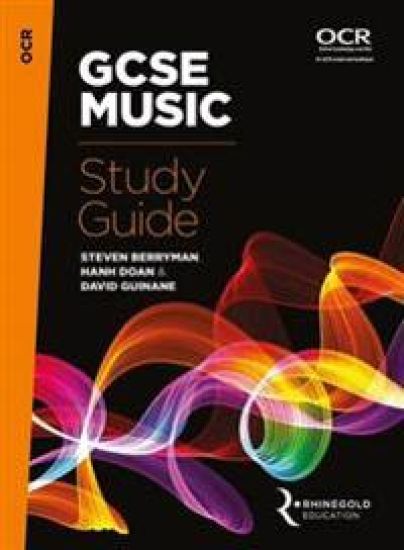
OCR GCSE Music Study Guide

OCR GCSE Music Study Guide

Berryman Steven; Doan Hanh; Guinane David

Rhinegold Education
2016
nidottu
A definitive study guide for the 'reformed' GCSE (9-1) specification. Written by experts, this comprehensive guide covers all components of the GCSE: Performing, Composing and Appraising.
Electronic Dance Music

Electronic Dance Music

Christopher T. Conner; David R. Dickens

BLOOMSBURY PUBLISHING PLC
2023
sidottu
Electronic Dance Music: From Deviant Subculture to Culture Industry explores the subculture’s emergence as a deviant subculture. This text analyzes how industry professionals, fans, and public officials helped usher in a new age of EDM, arguing that while the defining features of the subculture made it attractive, they also laid the foundations for outsiders to commodify the movement as a culture industry. Conner and Dickens explore the concept of “commodified resistance” as the mechanism by which the movement's politically dissident features were removed and its place as a multi-billion-dollar industry made possible. Ultimately, this text advocates the continued utility of the culture industry thesis through an empirical analysis of the EDM subculture.
Electronic Dance Music

Electronic Dance Music

Christopher T. Conner; David R. Dickens

BLOOMSBURY PUBLISHING PLC
2025
nidottu
Electronic Dance Music: From Deviant Subculture to Culture Industry explores the subculture’s emergence as a deviant subculture. This text analyzes how industry professionals, fans, and public officials helped usher in a new age of EDM, arguing that while the defining features of the subculture made it attractive, they also laid the foundations for outsiders to commodify the movement as a culture industry. Conner and Dickens explore the concept of “commodified resistance” as the mechanism by which the movement's politically dissident features were removed and its place as a multi-billion-dollar industry made possible. Ultimately, this text advocates the continued utility of the culture industry thesis through an empirical analysis of the EDM subculture.Check out an interview with the author on the New Books Network podcast here: https://newbooksnetwork.com/electronic-dance-music
A Biographical Dictionary of English Court Musicians, 1485–1714, Volumes I and II

A Biographical Dictionary of English Court Musicians, 1485–1714, Volumes I and II

Andrew Ashbee; David Lasocki; Fiona Kisby

Ashgate Publishing Limited
1998
muu
Compiled by scholars with unrivalled knowledge of the sources, this dictionary provides biographies of all musicians and instrument makers employed by the English court from 1485-1714. A number of the musicians featured here have never previously received a dictionary entry. Coverage of these minor figures helps to flesh out the picture of musical life in the court in a way which individual studies of more major composers cannot. In addition to basic biographical details, entries feature information on: appointments; probate material; family background; heraldry; signatures and holograph documents; subscriptions to books; bibliographic references. A finding-list of variant names, details of the succession of court places assumed by musicians and an index of subjects and place names completes this comprehensive reference work.