
Kirjahaku
Etsi kirjoja tekijän nimen, kirjan nimen tai ISBN:n perusteella.
1000 tulosta hakusanalla David R Addleman


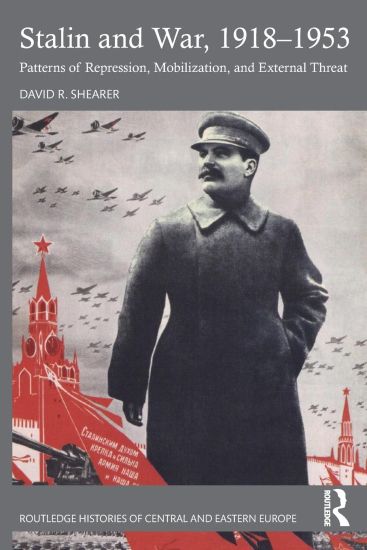
Stalin and War, 1918-1953 is the first book to examine the patterns of radicalized internal violence that characterized the Stalinist regime across the whole of the dictator’s rule, and it is one of the only works to connect patterns of internal violence to the dictator’s perceptions of war and foreign threat. Discussion focuses on the crisis years 1928-1932, 1936-1939, the Great Fatherland War, and the last war crisis period, 1947-1953. Violent repressions under Stalin were cyclical. They peaked and ebbed but, in each case, they were linked to Stalin’s expectation of war and invasion, to his perceived need for urgent internal mobilization, and to intense foreign policy activity. Stalin’s behavior in each of these perceived war crises followed a pattern established during the dictator's experience as a military commander in the Russian revolutionary wars, and especially during the Polish war in 1919 and 1920. Together, these chapters trace a consistent and interconnected logic of war and repression throughout Stalin’s political life.This book will be of interest to professional scholars of Soviet history, twentieth-century history, and World War II history, and it is approachable enough to be appreciated by general readers.
Stalin and War, 1918-1953 is the first book to examine the patterns of radicalized internal violence that characterized the Stalinist regime across the whole of the dictator’s rule, and it is one of the only works to connect patterns of internal violence to the dictator’s perceptions of war and foreign threat. Discussion focuses on the crisis years 1928-1932, 1936-1939, the Great Fatherland War, and the last war crisis period, 1947-1953. Violent repressions under Stalin were cyclical. They peaked and ebbed but, in each case, they were linked to Stalin’s expectation of war and invasion, to his perceived need for urgent internal mobilization, and to intense foreign policy activity. Stalin’s behavior in each of these perceived war crises followed a pattern established during the dictator's experience as a military commander in the Russian revolutionary wars, and especially during the Polish war in 1919 and 1920. Together, these chapters trace a consistent and interconnected logic of war and repression throughout Stalin’s political life.This book will be of interest to professional scholars of Soviet history, twentieth-century history, and World War II history, and it is approachable enough to be appreciated by general readers.
Mergers and Acquisitions
David R. King; Florian Bauer; Svante Schriber
TAYLOR FRANCIS LTD
2021
nidottu
The process of identifying and evaluating a target firm, completing a deal after its negotiation and announcement, and then integrating a target firm after legal combination is a multi-year process with uncertain returns to acquiring firms. Research on mergers and acquisitions (M&As) is progressing rapidly yet it remains fragmented across multiple research perspectives that largely examine different acquisition phases separately and coincide with a focus on different research variables. As a result, research fragmentation means that a researcher in one area may be unaware of research from related areas that is likely relevant. This contributes to research silos with M&A research displaying different traditions, starting points, and assumptions.Mergers and Acquisitions: A Research Overview summarizes the frontier in M&A research and provides insights into where it can be expanded. It undertakes the needed integration and reconciliation of research in order to derive practical knowledge for managing acquisitions from beginning to end, providing a summary of what is known and its implications for future research.This concise overview reconciles and integrates the state of the art in our understanding of mergers and acquisitions, providing an essential first stopping point in the research journey of students and scholars working in this area.
Teaching the World to Sleep provides a complete, science-based overview of sleep and sleep problems, from environmental, legal, and technological factors to assessment and treatment options.David R. Lee introduces the basic scientific concepts involved in sleep and provides a clear description of insomnias and the parasomnias. Teaching the World to Sleep discusses NICE-recommended Cognitive Behavioural Therapy for Insomnia (CBT-i) and the REST programme® and outlines considerations for at-risk groups, sleep and the law, and the application of dreams and dreaming in psychotherapy. This second edition includes a full update on research conducted since the publication of the first edition and includes new information on sleep in the legal setting, the rise of sleep apps and trackers and their impact on our sleep. Lee also considers neurodiversity, sleep in long Covid, rare and unusual sleep disorders and the delivery of treatment using the NHS-recommended stepped-care approach. Teaching the World to Sleep will be essential reading for psychotherapists, occupational therapists, and other professionals working with clients with sleep problems. It will also provide an accessible introduction to the science of sleep to readers looking to understand their own sleep problems.
Teaching the World to Sleep provides a complete, science-based overview of sleep and sleep problems, from environmental, legal, and technological factors to assessment and treatment options.David R. Lee introduces the basic scientific concepts involved in sleep and provides a clear description of insomnias and the parasomnias. Teaching the World to Sleep discusses NICE-recommended Cognitive Behavioural Therapy for Insomnia (CBT-i) and the REST programme® and outlines considerations for at-risk groups, sleep and the law, and the application of dreams and dreaming in psychotherapy. This second edition includes a full update on research conducted since the publication of the first edition and includes new information on sleep in the legal setting, the rise of sleep apps and trackers and their impact on our sleep. Lee also considers neurodiversity, sleep in long Covid, rare and unusual sleep disorders and the delivery of treatment using the NHS-recommended stepped-care approach. Teaching the World to Sleep will be essential reading for psychotherapists, occupational therapists, and other professionals working with clients with sleep problems. It will also provide an accessible introduction to the science of sleep to readers looking to understand their own sleep problems.
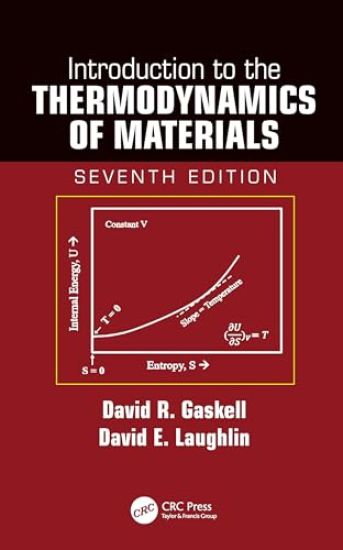
Introduction to the Thermodynamics of Materials
David R. Gaskell; David E. Laughlin
TAYLOR FRANCIS LTD
2024
sidottu
Maintaining the substance that has made Introduction to the Thermodynamics of Materials a perennial bestseller for decades, the Seventh Edition is updated to reflect the broadening field of materials science and engineering. Chapters are updated and revised throughout to be more useful and logical for students.Features more than 60 new homework problems for the students, a listing of terms and concepts introduced, and a summary sectionIncludes more on mathematical and graphical analysis of the various state functions utilized in classical thermodynamicsIncludes a more extensive discussion of the third law of thermodynamicsFeatures a new appendix on exact differential equations and mathematical relationships, including all mathematical relations among differentials of homogeneous functions utilized in the textWritten as the definitive introduction to the thermodynamic behavior of materials systems, this text presents the underlying thermodynamic principles of materials and their applications and continues to be the best undergraduate textbook in thermodynamics for materials science students. An updated solutions manual is also available for qualifying adopting professors.
Statisticians have met the need to test hundreds or thousands of genomics hypotheses simultaneously with novel empirical Bayes methods that combine advantages of traditional Bayesian and frequentist statistics. Techniques for estimating the local false discovery rate assign probabilities of differential gene expression, genetic association, etc. without requiring subjective prior distributions. This book brings these methods to scientists while keeping the mathematics at an elementary level. Readers will learn the fundamental concepts behind local false discovery rates, preparing them to analyze their own genomics data and to critically evaluate published genomics research.Key Features:* dice games and exercises, including one using interactive software, for teaching the concepts in the classroom* examples focusing on gene expression and on genetic association data and briefly covering metabolomics data and proteomics data* gradual introduction to the mathematical equations needed* how to choose between different methods of multiple hypothesis testing* how to convert the output of genomics hypothesis testing software to estimates of local false discovery rates* guidance through the minefield of current criticisms of p values* material on non-Bayesian prior p values and posterior p values not previously published
A Research Agenda for Mergers and Acquisitions
David R. (EDT) King; Olimpia (EDT) Meglio
Edward Elgar Pub
2024
sidottu
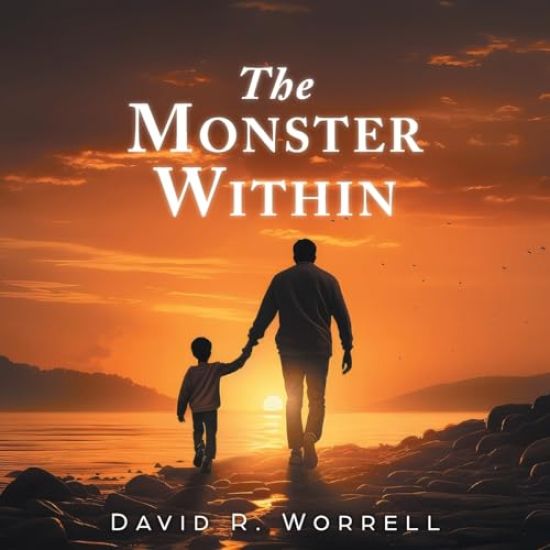
In spring of 1985, Dave Worrell, a police detective on Canada's Sunshine Coast, received a call: a young female provincial ward reported that she had been sexually assualted by her school principal. Dave was no stranger to investigating allegations like these, but as he dove deeper into the suspect's history, it soon became clear that Robert Olav Noyes's actions were even more far-reaching and sinister than anyone could have imagined.The Noyes case is infamous in British Columbia not only for the nature of the crime, but for the number of victims and the length of time he had been perpetrating; although he was ultimately charged with nineteen counts of sexual assault, he admitted to assaulting over sixty, and investigators believe the true count is in the hundreds. But how did he go unseen for so long?With care and precision, Dave recounts the investigation, interviewing witnesses and gathering information, all as the small-town communities involved fall apart in the wake of Noyes's arrest. He unfolds the story piece by piece, then takes it to court, providing firsthand experience and transcripts of the gruelling court sessions to prosecute Noyes.The Monster Within is a close look at the Noyes case written by the lead investigator himself, spanning from the nascent moments of the Noyes case to the aftermath of his sentence.
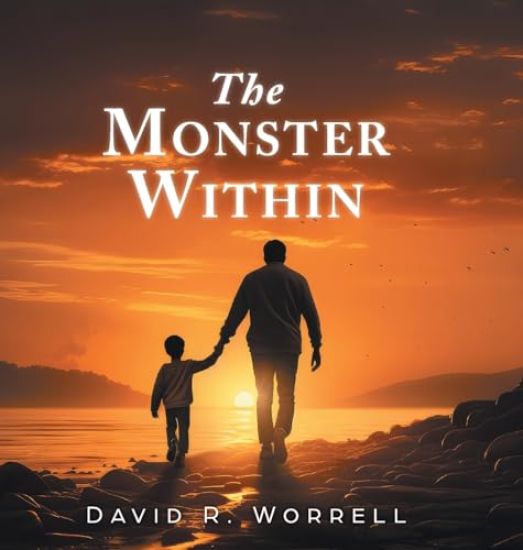
In spring of 1985, Dave Worrell, a police detective on Canada's Sunshine Coast, received a call: a young female provincial ward reported that she had been sexually assualted by her school principal. Dave was no stranger to investigating allegations like these, but as he dove deeper into the suspect's history, it soon became clear that Robert Olav Noyes's actions were even more far-reaching and sinister than anyone could have imagined.The Noyes case is infamous in British Columbia not only for the nature of the crime, but for the number of victims and the length of time he had been perpetrating; although he was ultimately charged with nineteen counts of sexual assault, he admitted to assaulting over sixty, and investigators believe the true count is in the hundreds. But how did he go unseen for so long?With care and precision, Dave recounts the investigation, interviewing witnesses and gathering information, all as the small-town communities involved fall apart in the wake of Noyes's arrest. He unfolds the story piece by piece, then takes it to court, providing firsthand experience and transcripts of the gruelling court sessions to prosecute Noyes.The Monster Within is a close look at the Noyes case written by the lead investigator himself, spanning from the nascent moments of the Noyes case to the aftermath of his sentence.
Handbook of Data on Common Organic Compounds
David R. Lide; G. W. A. Milne
TAYLOR FRANCIS LTD
2026
sidottu
The Handbook of Data on Common Organic Compounds provides physical property data, spectral data, and chemical structures for approximately 12,000 common organic compounds. These compounds encompass the most commonly used both in industry and laboratories, as well as those found on various lists of regulatory concern. A clear, easy-to-read format and three indexes- CAS Registry Number, Molecular Formula, and Name/Synonym-enhance the Handbook's usability and help make it a bestselling resource relied upon by researchers, chemists, and students around the world.
Handbook of Data on Common Organic Compounds
David R. Lide; G. W. A. Milne
TAYLOR FRANCIS LTD
2026
sidottu
The Handbook of Data on Common Organic Compounds provides physical property data, spectral data, and chemical structures for approximately 12,000 common organic compounds. These compounds encompass the most commonly used both in industry and laboratories, as well as those found on various lists of regulatory concern. A clear, easy-to-read format and three indexes- CAS Registry Number, Molecular Formula, and Name/Synonym-enhance the Handbook's usability and help make it a bestselling resource relied upon by researchers, chemists, and students around the world.
Handbook of Data on Common Organic Compounds
David R. Lide; G. W. A. Milne
TAYLOR FRANCIS LTD
2026
sidottu
The Handbook of Data on Common Organic Compounds provides physical property data, spectral data, and chemical structures for approximately 12,000 common organic compounds. These compounds encompass the most commonly used both in industry and laboratories, as well as those found on various lists of regulatory concern. A clear, easy-to-read format and three indexes- CAS Registry Number, Molecular Formula, and Name/Synonym-enhance the Handbook's usability and help make it a bestselling resource relied upon by researchers, chemists, and students around the world.