Kirjojen hintavertailu. Mukana 12 016 292 kirjaa ja 12 kauppaa.

Kirjahaku

Etsi kirjoja tekijän nimen, kirjan nimen tai ISBN:n perusteella.

1000 tulosta hakusanalla Deborah Hopkinson

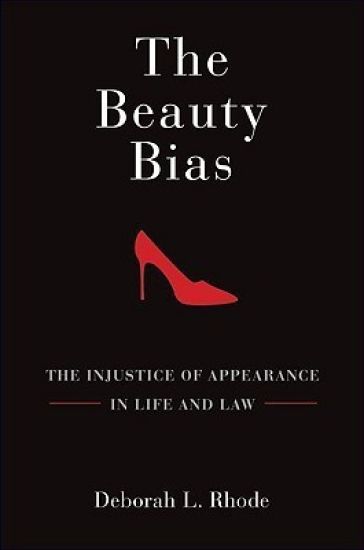
The Beauty Bias

The Beauty Bias

Deborah L. Rhode

Oxford University Press Inc
2010
sidottu
It hurts to be beautiful has been a cliché for centuries. What has been far less appreciated is how much it hurts not to be beautiful. The Beauty Bias explores our cultural preoccupation with attractiveness, the costs it imposes, and the responses it demands. Beauty may be only skin deep, but the damages associated with its absence go much deeper. Unattractive individuals are less likely to be hired and promoted, and are assumed less likely to have desirable traits, such as goodness, kindness, and honesty. Three quarters of women consider appearance important to their self image and over a third rank it as the most important factor. Although appearance can be a significant source of pleasure, its price can also be excessive, not only in time and money, but also in physical and psychological health. Our annual global investment in appearance totals close to $200 billion. Many individuals experience stigma, discrimination, and related difficulties, such as eating disorders, depression, and risky dieting and cosmetic procedures. Women bear a vastly disproportionate share of these costs, in part because they face standards more exacting than those for men, and pay greater penalties for falling short. The Beauty Bias explores the social, biological, market, and media forces that have contributed to appearance-related problems, as well as feminism's difficulties in confronting them. The book also reviews why it matters. Appearance-related bias infringes fundamental rights, compromises merit principles, reinforces debilitating stereotypes, and compounds the disadvantages of race, class, and gender. Yet only one state and a half dozen localities explicitly prohibit such discrimination. The Beauty Bias provides the first systematic survey of how appearance laws work in practice, and a compelling argument for extending their reach. The book offers case histories of invidious discrimination and a plausible legal and political strategy for addressing them. Our prejudices run deep, but we can do far more to promote realistic and healthy images of attractiveness, and to reduce the price of their pursuit.
Families, Relationships and Intimate Life

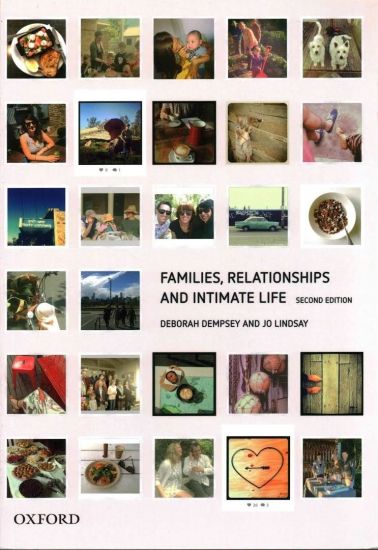
Families, Relationships and Intimate Life

Deborah Dempsey; Jo Lindsay

OUP Australia and New Zealand
2014
nidottu
Families, Relationships and Intimate Life, Second Edition is a thorough exploration of the controversies, contradictions and broad patterns that characterise contemporary relationships and families. Beginning with the conceptual scaffolding of families in their historical and cultural context this text includes the key cultural differences of ethnicity, class and sexuality. Theoretical perspectives including functionalism, feminist approaches and reflexive modernisation are also clearly outlined. Once the groundwork has been established this book delves into examining the complexity of contemporary family life, covering key elements in the life course - childhood, youth, partnering, parenting and ageing and both the positive and negative sides of family life including intimacy and violence.
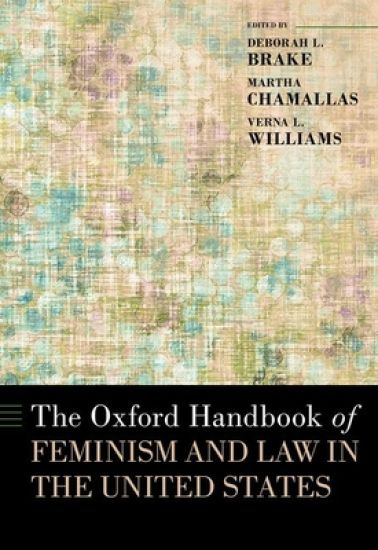
The Oxford Handbook of Feminism and Law in the United States

The Oxford Handbook of Feminism and Law in the United States

Deborah L. Brake; Martha Chamallas; Verna L. Williams

OXFORD UNIVERSITY PRESS INC
2023
sidottu
Combining analyses of feminist legal theory, legal doctrine, and feminist social movements, The Oxford Handbook of Feminism and Law in the United States offers a comprehensive overview of U.S. legal feminism. Contributions by leading feminist thinkers trace the impacts of legal feminism on legal claims and defenses and demonstrate how feminism has altered and transformed understandings of basic legal concepts, from sexual harassment and gender equity in sports to new conceptions of consent and motherhood. Its chapters connect legal feminism to adjacent intellectual discourses, such as masculinities theory and queer theory, and scrutinize criticisms and backlash to feminism from all sides of the political spectrum. Its examination of the prominent brands of feminist legal theory shows the links and divergences among feminist scholars, highlighting the continued relevance of established theories (liberal, dominance, and relational feminism) and the increased importance of new intersectional, sex-positive, and postmodern approaches. Unique in its triple focus on theory, doctrine, and social movements, the Handbook recounts the history of activist struggles to pass the Equal Right Amendment, the Anti-Rape and Battered Movements of the 1970s, the contemporary movements for reproductive justice and against campus sexual assault, as well as the #MeToo movement. The emphasis on theory and feminist practice animates discussions of feminist legal pedagogy and feminist influences on judges and judicial decision making. Chapters on emerging areas of law ripe for feminist analysis explore foundational subjects such as contracts, tax, and tort law, and imagine feminist and social justice approaches to digital privacy and intellectual property law, environmental law, and immigration law. The Handbook provides a broad picture of the intellectual landscape and allows both new and established scholars to gain an in-depth understanding of the full range of feminist influence on U.S. law.
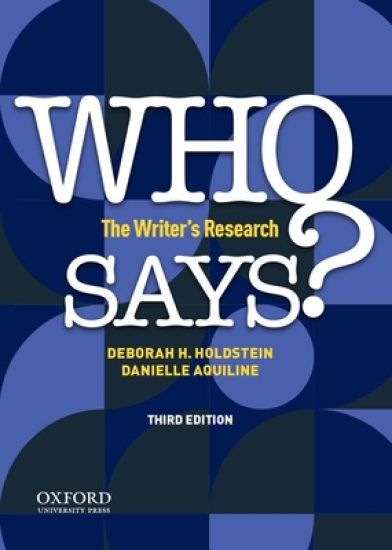
Who Says?: The Writer's Research

Who Says?: The Writer's Research

Deborah H. Holdstein; Danielle Aquiline

Oxford University Press
2020
nidottu
Now in a new edition, Who Says? The Writer's Research is an innovative and brief research guide focusing on information literacy. The text shows students not only how to do research but also why research is important. Written for today's college student, Who Says? addresses contemporary research issues head on: - What does it mean to conduct research in an age when we are bombarded by collaborative information through online media and databases like Wikipedia?- Who owns this information? How do we know?- As information circulates and changes, do the lines between audience and author blur?- How should these changes alter our expectations as readers and as writers? By prompting students to think critically about matters of ownership and authority, Who Says? not only shows students how to find and incorporate credible sources in their writing, but also encourages students to synthesize their own ideas with the ideas of others, leading them to develop more confident and compelling voices as writers.
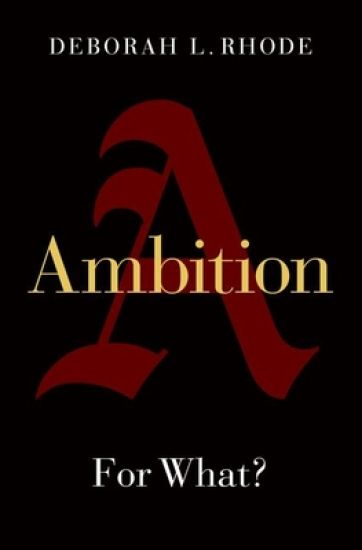
Ambition

Ambition

Deborah L. Rhode

Oxford University Press Inc
2021
sidottu
An engaging account of ambition, the forces that drive and constrain it, and whether it serves our deepest needs. Ambition is a dominant force in for human civilization, driving its greatest achievements and most horrific abuses. Our striving has brought art, airplanes, and antibiotics, as well as wars, genocide, and despotism. This mixed record raises obvious concerns about how we can channel ambition in the most productive directions. In Ambition, Deborah L. Rhode offers a comprehensive and engaging survey of the topic that focuses in particular on the nature of ambition in contemporary American life. To do this, she first explores three central focuses of ambition-recognition, power, and money-and argues that an excessive preoccupation with these external markers for success can be self-defeating for individuals and toxic for society. She then shifts to discussing the obstacles to constructive ambition and the consequences when ambitions are skewed or blocked by inequality and identity-related characteristics such as gender, race, class, and national origin. Rhode further addresses the ways that families, schools, and colleges might play a more effective role in developing positive ambition. Finally, she examines what sorts of ambitions contribute to sustained well-being, such as building relationships and contributing to society, rather than chasing extrinsic rewards such as wealth, power, and fame. Drawing upon leading thinkers on the topic and contemporary social science research while laying out an agenda for how ambition can be better developed, Ambition will force us reconsider the factors that shape our ambitions, and whether those ambitions meet our deepest needs and highest aspirations.
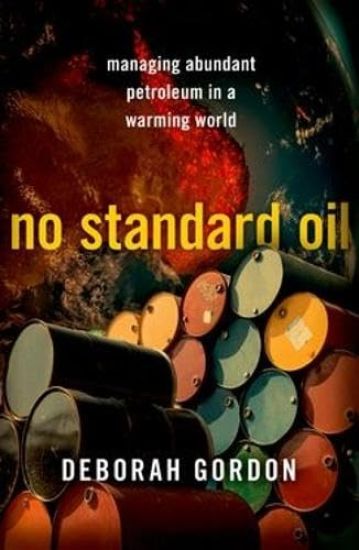
No Standard Oil

No Standard Oil

Deborah Godon

OXFORD UNIVERSITY PRESS INC
2025
nidottu
In No Standard Oil, environmental policy expert Deborah Gordon examines the widely varying climate impacts of global oils and gases, and proposes solutions to cut greenhouse gas emissions in this sector while making sustainable progress in transitioning to a carbon-free energy future. The next decade will be decisive in the fight against climate change. It will be impossible to hold the planet to a 1.5° C temperature rise without controlling methane and CO2 emissions from the oil and gas sector. Contrary to popular belief, the world will not run out of these resources anytime soon. Consumers will continue to demand these abundant resources to fuel their cars, heat their homes, and produce everyday goods like shampoo, pajamas, and paint. But it is becoming more environmentally damaging to supply energy using technologies like fracking oil and liquefying gas. Policymakers, financial investors, environmental advocates, and citizens need to understand what oil and gas are doing to our climate to inform decision-making. In No Standard Oil, Deborah Gordon shows that no two oils or gases are environmentally alike. Each has a distinct, quantifiable climate impact. While all oils and gases pollute, some are much worse for the climate than others. In clear, accessible language, Gordon explains the results of the Oil Climate Index Plus Gas (OCI+), an innovative, open source model that estimates global oil and gas emissions. Gordon identifies the oils and gases from every region of the globe--along with the specific production, processing, and refining activities--that are the most harmful to the planet, and proposes innovative solutions to reduce their climate footprints. Global climate stabilization cannot afford to wait for oil and gas to run out. No Standard Oil shows how we can take immediate, practical steps to cut greenhouse gas emissions in the crucial oil and gas sector while making sustainable progress in transitioning to a carbon-free energy future.
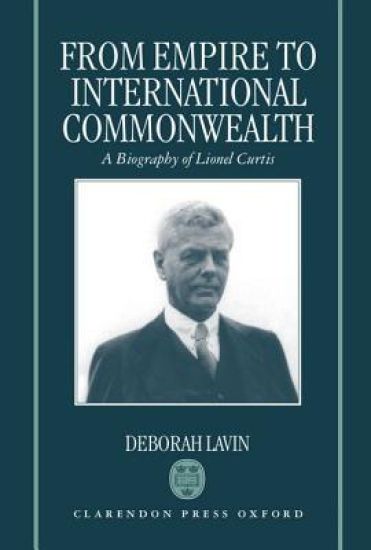
From Empire to International Commonwealth

From Empire to International Commonwealth

Deborah Lavin

Clarendon Press
1995
sidottu
Lionel Curtis C.H. once counted among the great and the good, working behind the scenes of international politics and honoured as the `pioneer of a great idea' - international federation as the natural successor to empire. He advocated federation as the way to create a new South Africa after the Boer War; he called for self-government in India in 1912; in 1921 he was instrumental in attempting to pacify the Irish Troubles by treating Eire as if it were a self-governing Commonwealth Dominion. He went on to preach the conversion of the Empire-Commonwealth into a multinational federation, which, in association with the United States, would serve as a model for a united Europe, and even for world government. He founded the Round Table think-tank, the Royal Institute of International Affairs at Chatham House, and the Oxford Society. He lobbied indefatigably for his vision of the Commonwealth as a new world order, to be more effective that the League of Nations in making wars obsolete. In the process, he exasperated nationalists and imperialists alike as a prophet of apparently lost causes. He deserves to be remembered not only for what he achieved but for what he was: the bore who never lost a friend; the optimist who stuck to his belief when all was lost, the third-class scholar who became a Fellow of All Souls; the visionary riding his hobby-horse into the drawing rooms of high political society and yet invited affectionately to return. The remarkable character of the man and the influence he exerted on the history of the Empire and Commonwealth are explored in this authoritative biography.
Xenophon's Cyropaedia

Xenophon's Cyropaedia

Deborah Levine Gera

Clarendon Press
1993
sidottu
This book is a literary study of the Cyropaedia, Xenophon's fictional account of Cyrus the Great and the founding of his empire. The Cyropaedia is a complex blend of various literary forms, and this book examines several of its literary genres. General discussions of the works of Xenophon's predecessors and contemporaries, in particular Herodotus, Plato, and Ctesias, are combined with a detailed commentary on select passages. Socrates--his life, ideas, and techniques of argument, is an indirect presence in the work, and the Socratic tenor of several of the dialogues in it is the subject of one chapter. The lovely Panthea, the fairest woman in Asia, is Xenophon's most colourful heroine and her story, along with the dramatic tales of the eunuch Gadatas, bereaved Gobyras, and defeated Croesus, are the focus of another section; special attention is paid to the question of Xenophon's originality in fashioning these tales. The symposia of the Cyropaedia, an intricate blend of Greek and Persian elements, are also investigated at length. The book concludes with an examination of Xenophon's ambivalent attitude towards his hero, Cyrus the Great: the author argues that both Xenophon and his hero are more complex than they might seem.
Streetwalking the Metropolis

Streetwalking the Metropolis

Deborah L. Parsons

Oxford University Press
2000
sidottu
Can there be a flaneuse, and what form might she take? This is the central question of Streetwalking the Metropolis, an important contribution to ongoing debates on the city and modernity in which Deborah Parsons re-draws the gendered map of urban modernism. Assessing the cultural and literary history of the concept of the flaneur, the urban observer/writer traditionally gendered as masculine, the author advances critical space for the discussion of a female 'flaneuse', focused around a range of women writers from the 1880's to World War Two. Cutting across period boundaries, this wide-ranging study offers stimulating accounts of works by writers including Amy Levy, Dorothy Richardson, Virginia Woolf, Rosamund Lehmann, Jean Rhys, Janet Flanner, Djuna Barnes, Anais Nin, Elizabeth Bowen and Doris Lessing, highlighting women's changing relationship with the social and psychic spaces of the city, and drawing attention to the ways in which the perceptions and experiences of the street are translated into the dynamics of literary texts.
Streetwalking the Metropolis

Streetwalking the Metropolis

Deborah L. Parsons

Oxford University Press
2000
nidottu
Can there be a flaneuse, and what form might she take? This is the central question of Streetwalking the Metropolis, an important contribution to ongoing debates on the city and modernity in which Deborah Parsons re-draws the gendered map of urban modernism. Assessing the cultural and literary history of the concept of the flaneur, the urban observer/writer traditionally gendered as masculine, the author advances critical space for the discussion of a female 'flaneuse', focused around a range of women writers from the 1880s to World War Two. Cutting across period boundaries, this wide-ranging study offers stimulating accounts of works by writers including Amy Levy, Dorothy Richardson, Virginia Woolf, Rosamund Lehmann, Jean Rhys, Janet Flanner, Djuna Barnes, Anais Nin, Elizabeth Bowen and Doris Lessing, highlighting women's changing relationship with the social and psychic spaces of the city, and drawing attention to the ways in which the perceptions and experiences of the street are translated into the dynamics of literary texts.
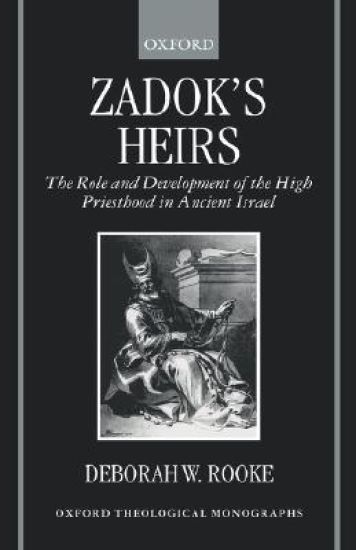
Zadok's Heirs

Zadok's Heirs

Deborah W. Rooke

Clarendon Press
2000
sidottu
This unique study is the first systematic examination to be undertaken of the high priesthood in ancient Israel, from the earliest local chief priests in the pre-monarchic period down to the Hasmonaean priest-kings in the first century BCE. Dr Rooke argues that, contrary to received scholarly opinion, the high priesthood was fundamentally a religious office which in and of itself bestowed no civil responsibilities upon its holders, and that not until the time of the Maccabean revolt does the high priest appear as the sole figure of leadership for the nation. However, even the Maccabean / Hasmonaean high priesthood was effectively a reversion to the monarchic model of sacral kingship which had existed several centuries earlier in the pre-exilic period, rather than being an extension of the powers of the high priesthood itself. The idea that high priesthood per se bestowed the power to rule should therefore be reconsidered.
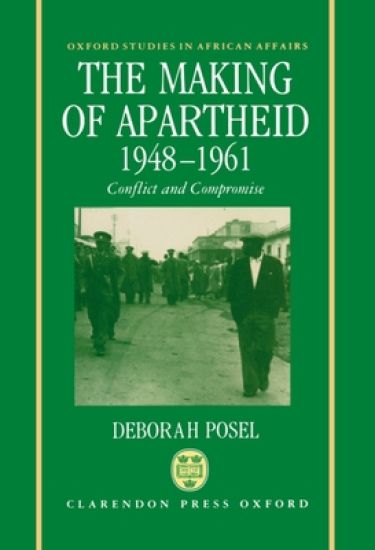
The Making of Apartheid, 1948-1961

The Making of Apartheid, 1948-1961

Deborah Posel

Clarendon Press
1991
sidottu
Deborah Posel breaks new ground in exposing some of the crucial political processes and struggles which shaped the reciprocal development of Apartheid and capitalism in South Africa. Her analysis debunks the orthodoxy view which presents apartheid as the product of a single `grand plan', created by the State in response to the pressures of capital accumulation. Using as a case study influx control during the first phase of apartheid (1948-1961), she shows that apartheid arose from complex patterns of conflict and compromise within the State, in which white capitalists, the black working class, and popular movements exercised varying and uneven degrees of influence. Her book integrates a detailed empirical analysis of the capitalist State and its relationship to class interests.
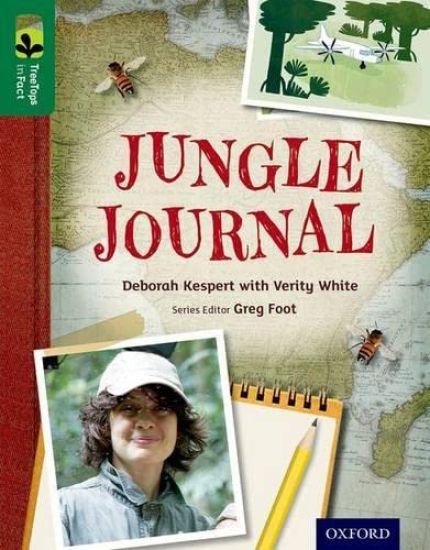
Oxford Reading Tree TreeTops inFact: Level 12: Jungle Journal
Jungle Journal takes a trip to the rainforests of the Congo with wildlife documentary producer, Verity White. TreeTops inFact is a non-fiction series that aims to engage children in reading for pleasure as powerfully as fiction does. The variety of topics means there are books to interest every child in this compelling series. The series is written by top children's authors and subject experts. The books are carefully levelled, making it easy to match every child to the right book.
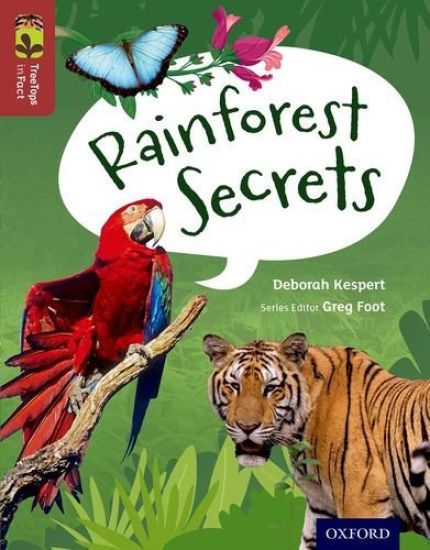
Oxford Reading Tree TreeTops inFact: Level 15: Rainforest Secrets
Rainforest Secrets takes a journey through the canopy of the Amazon rainforest, to discover the animals living in each layer. TreeTops inFact is a non-fiction series that aims to engage children in reading for pleasure as powerfully as fiction does. The variety of topics means there are books to interest every child in this compelling series. The series is written by top children's authors and subject experts. The books are carefully levelled, making it easy to match every child to the right book.
Oxford Reading Tree TreeTops inFact: Oxford Level 14/15: Pack of 6

Oxford Reading Tree TreeTops inFact: Oxford Level 14/15: Pack of 6

Deborah Kespert; Emma McFarland; Becca Heddle; Ali Sparkes; Rob Alcraft; Zoë Clarke

Oxford University Press
2016
nidottu
This pack contains one of each of the following titles: Step Away from the Kitten!, Explorers: Then and Now, William Kamkwamba: Bright Spark, Rainforest Secrets, Dance!, The Craft of Paper. TreeTops inFact\~is a non-fiction series that aims to engage children in reading for pleasure as powerfully as fiction does. The variety of topics means there are books to interest every child in this compelling series.\~The series is written by top children's authors and subject experts. The books are carefully levelled, making it easy to match every child to the right book. Each book contains inside cover notes to help children explore the content, supporting their reading development. Teaching notes on Oxford Owl offer cross-curricular links and activities to support guided reading, writing, speaking and listening.
Rollercoasters: Rollercoasters: My Name is Parvana Reader
In post-Taliban Afghanistan, fifteen-year-old Parvana waits for foreign military forces to determine her fate. Reunited with her mother and sisters, she has been living in a village where her mother has finally managed to open a school for girls. It's the life Parvan has been dreaming of. But this is Afghanistan, the war is far from over, and many continue to view the education of girls and women with suspicion and fear. And that means Parvana - and her family - are in danger.
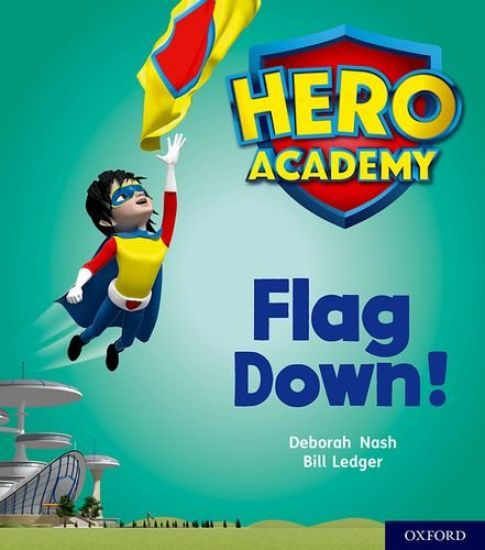
Hero Academy: Oxford Level 4, Light Blue Book Band: Flag Down!
Project X Hero Academy is a fully decodable and finely levelled reading series set in a school for superheroes, designed to captivate and motivate all young readers and turn them into reading superheroes. Flag Down! is in Light Blue Book Band, Oxford Level 4, and supports Letters and Sounds Phase 4. In this story, the school flag at Hero Academy has blown down. While Magnus, the caretaker, goes to get his ladder, Jin decides to use his superpower to fix the flag by himself. Will he manage it? Each book can be used for independent reading, but also contains inside cover notes that include help on developing vocabulary and prompt questions that can be used for guided reading and one-to-one sessions. Full guided reading notes are provided in the corresponding handbook. There are also a range of follow-up activities to support reading for pleasure.
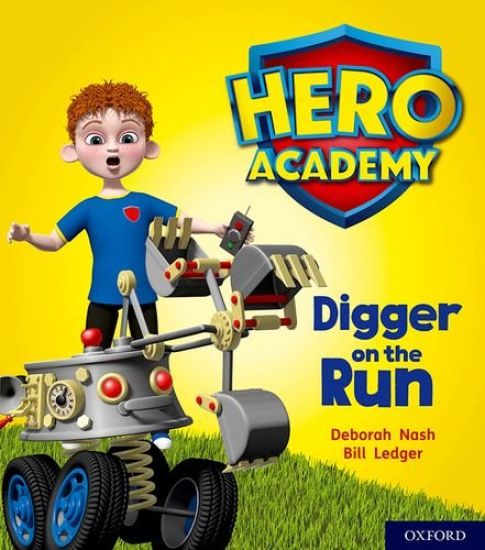
Hero Academy: Oxford Level 4, Light Blue Book Band: Digger on the Run
Project X Hero Academy is a fully decodable and finely levelled reading series set in a school for superheroes, designed to captivate and motivate all young readers and turn them into reading superheroes. Digger on the Run is in Light Blue Book Band, Oxford Level 4, and supports Letters and Sounds Phase 4. In this story, Evan invents a digger to help Magnus, the caretaker, but when he tests it out, something goes wrong and the digger loses control. Who will stop the digger from messing up the garden? Each book can be used for independent reading, but also contains inside cover notes that include help on developing vocabulary and prompt questions that can be used for guided reading and one-to-one sessions. Full guided reading notes are provided in the corresponding handbook. There are also a range of follow-up activities to support reading for pleasure.
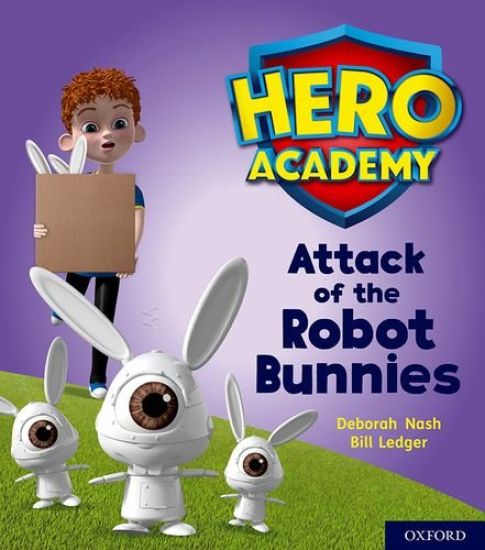
Hero Academy: Oxford Level 5, Green Book Band: Attack of the Robot Bunnies
Project X Hero Academy is a fully decodable and finely levelled reading series set in a school for superheroes, designed to captivate and motivate all young readers and turn them into reading superheroes. Attack of the Robot Bunnies is in Green Book Band, Oxford Level 5, and supports Letters and Sounds Phase 5. In this story, the intruder alarm goes off at Hero Academy. A swarm of robot bunnies, called bunny-wunnies, are trying to get into the school! Will the heroes manage to stop them? Each book can be used for independent reading, but also contains inside cover notes that include help on developing vocabulary and prompt questions that can be used for guided reading and one-to-one sessions. Full guided reading notes are provided in the corresponding handbook. There are also a range of follow-up activities to support reading for pleasure.
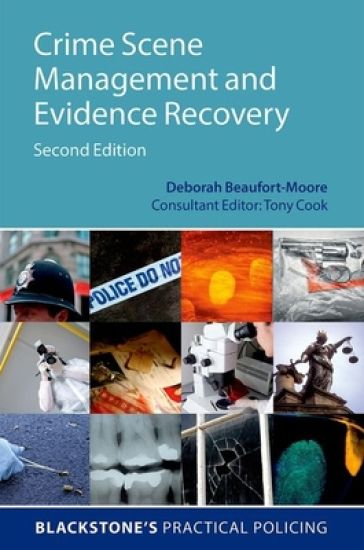
Crime Scene Management and Evidence Recovery

Crime Scene Management and Evidence Recovery

Deborah Beaufort-Moore

Oxford University Press
2015
nidottu
Crime Scene Management and Evidence Recovery is a must-have for first responders and crime scene investigators alike. Featuring step-by-step guidance on the techniques involved in crime scene management and evidence recovery, alongside hands-on advice and aide-memoirs from crime scene investigators, the second edition also includes clear scientific explanations and everyday examples for the non-specialist to recognise the importance difference that first responders can make. Whilst crime scene investigators are trained to undertake more detailed forensic examination, the actions of first responders can have a fundamental impact on the success of an examination. By increasing the awareness of forensic aspects of a crime scene investigation, this book ensures that crime scene officers are better equipped to make informed decisions about protecting and preserving scenes and recovering items for evidence. It also helps all police and forensic professionals to develop their understanding of the various analysis techniques available, as well as the pitfalls to avoid. The fifteen chapters offer structured advice on the techniques involved in the preservation, recovery, packaging, and storage of different evidential types such as fingerprints, DNA, glass, footwear, paint, and fibres. An overview of the science behind the various types of forensic analysis is presented alongside the relevant legislation, to reinforce the value of accurate crime scene management within the duration of an investigation, and practical tips, scenarios, and knowledge checks help to test understanding and root best practice within everyday policing. The Blackstone's Practical Policing Series covers a range of topical subjects of vital importance in today's policing arena. Each practical guide contains clear and detailed explanations of the relevant legislation, accompanied by practical scenarios, illustrative diagrams and useful checklists. Packed with a wealth of information, the Blackstone's Practical Policing Series ensures you have ready access to the tools you need to take on any policing challenge.