Starting with the tensions in the early family constellation, Gloria C. Erlich traces Edith Wharton's erotic evolution--from her early repression of sexuality and her celibate marriage to her discovery of passion in a rapturous midlife love affair with the bisexual Morton Fullerton. Analyzing the novelist's life, letters, and fiction, Erlich reveals several interrelated identity systems--the filial, the sexual, and the creative--that evolved together over the course of Wharton's lifetime.
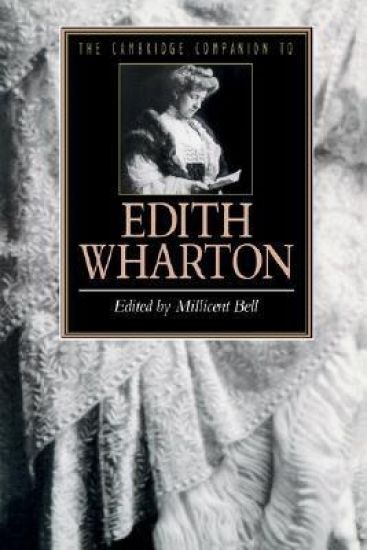
The Cambridge Companion to Edith Wharton offers a series of fresh examinations of Edith Wharton’s fiction written both to meet the interest of the student or general reader who encounters this major American writer for the first time and to be valuable to advanced scholars looking for new insights into her creative achievement. The essays cover Wharton’s most important novels as well as some of her shorter fiction, and utilise both traditional and innovative critical techniques, applying the perspectives of literary history, feminist theory, psychology or biography, sociology or anthropology, or social history. The Introduction supplies a valuable review of the history of Wharton criticism which shows how her writing has provoked varying responses from its first publication, and how current interests have emerged from earlier ones. A detailed chronology of Wharton’s life and publications and a useful bibliography are also provided.
The Cambridge Companion to Edith Wharton offers a series of fresh examinations of Edith Wharton’s fiction written both to meet the interest of the student or general reader who encounters this major American writer for the first time and to be valuable to advanced scholars looking for new insights into her creative achievement. The essays cover Wharton’s most important novels as well as some of her shorter fiction, and utilise both traditional and innovative critical techniques, applying the perspectives of literary history, feminist theory, psychology or biography, sociology or anthropology, or social history. The Introduction supplies a valuable review of the history of Wharton criticism which shows how her writing has provoked varying responses from its first publication, and how current interests have emerged from earlier ones. A detailed chronology of Wharton’s life and publications and a useful bibliography are also provided.
Born in New York into a world of wealth and privilege, and writing with unique insight into the lives of the rich and fashionable, Edith Wharton was a best-seller in her time, and is now, again, one of the most widely read American authors. This book provides an accessible and stimulating introduction to Wharton's life and writings, to help map her work for new readers, and to encourage more detailed exploration of her texts and contexts. Suggesting a range of perspectives on her most famous novels - The House of Mirth (1905), Ethan Frome (1911), The Custom of the Country (1913) and The Age of Innocence (1920) - it stimulates fresh lines of inquiry, examining these alongside other writings that are now attracting lively critical interest. With its clear structure, illustrations, and guide to further study, this book will form the ideal starting-point for students and for general readers.
Born in New York into a world of wealth and privilege, and writing with unique insight into the lives of the rich and fashionable, Edith Wharton was a best-seller in her time, and is now, again, one of the most widely read American authors. This book provides an accessible and stimulating introduction to Wharton's life and writings, to help map her work for new readers, and to encourage more detailed exploration of her texts and contexts. Suggesting a range of perspectives on her most famous novels - The House of Mirth (1905), Ethan Frome (1911), The Custom of the Country (1913) and The Age of Innocence (1920) - it stimulates fresh lines of inquiry, examining these alongside other writings that are now attracting lively critical interest. With its clear structure, illustrations, and guide to further study, this book will form the ideal starting-point for students and for general readers.
Through detailed study of these women the author demonstrates the integral place of royal queens in the rule of the English kingdom and in the process of unification by which England was made.
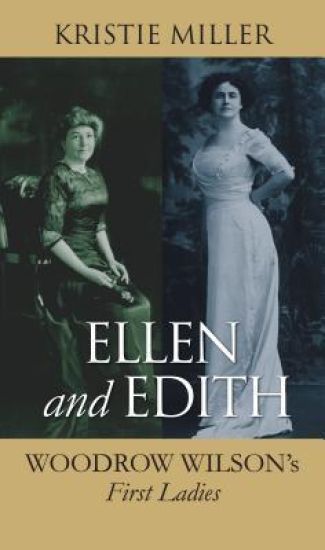
An authoritative dual biography of the two wives of Woodrow Wilson. Presents a rich and complex portrait of Wilson's marriages, first to the demure Ellen Axon Wilson and then to the controversial Edith Bolling Wilson, as well as his relationship with a "dearest friend," Mary Allen Hulbert Peck.
The wives of Woodrow Wilson were strikingly different from each other. Ellen Axson Wilson, quiet and intellectual, died after just a year and a half in the White House and is thought to have had little impact on history. Edith Bolling Wilson was flamboyant and confident but left a legacy of controversy. Yet, as Kristie Miller shows, each played a significant role in the White House. Miller presents a rich and complex portrait of Wilson's wives, one that compels us to reconsider our understanding of both women. Ellen comes into clear focus as an artist and intellectual who dedicated her talents to an ambitious man whose success enabled her to have a significant influence on the institution of the first lady. Miller's assessment of Edith Wilson goes beyond previous flattering accounts and critical assessments. She examines a woman who overstepped her role by hiding her husband's serious illness to allow him to remain in office. But, Miller concludes, Edith was acting as she knew her husband would have wished. Miller explains clearly how these women influenced Woodrow Wilson's life and career. But she keeps her focus on the women themselves, placing their concerns and emotions in the foreground. She presents a balanced appraisal of each woman's strengths and weaknesses. She argues for Ellen's influence not only on her husband but on subsequent first ladies. She strives for an understanding of the controversial Edith, who saw herself as Wilson's principal advisor and, some would argue, acted as shadow president after his stroke. Miller also helps us better appreciate the role of Mary Allen Hulbert Peck, whose role as Wilson's ""playmate"" complemented that of Ellen-but was intolerable to Edith. Especially because Woodrow Wilson continues to be one of the most-studied American presidents, the task of recognizing and understanding the influence of his wives is an important one. Drawing extensively on the Woodrow Wilson papers and newly available material, Miller's book answers that call with a sensitive and compelling narrative of how private and public emotions interacted at a pivotal moment in the history of first ladies.
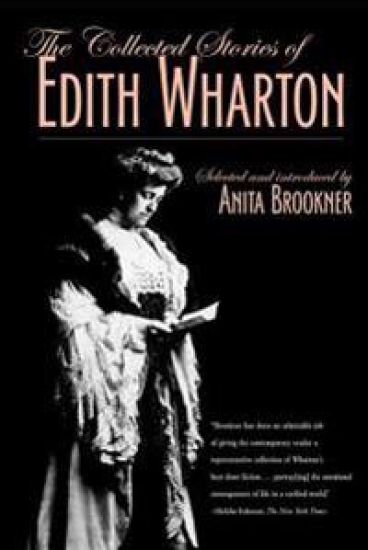
Combining two volumes of Wharton's short stories in a brand new edition, this outstanding selection is the most comprehensive available. Although Edith Wharton is best known for her novels The Age of Innocence and The House of Mirth, this extensive collection of her short fiction shows her to be a master of all its varieties. Wharton's stories ...owe their enduring power to portray the emotional consequences of life in a rarefied world."--The New York Times
Establishing Edith Sitwell at the center of British modernism, this volume showcases her many achievements in poetry, autobiography, novel writing, criticism, art, and performance. Forgoing the gossip about her eccentric appearance and self-fashioned persona that has too often overshadowed serious writing about her work, the contributors explore how Sitwell combined persona and poetry to foster an outpouring of iconoclastic creativity.The Many Facades of Edith Sitwell argues that Sitwell was crucial to the development of a British avant-garde that operated alongside the conventionally accepted transatlantic modernism of Ezra Pound and T. S. Eliot. With Sitwell as an influential literary player and social architect, the British interwar arts scene was not an ascetic escape from personality?as the modernism of Pound and Eliot has often been characterized?but an alternative space of flamboyant, extravagant, and ornate performance.
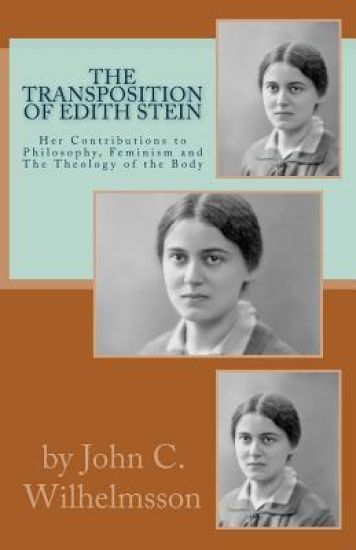
Edith Stein's life and thought intersect with many important movements of life and thought in the twentieth century. Through her life and eventual martyrdom, she gave witness to the primacy of truth and faith in the face of political totalitarianism, and in her philosophical works, she contributed to a synthesis of phenomenological thought with the thought of Aquinas, while also progressively advancing a compelling form of philosophical personalism. As a result, Stein represents one of the most important Catholic thinkers of the twentieth century and is a figure of growing fascination and devotion among believers and nonbelievers alike.The Personalism of Edith Stein is an investigation of Stein's mature philosophical anthropology, exploring her engagement with the thought of Aquinas and Thomism while maintaining the phenomenological mode of investigation. Through a careful examination of Stein's later works under the themes of human nature, the human individual, and the human being's relation to God, McNamara shows that Stein's mature personalism is considerably expanded and substantiated by her assimilation of key anthropological and metaphysical teachings of Aquinas and Thomism, and, conversely, that Stein significantly develops and deepens these same teachings through a phenomenological reconsideration of each from a personalist perspective.As a whole, the study reveals the profound accord between Stein's mature thought and the received teachings of Aquinas, while yet carefully attending to the remaining differences between them. Ultimately, the author proposes that Stein imbues the teachings of Aquinas with a fundamental personalization such that her mature anthropology can be understood as a Thomistically informed personalism that represents a significant, original contribution to the anthropological dimension of the philosophia perennis.
Edith Stein's murder at Auschwitz is a topic of intense controversy among members of the Jewish and Catholic faiths. Some observers, both Jews and Christians, insist that Stein was sent to the gas chambers because of her Jewish heritage and faith, and that it would be inappropriate to declare her a saint in the Christian religious tradition. Yet, others of both faiths find in Stein a healing symbol for our time of the atrocities committed against Jews in Christian nations during World War II. In this volume, members of the Jewish and Christian religious traditions speak to this deeply divided debate.
This work has been selected by scholars as being culturally important and is part of the knowledge base of civilization as we know it.This work is in the public domain in the United States of America, and possibly other nations. Within the United States, you may freely copy and distribute this work, as no entity (individual or corporate) has a copyright on the body of the work.Scholars believe, and we concur, that this work is important enough to be preserved, reproduced, and made generally available to the public. To ensure a quality reading experience, this work has been proofread and republished using a format that seamlessly blends the original graphical elements with text in an easy-to-read typeface.We appreciate your support of the preservation process, and thank you for being an important part of keeping this knowledge alive and relevant.
This work has been selected by scholars as being culturally important and is part of the knowledge base of civilization as we know it.This work is in the public domain in the United States of America, and possibly other nations. Within the United States, you may freely copy and distribute this work, as no entity (individual or corporate) has a copyright on the body of the work.Scholars believe, and we concur, that this work is important enough to be preserved, reproduced, and made generally available to the public. To ensure a quality reading experience, this work has been proofread and republished using a format that seamlessly blends the original graphical elements with text in an easy-to-read typeface.We appreciate your support of the preservation process, and thank you for being an important part of keeping this knowledge alive and relevant.
This work has been selected by scholars as being culturally important and is part of the knowledge base of civilization as we know it.This work is in the public domain in the United States of America, and possibly other nations. Within the United States, you may freely copy and distribute this work, as no entity (individual or corporate) has a copyright on the body of the work.Scholars believe, and we concur, that this work is important enough to be preserved, reproduced, and made generally available to the public. To ensure a quality reading experience, this work has been proofread and republished using a format that seamlessly blends the original graphical elements with text in an easy-to-read typeface.We appreciate your support of the preservation process, and thank you for being an important part of keeping this knowledge alive and relevant.