

Kirjahaku
Etsi kirjoja tekijän nimen, kirjan nimen tai ISBN:n perusteella.
1000 tulosta hakusanalla Elizabeth A. Cook

Ein Drache geht herum sein einsames Schloss. Er weint, weil er keine Freunde hat, aber dann etwas Erstaunliches passiert .... Was denken Sie passiert? Informieren Sie sich diesem charmanten Buch f r Leser jeden Alters.

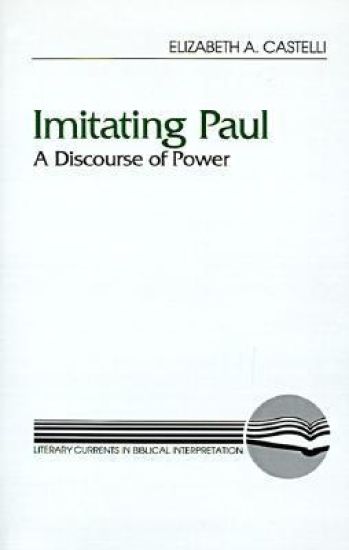
What does it mean to imitate another person? What relationships are possible and necessary, or unthinkable, because of exhortation advising people to imitate Paul? What are the effects of giving special status to likeness? Questions such as these are posed in this thought-provoking book that addresses the notion of mimesis (imitation) and how it functions in Paul's letters as a strategy of power.The Literary Currents in Biblical Interpretation series explores current trends within the discipline of biblical interpretation by dealing with the literary qualities of the Bible: the play of its language, the coherence of its final form, and the relationships between text and readers. Biblical interpreters are being challenged to take responsibility for the theological, social, and ethical implications of their readings. This series encourages original readings that breach the confines of traditional biblical criticism.
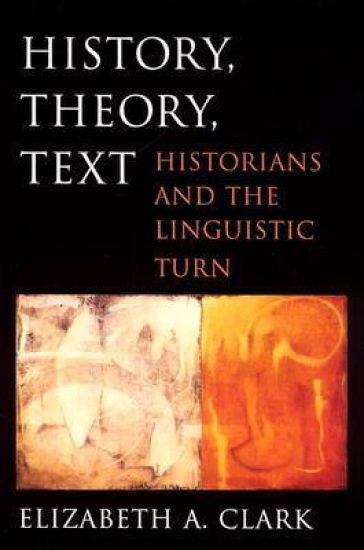
In this work of sweeping erudition, one of our foremost historians of early Christianity considers a variety of theoretical critiques to examine the problems and opportunities posed by the ways in which history is written. Elizabeth Clark argues forcefully for a renewal of the study of premodern Western history through engagement with the kinds of critical methods that have transformed other humanities disciplines in recent decades.History, Theory, Text provides a user-friendly survey of crucial developments in nineteenth- and twentieth-century debates surrounding history, philosophy, and critical theory. Beginning with the "noble dream" of "history as it really was" in the works of Leopold von Ranke, Clark goes on to review Anglo-American philosophies of history, schools of twentieth-century historiography, structuralism, the debate over narrative history, the changing fate of the history of ideas, and the impact of interpretive anthropology and literary theory on current historical scholarship. In a concluding chapter she offers some practical case studies to illustrate how attending to theoretical considerations can illuminate the study of premodernity.Written with energy and clarity, History, Theory, Text is a clarion call to historians for richer and more imaginative use of contemporary theory.
Paying for the Party
Elizabeth A. Armstrong; Laura T. Hamilton
Harvard University Press
2015
nidottu
Two young women, dormitory mates, embark on their education at a big state university. Five years later, one is earning a good salary at a prestigious accounting firm. With no loans to repay, she lives in a fashionable apartment with her fiancé. The other woman, saddled with burdensome debt and a low GPA, is still struggling to finish her degree in tourism. In an era of skyrocketing tuition and mounting concern over whether college is "worth it," Paying for the Party is an indispensable contribution to the dialogue assessing the state of American higher education. A powerful exposé of unmet obligations and misplaced priorities, it explains in vivid detail why so many leave college with so little to show for it.Drawing on findings from a five-year interview study, Elizabeth Armstrong and Laura Hamilton bring us to the campus of "MU," a flagship Midwestern public university, where we follow a group of women drawn into a culture of status seeking and sororities. Mapping different pathways available to MU students, the authors demonstrate that the most well-resourced and seductive route is a "party pathway" anchored in the Greek system and facilitated by the administration. This pathway exerts influence over the academic and social experiences of all students, and while it benefits the affluent and well-connected, Armstrong and Hamilton make clear how it seriously disadvantages the majority.Eye-opening and provocative, Paying for the Party reveals how outcomes can differ so dramatically for those whom universities enroll.
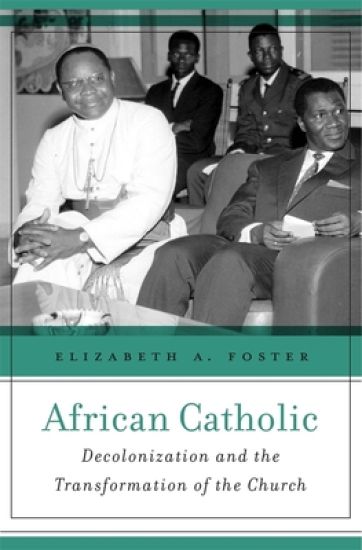
Winner of the John Gilmary Shea PrizeA groundbreaking history of how Africans in the French Empire embraced both African independence and their Catholic faith during the upheaval of decolonization, leading to a fundamental reorientation of the Catholic Church.African Catholic examines how French imperialists and the Africans they ruled imagined the religious future of French sub-Saharan Africa in the years just before and after decolonization. The story encompasses the political transition to independence, Catholic contributions to black intellectual currents, and efforts to alter the church hierarchy to create an authentically “African” church.Elizabeth Foster recreates a Franco-African world forged by conquest, colonization, missions, and conversions—one that still exists today. We meet missionaries in Africa and their superiors in France, African Catholic students abroad destined to become leaders in their home countries, African Catholic intellectuals and young clergymen, along with French and African lay activists. All of these men and women were preoccupied with the future of France’s colonies, the place of Catholicism in a postcolonial Africa, and the struggle over their personal loyalties to the Vatican, France, and the new African states.Having served as the nuncio to France and the Vatican’s liaison to UNESCO in the 1950s, Pope John XXIII understood as few others did the central questions that arose in the postwar Franco-African Catholic world. Was the church truly universal? Was Catholicism a conservative pillar of order or a force to liberate subjugated and exploited peoples? Could the church change with the times? He was thinking of Africa on the eve of Vatican II, declaring in a radio address shortly before the council opened, “Vis-à-vis the underdeveloped countries, the church presents itself as it is and as it wants to be: the church of all.”
A study of how asceticism was promoted through Biblical interpretation, Reading Renunciation uses contemporary literary theory to unravel the writing strategies of the early Christian authors. Not a general discussion of early Christian teachings on celibacy and marriage, the book is a close examination, in the author's words, of how "the Fathers' axiology of abstinence informed their interpretation of Scriptural texts and incited the production of ascetic meaning." Elizabeth Clark begins with a survey of scholarship concerning early Christian asceticism that is designed to orient the nonspecialist. Section Two is organized around potentially troubling issues posed by Old Testament texts that demanded skillful handling by ascetically inclined Christian exegetes. The third section, "Reading Paul," focuses on the hermeneutical problems raised by I Corinthians 7, and the Deutero-Pauline and Pastoral Epistles. Elizabeth Clark's remarkable work will be of interest to scholars of late antiquity, religion, literary theory, and history.

A full-color illustrated guide to the natural history of the most poisonous plants on earthThis richly illustrated book provides an in-depth natural history of the most poisonous plants on earth, covering everything from the lethal effects of hemlock and deadly nightshade to the uses of such plants in medicine, ritual, and chemical warfare.Featuring hundreds of color photos and diagrams throughout, Plants That Kill explains how certain plants evolved toxicity to deter herbivores and other threats and sheds light on their physiology and the biochemistry involved in the production of their toxins. It discusses the interactions of poisonous plants with other organisms--particularly humans-and explores the various ways plant toxins can target the normal functioning of bodily systems in mammals, from the effects of wolfsbane on the heart to toxins that cause a skin reaction when combined with the sun's rays. This intriguing book also looks at plants that can harm you only if your exposure to them is prolonged, the ethnobotany of poisons throughout human history, and much more.A must for experts and armchair botanists alike, Plants That Kill is the essential illustrated compendium to these deadly and intriguing plants.Provides an authoritative natural history of the most poisonous plants on earthFeatures hundreds of color illustrations throughoutLooks at how and why plants produce toxinsDescribes the effects of numerous poisonous plants, from hemlock and deadly nightshade to poppies and tobaccoExplains poisonous plants' evolution, survival strategies, physiology, and biochemistryDiscusses the uses of poisonous plants in medicine, rituals, warfare, and more
Around the turn of the fifth century, Christian theologians and churchmen contested each other's orthodoxy and good repute by hurling charges of "Origenism" at their opponents. And although orthodoxy was more narrowly defined by that era than during Origen's lifetime in the third century, his speculative, Platonizing theology was not the only issue at stake in the Origenist controversy: "Origen" became a code word for nontheological complaints as well. Elizabeth Clark explores the theological and extra-theological implications of the dispute, uses social network analysis to explain the personal alliances and enmities of its participants, and suggests how it prefigured modern concerns with the status of representation, the social construction of the body, and praxis vis--vis theory. Shaped by the Trinitarian and ascetic debates, and later to influence clashes between Augustine and the Pelagians, the Origenist controversy intersected with patristic campaigns against pagan "idolatry" and Manichean and astrological determinism. Discussing Evagrius Ponticus, Epiphanius, Theophilus, Jerome, Shenute, and Rufinus in turn, Clark concludes by showing how Augustine's theory of original sin reconstructed the Origenist theory of the soul's pre-existence and "fall" into the body. Originally published in 1992. The Princeton Legacy Library uses the latest print-on-demand technology to again make available previously out-of-print books from the distinguished backlist of Princeton University Press. These editions preserve the original texts of these important books while presenting them in durable paperback and hardcover editions. The goal of the Princeton Legacy Library is to vastly increase access to the rich scholarly heritage found in the thousands of books published by Princeton University Press since its founding in 1905.
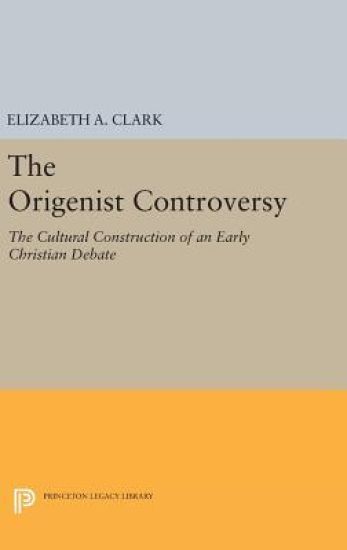
Around the turn of the fifth century, Christian theologians and churchmen contested each other's orthodoxy and good repute by hurling charges of "Origenism" at their opponents. And although orthodoxy was more narrowly defined by that era than during Origen's lifetime in the third century, his speculative, Platonizing theology was not the only issue at stake in the Origenist controversy: "Origen" became a code word for nontheological complaints as well. Elizabeth Clark explores the theological and extra-theological implications of the dispute, uses social network analysis to explain the personal alliances and enmities of its participants, and suggests how it prefigured modern concerns with the status of representation, the social construction of the body, and praxis vis--vis theory. Shaped by the Trinitarian and ascetic debates, and later to influence clashes between Augustine and the Pelagians, the Origenist controversy intersected with patristic campaigns against pagan "idolatry" and Manichean and astrological determinism. Discussing Evagrius Ponticus, Epiphanius, Theophilus, Jerome, Shenute, and Rufinus in turn, Clark concludes by showing how Augustine's theory of original sin reconstructed the Origenist theory of the soul's pre-existence and "fall" into the body. Originally published in 1992. The Princeton Legacy Library uses the latest print-on-demand technology to again make available previously out-of-print books from the distinguished backlist of Princeton University Press. These editions preserve the original texts of these important books while presenting them in durable paperback and hardcover editions. The goal of the Princeton Legacy Library is to vastly increase access to the rich scholarly heritage found in the thousands of books published by Princeton University Press since its founding in 1905.
Align with the Wild: Increase Your Wealth and Improve Your Well-Being
Elizabeth a. Armstrong Ph. D.
Elizabeth Armstrong, PH.D.
2014
nidottu
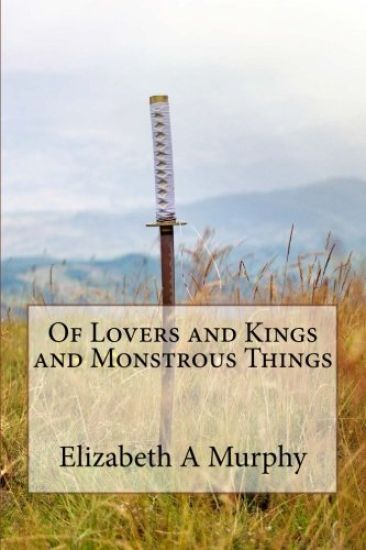
Of lovers and kings and monstrous things.In one country a woman can have many husbands and infidelity may result in death. In the other country a man can marry as many women as he can hold. Generations of war have resulted in a delicate balance between two countries alike in determination to survive. When the earthquake opens a pass in mountains surrounding the world, a new country awash in riches and potential is revealed to the warring Sarnese and Llweganians. Each combatant society rushes to control this country where monogamy is the written and winked at rule. Just as mountains can rise and crumble so can countries and cultures. People untried by life discover what they can do and the choices they can make. Through the vast landscape of three ecosystems and years of earth scorching war individuals will rise to the challenge of a new way of living and some will fall off the trail into the new chasms created by the shifting of the world. Everything is at risk. Marriages, cultures, and thrones are up for grabs. Warriors, courtiers, priests and peasants battle to secure a future, to define a culture, to rule the world.

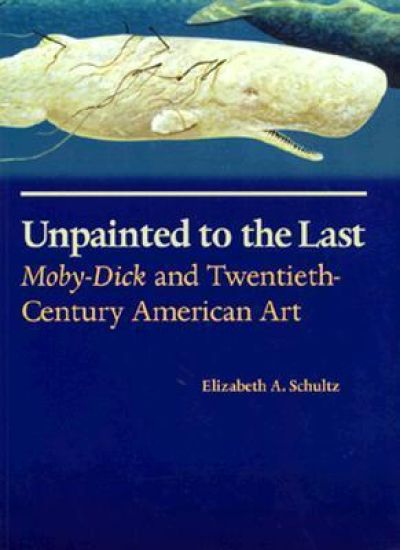
This text re-evaluates the literary symbol of ""Moby-Dick"" and provides a different way of reading one of the famous texts of American literature. Ranging from the realists to the abstract expressionists, from the famous to the obscure, Schultz reveals how these artists have tried to capture the essence of the meaning of ""Moby-Dick"" meanings and to use it as a springboard for their own imaginations. One of the most frequently and diversely illustrated of American novels, ""Moby-Dick"" has attracted book illustrators in Rockwell Kent, Boardman Robinson, Garrick Palmer, Barry Moser, Bill Sienkiewicz, among others. It has also inspired creations by artists such as Jackson Pollock, Frank Stella, Sam Francis, Benton Spruance, Leonard Baskin, Theodoros Stamos, Richard Ellis, Ralph Goings, Seymour Lipton, Walter Martin, Tony Rosenthal, Richard Serra and Theodore Roszak. The artists reflect in equal measure the novel's realistic (plot, character, natural history) and philosophical modes, its visual and visionary dimensions. Others view the novel as a touchstone for feminist, multicultural, and environmental themes, or mock its status as a cultural icon. The author demonstrates how these and many other diverse talents enlarge the reader's appreciation of ""Moby-Dick"" and how literature and art can amplify each other's meanings and achievements. Yet ultimately, she, like Melville, concludes that the great white whale remains unpainted and unread in any absolute or final sense.

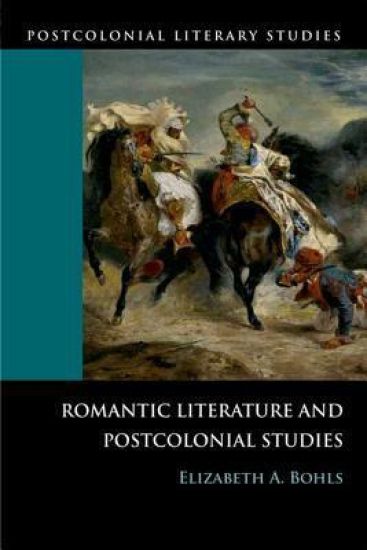
Romantic Literature and Postcolonial Studies
Elizabeth A Bohls
Edinburgh University Press
2013
nidottu
This title examines the relationship between Romantic writing and the rapidly expanding British Empire. Literature played a crucial role in constructing and contesting the modern culture of empire that was fully in place by the start of the Victorian period. Postcolonial criticism's concern with issues of geopolitics, race and gender, subalternity and exoticism shape discussions of works by major authors such as Blake, Coleridge, Percy and Mary Shelley, Austen and Scott, as well as their less familiar contemporaries. It explains how key theoretical concerns of postcolonial studies - imaginary geography, Otherness & difference and cultural hybridity - have dramatically changed our understanding of Romantic literature. It demonstrates how selected texts, in a range of genres, are illuminated by postcolonial criticism. It includes a bibliographical essay along with an up-to-date bibliography of criticism, editions of primary works and selected historical materials.
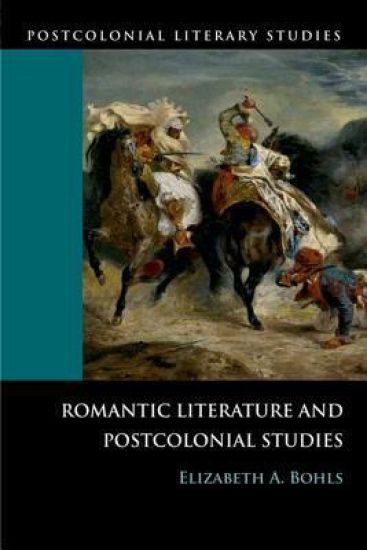
Romantic Literature and Postcolonial Studies
Elizabeth A Bohls
Edinburgh University Press
2013
sidottu
This title examines the relationship between Romantic writing and the rapidly expanding British Empire. Literature played a crucial role in constructing and contesting the modern culture of empire that was fully in place by the start of the Victorian period. Postcolonial criticism's concern with issues of geopolitics, race and gender, subalternity and exoticism shape discussions of works by major authors such as Blake, Coleridge, Percy and Mary Shelley, Austen and Scott, as well as their less familiar contemporaries. It explains how key theoretical concerns of postcolonial studies - imaginary geography, Otherness & difference and cultural hybridity - have dramatically changed our understanding of Romantic literature. It demonstrates how selected texts, in a range of genres, are illuminated by postcolonial criticism. It includes a bibliographical essay along with an up-to-date bibliography of criticism, editions of primary works and selected historical materials.