

Kirjahaku
Etsi kirjoja tekijän nimen, kirjan nimen tai ISBN:n perusteella.
1000 tulosta hakusanalla Elizabeth Edwards
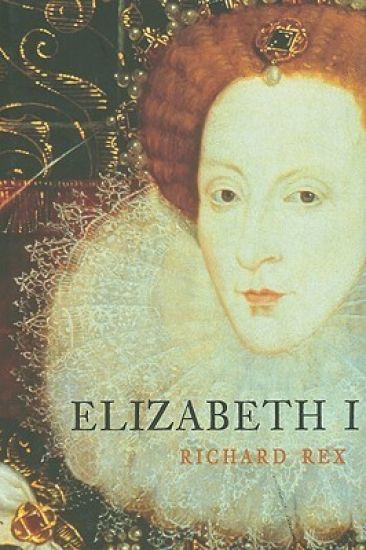
Elizabeth I stands in the English imagination for one of the formative phases of English history. Her reign saw England transformed, at her command, from a Catholic to a Protestant country, with calcuable consequences for the history of Europe and of the world - starting with the attempted invasion by the Spanish Armada.
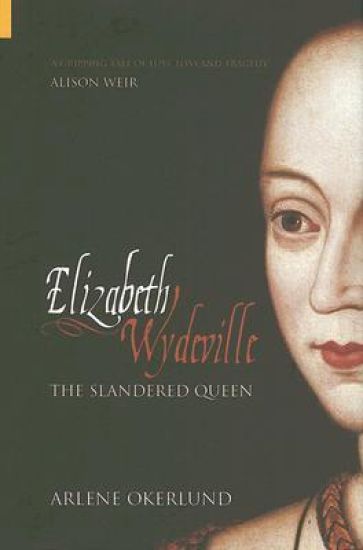
Elizabeth Wydeville, Queen consort to Edward IV, has traditionally been portrayed as a scheming opportunist. But was she a cunning vixen or a tragic wife and mother? As this extraordinary biography shows, the first queen to bear the name Elizabeth lived a life of tragedy, love, and loss that no other queen has since endured. This shocking revelation about the survival of one woman through vilification and adversity shows Elizabeth as a beautiful and adored wife, distraught mother of the two lost Princes in the Tower, an and innocent queen slandered by politicians.
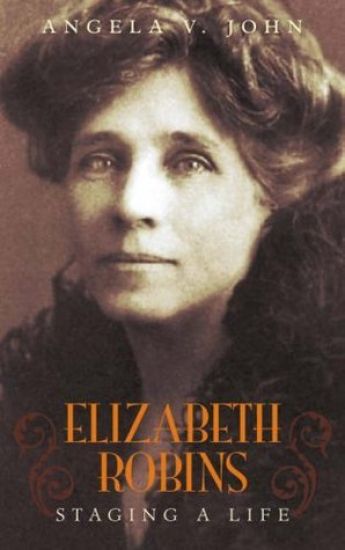
Beautiful and talented, versatile and charismatic, Elizabeth Robins was one of the foremost actresses of her day. Yet, this enduring character was also an active and lifelong feminist. This biography examines Elizabeth's historical identity and provides a study of the social culture surrounding a woman who lived a life in the spotlight.
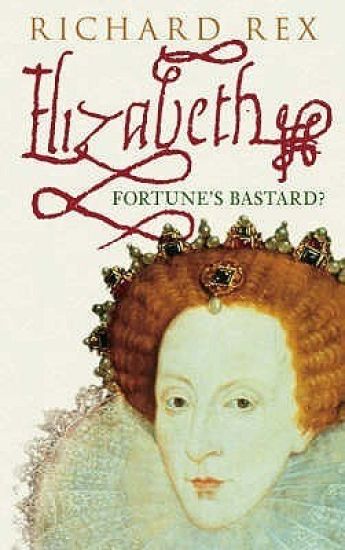
Elizabeth I stands in the English imagination for one of the formative phases of English history. Her reign saw England transformed, at her command, from a Catholic to a Protestant country, with incalculable consequences for the history of Europe and of the world - starting with the attempted invasion by the Spanish Armada, beaten off by the Queen's legendary naval captains. Of the five monarchs who trod the political stage of sixteenth-century England, Elizabeth was the most accomplished and versatile performer. And it is ultimately this which accounts for her enduring fascination. Richard Rex highlights the vivid and contrary personality of a Queen who could both baffle and bedazzle her subjects, her courtiers, and her rivals: at one moment flirting outrageously with a favourite or courting some foreign prince, and at another vowing perpetual virginity; at one time agonising over the execution of her cousin, Mary Queen of Scots, then ordering the slaughter of hundreds of poor men after a half-cock rebellion. Too many biographies of Elizabeth merely perpetuate the flattery she enjoyed from her courtiers, as if her dramatic repertoire was limited to the role of 'Gloriana'. This biography also reflects more critical voices, such as those of the Irish, the Catholics and those who lived on the wrong side of the emerging North/South divide. To them she showed a different face.
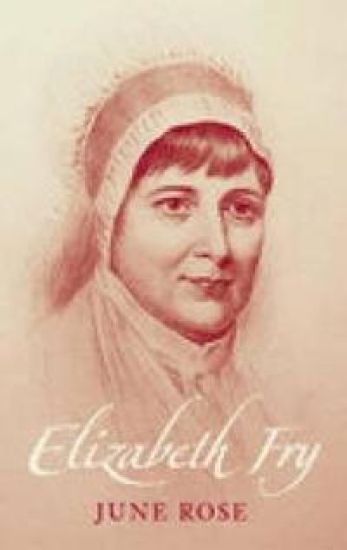
Elizabeth Fry, mother of eleven children and a Quaker minister, is seen as one of the most influential and enigmatic women in English history. Dismayed by the terrible prison conditions in the early 19th century, Fry drew the world's attention to the plight of incarcerated women, and became a living legend. This work presents her story.
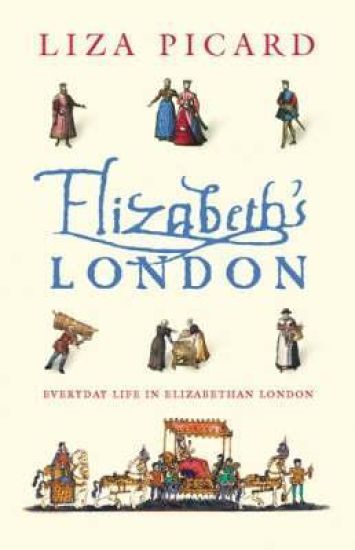
'Reading this book is like taking a ride on a marvellously exhilarating time-machine, alive with colour, surprise and sheer merriment' Jan MorrisElizabethan London reveals the practical details of everyday life so often ignored in conventional history books. It begins with the River Thames, the lifeblood of Elizabethan London, before turning to the streets and the traffic in them. Liza Picard surveys building methods and shows us the interior decor of the rich and the not-so-rich, and what they were likely to be growing in their gardens. Then the Londoners of the time take the stage, in all their amazing finery. Plague, smallpox and other diseases afflicted them. But food and drink, sex and marriage and family life provided comfort. Cares could be forgotten in a playhouse or the bull-baiting of bear-baiting rings, or watching a good cockfight. Liza Picard's wonderfully skilful and vivid evocation of the London of Elizabeth I enables us to share the delights, as well as the horrors, of the everyday lives of our sixteenth-century ancestors.
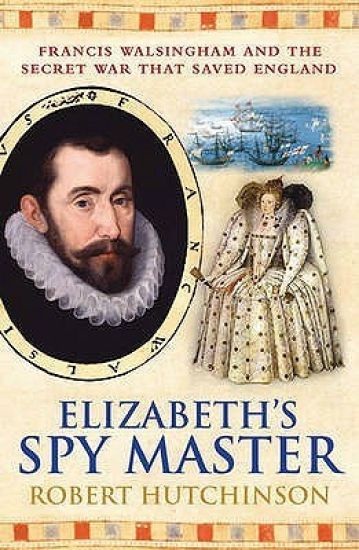
The incredible real life story of the world's first super spy'Full of stimulating detail... vivid glimpses of the world of Elizabethan espionage' GUARDIAN'Walsingham emerges from these pages as a hero of epic stature' DAILY TELEGRAPHFrancis Walsingham was the first 'spymaster' in the modern sense. His methods anticipated those of MI5 and MI6 and even those of the KGB. He maintained a network of spies across Europe, including double-agents at the highest level in Rome and Spain - the sworn enemies of Queen Elizabeth and her Protestant regime. His entrapment of Mary Queen of Scots is a classic intelligence operation that resulted in her execution. As Robert Hutchinson reveals, his cypher expert's ability to intercept other peoples' secret messages and his brilliant forged letters made him a fearsome champion of the young Elizabeth. Yet even this Machiavellian schemer eventually fell foul of Elizabeth as her confidence grew (and judgement faded). The rise and fall of Sir Francis Walsingham is a Tudor epic, vividly narrated by a historian with unique access to the surviving documentary evidence.
Elizabeth Tyrwhit's 1574 Morning and Euening Praiers is a collection of private prayers, a class of book that grew in both popularity and volume with the establishment of Protestantism in England from the mid-century on. These prayers first appeared in a tiny gilt girdle-book alongside the Litany, an incomplete copy of The Queen's Prayers by Katherine Parr and an incomplete copy of The Kalendar which are also reproduced in this facsimile edition.
The history of the angelicall virgin glorious S.Clare (Douai 1635) is a translation by 'Sister Magdalen' of a work by the Franciscan priest François Hendricq, Vie admirable de madame S. Claire fondatrice des Pauvres Clairesses (1631). In its turn Hendricq's book is largely a translation of parts of Luke Wadding's Annales ordinis minorum ('Annals of the Franciscan Order'). These volumes include an account of the activities of the young woman, Clara Offreduccio di Favarone, one of the many followers of St. Francis of Assisi. In 1212 Clara was advised by St. Francis to withdraw to the monastery at San Damiano in Assisi. In this way St. Francis founded his Second Order, an order of religious women known as the Poor Clares. 'Sister Magdalen' has been identified as Elizabeth Evelinge who belonged to a dissident group of Poor Clares that left their English convent at Gravelines in 1627 and started a new convent at Aire in May 1629. The copy of her translation reproduced in this volume is that of Heythrop College, University of London.
The declarations and ordinances made upon the rule of our holy mother S.Clare is an English translation of papal pronouncements upon the rules governing the convents of the Franciscan Order of St Clare. Elizabeth Evelinge's 176-page English version was published by one of the most prolific presses of the 17th-century English Roman Catholic exiles, the English College Press at St Omer. The edition, which was presumably very limited, was meant for English nuns living in monasteries in Flanders and Northern France. At her death, Elizabeth Evelinge was described as having 'a more polish'd way of writing above her sex. Her translation of The declarations at the age of just 25, testifies to her skills. The copy of the text reproduced here is that held at the Franciscan Library at Killiney.
Elizabeth Tyrwhit's Morning and Evening Prayers
Ashgate Publishing Limited
2008
sidottu
In 1574, Christopher Barker published a volume of prayers and poems collected and composed by Elizabeth Tyrwhit, an intimate member of Katherine Parr's circle, governess to the princess Elizabeth, wife of a Tudor court functionary, and a wealthy widow. Later, Tyrwhit's Morning and Evening Prayers was selected by Thomas Bentley to be republished in his 1582 compilation of devotional works, The Monument of Matrones. This volume presents critical, old-spelling editions of both versions of Morning and Evening Prayers. Placing them side by side, Susan Felch discloses that the second version contains nearly a quarter more material that the first, and is organized quite differently. Felch convincingly argues that the additional material and revised arrangement of the longer version are likely copied direct from another, no longer extant authorial version, either printed or manuscript. In the volume's introduction, Felch provides background on Tyrwhit's life and family, including new information unearthed in her research; and sets Tyrwhit's work within the context of sixteenth- century English prayerbooks. Felch here posits that Tyrwhit's reorganization and framing of traditional material indicates her own considerable creativity. The Textual Notes and Appendix A compare the 1574 and 1582 versions and identify the source texts from which Tyrwhit derives her prayers and poems. The edition is completed by an autograph note by Tyrwhit; a discussion of the Tyrwhit family connections, and several versions of the rhymed Hours of the Cross as background to Tyrwhit's rendition entitled, 'An Hymne of the Passion of Christ'.
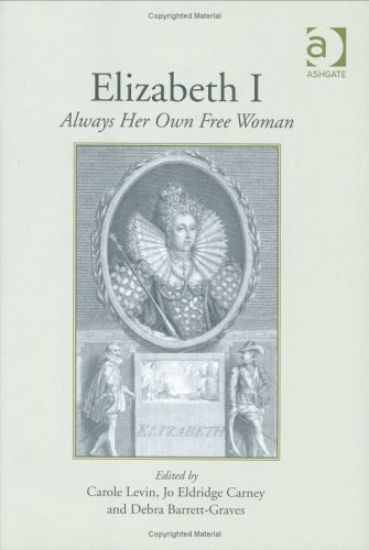
This interdisciplinary collection by historians, cultural critics and literary scholars examines a variety of the political, social, and cultural forces at work during the English Renaissance and beyond, forces that contributed to creating a wealth of artistic, literary and historical impressions of Elizabeth, her court, and the time period named after her, the Elizabethan age. Articles in the collection discuss Elizabeths' relationships, investigate the advice given her, explore connections between her court and the arts, and consider the role of Elizabeth's court in the political life of the nation. Some of the ways Elizabeth was understood and represented demonstrate society's fears and ambivalence about early modern women in power, while others celebrate her successes as England's first and only unmarried queen regnant. This volume will be of interest to scholars and students in a wide range of disciplines, including literary, cultural, historical and women's studies, as well as those interested in the life and times of Elizabeth I.

Elizabeth Major was inspired to write Honey on the Rod (1656) as a result of lameness brought on by a bout of fever in her mid-twenties. The experience left her fiercely devoted to her Christian religion, but also filled with indignation against the sins of nominal Christians. Honey on the Rod was written to comfort the afflicted and afflict the comfortable. The work is in two parts. The first is a lengthy prose meditation in the form of a dialogue between a 'Soul' and 'Consolation'. The second is a sequence of poems on conventional Calvinistic themes, scourging common vices and praising the humble soul that accepts God's rod of affliction. The speaking voice of Honey on the Rod is unmistakeably that of a woman and as such the work contributes a woman's voice to the devotional literature dominated by men in the seventeenth century. This facsimile edition reproduces the copy held in the British Library.
![Elizabeth Singer [Rowe]](/covers/9780754630999.jpg)
Printed Writings 1641-1700: Series II, Part Two, consists of seven volumes of writings as follows: Volume 1: An Collins Volume 2: Alicia D'Anvers Volume 3: 'Eliza' Volume 4: Amey Hayward Volume 5: Anne Killigrew Volume 6: Elizabeth Major Volume 7: Elizabeth Singer [Rowe]

Elizabeth Cellier, the scandalous celebrity known as the 'Popish midwife', became the focus of a large number of pamphlets in 1680: accounts of her two trials, her self-vindication, Malice Defeated, her opponent Thomas Dangerfield's rejoinder, and various anonymous satiric attacks against her. She was tried twice: the first time for the more serious charge of treason, and the second for libel, for publishing Malice Defeated. She was acquitted the first time, but found guilty the second, though her punishment was to be pilloried, not executed. She reemerges as the author of tracts on midwifery, proposing to James II the establishment of a professional guild of midwives. Her writings exhibit her remarkable determination to publish her accusations of judicial torture and her advocacy of the licensing of midwives as professional women, as well as exemplifying the importance of the printing press for enabling women to participate in the political public sphere.
Elizabeth Evelinge, now firmly believed to have been the translator of The admirable life of the holy virgin S. Catharine of Bologna, entered the English Poor Clare monastery in Gravelines in 1620. After ongoing dissension at Gravelines, along with Catharine Bentley (originally believed to be the translator) she founded a new cloister at Aire. Evelinge served as abbess here for 25 years. Her 1621 translation of Catharine of Bologna's life and Spiritual weapons, with their exemplary advice about how to survive the temptations and conflicts of cloistered life, aimed at assisting the troubled English Poor Clares in their time of need. Whether designed to further the Franciscan cause within the cloister or simply to offer solace, the translation of this text occurred because of the dissension in the house at Gravelines. Moreover, it is possible that Catharine of Bologna represented so compelling a model of Poor Clare spirituality that Elizabeth Evelinge, whose piety and talents mirrored those of her subject, deemed herself too humble to ascribe her intellectual achievements to herself, which led to the debate about who translated the text.

Elizabeth Elstob's Writings on Anglo-Saxon (1709–1715?)
John Considine; Sylvia Brown
Ashgate Publishing Limited
2026
sidottu
Blurb to come.
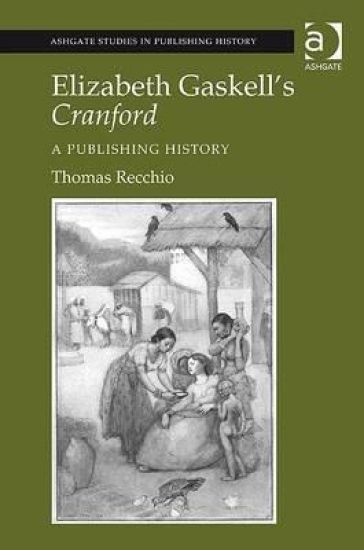
Tracing the publishing history of Elizabeth Gaskell's Cranford from its initial 1851-53 serialization in Dickens's Household Words through its numerous editions and adaptations, Thomas Recchio focuses especially on how the text has been deployed to support ideas related to nation and national identity. Recchio maps Cranford's nineteenth-century reception in Britain and the United States through illustrated editions in England dating from 1864 and their subsequent re-publication in the United States, US school editions in the first two decades of the twentieth century, dramatic adaptations from 1899 to 2007, and Anglo-American literary criticism in the latter half of the twentieth century. Making extensive use of primary materials, Recchio considers Cranford within the context of the Victorian periodical press, contemporary reviews, theories of text and word relationships in illustrated books, community theater, and digital media. In addition to being a detailed publishing history that emphasizes the material forms of the book and its adaptations, Recchio's book is a narrative of Cranford's evolution from an auto-ethnography of a receding mid-Victorian English way of life to a novel that was deployed as a maternal model to define an American sensibility for early twentieth-century Mediterranean and Eastern European immigrants. While focusing on one novel, Recchio offers a convincing micro-history of the way English literature was positioned in England and the United States to support an Anglo-centric cultural project, to resist the emergence of multicultural societies, and to ensure an unchanging notion of a stable English culture on both sides of the Atlantic.
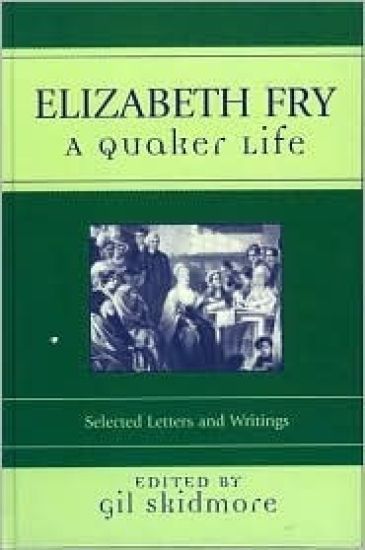
Offers a portrait of the struggles and anxieties behind the public persona of Elizabeth Fry.