Kirjojen hintavertailu. Mukana 12 016 292 kirjaa ja 12 kauppaa.

Kirjahaku

Etsi kirjoja tekijän nimen, kirjan nimen tai ISBN:n perusteella.

1000 tulosta hakusanalla Eric J Butler Jr

James J. Curto Correspondence, 1948-1969

James J. Curto Correspondence, 1948-1969

Eric P Newman

Hassell Street Press
2021
nidottu
This work has been selected by scholars as being culturally important and is part of the knowledge base of civilization as we know it.This work is in the public domain in the United States of America, and possibly other nations. Within the United States, you may freely copy and distribute this work, as no entity (individual or corporate) has a copyright on the body of the work.Scholars believe, and we concur, that this work is important enough to be preserved, reproduced, and made generally available to the public. To ensure a quality reading experience, this work has been proofread and republished using a format that seamlessly blends the original graphical elements with text in an easy-to-read typeface.We appreciate your support of the preservation process, and thank you for being an important part of keeping this knowledge alive and relevant.
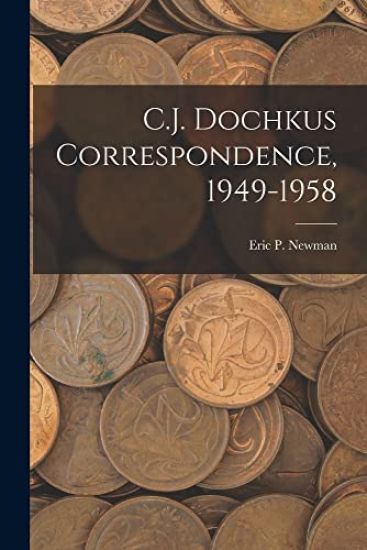
C.J. Dochkus Correspondence, 1949-1958

C.J. Dochkus Correspondence, 1949-1958

Eric P Newman

Hassell Street Press
2021
nidottu
This work has been selected by scholars as being culturally important and is part of the knowledge base of civilization as we know it.This work is in the public domain in the United States of America, and possibly other nations. Within the United States, you may freely copy and distribute this work, as no entity (individual or corporate) has a copyright on the body of the work.Scholars believe, and we concur, that this work is important enough to be preserved, reproduced, and made generally available to the public. To ensure a quality reading experience, this work has been proofread and republished using a format that seamlessly blends the original graphical elements with text in an easy-to-read typeface.We appreciate your support of the preservation process, and thank you for being an important part of keeping this knowledge alive and relevant.
Eric Bogle, Music and the Great War

Eric Bogle, Music and the Great War

Michael J. K. Walsh

Routledge
2017
sidottu
Eric Bogle has written many iconic songs that deal with the futility and waste of war. Two of these in particular, ‘And the Band Played Waltzing Matilda’ and ‘No Man’s Land (a.k.a. The Green Fields of France)’, have been recorded numerous times in a dozen or more languages indicating the universality and power of their simple message. Bogle’s other compositions about the First World War give a voice to the voiceless, prominence to the forgotten and personality to the anonymous as they interrogate the human experience, celebrate its spirit and empathise with its suffering.This book examines Eric Bogle’s songs about the Great War within the geographies and socio-cultural contexts in which they were written and consumed. From Anzac Day in Australia and Turkey to the ‘The Troubles’ in Northern Ireland and from small Aboriginal communities in the Coorong to the influence of prime ministers and rock stars on a world stage, we are urged to contemplate the nature and importance of popular culture in shaping contemporary notions of history and national identity. It is entirely appropriate that we do so through the words of an artist who Melody Maker described as ‘the most important songwriter of our time’.
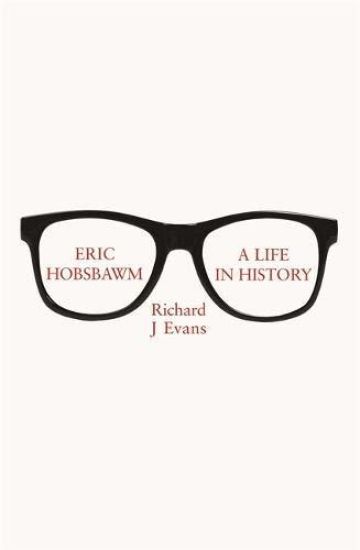
Eric Hobsbawm: A Life in History

Eric Hobsbawm: A Life in History

Richard J. Evans

Little, Brown
2019
sidottu
At the time of his death at the age of 95, Eric Hobsbawm (1917-2012) was the most famous historian in the world. His books were translated into more than fifty languages and he was as well known in Brazil and Italy as he was in Britain and the United States. His writings have had a huge and lasting effect on the practice of history. More than half a century after it appeared, his books remain a staple of university reading lists.He had an extraordinarily long life, with interests covering many countries and many cultures, ranging from poetry to jazz, literature to politics. He experienced life not only as a university teacher but also as a young Communist in the Weimar Republic, a radical student at Cambridge, a political activist, an army conscript, a Soho 'man about town', a Hampstead intellectual, a Cambridge don, an influential journalist, a world traveller, and finally a Grand Old Man of Letters.In A Life in History, Richard Evans tells the story of Hobsbawm as an academic, but also as witness to history itself, and of the twentieth century's major political and intellectual currents. Eric not only wrote and spoke about many of the great issues of his time, but participated in many of them too, from Communist resistance to Hitler to revolution in Cuba, where he acted as an interpreter for Che Guevara. He was a prominent part of the Jazz scene in Soho in the late 1950s and his writings played a pivotal role in the emergence of New Labour in the late 1980s and early 1990s.This, the first biography of Eric Hobsbawm, is far more than a study of a professional historian. It is a study of an era.
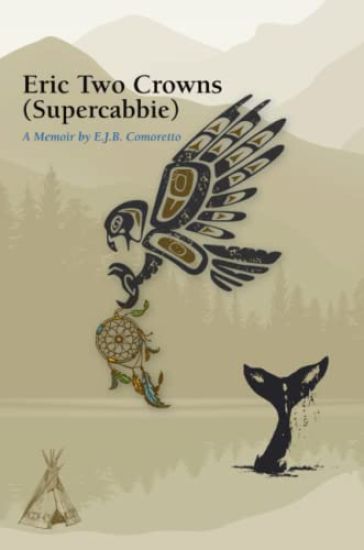
Eric Two Crowns (Supercabbie)

Eric Two Crowns (Supercabbie)

E J B Comoretto

Earthenhouse Incorporated
2019
pokkari
Like everybody else's life, Eric's is unique. He was thirteen when his father took him, his brother and two sisters out of Canada and away from his Innu mother during a bitter divorce and custody battle. He grew up between two worlds, as a Canadian boy immersed in Italy, as a rising Italian businessman in England, and as an economic refugee of the early 90s recession. Resettling back in Canada after nearly twenty years away, he reconnected with the heritage of his mother's Innu family.
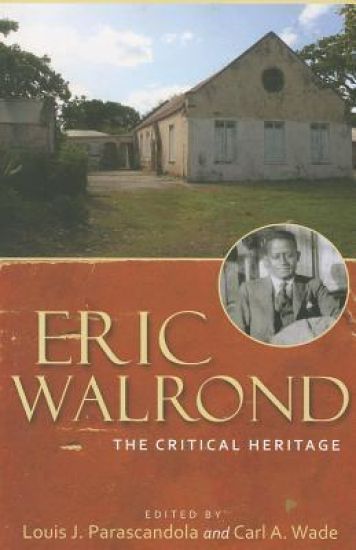
Eric Walrond

Eric Walrond

Louis J. Parascandola; Carl A. Wade

University of the West Indies Press
2012
nidottu
Eric Walrond (1898–1966), author of Tropic Death (1926), remains a seminal but elusive figure in Harlem Renaissance and Caribbean diasporic literature. Although this collection remains his only major text, Walrond was in fact quite prolific, penning several more fictions and journalistic writings. Born in British Guiana (Guyana), he endured a peripatetic existence, beleaguered at every turn by those colonial crises and conflicts that constitute the central concerns of his fiction and journalism. Despite the enduring popularity of Tropic Death, there has been little sustained critical examination of Walrond’s achievement. In Eric Walrond: The Critical Heritage, Louis J. Parascandola and Carl A. Wade address this deficiency, fashioning the first critical anthology on Walrond. The ten essays in this volume employ a variety of literary, cultural and sociological approaches to illuminate the art and imagination of a writer celebrated as one of the most complex authors of the Harlem Renaissance. Included in the collection are two early commentaries by noted West Indian critic Kenneth Ramchand (his article is revised for this volume) and the late American scholar Robert Bone, as well as contributions by more contemporary voices. This comprehensive dissection of Walrond’s life and writings reveals an oeuvre that still has much to contribute to discussions about modern black literary and cultural studies.
J. Hewitt Judd Correspondence, 1957-1963

J. Hewitt Judd Correspondence, 1957-1963

Eric P Newman

Hassell Street Press
2021
nidottu
This work has been selected by scholars as being culturally important and is part of the knowledge base of civilization as we know it.This work is in the public domain in the United States of America, and possibly other nations. Within the United States, you may freely copy and distribute this work, as no entity (individual or corporate) has a copyright on the body of the work.Scholars believe, and we concur, that this work is important enough to be preserved, reproduced, and made generally available to the public. To ensure a quality reading experience, this work has been proofread and republished using a format that seamlessly blends the original graphical elements with text in an easy-to-read typeface.We appreciate your support of the preservation process, and thank you for being an important part of keeping this knowledge alive and relevant.
Jātaka Tales: Volume 3: Folk Tales of the Buddha's Previous Lives
The Jātaka Tales are the Buddhist equivalent of Aesop's Fables. They are morality stories. In the Buddhist cultures of that time, these were the stories that children grew up hearing. They were the popular entertainment of their time. Families would gather together in the evening after the day's work was done and share these tales. And it is from these stories that people learned about the standards of conduct for followers of the Buddha.Like Aesop's Fables, the main characters in these stories can be a king, a merchant, a craftsperson, or an animal. This collection contains stories 101-150 of the 547 total stories. Jātaka 124 tells a lovely story a monk whose selflessness leads to prosperity for his monastery, and in the past how he devoted himself tirelessly to providing water for animals during a drought. Jātaka 105 shows a tree fairy who calms an elephant's fears. Jātaka 107 is a funny story about a priest who makes his king crazy by talking too much, and how the king enlists the help of a cripple who is deadly accurate with a pea shooter to cure him There are a number of stories about monks behaving badly. To a Westerner this may sound strange. But in a Buddhist culture there are bound to be people who ordain as monks - often with good intentions - but who find the monastic life too challenging. Jātaka 146 tells the story of three older men who find a pretty cushy way to live as monks.In all these stories represent the breadth the human experience. What we see is that in 2500 years, the spectrum of humanity has not changed at all.
Jātaka Tales: Volume 4: Folk Tales of the Buddha's Previous Lives
The Jātaka Tales are the Buddhist equivalent of Aesop's Fables. They are morality stories. In the Buddhist cultures of that time, these were the stories that children grew up hearing. They were the popular entertainment of their time. Families would gather together in the evening after the day's work was done and share these tales. And it is from these stories that people learned about the standards of conduct for followers of the Buddha. Like Aesop's Fables, the main characters in these stories can be a king, a merchant, a craftsperson, or an animal. This collection contains stories 151-200 of the 547 total stories. There are a number of stories about friendship. Jātaka 157 tells the story of a jackal and a lion whose families stay friends for generations. Jātaka 162 tells the story of both good and bad friendship, with the good friendship coming between a black deer, a leopard, a lion, and a tiger. Jātaka 190 tells a story of both friendship and deep faith.Jātakas 173 - 176 have mischievous monkeys at the heart of the story, but in Jātaka 177 a monkey is finally the hero. A monkey named "Senaka" saves his entire tribe by quick thinking. In other Jātakas we have tree fairies, elephants, and even people ( ). In one story a man is rumored to have become a monk. This inspires him to actually become a monk. In all, these stories represent the breadth the human experience. What we see is that in 2500 years, the spectrum of experiences has not changed at all.
J.C. Ryle

J.C. Ryle

Eric Russell

Christian Focus Publications Ltd
2008
pokkari
Superb story of a spiritual leader with a gentle heart! John Charles Ryle was born into a comfortable English family background - his father was a politician and businessman. Ryle was intelligent, a great sportsman (captain of cricket at Eton and Oxford) and was set for a career in his father's business, and then politics - a typical, well to do, 19th century family.Then - disaster. The family awoke to find that their father's bank had failed, taking all the other businesses with it. Ryle had lost his job and his place in society. He resigned his commission in the local yeomanry and went to comfort his parents, brother and sisters. One moment a popular man with good prospects, the next the son of a bankrupt with no trade or profession. Almost as a last resort, he was ordained into the ministry of the church.Ryle's reputation as a pastor and leader grew until he was appointed the first Bishop of Liverpool, a post he held for 20 years. He was an author who is still in print today (he put aside royalties to pay his father's debts) and a man once described by his successor as 'that man of granite with the heart of a child.' He changed the face of the English church.Ryle stands as a colossus at the junction of two centuries - a hundred years after his death he still stands as an example to church leaders today of how to combine leadership, a firm faith and compassion.