

Kirjahaku
Etsi kirjoja tekijän nimen, kirjan nimen tai ISBN:n perusteella.
1000 tulosta hakusanalla French Hacking

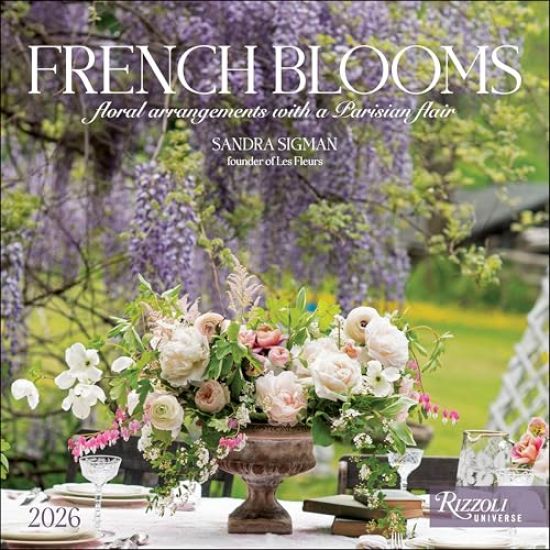
Based on Sandra Sigman’s wildly popular book French Blooms, this calendar showcases lush floral arrangements filled with passion, movement, texture, and surprise. The French Blooms 2026 Wall Calendar is the perfect gift for anyone who want to bring the beauty of Parisian flowers to their home or office. Featuring 12 full color photographs of one-of-a-kind floral bouquets Bonus spread for September–December 2025 Generous grids for adding appointments and reminders Includes major official world holidays Includes moon phases Opens to 12 inches x 24 inches

French Sociology offers a uniquely comprehensive view of the oldest and still one of the most vibrant national traditions in sociology. Johan Heilbron covers the development of sociology in France from its beginnings in the early nineteenth century through the discipline's expansion in the late twentieth century, tracing the careers of figures from Auguste Comte to Pierre Bourdieu. Presenting fresh interpretations of how renowned thinkers such as Émile Durkheim and his collaborators defined the contours and content of the discipline and contributed to intellectual renewals in a wide range of other human sciences, Heilbron's sophisticated book is both an innovative sociological study and a major reference work in the history of the social sciences. Heilbron recounts the halting process by which sociology evolved from a new and improbable science into a legitimate academic discipline. Having entered the academic field at the end of the nineteenth century, sociology developed along two separate tracks: one in the Faculty of Letters, engendering an enduring dependence on philosophy and the humanities, the other in research institutes outside of the university, in which sociology evolved within and across more specialized research areas. Distinguishing different dynamics and various cycles of change, Heilbron portrays the ways in which individuals and groups maneuvered within this changing structure, seizing opportunities as they arose. French Sociology vividly depicts the promises and pitfalls of a discipline that up to this day remains one of the most interdisciplinary endeavors among the human sciences in France.

French Sociology offers a uniquely comprehensive view of the oldest and still one of the most vibrant national traditions in sociology. Johan Heilbron covers the development of sociology in France from its beginnings in the early nineteenth century through the discipline's expansion in the late twentieth century, tracing the careers of figures from Auguste Comte to Pierre Bourdieu. Presenting fresh interpretations of how renowned thinkers such as Émile Durkheim and his collaborators defined the contours and content of the discipline and contributed to intellectual renewals in a wide range of other human sciences, Heilbron's sophisticated book is both an innovative sociological study and a major reference work in the history of the social sciences. Heilbron recounts the halting process by which sociology evolved from a new and improbable science into a legitimate academic discipline. Having entered the academic field at the end of the nineteenth century, sociology developed along two separate tracks: one in the Faculty of Letters, engendering an enduring dependence on philosophy and the humanities, the other in research institutes outside of the university, in which sociology evolved within and across more specialized research areas. Distinguishing different dynamics and various cycles of change, Heilbron portrays the ways in which individuals and groups maneuvered within this changing structure, seizing opportunities as they arose. French Sociology vividly depicts the promises and pitfalls of a discipline that up to this day remains one of the most interdisciplinary endeavors among the human sciences in France.

The author describes the various ideas that may be called chivalric, illustrates their nature and content from contemporary literature, and attempts to show what effect they had on the ethical principles and practices of the feudal nobility.

Among the most enduring of French cultural institutions, the salon, is among the most misunderstood. Seen primarily as a venue for apolitical social gatherings, the salon's influence is generally believed to have ended during the French Revolution. In French Salons, Steven Kale challenges conventional thinking about the salon. Drawing on an impressive range of primary sources, he offers a nuanced history of this institution from the eighteenth century through the Revolution of 1848 which emphasizes continuity and evolution over disjuncture and highlights its shifting political character and relevance. Salons, Kale shows, originally provided opportunities for the exchange of literary and philosophical ideas among the French aristocracy. Central to the maintenance of salon culture were salonnieres, aristocratic women such as Madame de Stael who opened their homes to fellow elites and nurtured a sociability that united the members of high society. Salons provided ready-made venues for aristocratic politics during the early years of the French Revolution, when salons were transformed into places where the upper classes could express their political opinions and concerns. Even at the height of the Terror, salons did not dissolve but, rather, were displaced as aristocrats moved their social networks of influence to such cities as Coblenz, Brussels, and London. Napoleon sought to manipulate salon culture for his own ends, but with his fall from power, salons reemerged and proliferated. Although never intended to serve as political clubs, salons became informal sites for the cultivation of political capital and the exchange of political ideas during the Bourbon Restoration and the July Monarchy. By 1848, the conditions that sustained aristocratic sociability declined, and salons became increasingly marginal to French public life. At the same time, new political institutions-parties, the press, legislative bodies-emerged that more effectively disseminated and shaped political opinion and led to real political change. Challenging many of the conclusions of recent historiography, including the depiction of salonnieres as influential power brokers, French Salons offers an original, penetrating, and engaging analysis of elite culture and society in France before, during, and after the Revolution.

French Writers and the Politics of Complicity
Richard J. Golsan
Johns Hopkins University Press
2006
sidottu
Focusing on the political commitments of three French writers who collaborated with the Vichy Regime and Nazi Germany during World War II, and on those of three leading French intellectuals of the 1990s whose misplaced political idealism led them to support xenophobic, authoritarian regimes and dangerous historical revisionisms, Richard J. Golsan reexamines the notion of political commitment or engagement in two difficult periods in modern French history. Discussing the fiction, essays, and journalism of Henry de Montherlant, Jean Giono, and Alphonse de Chateaubriant, Golsan explores the complexity of artistic and intellectual collaboration during the German Occupation. He demonstrates that, in this context, complicity with political evil often derived from "nonpolitical" motives including sexual orientation, antimodern aesthetics, and dangerously skewed religious beliefs. Turning to the post-cold war era of the 1990s, Golsan examines the philosopher Alain Finkielkraut's support for Croatian independence, the "mediologist" Regis Debray's pro-Serb stance during the bombing of Kosovo, and the historian Stephane Courtois's revisionist comparison of Nazi and Communist crimes during the 1997 debate surrounding the publication of The Black Book of Communism. In these three cases, laudable motives-and misguided historical comparisons with Vichy, Nazism, and the Occupation period that marked the political and intellectual discourses of France in the 1990s-resulted, paradoxically, in antidemocratic engagements profoundly at odds with the original motivations behind these intellectuals' commitments. In each of these case studies, political complicity derives from a combination of passions and ideals-whether positive or negative, emotional or intellectual-as well as a desire to make the present conform to a particular and generally skewed vision of the past. The full implications of these involvements are neither fully grasped nor understood by their authors, either through lack of objectivity, rationality, or imagination or through willful ignorance. The results are always unfortunate and often disastrous. Considered together, these six intellectuals serve as sobering reminders that political commitments are never as simple or straightforward as they seem and that admirable motives for political involvement can have dangerous and destructive consequences in historical practice.

Among the most enduring of French cultural institutions, the salon, is among the most misunderstood. Seen primarily as a venue for apolitical social gatherings, the salon's influence is generally believed to have ended during the French Revolution. In French Salons, Steven Kale challenges conventional thinking about the salon. Drawing on an impressive range of primary sources, he offers a nuanced history of this institution from the eighteenth century through the Revolution of 1848 which emphasizes continuity and evolution over disjuncture and highlights its shifting political character and relevance. Salons, Kale shows, originally provided opportunities for the exchange of literary and philosophical ideas among the French aristocracy. Central to the maintenance of salon culture were salonnieres, aristocratic women such as Madame de Stael who opened their homes to fellow elites and nurtured a sociability that united the members of high society. Salons provided ready-made venues for aristocratic politics during the early years of the French Revolution, when salons were transformed into places where the upper classes could express their political opinions and concerns. Even at the height of the Terror, salons did not dissolve but, rather, were displaced as aristocrats moved their social networks of influence to such cities as Coblenz, Brussels, and London. Napoleon sought to manipulate salon culture for his own ends, but with his fall from power, salons reemerged and proliferated. Although never intended to serve as political clubs, salons became informal sites for the cultivation of political capital and the exchange of political ideas during the Bourbon Restoration and the July Monarchy. By 1848, the conditions that sustained aristocratic sociability declined, and salons became increasingly marginal to French public life. At the same time, new political institutions-parties, the press, legislative bodies-emerged that more effectively disseminated and shaped political opinion and led to real political change. Challenging many of the conclusions of recent historiography, including the depiction of salonnieres as influential power brokers, French Salons offers an original, penetrating, and engaging analysis of elite culture and society in France before, during, and after the Revolution.

Unprecedented in scope and depth, this tour de force collection of poetry by French-speaking women contains over 600 poems from 56 different pens, from the twelfth-century Anglo-Norman Marie de France through such noted poets of the past century as Lucienne Desnoues, Liliane Wouters, and Albertine Sarrazin. Through artful, careful translations that remain true to the authors' voices, style, and artistic integrity, Norman R. Shapiro provides an exceptional window into the development and evolution of French poetry from the Middle Ages up to the present. Original texts and translations are presented on facing pages, allowing readers to appreciate the vigor and variety of the French and the fidelity of the English versions. Divided into three chronological sections spanning the Middle Ages through the sixteenth century, the seventeenth and eighteenth centuries, and the nineteenth and twentieth centuries, the volume includes introductory essays by noted scholars of each era's poetry along with biographical sketches and bibliographical references for each poet. This bilingual panorama is an essential addition to the libraries of all scholars and readers of poetry, French, literature, and-especially-women's writing. It will also interest students of the art and craft of literary translation. Featuring the poetry of: Louise Ackermann, Victoire Babois, Natalie Clifford Barney, Fanny de Beauharnais, Catherine Bernard, Castelloza, Elisabeth-Sophie Cheron, Christine de Pizan, Gabrielle de Coignard, Louise Colet, Marie Dauguet, Lise Deharme, Lucie Delarue-Mardrus, Marceline Desbordes-Valmore, Antoinette Deshoulieres, Lucienne Desnoues, Catherine des Roches, Madeleine des Roches, Stephanie-Felicite de Genlis, Rosemonde Gerard, Delphine Gay de Girardin, Elisabeth Guibert, Pernette du Guillet, Henriette de Coligny de La Suze, Gerard d'Houville, Jeanne d'Albret, Marie-Madeleine Joliveau de Segrais, Anne-Marie Kegels, Louise Labe, Marie-Amable de La Ferandiere, Madeleine de l'Aubespine, Marguerite de Navarre, Marie de Cleves, Marie de France, Anne de Marquets, Elisa Merc ur, Louise Michel, Marie-Emilie Maryon de Montanclos, Amelie Murat, Marie Nizet, Anna de Noailles, Marie Pape-Carpantier, Louisa Paulin, Cecile Perin, Marie de Romieu, Louise-Genevieve Gillot de Sainctonge, Albertine Sarrazin, Cecile Sauvage, Madeleine de Scudery, Sabine Sicaud, Andree Sodenkamp, Amable Tastu, Marie-Catherine Desjardins de Villedieu, Louise de Vilmorin, Renee Vivien, and Liliane Wouters

Before the Vichy regime, there was ostensibly only one France and one form of colonialism for French West Africa (FWA). World War II and the division of France into two ideological camps, each asking for legitimacy from the colonized, opened for Africans numerous unprecedented options. French Colonialism Unmasked analyzes three dramatic years in the history of FWA, from 1940 to 1943, in which the Vichy regime tried to impose the ideology of the National Revolution in the region. Ruth Ginio shows how this was a watershed period in the history of the region by providing an in-depth examination of the Vichy colonial visions and practices in fwa. She describes the intriguing encounters between the colonial regime and African society along with the responses of different sectors in the African population to the Vichy policy. Although French Colonialism Unmasked focuses on one region within the French Empire, it has relevance to French colonial history in general by providing one of the missing pieces in research on Vichy colonialism.
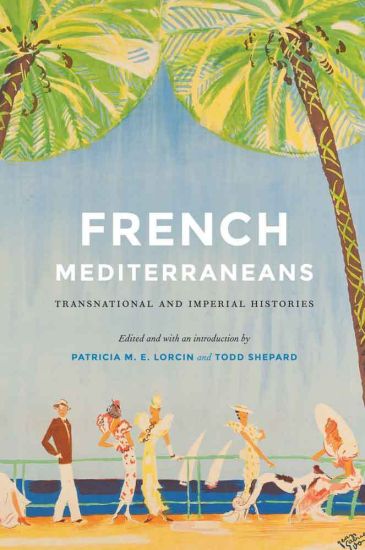
French Mediterraneans
University of Nebraska Press
2016
sidottu
While the Mediterranean is often considered a distinct, unified space, recent scholarship on the early modern history of the sea has suggested that this perspective is essentially a Western one, devised from the vantage point of imperial power that historically patrolled the region’s seas and controlled its ports. By contrast, for the peoples of its southern shores, the Mediterranean was polymorphous, shifting with the economic and seafaring exigencies of the moment. Nonetheless, by the nineteenth century the idea of a monolithic Mediterranean had either been absorbed by or imposed on the populations of the region. In French Mediterraneans editors Patricia M. E. Lorcin and Todd Shepard offer a collection of scholarship that reveals the important French element in the nineteenth- and twentieth-century creation of the singular Mediterranean. These essays provide a critical study of space and movement through new approaches to think about the maps, migrations, and margins of the sea in the French imperial and transnational context. By reconceptualizing the Mediterranean, this volume illuminates the diversity of connections between places and polities that rarely fit models of nation-state allegiances or preordained geographies.

French Fur Traders and Voyageurs in the American West
Bison Books
1997
pokkari
"Frenchmen were far ahead of Englishmen in the early Far West, not only prior in time but greater in numbers and in historical importance," writes Janet Lecompte in her introduction to French Fur Traders and Voyageurs in the American West. They were the first to navigate the Mississippi and its tributaries, and they founded St. Louis and New Orleans. Though France lost her North American possessions in 1763, thousands of her natives remained on the continent. Many of them were voyageurs for Hudson's Bay Company, whose descendants would join American fur trade companies plying the trans-Mississippi West. This volume documents the fact that in the nineteenth century Frenchmen dominated the fur trade in the United States. Twenty-two biographies, collected from LeRoy R. Hafen's classic ten-volume The Mountain Men and the Fur Trade of the Far West, represent a variety of origins and social classes, types of work, and trading areas. Here are trappers who joined John Jacob Astor's ill-fated fur venture on the Pacific, St. Louis traders who hauled goods to Spanish New Mexico along the Santa Fe Trail, and those who traded with Indians in the western plains and mountains.
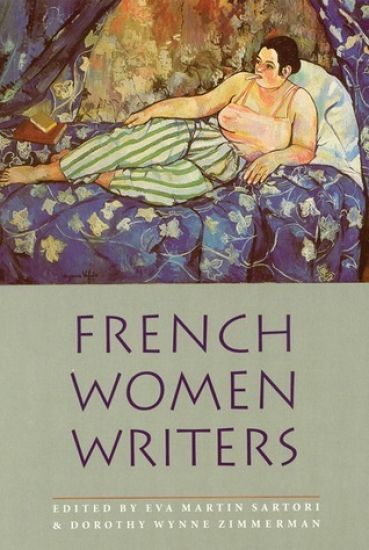
French Women Writers
University of Nebraska Press
1994
pokkari
Marie de France, Mme. De Sévigné, and Mme. De Lafayette achieved international reputations during periods when women in other European countries were able to write only letters, translations, religious tracts, and miscellaneous fragments. There were obstacles, but French women writers were more or less sustained and empowered by the French culture. Often unconventional in their personal lives and occupied with careers besides writing—as educators, painters, actresses, preachers, salon hostesses, labor organizers—these women did not wait for Simone de Beauvoir to tell them to make existential choices and have "projects in the world." French Women Writers describes the lives and careers of fifty-two literary figures from the twelfth century to the late twentieth. All the contributors are recognized authorities. Some of their subjects, like Colette and George Sand, are celebrated, and others are just now gaining critical notice. From Christine de Pizan and Marguerite de Navarre to Rachilde and Hélène Cixous, from Louise Labe to Marguerite Duras—these women speak through the centuries to issues of gender, sexuality, and language.French Women Writers now becomes widely available in this Bison Book edition.


French and British Land Grants in the Post Vincennes (Indiana) District, 1750-1784
Smith
Clearfield
2009
pokkari


French and Spanish Records of Louisiana
Henry Putney Beers
Louisiana State University Press
2002
nidottu
Representing years of extensive research, this authoritative and comprehensive guide to the records generated in the Louisiana Territory during the French and Spanish colonial periods is a major reference work. Henry Putney Beers has painstakingly traced all types of documents, including land, military, and ecclesiastical records; registers of births, marriages, and burials; and private papers. Far more than a mere bibliographical listing, the book provides a complete history and description of these records and their past as well as current locations. When microfilms or other copies of particular bodies of documents exist, Beers describes the circumstances of reproduction and lists the locations of the copies.In the first part of the book, Beers presents a concise account of history and government in Louisiana, concentrating on the formation of a record-keeping bureaucracy. His detailed discussion includes information on available archival reproductions, documentary publications, and the nature and size of holdings in pertinent manuscript collections. Beers's examination of parish, land, and ecclesiastical records will serve as a vital resource. In the remainder of the book, he provides a similarly comprehensive treatment of the records of what are now Mississippi, Alabama, Missouri, and Arkansas.Beers traces repositories for these documents far beyond regional confines, locating some in Europe, Canada, and Cuba. For the early migrants to the region -- the Acadians, for example -- he describes source materials at the migrants' points of origin. He also provides information on documents that have been lost or destroyed, an important service that will save researchers much time. French and Spanish Records of Louisiana will prove to be of enormous value to a wide range of people: professional historians, local history buffs, genealogists, lawyers, archivists, and librarians.

French Colonial Louisiana and the Atlantic World
Louisiana State University Press
2005
sidottu
French colonial Louisiana has failed to occupy a place in the historic consciousness of the United States, perhaps owing to its short duration (1699--1762) and its standing outside the dominant narrative of the British colonies in North America. This anthology seeks to locate early Louisiana in its proper place, bringing together a broad range of scholarship that depicts a complex and vibrant sphere.Colonial Louisiana comprised the vast center of what would become the United States. It lay between Spanish, British, and French colonies in North America and the Caribbean, and between woodland and eastern plains Indians. As such, it provided a meeting place for Europeans, Africans, and native Americans, functioning as a crossroads between the New World and other worlds. While acknowledging colonial Louisiana's peripheral position in U.S. and Atlantic World history, this volume demonstrates that the colony stands at the thematic center of the shared narratives and historiographies of diverse places. Through its twelve essays, French Colonial Louisiana and the Atlantic World tells a whole story, the story of a place that belongs to the historic narrative of the Atlantic World.

In recent years, ethnographers have recognized south Louisiana as home to perhaps the most complex rural society in North America. More than a dozen French-speaking immigrant groups have been identified there, Cajuns and white Creoles being the most famous. In this guide to the amazing social, cultural, and linguistic variation within Louisiana's French-speaking region, Carl A. Brasseaux presents an overview of the origins and evolution of all the Francophone communities.Brasseaux examines the impact of French immigration on Louisiana over the past three centuries. He shows how this once-undesirable outpost of the French empire became colonized by individuals ranging from criminals to entrepreneurs who went on to form a multifaceted society -- one that, unlike other American melting pots, rests upon a French cultural foundation.A prolific author and expert on the region, Brasseaux offers readers an entertaining history of how these diverse peoples created south Louisiana's famous vibrant culture, interacting with African Americans, Spaniards, and Protestant Anglos and encountering influences from southern plantation life and the Caribbean. He explores in detail three still cohesive components in the Francophone melting pot, each one famous for having retained a distinct identity: the Creole communities, both black and white; the Cajun people; and the state's largest concentration of French speakers -- the Houma tribe.A product of thirty years' research, French, Cajun, Creole, Houma provides a reliable and understandable guide to the ethnic roots of a region long popular as an international tourist attraction.