Kirjojen hintavertailu. Mukana 11 244 527 kirjaa ja 12 kauppaa.

Kirjahaku

Etsi kirjoja tekijän nimen, kirjan nimen tai ISBN:n perusteella.

1000 tulosta hakusanalla Fritz Heithecker

Studies on Aby Warburg, Fritz Saxl and Gertrud Bing
Originally published in German, Italian and French these articles have been translated into English for the first time by the author, the former archivist of The Warburg Institute, London. Aby Warburg’s research and writings centred on images, their origins and metamorphoses, and their explanations and interpretations. The articles include discussions of Warburg’s academic work with colleagues such as James Loeb, the American Hellenist and philanthropist, and founder of the Loeb Classical Library, and with Josef Strzygowski, the Polish-Austrian art historian of the Vienna School of Art History. Further articles include notes on Warburg’s Serpent Ritual lecture of 1923; his politico-cultural initiative in 1914–1915; his work on caricature, in particular the Struwwelpeter topic; and discussions on the topic of Judaica. The Viennese art historian Fritz Saxl became his trusted friend and collaborator helping to gather Warburg’s large collection of books and photographs into the foundation of an academic institution in Hamburg in the 1920s, and then for a second time in London in the 1930s. The Warburg Institute has become one of the world’s leading centres of intellectual history. (CS 1109).
Richard Wagner, Fritz Lang, and the Nibelungen

Richard Wagner, Fritz Lang, and the Nibelungen

David J. Levin

Princeton University Press
1999
pokkari
This highly original book draws on narrative and film theory, psychoanalysis, and musicology to explore the relationship between aesthetics and anti-Semitism in two controversial landmarks in German culture. David Levin argues that Richard Wagner's opera cycle Der Ring des Nibelungen and Fritz Lang's 1920s film Die Nibelungen creatively exploit contrasts between good and bad aesthetics to address the question of what is German and what is not. He shows that each work associates a villainous character, portrayed as non-Germanic and Jewish, with the sometimes dramatically awkward act of narration. For both Wagner and Lang, narration--or, in cinematic terms, visual presentation--possesses a typically Jewish potential for manipulation and control. Consistent with this view, Levin shows, the Germanic hero Siegfried is killed in each work by virtue of his unwitting adoption of a narrative role. Levin begins with an explanation of the book's theoretical foundations and then applies these theories to close readings of, in turn, Wagner's cycle and Lang's film. He concludes by tracing how Germans have dealt with the Nibelungen myths in the wake of the Second World War, paying special attention to Michael Verhoeven's 1989 film The Nasty Girl. His fresh and interdisciplinary approach sheds new light not only on Wagner's Ring and Lang's Die Nibelungen, but also on the ways in which aesthetics can be put to the service of aggression and hatred. The book is an important contribution to scholarship in film and music and also to the broader study of German culture and national identity.
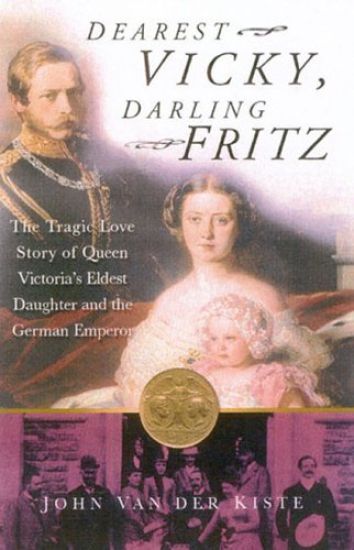
Dearest Vicky, Darling Fritz

Dearest Vicky, Darling Fritz

John Kiste

The History Press Ltd
2002
nidottu
This work tells the love story of the royal couple against the changing background of 19th-century Germany. It looks at the differing political sympathies of the couple, revealed through letters, and re-examines the prevailing view that the domineering Vicky never bothered to conceal her distaste for everything Prussian and flaunting her sense of British superiority. In many ways ahead of her time, she was something of a pioneer feminist, refusing to accept the oft-accepted maxim that women were second-class citizens. Insufficient consideration has been given to her health and the possibility that her judgement and reason may sometimes have been affected, albeit mildly, by the family's inheritance of porphyria that led to the 'madness' of her great-grandfather George III.
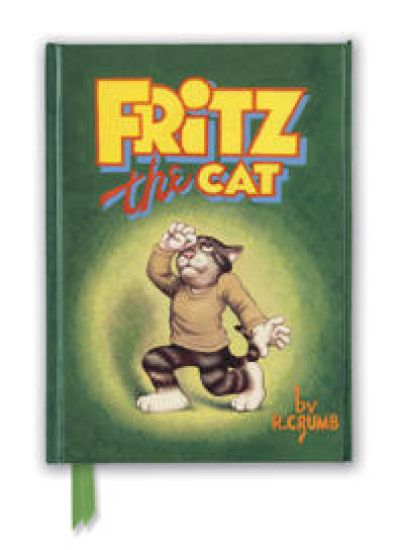
R. Crumb: Fritz the Cat (Foiled Journal)
Part of a series of exciting and luxurious Flame Tree Notebooks. Combining high-quality production with magnificent fine art, the covers are printed on foil in five colours, embossed, then foil stamped. And they're powerfully practical: a pocket at the back for receipts and scraps, two bookmarks and a solid magnetic side flap. These are perfect for personal use and make a dazzling gift. This example features R. Crumb: Fritz the Cat. One of the leading figures of the underground comix movement, R. Crumb’s work is as distinctive as it is polarizing. The eccentric social satirist first rose to prominence in the 1960s counterculture scene, going on to be one of the most prolific and influential cartoonists of the 20th century. Fritz the Cat is one of Crumb’s most iconic comic strips, appearing in Help!, Cavalier, and numerous underground publications between 1965 and 1972.
Die Schuld am Ausbruch des Ersten Weltkrieges und Fritz Fischers "Griff nach der Weltmacht". Die historische Kontroverse als Grundlage multiperspektivischen Geschichtsunterrichts
Examensarbeit aus dem Jahr 2007 im Fachbereich Geschichte - Deutsches Kaiserreich, Imperialismus, Note: 1,0, Technische Universität Dresden (Institut für Geschichte), Veranstaltung: Erstes Staatsexamen, 119 Quellen im Literaturverzeichnis, Sprache: Deutsch, Anmerkungen: Die Kontroverse um die Schuld am Kriegsausbruch 1914 erreichte in den 1960er Jahren mit Fritz Fischers Buch 'Griff nach der Weltmacht' ihren Höhepunkt. Die emotional geführte Debatte vor und nach diesem Buch ist ausführlicher Gegenstand meiner Arbeit. Die Juli-Krise erscheint vor dem Hintergrund einer breit angelegten historischen Untermauerung: Der Weg in den Krieg begann latent mit Bismarcks Rücktritt. Wer war Schuld am Weg in das Massensterben? Die Antwort kann nur multiperspektivisch sein. , Abstract: "In ganz Europa gehen die Lichter aus", so kommentierte der britische Außenminister Edward Grey den Ausbruch des Ersten Weltkrieges 1914. Im Kladderadatsch, einem humoristisch-satirischen Wochenblatt Berlins, "dreht der Russe plötzlich das Licht aus". Die Lichter der Politik und Diplomatie erloschen und überließen das Gesetz des Handelns den Waffen. "Diese Politiker waren allesamt zu schwach, zu wenig fähig, über die Pflöcke der eigenen nationalen Grenzen zu blicken. So ließen sie den Dingen ihren Lauf, übergaben den Militärs das Geschäft". Nur aus dieser Sicht, so zitierte Berghahn Binder, könne man Lloyd Georges Wort zustimmen: "Wir sind alle in den Krieg hineingeschlittert." Die Frage der erstarrten Politik, die sich dem militärischen Dogma unterordnete, wird an späterer Stelle zu klären sein. Dieser erste große Weltkrieg des 20. Jahrhunderts - das neue an ihm war, dass "hier nicht allein europäische Mächte aufeinanderstießen, sondern diese Mächte zugleich Weltmächte waren" - unterschied sich deutlich von den bisher gekannten Auseinandersetzungen des 19. Jahrhunderts. "Doch der erste war er sicherlich nicht. Europäische Mächte hatten während der 300 Jahre zuvor überall auf dem Erdball gegeneinander gekämpft. Jene, die in diesem Krieg kämpften, haben ihn einfach den Großen Krieg genannt, außer in Deutschland, wo man ihn als den Weltkrieg bezeichnete." Entscheidend wurde insbesondere, "daß man glaubte, die in Übersee gewonnenen Kolonialreiche auf europäischem Boden verteidigen zu müssen." Der Erste Weltkrieg war somit ein Krieg neuen Ausmaßes, letztlich der Kampf um Weltmachtanspruch als "Ausdruck eines Prestigestrebens, das dem Reich einen Platz an der Sonne verschaffen wollte." Die Kontroverse um die Sicherung des Großmachtstatus? und das Anstreben der Weltherrschaft wird ebenfalls einer Untersuchung unterzogen werden, da hier die erheblichen Ursachen des Krieges lagen.