Kirjojen hintavertailu. Mukana 12 390 323 kirjaa ja 12 kauppaa.

Kirjahaku

Etsi kirjoja tekijän nimen, kirjan nimen tai ISBN:n perusteella.

1000 tulosta hakusanalla Gerhard Hauser

The Our Father

The Our Father

Gerhard Lohfink

Liturgical Press
2022
pokkari
2020 Catholic Press Association first place award, books about prayerCan Christians still pray the Our Father in the twenty-first century? We can, and we must. Gerhard Lohfink breaks open its strange phrases like “hallowed be thy name,” its off-putting language like “Father” and “kingdom,” and its apparently harsh demands like forgive us as we have forgiven those who hurt us—all to shed light on Jesus’ original words and their meaning. By probing what the prayer meant for Jesus and his first disciples in their world Lohfink calls us to allow the Our Father to break open our own minds and hearts to its infinite invitation and challenge for our time and for all ages.
Between Heaven and Earth

Between Heaven and Earth

Gerhard Lohfink

Liturgical Press
2022
sidottu
2023 Catholic Media Association First Place Award, Author of the Year2023 Association of Catholic Publishers First Place Award, Scripture In this book New Testament scholar Gerhard Lohfink interprets a spectrum of biblical texts, some familiar, others not. He explores them in a spirit of curiosity, questions them insistently, and confronts them with the realities of our present day, from COVID-19 to the inner loneliness experienced by so many. In light of central biblical texts Lohfink asks: What would a life look like today if it were wholly in the world and at the same time wholly in God—sweeping joyously between heaven and earth—aware of the immeasurable breadth of the universe and still able to marvel at the tiniest flower—knowing the depths of the human heart and being comforted by a child’s smile? This book takes up the colorful threads of many Old and New Testament texts and weaves from them a many-hued tapestry of biblical theology. It reveals things unknown, sheds new light on things known, and is full of surprises. It speaks not only to the curious or the “nones” who want to know more about the Christian message; it is addressed to everyone who senses a desire to understand the Bible better and more deeply.
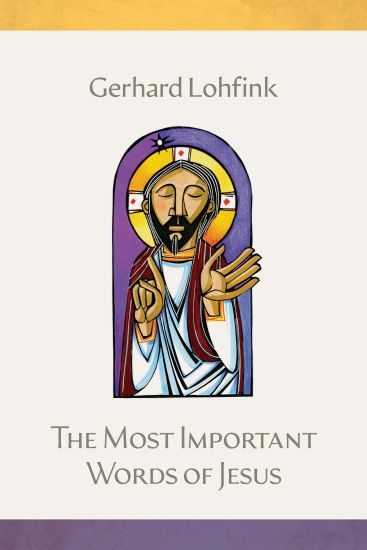
The Most Important Words of Jesus

The Most Important Words of Jesus

Gerhard Lohfink

Liturgical Press
2023
sidottu
2024 Association of Catholic Publishers Third Place Award, Scripture What Jesus taught through his preaching made an unforgettable impression upon his disciples. But it was the many succinctly formulated sayings of Jesus that stood out from the start because of their clear structure and vividness. In The Most Important Words of Jesus, renowned scholar Gerhard Lohfink focuses on the power, beauty, and seriousness of these seventy central sayings of the Lord. When the Church confesses that Jesus is not only truly human but also truly God, that means he is the perfect image of God, God’s definitive word. It rests on the majestic claim that revealed itself, modestly, discreetly, and yet clearly, in every one of the seventy “sayings” or logia of Jesus. In this book, Lohfink helps us to understand what Jesus is talking about in these sharply defined words.
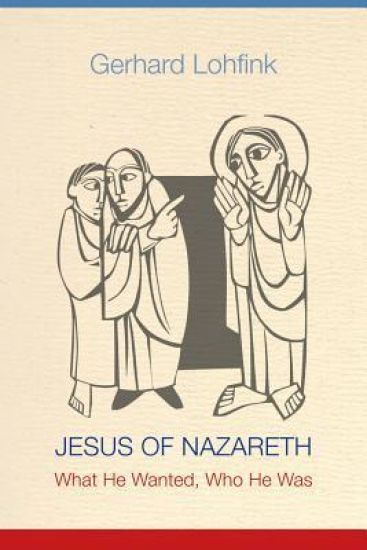
Jesus of Nazareth

Jesus of Nazareth

Gerhard Lohfink

Liturgical Press
2015
pokkari
Who was Jesus? A prophet? There have been many of those. A miracle-worker? A radical revolutionary? A wise teacher? There have been many of these, too. In his latest book, renowned Scripture scholar Gerhard Lohfink asks, What is unique about Jesus of Nazareth, and what did he really want?Lohfink engages the perceptions of the first witnesses of his life and ministry and those who handed on their testimony. His approach is altogether historical and critical, but he agrees with Karl Barth's statement that "historical criticism has to be more critical."Lohfink takes seriously the fact that Jesus was a Jew and lived entirely in and out of Israel's faith experiences but at the same time brought those experiences to their goal and fulfillment. The result is a convincing and profound picture of Jesus.
Is This All There Is?

Is This All There Is?

Gerhard Lohfink

Liturgical Press
2020
pokkari
2020 Catholic Press Association second place award for English translation edition Is the Christian hope for resurrection still alive or has it become tired? How can we talk about the Resurrection today? Gerhard Lohfink takes up the question of death and resurrection in this new book. He argues against the dazzling array of today's ideas and expectations and seeks his answers in Scripture, the Christian tradition, and human reason. With his characteristically gentle but clear language, he reveals the power of Christian resurrection, showing it is not about events that lie in the distant future but rather occurrences incomprehensively close to us. They were long since begun and they will embrace us fully in our own death..
No Irrelevant Jesus

No Irrelevant Jesus

Gerhard Lohfink

Liturgical Press
2018
pokkari
Is Jesus relevant for today? If you think not, don’t bother with this book. But if you think that Jesus might have something to say to today’s world, which Jesus comes to mind? Is he “gentle Jesus, meek and mild,” offering individual salvation but with no message for a suffering world? Is he to be remembered as a Zealot fighting for a hopeless cause or as an outstanding rabbi? Was he a prophet in the long series of Israel’s prophets or a religious founder like Muhammad or Gautama? Or was Jesus unique, a man utterly consumed by zeal for the reign of God, by the “fierce urgency of now,” the leader of a movement dedicated to God’s cause but committed to nonviolence and living for others? If we seek him, can we find him in the churches? In No Irrelevant Jesus, Gerhard Lohfink, author of the acclaimed Jesus of Nazareth, explores these questions and offers a resounding yes to the relevance of Jesus today.
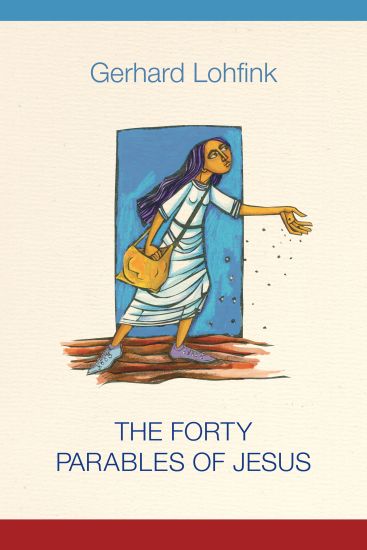
The Forty Parables of Jesus

The Forty Parables of Jesus

Gerhard Lohfink

Liturgical Press
2021
sidottu
2022 Catholic Media Association first place award in scripture: academic studies In this book, which covers all of Jesus' parables, award-winning author Gerhard Lohfink takes a closer look at the origins of each one--its shape, its realistic details, but most of all its original message and the situation into which it was once spoken. Jesus' parables speak in bold images of the kingdom of God, making it present to us as they reveal something of the mystery of his own person. Lohfink also offers a review of some of the scholarship in this area--as this topic has sustained research on Jesus since the first telling of these stories--but not for the purposes of debate. His reflections interpret the forty parables and show how they speak of the coming of the reign of God, lead us to Jesus, and reveal the mystery of Jesus himself.
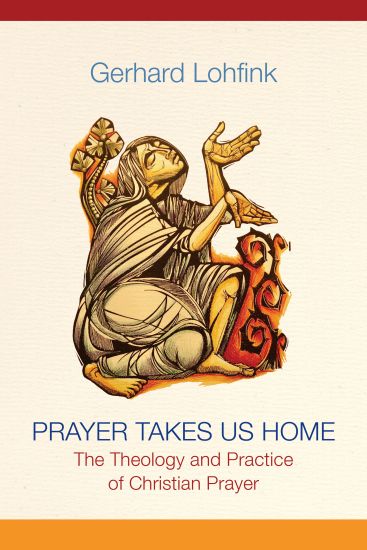
Prayer Takes Us Home

Prayer Takes Us Home

Gerhard Lohfink

Liturgical Press
2022
pokkari
A lot of people would like to learn to pray all over again. Others are not so sure they ought to pray. They want to know whether prayer will help them and, more than that, whether it will be of any use at all to our world. This book gives an answer—not in the form of glib instructions, but by introducing the reader to the theology of prayer. It refers again and again to the Bible, especially the Psalms. At the same time, it speaks about personal experiences as well. Gerhard Lohfink writes in inviting, easy-to-read language, answering questions such as: “To whom do we pray?” “Does it make any sense to ask for things in prayer?” “What happens in the Eucharistic Prayer?” “What is so special about the Psalms?” “How can I practice Christian meditation?” This book offers an inviting approach to Christian prayer.
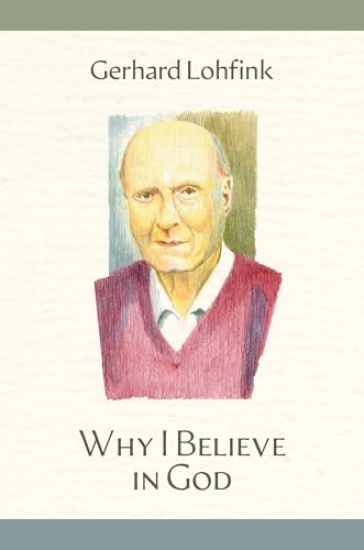
Why I Believe in God

Why I Believe in God

Gerhard Lohfink

Liturgical Press
2025
sidottu
Renowned Scripture scholar, Gerhard Lohfink’s most personal book. While many of his other books offer biblical exegesis, this book tells the story of a life. Through personal, biblical, and theological reflections, Gerhard Lohfink (1934-2024) offers readers hope for the future with a compelling glimpse into his own story of faith. In Why I Believe in God, Lohfink also considers how the Christian faith can still exist in a world filled with hatred, war, and destruction. Interwoven with his life history, Lohfink recounts his childhood during the Nazi era and the Second World War, on his theology studies in Frankfurt and Munich, on his experiences as a priest and pastor, on his further studies in Würzburg, his time as a professor in Tübingen and the years after. He also ponders questions that play a decisive role in every Christian life: about the truth in the Bible, the role of reason in the Christian faith, and engaging with God when it comes to life decisions.
The Forty Parables of Jesus

The Forty Parables of Jesus

Gerhard Lohfink

Liturgical Press
2022
pokkari
2022 Catholic Media Association first place award in scripture: academic studies In this book, which covers all of Jesus’ parables, award-winning author Gerhard Lohfink takes a closer look at the origins of each one—its shape, its realistic details, but most of all its original message and the situation into which it was once spoken. Jesus’ parables speak in bold images of the kingdom of God, making it present to us as they reveal something of the mystery of his own person. Lohfink also offers a review of some of the scholarship in this area—as this topic has sustained research on Jesus since the first telling of these stories—but not for the purposes of debate. His reflections interpret the forty parables and show how they speak of the coming of the reign of God, lead us to Jesus, and reveal the mystery of Jesus himself.
Morphologic Encyclopedia of Palynology

Morphologic Encyclopedia of Palynology

Gerhard Kremp

University of Arizona Press
2019
nidottu
This encyclopedia is designed to serve scholars in palynology as a standard text in questions concerning spore morphology and as a source of information for understanding the descriptive literature in palynology. Of particular value to petroleum geologists as well as to palynologists and plant scientists.
Tennysonian Love

Tennysonian Love

Gerhard Joseph

University of Minnesota Press
1969
nidottu
Tennysonian Love was first published in 1969. Minnesota Archive Editions uses digital technology to make long-unavailable books once again accessible, and are published unaltered from the original University of Minnesota Press editions.In the century or so since Alfred Tennyson's poetry reached the height of its popularity and critical acclaim, the pendulum of criticism has swung wide in opposite directions. From the earlier idolatry to the later ridicule, that pendulum has now settled into a position of qualified and selective praise from which a more thoughtful consideration of the poet is possible. Consequently, as this critical study suggests, new values and dimensions are recognizable in his work.Professor Joseph, concentrating on the theme of love but involving in his argument other facets of Tennyson's achievement, demonstrates the thesis that the poet moved as in a "strange diagonal." This phrase used as the subtitle of the book comes from Tennyson's poem The Princess in which the narrator "moved as in a strange diagonal / And maybe neither pleased myself nor them."As the author shows, Tennyson throughout his work moved between a Platonic conception of love in which the highest kind of spiritual love has disencumbered itself of sense and a Neoplatonic ("Dantesque") one in which sense and soul tend to merge. In coming to terms with the nineteenth-century form of this divided Western heritage, the pietism of the evangelical revival on the one hand and the idealized eroticism of his Romantic predecessors on the other, Tennyson became the exemplary poet of Victorian love. No other Victorian poet, Professor Joseph concludes, exhibits quite his representative and successful blending of these clashing strains. For while moving between the alternate traditions of Western love, Tennyson was able to forge a large body of highly disciplined, beautifully wrought, and far-ranging verse.
Comparing Legislatures

Comparing Legislatures

Gerhard Loewenberg; Samuel C. Patterson

University Press of America
1988
nidottu
This book focuses on the U.S. Congress, the British parliament, the German Bundestag and the Kenyan National Assembly. It analyzes how legislatures develop, how they are constituted, and what functions they perform. It also examines the recruitment of their members, their internal organization and decision-making processes, and their linkages to the surrounding political environment.
Proceedings of the Sixth International Kant Congress

Proceedings of the Sixth International Kant Congress

Gerhard Funke; Thomas M. Seebohm

University Press of America
1989
sidottu
The proceedings of the Sixth International Kant Congress are published in three volumes which contain almost 100 essays on the prehistory of Kant's philosophy, the transcendental analytic and dialectic, Kant's practical philosophy, his anthropology, and his theories of art and science. Representing a cross-section of international (North and South American, European, Russian, and Asian) perspectives on Kant and his work, the authors of the essays included in this volume of proceedings offer a survey of the latest achievements in Kant research. Contents: Prehistory of Kant's Critical Philosophy; Transcendental Aesthetic and Analytic. Contributors include: Jorge Eugenio Dotti, Paul Guyer, Halley D. Sanchez, Kent Baldner, Manfred Baum, Pio Colonnello, and Hans Seigfried. Co-published with the Center for Advanced Research in Phenomenology.
Proceedings of the Sixth International Kant Congress

Proceedings of the Sixth International Kant Congress

Gerhard Funke; Thomas M. Seebohm

University Press of America
1989
nidottu
The proceedings of the Sixth International Kant Congress are published in three volumes which contain almost 100 essays on the prehistory of Kant's philosophy, the transcendental analytic and dialectic, Kant's practical philosophy, his anthropology, and his theories of art and science. Representing a cross-section of international (North and South American, European, Russian, and Asian) perspectives on Kant and his work, the authors of the essays included in this volume of proceedings offer a survey of the latest achievements in Kant research. Contents: Prehistory of Kant's Critical Philosophy; Transcendental Aesthetic and Analytic. Contributors include: Jorge Eugenio Dotti, Paul Guyer, Halley D. Sanchez, Kent Baldner, Manfred Baum, Pio Colonnello, and Hans Seigfried. Co-published with the Center for Advanced Research in Phenomenology.
The Restoration of Israel

The Restoration of Israel

Gerhard Falk

Peter Lang Publishing Inc
2006
sidottu
The restoration of Israel to the Holy Land was originally an English, Protestant idea. Jewish Zionism came later and succeeded only because of the Holocaust. The principal impetus for the promotion of a Jewish return to Zion was religious and began with the translation of the Bible from the Hebrew to English by Tindale. Because literature in the English language depicted Jews almost always in an unfavorable light, both British and American religious and political leaders were ambivalent about Jews. Nevertheless, the religious impulse to restore Israel became political in the twentieth century and succeeded with the establishment of the Jewish state in 1948.
Theodor W. Adorno

Theodor W. Adorno

Gerhard Schweppenhäuser

Duke University Press
2009
sidottu
Theodor W. Adorno (1903–1969) was one of the twentieth century’s most important thinkers. In light of two pivotal developments-the rise of fascism, which culminated in the Holocaust, and the standardization of popular culture as a commodity indispensable to contemporary capitalism-Adorno sought to evaluate and synthesize the essential insights of Western philosophy by revisiting the ethical and sociological arguments of his predecessors: Kant, Nietzsche, Hegel, and Marx. This book, first published in Germany in 1996, provides a succinct introduction to Adorno’s challenging and far-reaching thought. Gerhard SchweppenhÄuser, a leading authority on the Frankfurt School of critical theory, explains Adorno’s epistemology, social and political philosophy, aesthetics, and theory of culture.After providing a brief overview of Adorno’s life, SchweppenhÄuser turns to the theorist’s core philosophical concepts, including post-Kantian critique, determinate negation, and the primacy of the object, as well as his view of the Enlightenment as a code for world domination, his diagnosis of modern mass culture as a program of social control, and his understanding of modernist aesthetics as a challenge to conceive an alternative politics. Along the way, SchweppenhÄuser illuminates the works widely considered Adorno’s most important achievements: Minima Moralia, Dialectic of Enlightenment (co-authored with Horkheimer), and Negative Dialectics. Adorno wrote much of the first two of these during his years in California (1938–49), where he lived near Arnold Schoenberg and Thomas Mann, whom he assisted with the musical aesthetics at the center of Mann’s novel Doctor Faustus.
Theodor W. Adorno

Theodor W. Adorno

Gerhard Schweppenhäuser

Duke University Press
2009
pokkari
Theodor W. Adorno (1903–1969) was one of the twentieth century’s most important thinkers. In light of two pivotal developments-the rise of fascism, which culminated in the Holocaust, and the standardization of popular culture as a commodity indispensable to contemporary capitalism-Adorno sought to evaluate and synthesize the essential insights of Western philosophy by revisiting the ethical and sociological arguments of his predecessors: Kant, Nietzsche, Hegel, and Marx. This book, first published in Germany in 1996, provides a succinct introduction to Adorno’s challenging and far-reaching thought. Gerhard SchweppenhÄuser, a leading authority on the Frankfurt School of critical theory, explains Adorno’s epistemology, social and political philosophy, aesthetics, and theory of culture.After providing a brief overview of Adorno’s life, SchweppenhÄuser turns to the theorist’s core philosophical concepts, including post-Kantian critique, determinate negation, and the primacy of the object, as well as his view of the Enlightenment as a code for world domination, his diagnosis of modern mass culture as a program of social control, and his understanding of modernist aesthetics as a challenge to conceive an alternative politics. Along the way, SchweppenhÄuser illuminates the works widely considered Adorno’s most important achievements: Minima Moralia, Dialectic of Enlightenment (co-authored with Horkheimer), and Negative Dialectics. Adorno wrote much of the first two of these during his years in California (1938–49), where he lived near Arnold Schoenberg and Thomas Mann, whom he assisted with the musical aesthetics at the center of Mann’s novel Doctor Faustus.
Thinking with Adorno

Thinking with Adorno

Gerhard Richter

Fordham University Press
2019
pokkari
What Theodor W. Adorno says cannot be separated from how he says it. By the same token, what he thinks cannot be isolated from how he thinks it. The central aim of Richter's book is to examine how these basic yet far-reaching assumptions teach us to think with Adorno—both alongside him and in relation to his diverse contexts and constellations. These contexts and constellations range from aesthetic theory to political critique, from the problem of judgment to the difficulty of inheriting a tradition, from the primacy of the object to the question of how to lead a right life within a wrong one. Richter vividly shows how Adorno's highly suggestive—yet often overlooked—concept of the "uncoercive gaze" designates a specific kind of comportment in relation to an object of critical analysis: It moves close to the object and tarries with it while struggling to decipher the singularities and non-identities that are lodged within it, whether the object is an idea, a thought, a concept, a text, a work of art, an experience, or a problem of political or sociological theory. Thinking with Adorno's uncoercive gaze not only means following the fascinating paths of his own work; it also means extending hospitality to the ghostly voices of others. As this book shows, Adorno is best understood as a thinker in dialogue, whether with long-deceased predecessors in the German tradition such as Kant and Hegel, with writers such as Kafka, with contemporaries such as Benjamin and Arendt, or with philosophical voices that succeeded him, such as those of Derrida and Agamben.
Thinking with Adorno

Thinking with Adorno

Gerhard Richter

Fordham University Press
2019
sidottu
What Theodor W. Adorno says cannot be separated from how he says it. By the same token, what he thinks cannot be isolated from how he thinks it. The central aim of Richter's book is to examine how these basic yet far-reaching assumptions teach us to think with Adorno—both alongside him and in relation to his diverse contexts and constellations. These contexts and constellations range from aesthetic theory to political critique, from the problem of judgment to the difficulty of inheriting a tradition, from the primacy of the object to the question of how to lead a right life within a wrong one. Richter vividly shows how Adorno's highly suggestive—yet often overlooked—concept of the "uncoercive gaze" designates a specific kind of comportment in relation to an object of critical analysis: It moves close to the object and tarries with it while struggling to decipher the singularities and non-identities that are lodged within it, whether the object is an idea, a thought, a concept, a text, a work of art, an experience, or a problem of political or sociological theory. Thinking with Adorno's uncoercive gaze not only means following the fascinating paths of his own work; it also means extending hospitality to the ghostly voices of others. As this book shows, Adorno is best understood as a thinker in dialogue, whether with long-deceased predecessors in the German tradition such as Kant and Hegel, with writers such as Kafka, with contemporaries such as Benjamin and Arendt, or with philosophical voices that succeeded him, such as those of Derrida and Agamben.