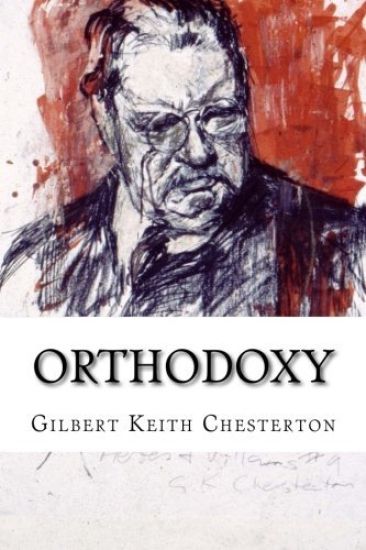
Orthodoxy (1908) is a book by G. K. Chesterton that has become a classic of Christian apologetics. Chesterton considered this book a companion to his other work, Heretics. In the book's preface Chesterton states the purpose is to "attempt an explanation, not of whether the Christian Faith can be believed, but of how he personally has come to believe it." In it, Chesterton presents an original view of Christian religion. He sees it as the answer to natural human needs, the "answer to a riddle" in his own words, and not simply as an arbitrary truth received from somewhere outside the boundaries of human experience.
Though he was on the whole a fun loving and gregarious man, during adolescence Chesterton was troubled by thoughts of suicide. In Christianity he found answers to many of the dilemmas and paradoxes of life. Throughout Heretics he provides a very personal critique of contemporary religious notions. His consistently engaging but often wayward humour is mixed liberally with daring flights of fancy and some startling turns of thought. A highly original collection of essays, providing an invaluable contribution to one of the major debates of the last century - one that continues to exercise leading thinkers in the present one.
This is a compilation of original poetry and song lyrics by Marilyn Gilbert Komechak. Ms. Komechak is an award-winning, published poet and songwriter. Michael Baldwin, President of the Fort Worth Poetry Society and winner of two state-level poetry manuscript contests, said of this book, "Are you missing the duende, the deep passion in poetry that is haunted by reminders of mortality? You will find it in abundance in these wonderful poems by Marilyn Komechak, but also her exuberant love of life and her uncanny evocation of sun-washed Southwest Texas, New Mexico, and even more exotic imaginary venues. There is something to astonish in almost every poem: tear-catchers from the Civil War, ancient Indian petroglyphs, Russian holy icons on barn steps, meditations on pentimenti. Each poem is extraordinary in extraordinary ways. Then come the song lyrics. Willie and Waylon need not apply. These are story songs of sly insouciance amid deceptively simple tales. I've loved and been nourished by Marilyn's writing for many years; I think you will too if you are sufficiently adventurous."Marilyn Gilbert Komechak is a licensed psychologist who has served as a consultant to schools, businesses, and corporations. While maintaining a private practice, she wrote numerous articles and a book, Getting Yourself Together. She continued writing after she retired and has now included an award-winning children's book, Paisano Pete: Snake-killer Bird, a children's historical narrative about Deborah Sampson, a true hero of the American Revolutionary War, entitled The Girl Who Went to War; and she collaborated with her talented artist daughter, Kim Komechak, on an illustrated collection of poetry and paintings, titled Painted Poems: Interior Scapes. Now, she offers this beautiful collection of poetry and song lyrics which take the reader on a moonlit waltz through a world filled with laughter, tears, song, and wisdom. Come glide along the Pecos, find yourself in the reflection of a painting or dusty petroglyph, or learn Sacajawea's nickname.
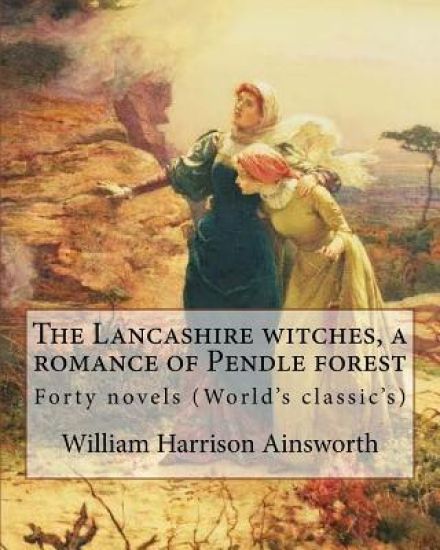
The Lancashire Witches is the only one of William Harrison Ainsworth's forty novels that has remained continuously in print since its first publication.It was serialised in the Sunday Times newspaper in 1848; a book edition appeared the following year, published by Henry Colburn. The novel is based on the true story of the Pendle witches, who were executed in 1612 for causing harm by witchcraft. Modern critics such as David Punter consider the book to be Ainsworth's best work.E. F. Bleiler rated the novel "one of the major English novels about witchcraft". Biographical background and publication: The subject of the Pendle witches was suggested to Ainsworth by antiquarian and long-time friend James Crossley, President of the Chetham Society. During 1846 and 1847 Ainsworth visited all of the major sites involved in the story, such as Pendle Hill and Malkin Tower, home of the Demdikes, one of the two families accused of witchcraft. He wrote the story in 1848, when it was serialised in the Sunday Times newspaper. On completion of the work, Ainsworth was paid 1,000 (equivalent to about 78,600 as of 2008), and the copyright reverted to him. As was common practice at the time, the novel was published in a three-volume set, known as a "triple decker". The first edition was produced by Henry Colburn in 1849, with the subtitle "A Romance of Pendle Forest". At 1 11s 6d, about the amount that a skilled worker could earn in a week, it was expensive. Routledge published an illustrated edition in 1854, reissued in 1878. The twelve full-page illustrations were by John Gilbert. Plot: Ainsworth based his story largely on the official account of the Lancashire witch trials written by the clerk to the court, Thomas Potts, first published in 1613 under the title The Wonderfull Discoverie of Witches in the Countie of Lancaster. Potts himself makes an appearance in the novel, as a "scheming and self-serving lawyer". Book one is set against the backdrop of the 1536 Pilgrimage of Grace, an uprising by northern Catholics against the English Reformation instituted by King Henry VIII... William Harrison Ainsworth (4 February 1805 - 3 January 1882) was an English historical novelist born at King Street in Manchester. He trained as a lawyer, but the legal profession held no attraction for him. While completing his legal studies in London he met the publisher John Ebers, at that time manager of the King's Theatre, Haymarket. Ebers introduced Ainsworth to literary and dramatic circles, and to his daughter, who became Ainsworth's wife. Ainsworth briefly tried the publishing business, but soon gave it up and devoted himself to journalism and literature. His first success as a writer came with Rookwood in 1834, which features Dick Turpin as its leading character. A stream of 39 novels followed, the last of which appeared in 1881. Ainsworth died in Reigate on 3 January 1882.... Sir John Gilbert RA (21 July 1817 - 5 October 1897) was an English artist, illustrator and engraver.Gilbert was born in Blackheath, Surrey, and taught himself to paint. His only formal instruction was from George Lance. Skilled in several media, Gilbert gained the nickname, "the Scott of painting". He was best known for the illustrations and woodcuts he produced for the Illustrated London News....
William Harrison Ainsworth (4 February 1805 - 3 January 1882) was an English historical novelist born at King Street in Manchester. He trained as a lawyer, but the legal profession held no attraction for him. While completing his legal studies in London he met the publisher John Ebers, at that time manager of the King's Theatre, Haymarket. Ebers introduced Ainsworth to literary and dramatic circles, and to his daughter, who became Ainsworth's wife. Ainsworth briefly tried the publishing business, but soon gave it up and devoted himself to journalism and literature. His first success as a writer came with Rookwood in 1834, which features Dick Turpin as its leading character. A stream of 39 novels followed, the last of which appeared in 1881. Ainsworth died in Reigate on 3 January 1882. EARLY LIFE: Ainsworth was born on 4 February 1805 in the family house at 21 King Street, Manchester, to Thomas Ainsworth, a prominent Manchester lawyer, and Ann (Harrison) Ainsworth, the daughter of the Rev. Ralph Harrison, the Unitarian minister at Manchester Cross Street Chapel. On 4 October 1806, Ainsworth's brother, Thomas Gilbert Ainsworth, was born. Although the family home was eventually destroyed, it was a three-storey Georgian home in a well-to-do community. The area influenced Ainsworth with its historical and romantic atmosphere, which existed until the community was later replaced by commercial buildings. Besides the community, Ainsworth read romantic works as a child and enjoyed stories dealing with either adventure or supernatural themes. Of these, Dick Turpin was a favourite of Ainsworth. During his childhood, he adopted Jacobean ideas and held Tory ideas in addition to his Jacobite sympathies, even though his community was strict Whig and Nonconformist. During this time, Ainsworth began to write prolifically. The Ainsworth family moved to Smedly Lane, north of Manchester in Cheetham Hill, during 1811. They kept the old residence in addition to the new, but resided in the new home most of the time. The surrounding hilly country was covered in woods, which allowed Ainsworth and his brother to act out various stories. When not playing, Ainsworth was tutored by his uncle, William Harrison. In March 1817, he was enrolled at Manchester Grammar School, which was described in his novel Mervyn Clitheroe. The work emphasised that his classical education was of good quality but was reinforced with strict discipline and corporal punishment. Ainsworth was a strong student and was popular among his fellow students. His school days were mixed; his time within the school and with his family was calm even though there were struggles within the Manchester community, the Peterloo Massacre taking place in 1819. Ainsworth was connected to the event because his uncles joined in protest at the incident, but Ainsworth was able to avoid most of the political after-effects. During the time, he was able to pursue his own literary interests and even created his own little theatre within the family home at King Street. Along with his friends and brother, he created and acted in many plays throughout 1820. During 1820, Ainsworth began to publish many of his works under the name "Thomas Hall".... Sir John Gilbert RA (21 July 1817 - 5 October 1897) was an English artist, illustrator and engraver.
Philip Hamerton was born at Laneside, a hamlet near Shaw and Crompton, Lancashire, England. His mother died giving birth to him, and his father died ten years later. When he was about five, he was sent to live with his two aunts at an estate called the Hollins on the edge of Burnley, where he attended Burnley Grammar School.Hamerton's first literary attempt, a volume of poems, was unsuccessful, leading him to devote himself for a time entirely to landscape painting; he camped out in the Scottish Highlands, where he eventually rented the former island of Inistrynich in Loch Awe, upon which he settled with his wife Eug nie Gindriez, the daughter of a French republican magistrate, in 1858. Discovering after a time that he was more suited to art criticism than painting, he moved to his wife's native area in France, where?] where he produced his Painter's Camp in the Highlands (1863), which was very successful and prepared the way for his standard work on Etching and Etchers (1866). In the following year he published Contemporary French Painters, and in 1868 a continuation, Painting in France after the Decline of Classicism.
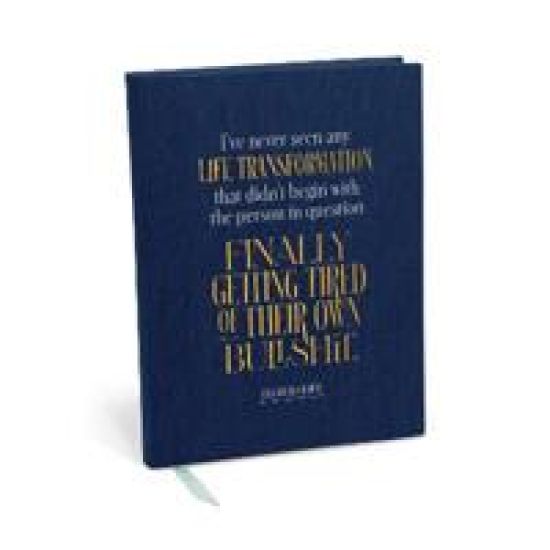
This motivational, gently humorous journal comes from the debut collection of journals and cards by Elizabeth Gilbert, bestselling author of Big Magic and Eat Pray Love. Calling bullshit on yourself can be a sign of profound self-love! -Elizabeth Gilbert brings her genius to Em & Friends with a line of inspiring journals and cards! -Journal measures 5.75 x 7.5-inches -Cloth-covered softcover with foil stamping, 160 lined pages -Ribbon marker
This comforting, cloth-covered journal is from the debut collection of journals and cards by Elizabeth Gilbert, bestselling author of Big Magic and Eat Pray Love. Use it as a safe place to get in with your own heart, mind, and soul. (And maybe draw some fanciful doodles.) -Elizabeth Gilbert brings her genius to Em & Friends with a line of inspiring journals and cards! -Journal measures 5.75 x 7.5-inches -Cloth-covered softcover with foil stamping, 160 lined pages -Ribbon marker
This elegant, cloth-bound journal is from the debut collection of journals and cards by Elizabeth Gilbert, bestselling author of Big Magic and Eat Pray Love. It's a tribute to the strong and graceful women who know how to handle shit, one way or another—whatever the shit may be. You know who you are. (Our numbers are legion!) This message is also available on a greeting card! -Elizabeth Gilbert brings her genius to Em & Friends with a line of inspiring journals and cards! -Journal measures 5.75 x 7.5-inches -Cloth-covered softcover with foil stamping, 160 lined pages -Ribbon marker
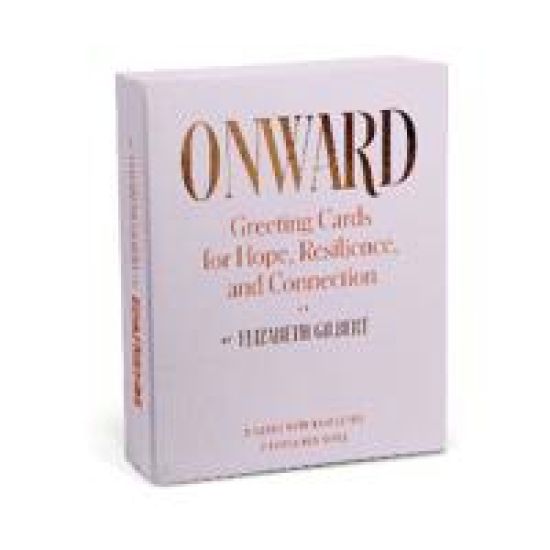
Is it just us, or could everyone in the world use a little extra love these days? We're thinking it's not just us. So we made this box of supportive greeting cards for everyone in your world who deserves a pep talk. Includes 4 heartfelt, inspirational card designsLike having an Em & Friends greeting card shop in a box!8 assorted blank cards with envelopes (2 cards each of 4 different designs)Cards 4.25" x 5.5"; hinged-lid box 4.625" x 6.25"
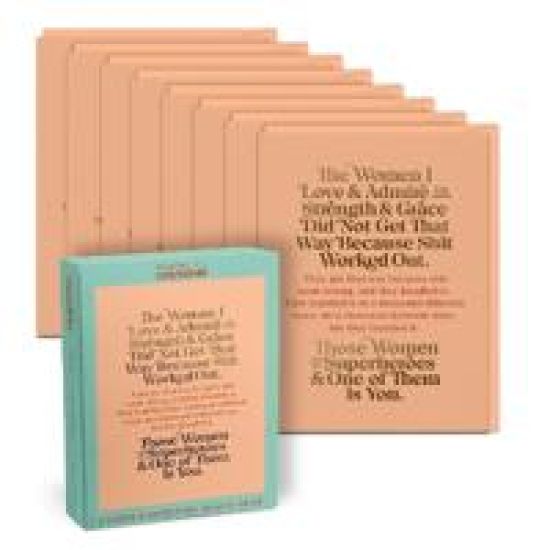
All of us stand on the shoulders of strong, graceful women who worked shit out. And we are those women, too. We’ve put 8 of these heart-soothing friendship and support greeting cards into a lovely keepsake box, giving you plenty of opportunities to let the amazing women in your life know that you see them. Next time you want to offer some loving friendship to someone who could use a reminder of how special they are, you’ll be ready.This powerful message of sisterhood comes from the debut collection of cards and journals by Elizabeth Gilbert, bestselling author of City of Girls and Eat, Pray, Love. Share it with a friend, sister, mother, daughter, or yourself.Elizabeth Gilbert brings her genius to Em & Friends with a line of inspiring cards and journals! A similar design is also available as a journal.Includes 8 of our best-selling friendship cards by the bestselling author, Elizabeth Gilbert. Wonderful cards and envelopes, birthday cards for women, a great sister card, and for every best friend.8 blank greeting cards and envelopes (8 cards of 1 design). Support in bulk!Printed on heavyweight uncoated stock with foil stamping
When nineteen-year old Grady Gilbert seeks gas money in a rural Tennessee church, the congregation assumes he is the straight-out-of-the seminary pastor for whom they've been waiting. The truth is, Grady lost his college basketball scholarship. Matt the Rat, his stepfather, refused to let him live at home, and Grady stole Matt's antique Pontiac and drove off without a plan.With limited church exposure, Grady figures pastoring couldn't be too difficult-he wouldn't have to punch a time clock or report to a boss-so he does not correct the congregation's misunderstanding. When he runs into obstacles, Grady simply searches the Internet for guidance. The one insurmountable obstacle is Mae-June, the church secretary whose trust he can't seem to win.In the beginning, impersonating a pastor was a joke to Grady, but somewhere along the line all that changes when he beginsto care.
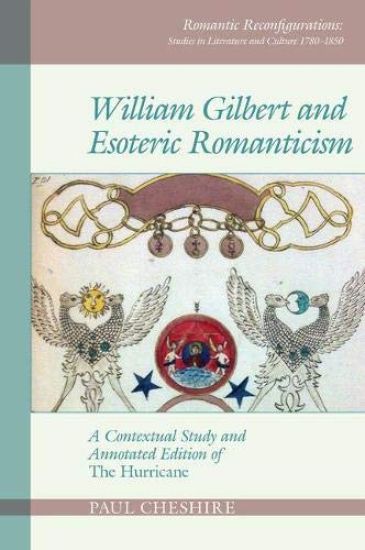
William Gilbert, poet, theosophist and astrologer, published The Hurricane: A Theosophical and Western Eclogue in Bristol in 1796, while he was on intimate terms with key members of Bristol literary culture: Coleridge published an extract from The Hurricane in his radical periodical The Watchman; Robert Southey wrote of the poem’s ‘passages of exquisite Beauty’; and William Wordsworth praised and quoted a long passage from Gilbert’s poem in The Excursion. The Hurricane is a copiously annotated 450 line blank verse visionary poem set on the island of Antigua where, in 1763, Gilbert was born into a slave-owning Methodist family. The poem can be grouped with other apocalyptic poems of the 1790s—Blake’s Continental Prophecies, Coleridge's Religious Musings, Southey's Joan of Arc—all of which gave a spiritual interpretation to the dramatic political upheavals of their time. William Gilbert and Esoteric Romanticism presents the untold story of Gilbert’s progress from the radical occultist circles of 1790s London to his engagement with the first generation Romantics in Bristol. At the heart of the book is the first modern edition of The Hurricane, fully annotated to reveal the esoteric metaphysics at its core, followed by close interpretative analysis of this strange elusive poem.
William Gilbert, poet, theosophist and astrologer, published The Hurricane: A Theosophical and Western Eclogue in Bristol in 1796, while he was on intimate terms with key members of Bristol literary culture: Coleridge published an extract from The Hurricane in his radical periodical The Watchman; Robert Southey wrote of the poem’s ‘passages of exquisite Beauty’; and William Wordsworth praised and quoted a long passage from Gilbert’s poem in The Excursion. The Hurricane is a copiously annotated 450 line blank verse visionary poem set on the island of Antigua where, in 1763, Gilbert was born into a slave-owning Methodist family. The poem can be grouped with other apocalyptic poems of the 1790s—Blake’s Continental Prophecies, Coleridge's Religious Musings, Southey's Joan of Arc—all of which gave a spiritual interpretation to the dramatic political upheavals of their time. William Gilbert and Esoteric Romanticism presents the untold story of Gilbert’s progress from the radical occultist circles of 1790s London to his engagement with the first generation Romantics in Bristol. At the heart of the book is the first modern edition of The Hurricane, fully annotated to reveal the esoteric metaphysics at its core, followed by close interpretative analysis of this strange elusive poem.
'December is FINALLY here! I'm making a list, I'm checking it twice, and I'm dreaming of a PINK Christmas!' What colour is Christmas, do you think? Is it red, is it green? Well, according to one little girl, Christmas is most definitely PINK! Join her on this hilarious, and colourful, adventure as she tries to persuade her friends, you, and even Santa and his elves, that anything to do with Christmas must be, and simply has to be, PINK! Written by the talented children's book author Frances Gilbert, author of I Love Pink and Go, Girls, Go! and with utterly charming illustrations by George Sweetland, this pink-credible storybook is a perfect read for anyone who loves pink at Christmas time. So, this Christmas, think PINK!